

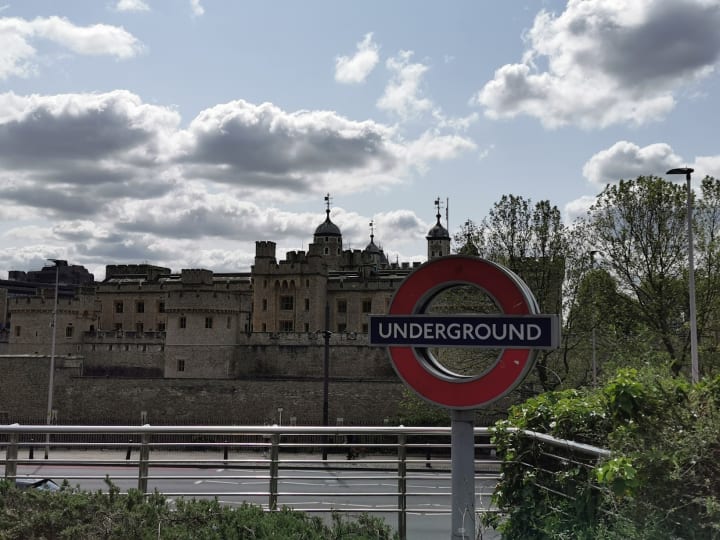
It might look like an interesting Square, especially as it’s slap bang in the centre of the tourist area. The two big London crowd-pullers—Tower Bridge and Tower of London —are a few metres away.
Whilst thousands of tourists pour out of Tower Hull Station each day and make their way to Tower Bridge, Tower of London or St Katherine’s Dock, many overlook another patch of history. For those who’ve done their research, they won’t miss Trinity Square. What’s so good about this square? Naturally, it’s history.
Let me tell you a bit more about it.
History
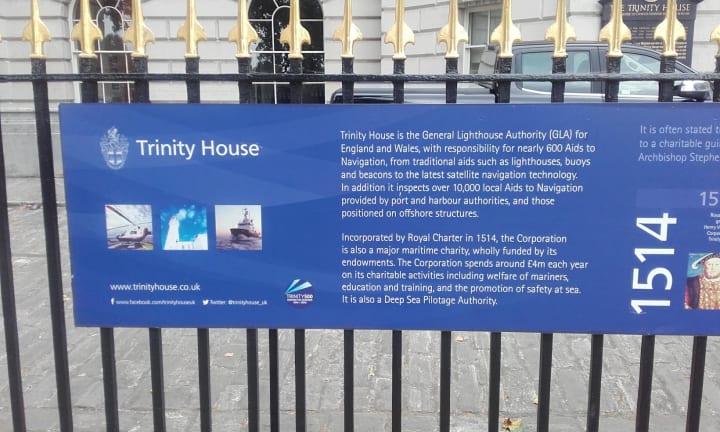
Trinity Square’s history is where it gets exciting. However, let me tell you its name. The square is named after Trinity House, the headquarters of the Corporation of Trinity House, which has managed lighthouses and navigational aids in England since 1514. The current Trinity House building, a neoclassical structure designed by Samuel Wyatt in 1796, stands on the square’s north side.

The area was historically significant as the site of Tower Hill, infamous for public executions. A memorial in Trinity Square Gardens marks the site where over 125 people, including nobles like Sir Thomas More, were executed between the 14th and 18th centuries.
Trinity Square Gardens


Trinity Square Gardens is a historic garden. It’s a small, open public space surrounded by notable buildings and steeped in history, closely tied to its proximity to the Tower of London. It’s a funny-shaped garden.
It’s neither square nor round but more triangular. It has plenty of benches for locals who frequent it during their lunch break or those who’ve checked out of their hotel and need a place to sit before moving on to their next destination.
The gardens house memorials, including the Tower Hill Memorial, commemorating merchant sailors and fishermen who died in World Wars I and II. The WWI memorial, designed by Sir Edwin Lutyens, is a vaulted corridor, while the WWII memorial, by Sir Edward Maufe, is a sunken garden nearby.
Executions Took Place
The gardens also contain a small paved area with a plaque marking the execution site.
Trinity Square was once the site of public executions from the 14th to 18th centuries, where over 125 individuals, including high-profile figures like Sir Thomas More and Anne Boleyn, were beheaded for crimes such as treason.
The executions took place on Tower Hill, just outside the Tower of London, drawing large crowds to witness the grim spectacles.
Today’s Square
The square is surrounded by a mix of historic and modern buildings, including the Grade II-listed Ten Trinity Square, a former Port of London Authority building (completed in 1922) now housing a luxury hotel (Four Seasons Hotel London at Ten Trinity Square).

It’s a popular spot for visitors due to its proximity to the Tower of London and views of the iconic fortress. The area is well-served by public transport, with Tower Hill station (Circle and District lines) and bus routes nearby.
Notable Landmarks
✳️Trinity House: A Georgian building with maritime significance, still used by the Corporation of Trinity House for ceremonial and administrative purposes.
✳️Ten Trinity Square: A grand Beaux-Arts building, once the Port of London Authority’s headquarters, now the Four Seasons Hotel, with restaurants and event spaces.
✳️Tower Hill Memorial: A poignant tribute to merchant navy losses in both world wars.
✳️ Tower of London: Just south of the square, this UNESCO World Heritage Site draws millions of visitors annually.
Atmosphere and Uses
Trinity Square combines modern urban life with a fascinating history. The gardens offer a peaceful spot for office workers, tourists, and locals—the square hosts occasional events, such as remembrance ceremonies tied to the memorials. When you sit on the bench, you’ll be reminded of the history before you. You can’t miss the Tower of London.
Practical Information
It is reachable via Tower Hill Underground station or a short walk from Fenchurch Street or London Bridge stations.
The gardens are free to visit, with benches for seating. Nearby, you’ll find cafes, pubs, and restaurants in St Katharine Docks or along the Thames.
Check for seasonal events or memorial services, especially around Remembrance Day (November).
Parting Comments
If you’re visiting, Trinity Square is worth a stop for its historical past and as a quieter place to escape the hustle and bustle of tourists visiting the Tower of London nearby.
If you enjoyed reading this article and want to support my work, you can now buy me a coffee ☕️.
https://www.buymeacoffee.com/TabbyLondon
Thank you for your attention.
Best wishes
Tabby

About the Creator
Tabby London
The London I've been discovering is usually off the well-beaten track.I love the nooks and crannies and walking along the streets steeped in centuries worth of history. I'm fond of Zone 1 because that's where it all began centuries ago.
Keep reading
More stories from Tabby London and writers in Wander and other communities.
Milkmaids Passage
Thousands of people walk through Green Park and rarely glance around at Milkmaid's Passage. Why would they? You can't walk through it anyways. However, the name captures your attention as you walk past and dare to look behind through the gated off narrow alley. Plus, the presence f the King's men is enough to stop anyone from lingering around for too long.
By Tabby London10 months ago in Wander
10 Reasons to Choose a Beach Villa with Private Pool
A beach holiday is about more than warm sand and gentle surf. When you choose a beach villa with a private pool, you unlock a level of comfort, privacy, and personalised experience that simply cannot be matched by standard hotel rooms. But what makes a private-pool villa genuinely worth it — beyond the glossy photos?
By Island Life Maldives3 days ago in Wander
me, me, me
when i read back my poetry it screams “me, me, me” on my screen in bold letters and i can’t shut it up — most days, i cannot make any other words out; i want to throttle a thousand versions of the me gone by, i want to throw myself from a figurative balcony, i want to sink a sword into every pen i’ve held
By angela hepworth4 days ago in Poets




Comments
There are no comments for this story
Be the first to respond and start the conversation.