
Trekking Through Time: My Soul-Soothing Journey on the Kurinjal Trail
if your soul is tired, your mind is cluttered, or you just need a real break—Kurinjal might be the trail you didn’t know you needed.
Some treks test your strength. Others test your patience. And then there are treks like Kurinjal, which simply invite you to slow down, breathe deeply, and lose yourself in the arms of nature.
Tucked deep within Kudremukh National Park, Kurinjal is one of Karnataka’s most underrated trekking experiences—no frills, no massive crowds, just raw nature and a trail that winds through dreams. When I set out for this weekend getaway from Bangalore, I didn’t expect it to be so profound. But by the time I returned, I felt like I had left a piece of myself on that mountain.
If you’re craving a serene, offbeat, and enriching trek, let me take you through everything you need to know about the Kurinjal Trek.
Reaching Kurinjal: The Journey Before the Journey
My trip began with an overnight bus from Bangalore to Kalasa, a quaint town surrounded by coffee estates and misty hills. From there, a bumpy jeep ride (which was an adventure in itself!) took me to the Kudremukh Forest Department Office, where all trekkers must register. A local guide is mandatory since the trail passes through a protected ecological zone. The staff were helpful, and the process was smooth.
If you’re flying in, the nearest airport is in Mangalore, about 3 hours away by road. From Mangalore, you can hire a taxi or hop on a local bus heading toward Kalasa or Kudremukh.
Into the Forest: When the Trees Became My Friends
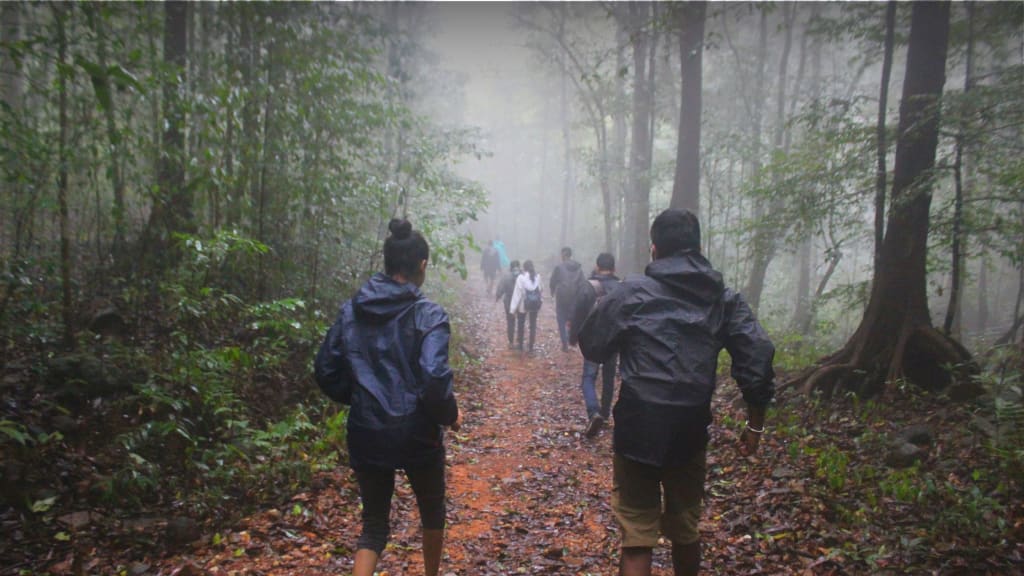
From the first step into the trail, I felt like I’d entered another world. Towering trees arched above us like nature’s own cathedral, while the sun filtered in through the canopy in golden beams. The Kurinjal trail is about 7 km one way—enough to feel like an adventure, but not too punishing.
The forest is alive in the most subtle ways. Birds chirp like background music, and once, we heard the distant bark of a barking deer. Our guide, a soft-spoken local named Ramesh, showed us wild herbs and pointed out elephant tracks. It was a reminder that we were walking through their world, not ours.
The trail itself is moderately easy with a few steep inclines but mostly gradual elevation. It winds through forests, grassy meadows, and occasional rocky patches—each turn offering something new.
Reaching the Peak: More Than Just a View
After nearly 3.5 hours of hiking, we reached the top—and it was quiet. Not silent in a hollow way, but quiet in a soul-touching way. The Kurinjal Peak, though not the tallest, gives you a 360-degree view of rolling green hills, forested valleys, and clouds drifting lazily over distant peaks.
There was no mobile signal, no crowd, no rush to click and leave. Just pure air, open sky, and the feeling that time had slowed down. I sat on a flat rock with my packed lunch—just chapati and pickle, but at that moment, it tasted like a feast. I remember thinking, This is why I travel.
Things to Do Nearby If You Have Time
While Kurinjal is the main event, the surrounding region is dotted with hidden gems you shouldn't miss:
Kudremukh Peak: The most popular and challenging trek in the park.
Hanuman Gundi Waterfall: A lovely cascading fall just a short drive away.
Soormane & Kadambi Falls: Lesser-known waterfalls perfect for a post-trek dip.
Horanadu Temple: A spiritually peaceful pit stop if you’re heading back through Kalasa.
These places make Kurinjal part of a larger, immersive nature escape—ideal for a 2-3 day trip.
When to Go: Seasons of Solitude
The best time to do the Kurinjal Trek is during the post-monsoon and winter months—from October to February. The skies are usually clear, the forest is fresh, and the temperature is just right for trekking.
During monsoon (June to September), the forest comes alive in green, but the trails are slippery and leeches are common. If you enjoy trekking in the rain and don’t mind getting muddy, this season has its own magic.
Avoid trekking in peak summer (March to May)—the sun can be harsh, and the trails lose their lush charm.
Practical Tips to Make the Most of Kurinjal
Here are some field-tested suggestions based on my own experience:
Don’t forget your ID: It’s required at the forest office to get permits.
Cash is king: ATMs are limited, and UPI doesn’t always work in these remote areas.
Stay close to nature: Homestays in Kalasa or Samse offer authentic experiences—think firewood kitchens, local food, and birdsong wake-up calls.
Pack light but smart: A rain jacket, good trekking shoes, snacks, and water are essential. No shops on the trail.
Leave no trace: Please carry your trash back. The forest gives us so much—it’s the least we can do.
Itinerary for a Weekend Trip
Day 1 – Friday Night
Board an overnight bus from Bangalore to Kalasa.
Day 2 – Saturday
Arrive early morning, check into a local homestay.
Drive to the forest office, complete permits, and start the Kurinjal Trek.
Return by evening, relax at the homestay with a hot local meal.
Day 3 – Sunday
Visit a nearby waterfall or temple, or simply unwind in nature.
Return to Bangalore by evening.
Budget Estimate:
Travel: ₹1,500
Stay (1 night): ₹800–1,200
Guide + Entry fee: ₹600
Food & misc: ₹400
Total: Around ₹3,500–4,000
Totally worth it for a rejuvenating mountain weekend.
Why Kurinjal Is More Than Just a Trek
When I think back to the Kurinjal Trek, I don’t just remember the views—I remember the feeling of being small in a vast, ancient world. I remember the silence of the woods, the kindness of strangers, and the comfort of simplicity.
It’s a place where nature is still wild, where time slows down, and where you come back not just with photos, but with perspective.
So if your soul is tired, your mind is cluttered, or you just need a real break—Kurinjal might be the trail you didn’t know you needed.
About the Creator
Rohit SEN
Hey! Come along with me to explore beautiful places, learn about different cultures, and share my adventures. Let's Explore together! From a travel lover!
Worth the Wait: Puerto Viejo, Costa Rica
Beach bumming in a small Caribbean beach town sounded like a perfect way to end our 6-month trip through Mexico and Central America. Or so we thought. The foul, fishy stench of rotten seaweed hit our nostrils as we stepped from the cramped bus and looked out at a rather depressing, empty, and underwhelming black sand beach. It was pouring with rain, and we had to quickly fish out our ponchos. We thought, this couldn’t be it, could it?
By Sh*t Happens - Lost Girl Travel10 days ago in Wander
Why a Dubai Desert Safari Is a Must-Do Experience for First-Time Visitors
Dubai screams luxury, with a skyline packed with gleaming towers, headline-making architecture, and entertainment and shopping centres that feel almost unreal. Everything is polished, bright, and designed to impress. But step away from the glitz and the glamour, and you hit Dubai’s older side. Out in the Arabian desert, the pace shifts. The landscape is ancient, the traditions run deep, and the whole experience feels like a window into what this emirate really is beneath the shine. Plenty of travellers have crossed these sands before you. Now it is your turn.
By ameliarosanna3 days ago in Wander


Comments
There are no comments for this story
Be the first to respond and start the conversation.