
Top 10 Myths About INDIA
There are many myths and misconceptions about India that are widely believed, but are not necessarily true. Here are a few examples:
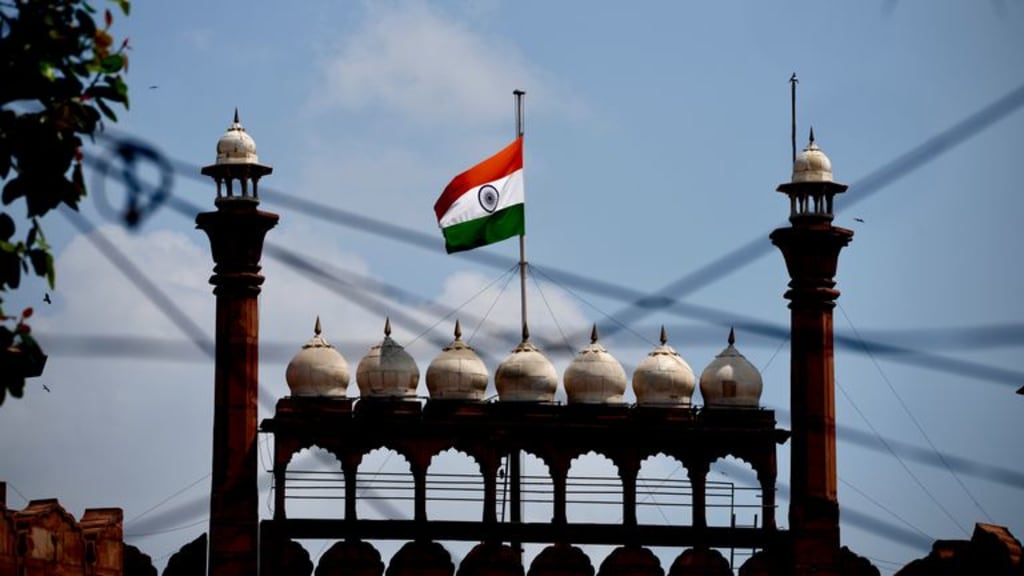
There are many myths and misconceptions about India that are widely believed, but are not necessarily true. Here are a few examples:
Myth : All Indians are Hindu. While Hinduism is the dominant religion in India, the country is home to a diverse mix of religious traditions, including Islam, Christianity, Sikhism, Jainism, and Buddhism.
Myth: India is a poor, developing country. While it is true that poverty is a significant issue in India, the country has a rapidly growing economy and is home to some of the world's wealthiest individuals.
Myth: India is a land of snake charmers and elephants. While elephants and snakes do have cultural significance in India, the country is a modern and diverse nation with a rich history and a variety of cultures and traditions.
Myth: All Indian food is spicy. While many Indian dishes do feature spices, not all Indian food is spicy. In fact, there is a wide range of flavors and ingredients used in Indian cuisine, and many dishes are mild or even sweet.
Myth: India is a land of arranged marriages. While arranged marriages are still a common practice in some parts of India, love marriages are also becoming more common, particularly among younger generations.
Myth: India is a predominantly vegetarian country. While it is true that many Indians do follow a vegetarian diet, meat is also a significant part of many Indian cuisines, particularly in non-vegetarian regions like the states of Goa, Kerala, and West Bengal.
Myth: All Indians speak Hindi. While Hindi is the official language of the Indian government and is spoken by a large percentage of the population, it is not the only language spoken in India. India is home to hundreds of languages, including English, Tamil, Telugu, Bengali, and Marathi, to name just a few.
Myth: India is a homogenous culture. India is a vast and diverse country with a rich and varied cultural heritage. Each region of India has its own distinct culture, language, and traditions, and there is a great deal of diversity within the country.
Myth: India is a land of cow worship. While cows are considered sacred in Hinduism and are protected in many parts of India, they are not worshipped as deities. In fact, cows are often used for agricultural purposes and are a vital source of livelihood for many farmers in India.
Myth: India is a backward and primitive society. India is a modern and rapidly developing country with a rich history and a diverse and sophisticated culture. While there are certainly challenges and issues facing the country, India is home to many world-class universities, businesses, and cultural institutions.
Myth: India is a country of extreme poverty and lack of basic amenities. While it is true that poverty is a significant issue in India, the country has made significant progress in reducing poverty and increasing access to basic amenities such as education, healthcare, and electricity in recent decades.
Myth: All Indians are dark-skinned. While the majority of the Indian population has a medium to dark skin tone, there is a wide range of skin tones within the country, including lighter skinned individuals.
Myth: India is a dangerous place to visit. While it is always important to be cautious when traveling to any country, India is generally a safe place to visit and is known for its welcoming and hospitable people.
Myth: Indian culture is stagnant and unchanging. India has a rich and vibrant culture that has evolved over time and continues to change and adapt to new influences and ideas.
Myth: All Indian women wear saris and bindis. While the sari and bindi are common elements of traditional Indian dress, not all Indian women wear them, and there is a wide range of traditional and modern clothing styles worn in India.
About the Creator
Keep reading
More stories from suresh dev and writers in Wander and other communities.
How to Make the Best New Years Resolutions for 2023
How to Make the Best New Years Resolutions for 2023 The start of a new year is the perfect time to set goals and resolutions for the coming year. But all too often, our good intentions fall by the wayside and we find ourselves back where we started come January 1st.
By suresh dev3 years ago in Motivation
Why Hanifaru Bay is a Dream Destination for Marine Life Enthusiasts
Hanifaru Bay, situated in the Baa Atoll in the Maldives, is one of the earth's most bizarre protected marine areas. This protected zone has a special reputation for the annual visitation of mantas and whale sharks and provides a chance for a nature enthusiast to explore the wonders of the ocean.
By ameliarosanna3 days ago in Wander
A Mountain Overture Beneath the Alps
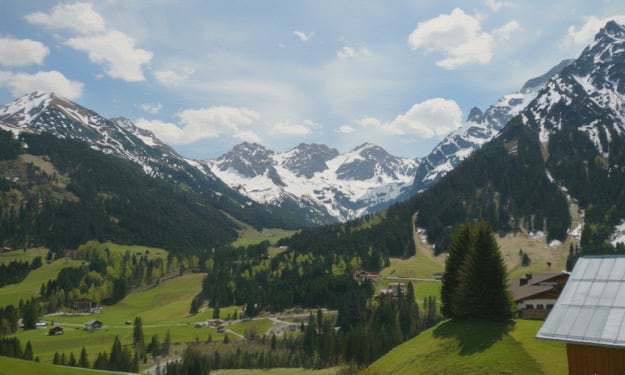
I met this mountain feast at dawn, the moment I pushed open the window. The wind rushed in, carrying the damp scent of pine needles and fresh grass. Lifting my eyes, I saw the Alps stretching their boundless arms in the morning light. The distant peaks wore crowns of silver, their snow gleaming with a sacred glow beneath the rising sun. Dark gray mountain faces, like ancient books worn smooth by time, stood in silent devotion, bearing this purity upon their backs.
By CeeCee Yan3 days ago in Wander


Comments
There are no comments for this story
Be the first to respond and start the conversation.