
The Romance of Rome
The beautiful capital of Italy


Most everyone knows the saying, “When in Rome do as the Romans do”. Rome is also known as one of the most romantic cities to visit in Europe. If you are an Old Hollywood movie fan like I am then you have seen lots of romantic movies with Rome as the background. It is truly a wonderful city with architecture, fountains, and history.
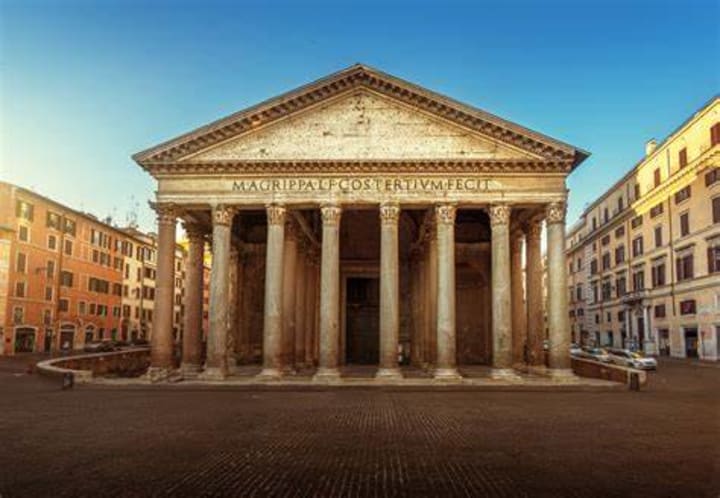
Your first steps in Rome take you to the most impressive 2000-year-old temple that is now a church – the Pantheon. This is one of the city’s best-preserved ancient monuments. It was built by Hadrian over the site of Marcus Agrippa’s 27 BC temple. This wonder has been on this spot since 120 AD. Under the pediment, you can still read the inscription - 'M:AGRIPPA.L.F.COS.TERTIUM.FECIT' or Marcus Agrippa, son of Lucius, consul for the third time built this. Hadrian had chosen to keep the original inscription even though he built over the temple. The Pantheon has a most impressive dome and is looked upon as the ancient Romans’ greatest architectural achievement and was the largest dome in the world until the 15th century. It is still the largest unreinforced concrete dome in existence.

In ancient Rome, the Colosseum was the great gladiator arena where gladiators fought each other and wild animals like lions. It was originally called the Flavian Amphitheater and was made from travertine or limestone and covered by a huge canvas awning that was held up by 240 masts. The arena had tiered seating and beneath this was an underground complex called the hypogeum where the wild animals were caged and stage sets were prepared. There were 80 entrance arches called vomitoria that let spectators enter and get seated quickly.
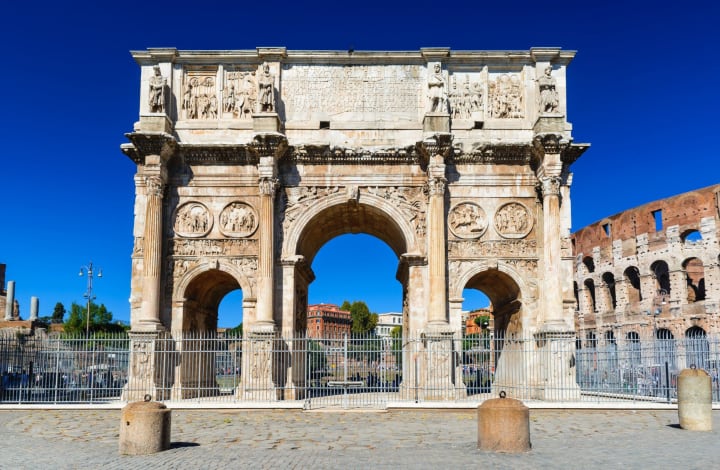
Beside the Colosseum, you'll find the Arch of Constantine. This is a triumphal arch that was erected by the Senate to honor the emperor. He was the “liberator of the city and bringer of peace” after his victory in the battle of the Milvian Bridge in 312.

Basilica di San Pietro or St. Peter’s Basilica is Italy’s most spectacular cathedral. It was built on top of a 4th-century church. Completed in 1626 it took 150 years to build. Here you can see some fantastic works of are among them three of Italy’s most celebrated masterpieces – Michelangelo’s Pieta, his soaring dome, and Bernini’s 29m high baldachin over the papal altar. The original design for the basilica was drawn up by Bramante but it was Michelangelo who simplified the building plans and with that created his greatest architectural achievement – the dome. Unfortunately, Michelangelo didn’t live to see the dome completed and it was finished by Giacomo della Porta and Domenico Fontana. Once the dome was in place Carlo Maderno came into the project in 1605 and designed the monumental facade and lengthened the nave towards the piazza.
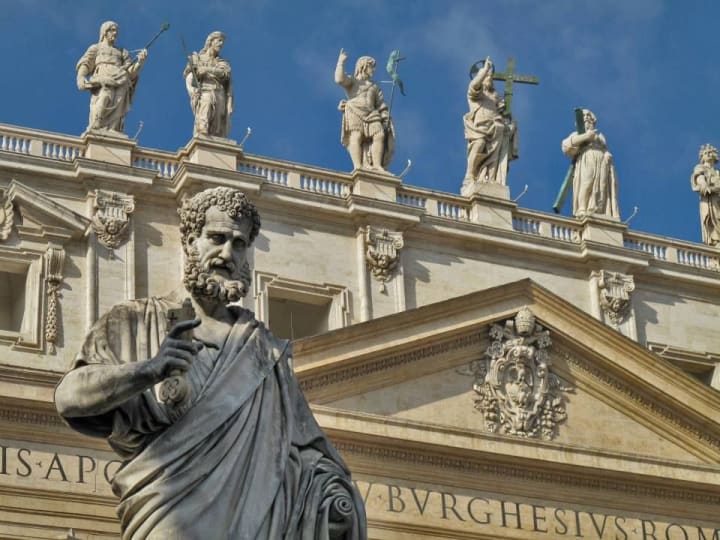
The Facade has eight 27m high columns that support the upper attic upon which stand 13 statues representing Christ the Redeemer, St. John the Baptist, and the eleven apostles. The central balcony is known as the Loggia della Benedizione and from here the Pope delivers his blessing at Christmas and Easter.
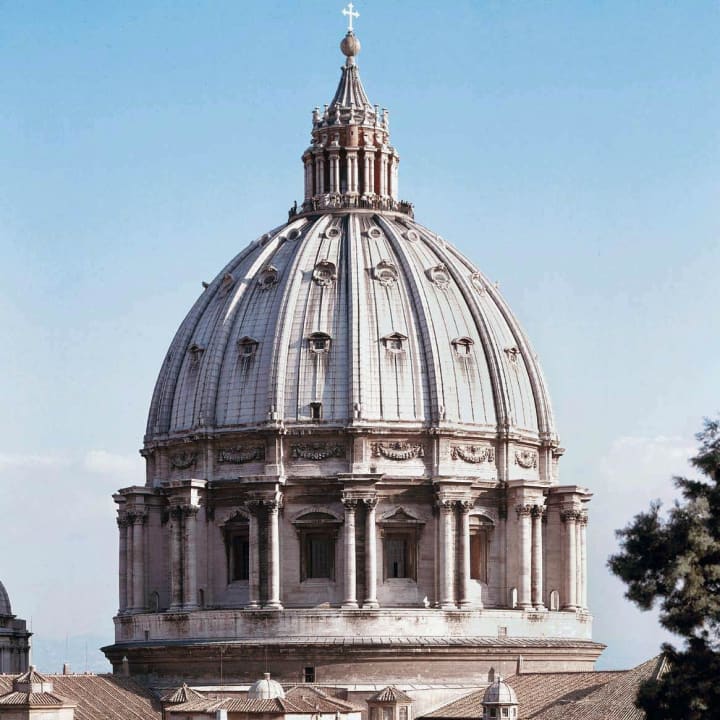
You can climb the done taking the entrance to the right of the basilica. It takes 551 steps to get to the top or if you prefer you can take a small lift halfway up and climb the last 320 steps. It is a steep, narrow climb but once you reach the top the rooftop views are awesome and you’ll find yourself 120 m above St. Peter’s Square.

If you want to see one of the world’s greatest collections of art head for the Vatican Museums founded by Pope Julius II in the early 16th century. Here you can enjoy seeing Egyptian mummies, Etruscan bronzes, ancient busts, and paintings by old masters and modern paintings. Among the highlights are a collection of classical statuary, a suite of frescoed rooms by Raphael, and the Sistine Chapel painted by Michelangelo. The museums have found their home among the decorated rooms and galleries of the Palazzo Apostolico Vaticano. This is a 5.5-hectare complex that includes two palaces – the Vatican Palace and Belvedere Palace both of which are joined by two long galleries. Inside are three courtyards – the Cortile della Pigna, the Cortile della Biblioteca, and the Cortile del Belvedere.
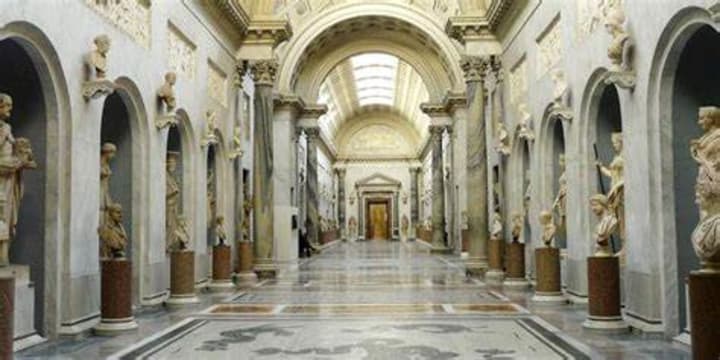
Pinacoteca displays the papal picture gallery with Raphael’s last work, La Trasfigurazione or Transfiguration, and paintings by artists such as Giotto, Fra Angelico, and many others.
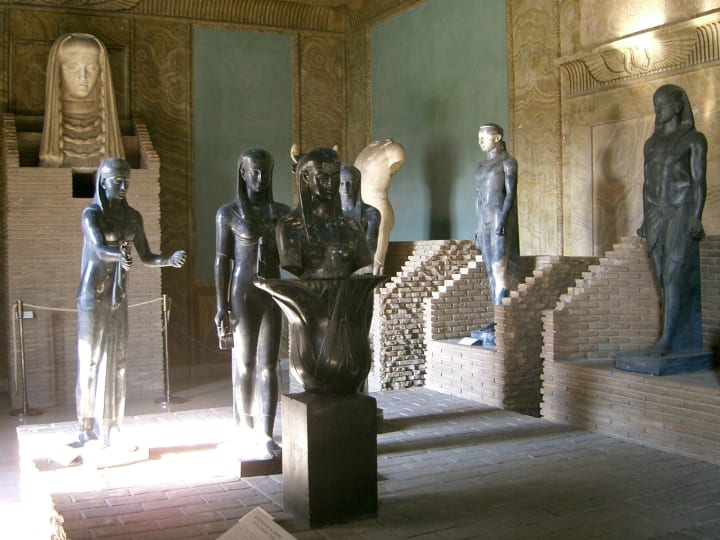
The Egyptian Museum has interesting pieces taken from Egypt during Roman times. Here you can see painted sarcophagi and mummies and so much more.
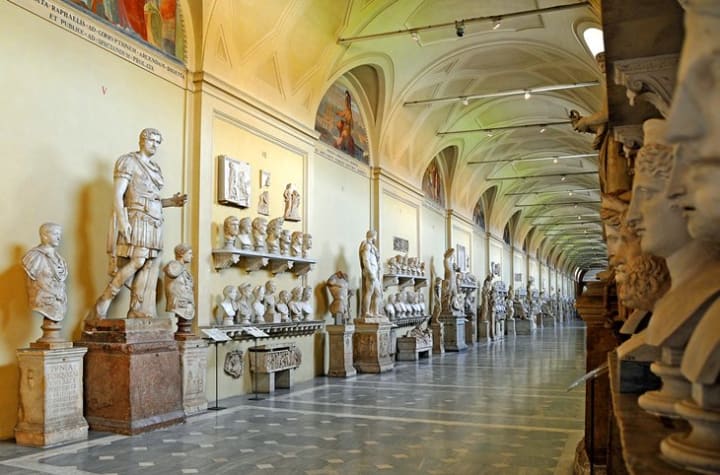
The Museo Chiaramonti has walls lined with thousands of statues.
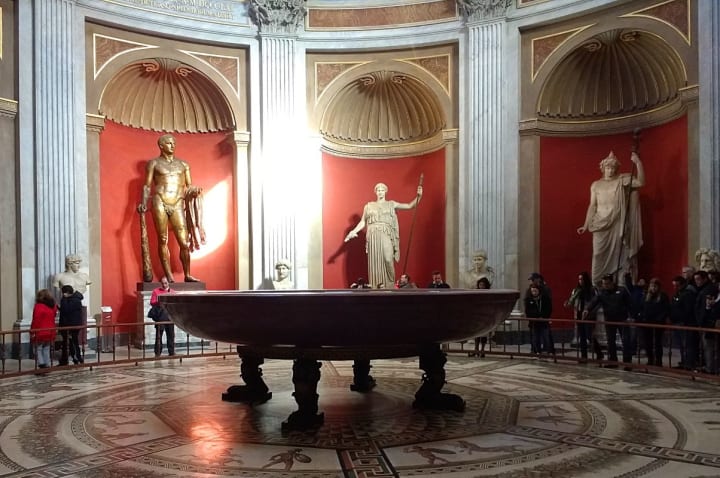
Museo Pio-Clementino has the finest classical statuary.
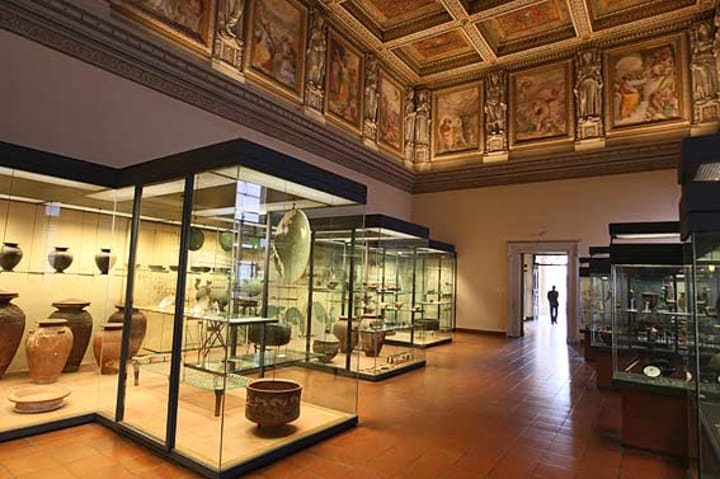
Museo Gregoriano Etrusco has artifacts that were unearthed in the Etruscan tombs of northern Lazio. There are also Greek vases and Roman antiquities on display.
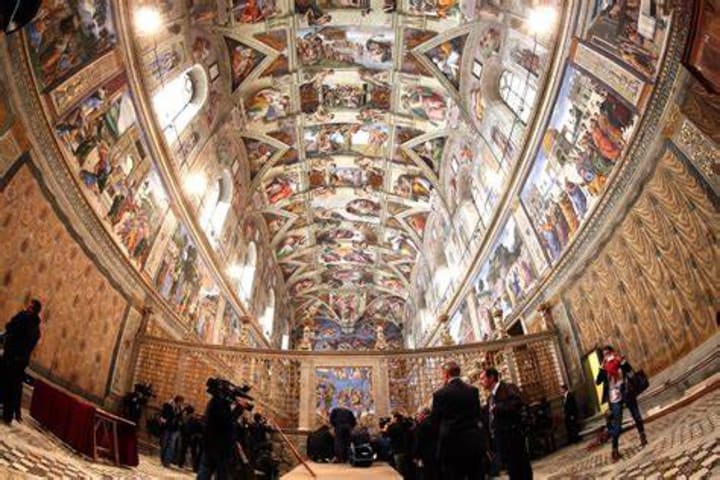
The highlight of the Vatican museums is the Sistine Chapel. The frescoed ceiling is Michelangelo's most famous artwork.
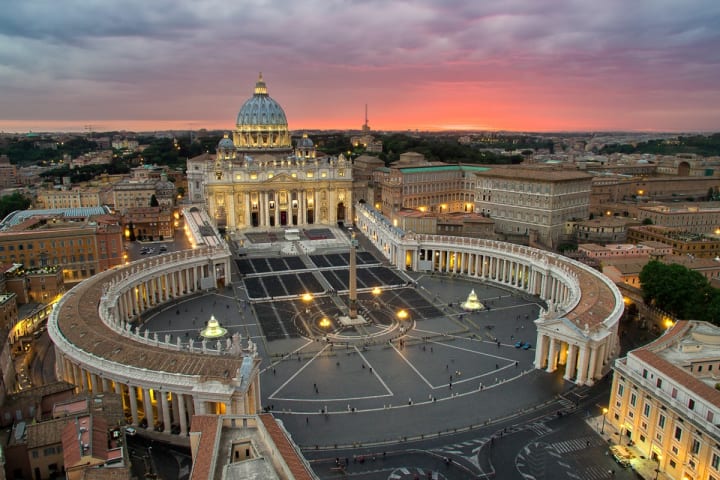
Vatican City is the smallest independent state in the world, enclosed by Vatican Walls.
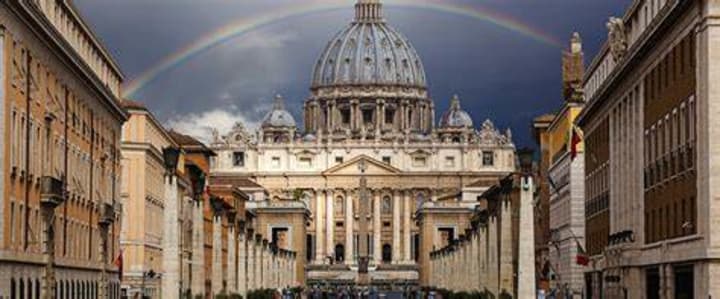
Inside are the Vatican Palace and gardens. Inside the palace are the Raphael Rooms, Borgia Apartments, and the Vatican Library. St. Peter's Basilica and St. Peter's Square, an area that is ruled by the Pope, the supreme head of the Roman Catholic Church.
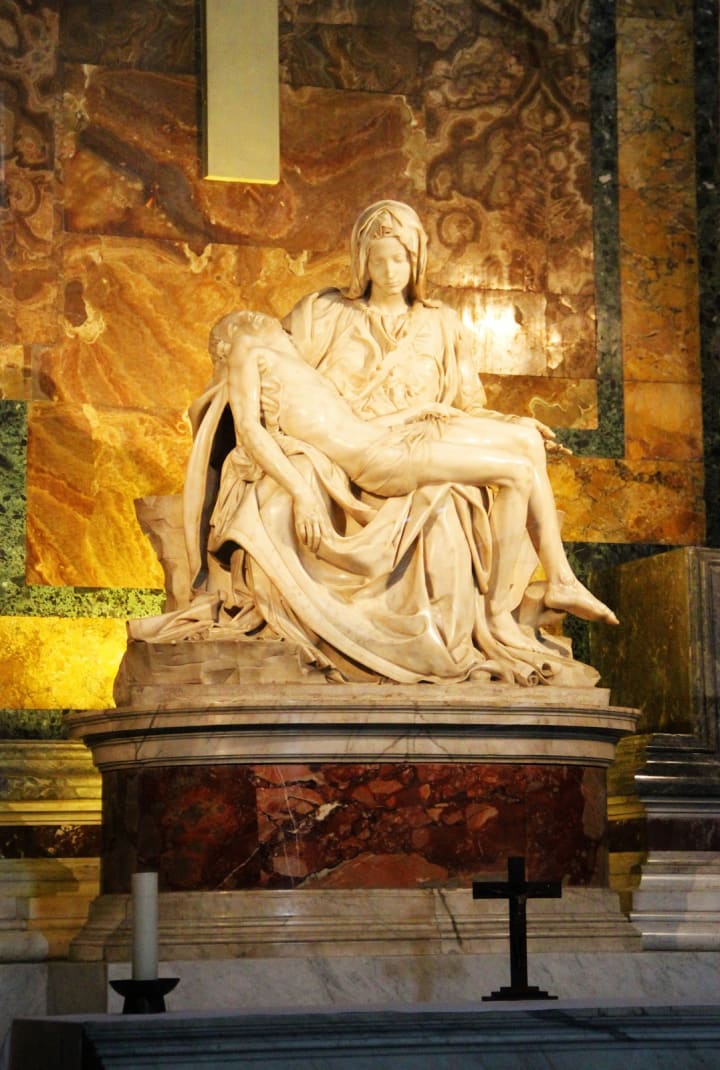
Inside the basilica is Pieta, the masterpiece created by Italian Renaissance artist Michelangelo.
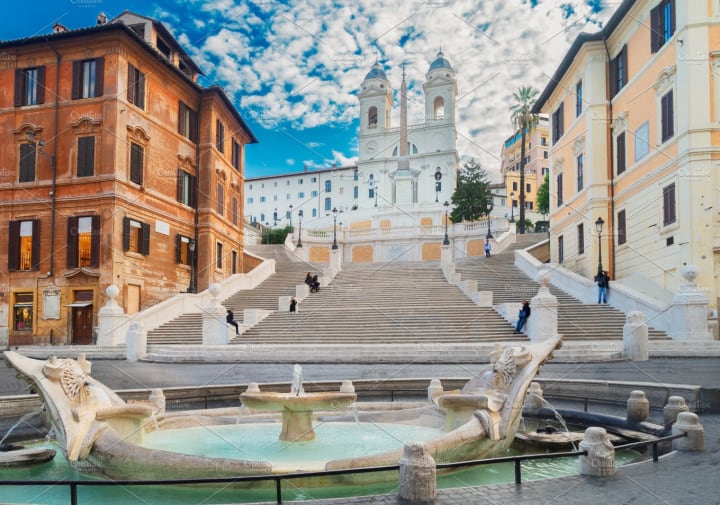
Visitors love to sit and people-watch on the Spanish Steps. These can be found at the Piazza di Spagna named after the Spanish Embassy to the Holy See. The staircase was designed by Francesco de Sanctis and was built in 1725. This landmark church was commissioned by King Louis XII of France and consecrated in 1585. Here you can see some amazing frescoes by Daniele da Volterra. At the foot of the step is the Barcaccia or the sinking boat fountain believed to be created by Pietro Bernini.
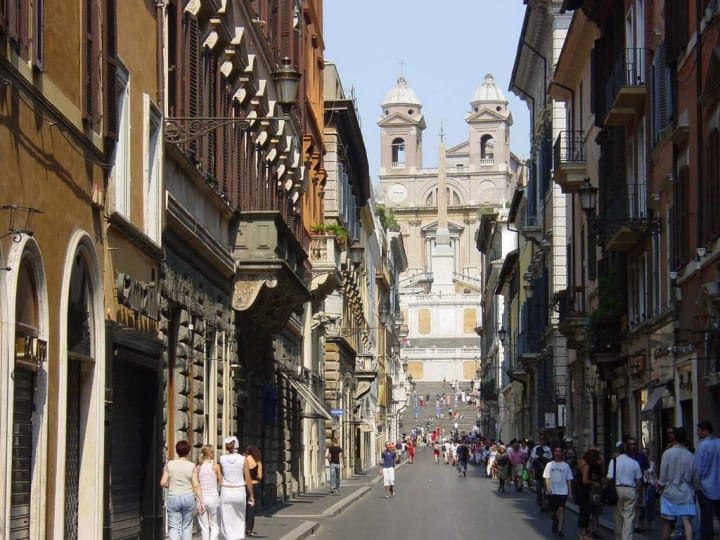
Via Condotti stretching southwest from Piazza di Spagna, is the most fashionable shopping street in Rome.
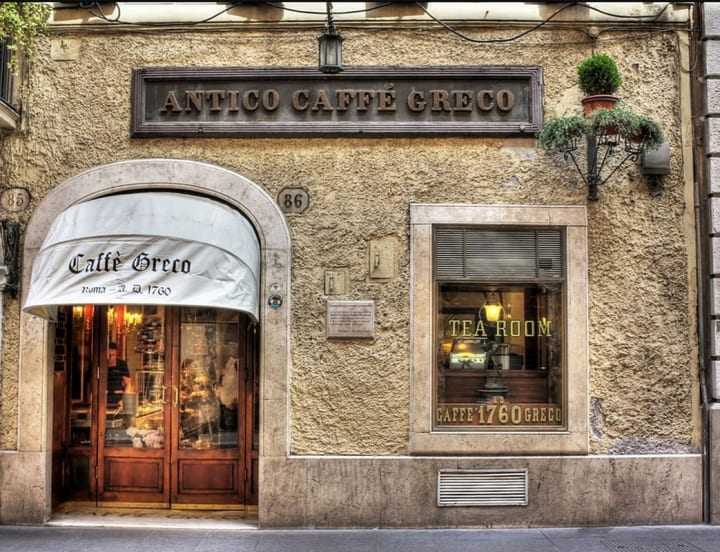
Visit the Caffe Greco which is famous for the artists, writers, and musicians who have frequented it.
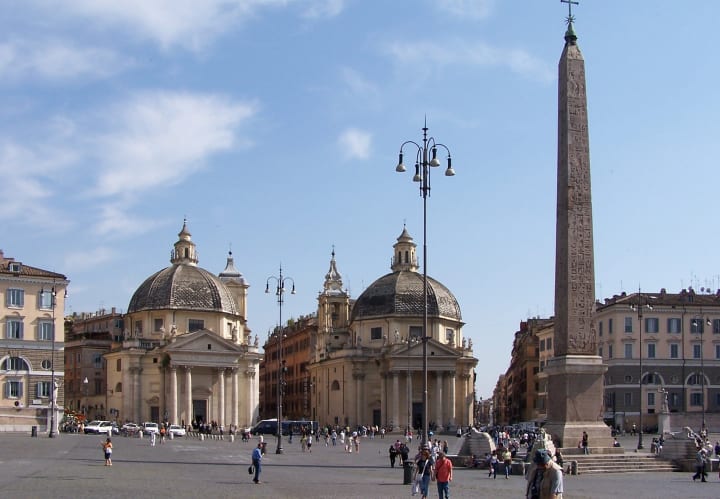
Piazza del Popolo was designed in the early 19th century as the northern entrance to the city center.
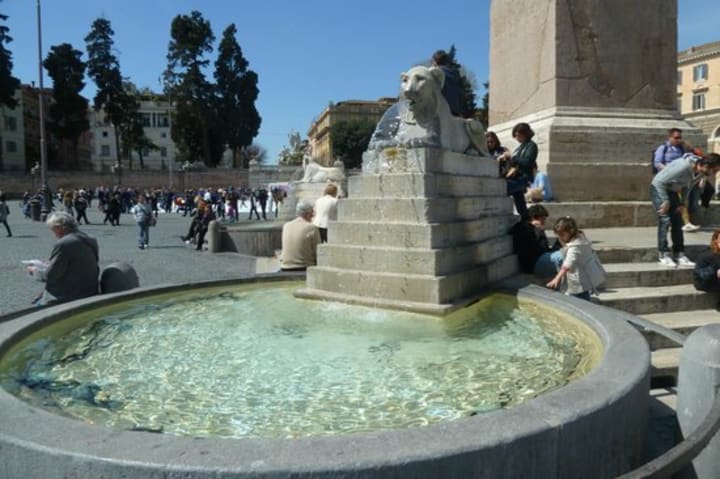
At the center of the piazza is the Egyptian obelisk, called Flaminio, rising above a fountain, with four white marble lions spouting water into four round travertine pools.
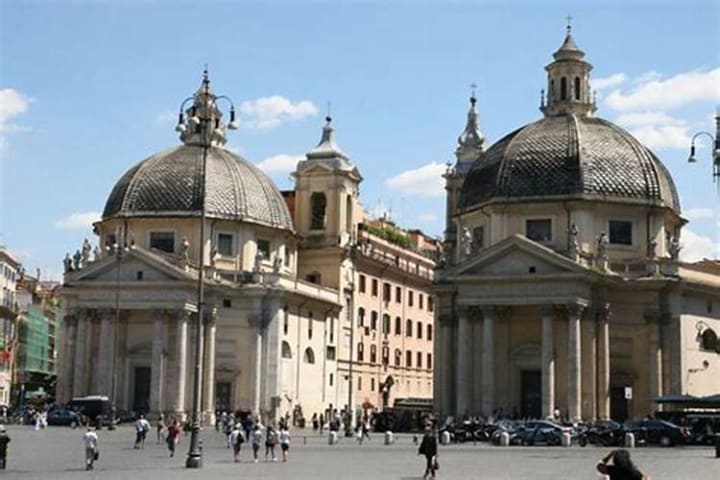
On either side of the Via Coorso are the twin churches of Santa Maria dei Miracoli and Santa Maria in Montesanto.

At the opposite side of this grand piazza is the Augustinian Basilica of Santa Maria del Popolo.
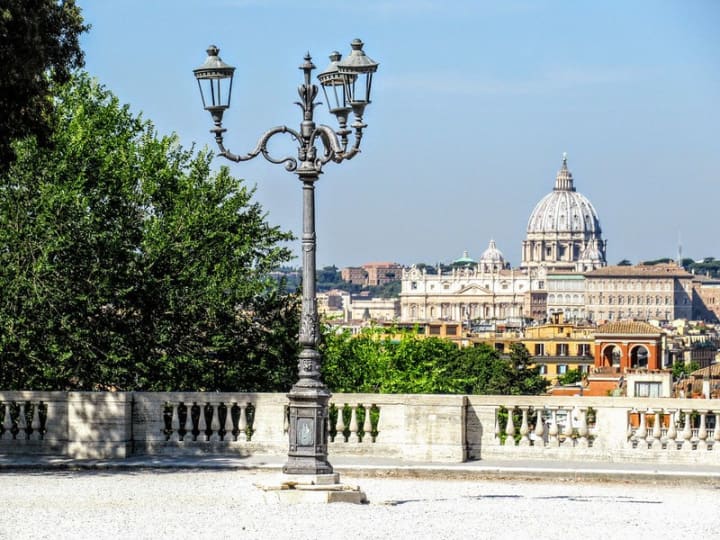
Take the steps next to the basilica to the Pincio Terrace for great views over the piazza and across Rome.
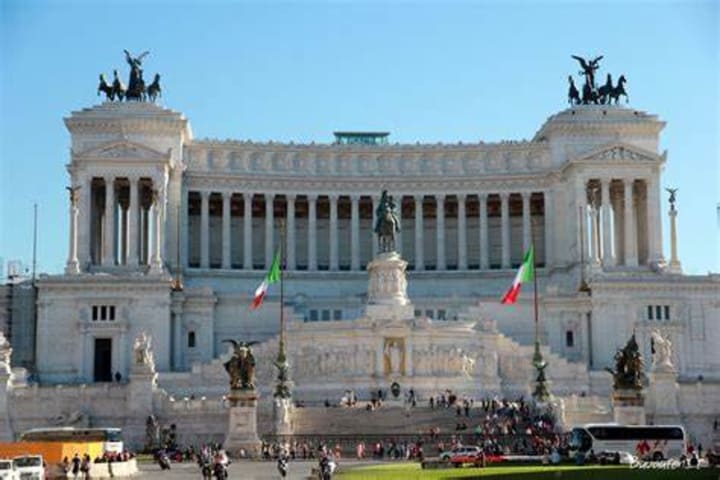
Vittorio Emanuele II Monument is considered one of the national symbols of Italy. This classical structure adorns Capitoline Hill, the symbolic center of ancient Rome. It was built between 1885 and 1935 and is a monument to King Vittorio Emanuele II, the first king of unified Italy. He is represented here by an equestrian statue. A lift takes visitors to the topmost terrace for 360-degree views of Rome.
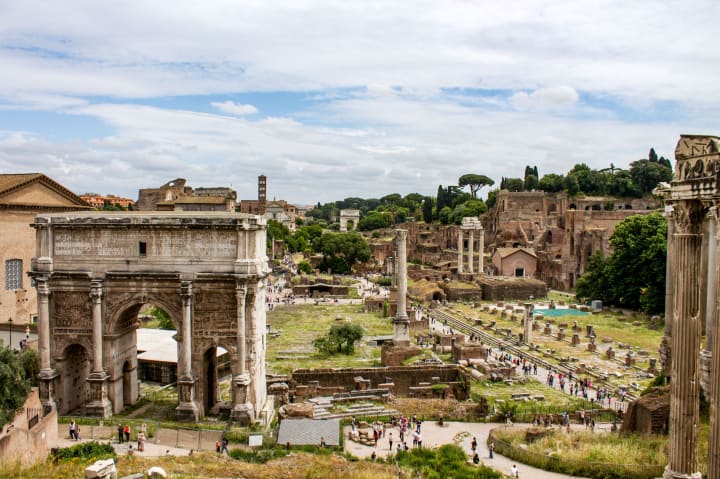
Between the Roman Forum and the Circo Massimo, you’ll find the Palatino or Palatine Hill. This is a relaxing place with towering pine trees, amazing ruins, and most impressive views. It was at this point that supposedly Romulus founded Rome in 753 BC and the emperors of Rome lived in luxury. This is the most central of Rome’s seven hills and at one time the Palatino was ancient Rome’s most exclusive neighborhood. Emperor Augustus lived here all of his life and once it fell into disrepair in the Middle Ages churches and castles were built over the ruins. During the Renaissance wealthy families created gardens on this hill. Go to see the incredible ruins and take in the spectacular views.
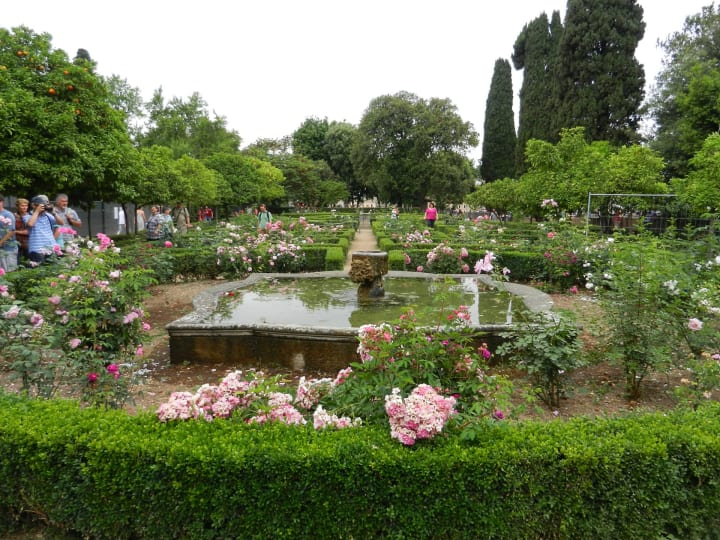
The Farnese Gardens on the hill were laid out in the 16th century. Here is a lovely park with terraces, pavilions, lawns, flowers, trees, and fountains.
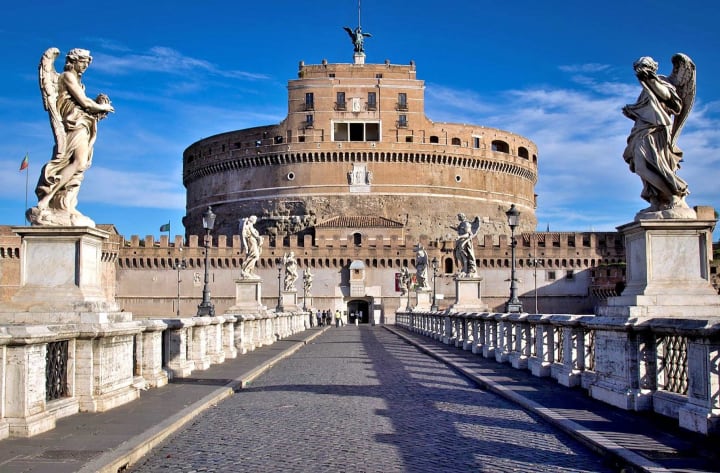
Castel Sant'Angelo is a huge drum-shaped structure that overlooks the Tiber River near the Vatican. It has been a papal residence, a fortress, and now a National Museum. The castle is reached by a pedestrian bridge that is lined with statues of angels and ascends to its five floors on a spiral ramp.
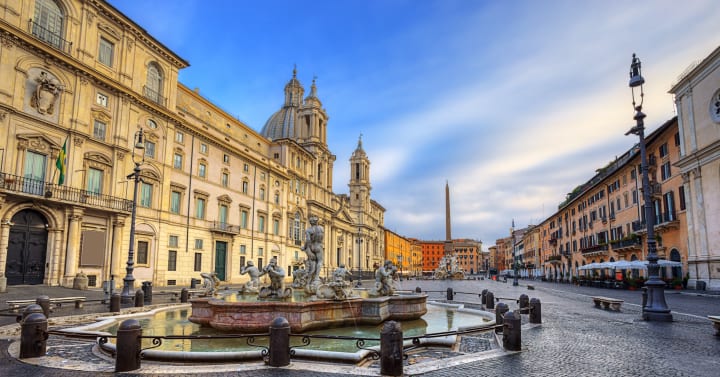
Don’t miss Piazza Navona with its wonderful fountains, Baroque mansions, and fascinating street artists and hawkers. This is Rome’s showcase square and it was built over the 1st century Domitian’s Stadium. In the 15th century, it was paved over and for practically the next 300 years it was home to the city’s main market.
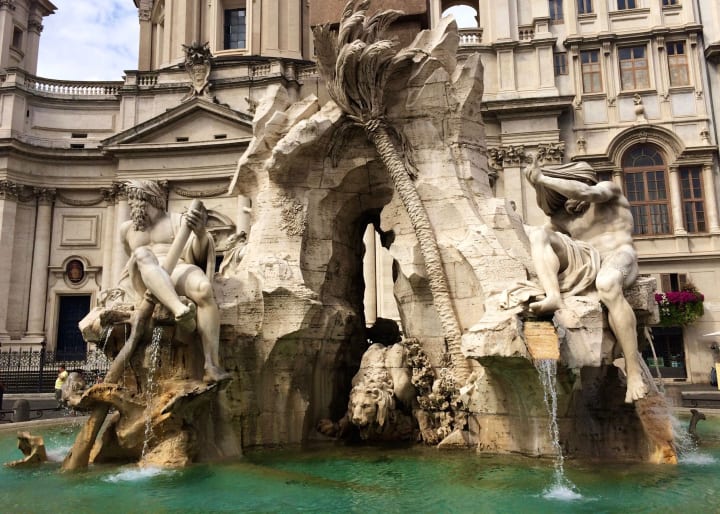
The square’s centerpiece is Bernini’s Fontana dei Quattro Fiumi. This fountain depicts personifications of the rivers Nile, Ganges, Danube, and Plate. At the north end of the square, you’ll find the 19th-century Fontana dei Nettuno where a Moor is holding a dolphin surrounded by Tritons also by Bernini.
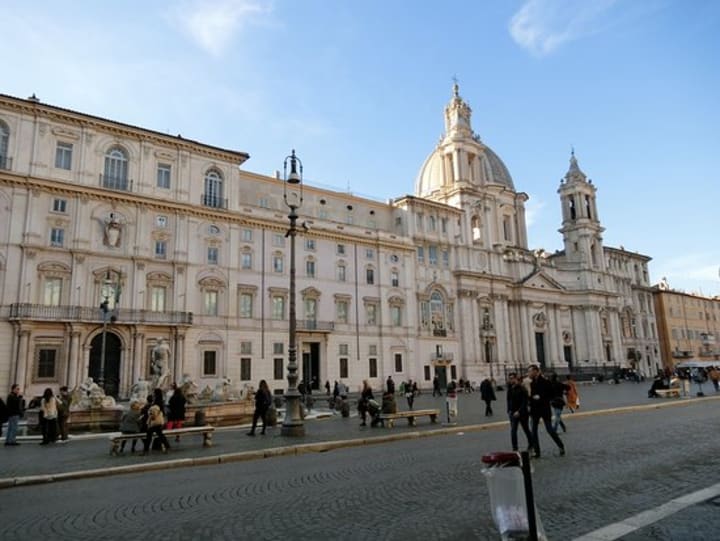
The largest building in the piazza is the 17th-century Palazzo Pamhilj which was built for Pope Innocent X and now houses the Brazilian Embassy.
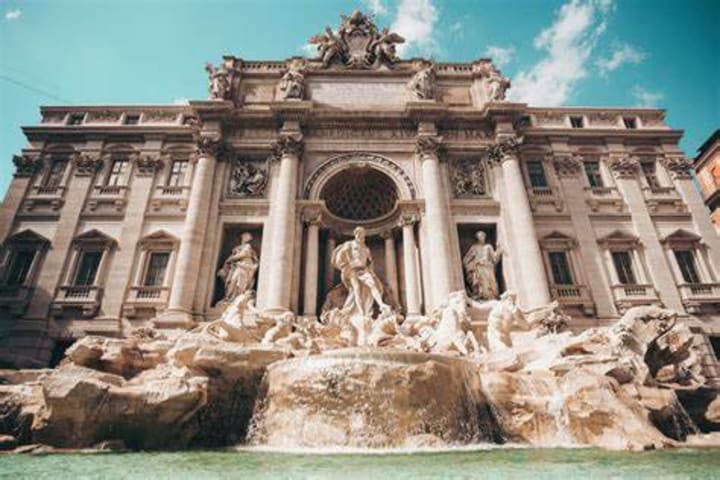
The Trevi Fountain is the largest Baroque fountain in Rome and a most popular tourist attraction. It is located at the junction of three roads marking the terminal point of Acqua Vergine, the revived Aqua Virgo that was one of the aqueducts that supplied ancient Rome with water. Coins are to be thrown into this fountain using the right hand over the left shoulder. It was the theme of the movie “Three Coins in the Fountain” and an Academy Award-winning song. It has been estimated that around 3,000 Euros are thrown into the Trevi Fountain every day and this money has been used to subsidize a supermarket for the needy of Rome. I think that alone is a blessing and will give the people who threw the money good luck.
About the Creator
Rasma Raisters
My passions are writing and creating poetry. I write for several sites online and have four themed blogs on Wordpress. Please follow me on Twitter.
Keep reading
More stories from Rasma Raisters and writers in Wander and other communities.
Worth the Wait: Puerto Viejo, Costa Rica
Beach bumming in a small Caribbean beach town sounded like a perfect way to end our 6-month trip through Mexico and Central America. Or so we thought. The foul, fishy stench of rotten seaweed hit our nostrils as we stepped from the cramped bus and looked out at a rather depressing, empty, and underwhelming black sand beach. It was pouring with rain, and we had to quickly fish out our ponchos. We thought, this couldn’t be it, could it?
By Sh*t Happens - Lost Girl Travel8 days ago in Wander
Lost in Translation: How Getting It Wrong in Asia Taught Me How to Travel Right
My first morning in Hanoi started with a sensory assault. I was sitting on a tiny blue plastic stool, knees touching my chin, watching a woman whisk an egg yolk into a cup of robusta coffee. The air smelled of charcoal smoke, cilantro, and exhaust fumes. It was chaotic, loud, and utterly mesmerizing.
By Eleni N. Markou5 days ago in Wander



Comments
There are no comments for this story
Be the first to respond and start the conversation.