
Before I moved to the Pacific Northwest, I had no clue what a steelhead was. I was your typical 18-year-old suburban smartass who probably would have guessed that the word “anadromous” had something to do with David Bowie’s wardrobe.
I moved to The Palouse to attend the University of Idaho in the fall of 2009. I was attracted to this place because of my love for the outdoors and the abundant access to fishing and hunting. I was studying finance and accounting, which was a far cry from a trout stream, but I still managed to spend a fair amount of time afield. During my last semester, my schedule was filled with upper division finance and accounting courses, but I had one open slot for an elective. My girlfriend convinced me that I should fill it with an elective that I actually enjoyed instead of another mundane money class. I scrolled through the course list until one class caught my eye. Fly Tying 101. It was a one credit, “pass/fail” rec course that I honestly wasn’t all that excited about. Regardless of my skepticism, I signed up for it hoping to pick up a life skill that I might use someday.
For one hour a week I sat in the basement of Memorial Gymnasium with a room full of hackie sack majors and learned how to affix feathers and fibers to the shank of a hook. The idea was to learn how to tie some flies that I could ultimately use to catch a fish. The problem was that most of the early flies that we tied in that class were steelhead patterns. Again, still had no clue what a steelhead was at this point. Most classes start with these types of flies because they are traditionally larger and somewhat easier to tie than trout flies. Size 4 Woolly Buggers and Butt Skunks were a little less intimidating than stimulators and size 22 mayflies.
After graduation I followed my future bride south to the Lewis Clark Valley and found myself surrounded by a fishing culture that was steelhead centric. These people live and breathe it. Rightfully so. This valley is the furthest inland seaport in the west and it holds the confluence of two major western waterways. A large amount of money changes hands in the LC valley on an annual basis surrounding this species alone and it is not hard to understand why folks are captivated by its advent.
My wife’s family is from the central part of the state where freshwater arteries pulse through vast expanses of wilderness and cattle country. My first exposure to this remarkable fish took place with her brothers, not far from their parents’ house...no flies were involved. Like all fisherman, they have their ways of doing things that have been passed down for more than one generation and I wasn’t going to be the guy that bucked the trend. After all, I was on thin ice to begin with as the guy that was dating their sister. Fly fishing just wasn’t their technique of choice. I’ve always said that I simply consider myself to be an angler, plain and simple, and I don’t discriminate against the method. I just prefer one over the other.
These sea run creatures can be hard to target and even harder to entice. You’re talking about and fish that has traveled several hundred miles up a river. It has only traveled that river one other time in its life and its sole charter is procreation. These fish don’t care about feeding, and they are not taking time to watch the leaves change. They are on a mission to pass their genes for another generation and they overcome monumental obstacles to do so. I was likely the least of their worries. From the outside looking in, pursing steelhead almost seemed like a fool’s errand…That was until I landed one on a casting rod. The sheer strength and power of that fish was astounding to me. I got it to the bank, primed for a grip and grin, but both of my brother in-laws looked at me with blank stares as if to suggest the fish was far too small for a picture. It left me wondering how big a fish needed to be to spark their interest, and how much bigger these things got.
Given that the first steelhead I ever caught was not on a fly rod I still felt like there was more of the mountain left to climb. For some reason I wouldn’t be satisfied until I caught one on a fly rod and the internal drive to do so barked like a pissed off dog. Fly fishermen are a different breed that tend to be the natural antagonists of the fishing world. They are the guys and gals that watch someone wrangle an 8ft sturgeon from a kayak and say, “yeah but how cool would it be to catch one on a fly?”. I am certainly guilty of this, especially when it comes to steelhead, but I stand by my beliefs. You haven’t lived until you’ve caught one on a fly rod.
That same fall I decided it was time to dust off the flies I had tied a few months prior and buy myself a rod. I don’t like to use the word cheap when describing anyone, but others have painted me with that brush. I was not overly enthusiastic about spending several hundred dollars on a new fly rod and reel that would be specific to one species of fish. So, I went cheap…real cheap. I bought a kit rod online from a big retailer with a model name that was supposed to conjure images of wind-swept freestone streams. I found it tacky, which should have been my first sign. Don’t ever buy a rod that sounds like it was named by Bob Ross.
Nonetheless, I got an 8wt rod, large arbor reel, backing and float line shipped straight to my apartment door for less than the cost of my waders. I had read horror stories of big fish on shoddy gear, but I felt that I had little cause for concern. Honestly, I hadn’t yet convinced myself that I was capable of catching a steelhead on a fly rod.
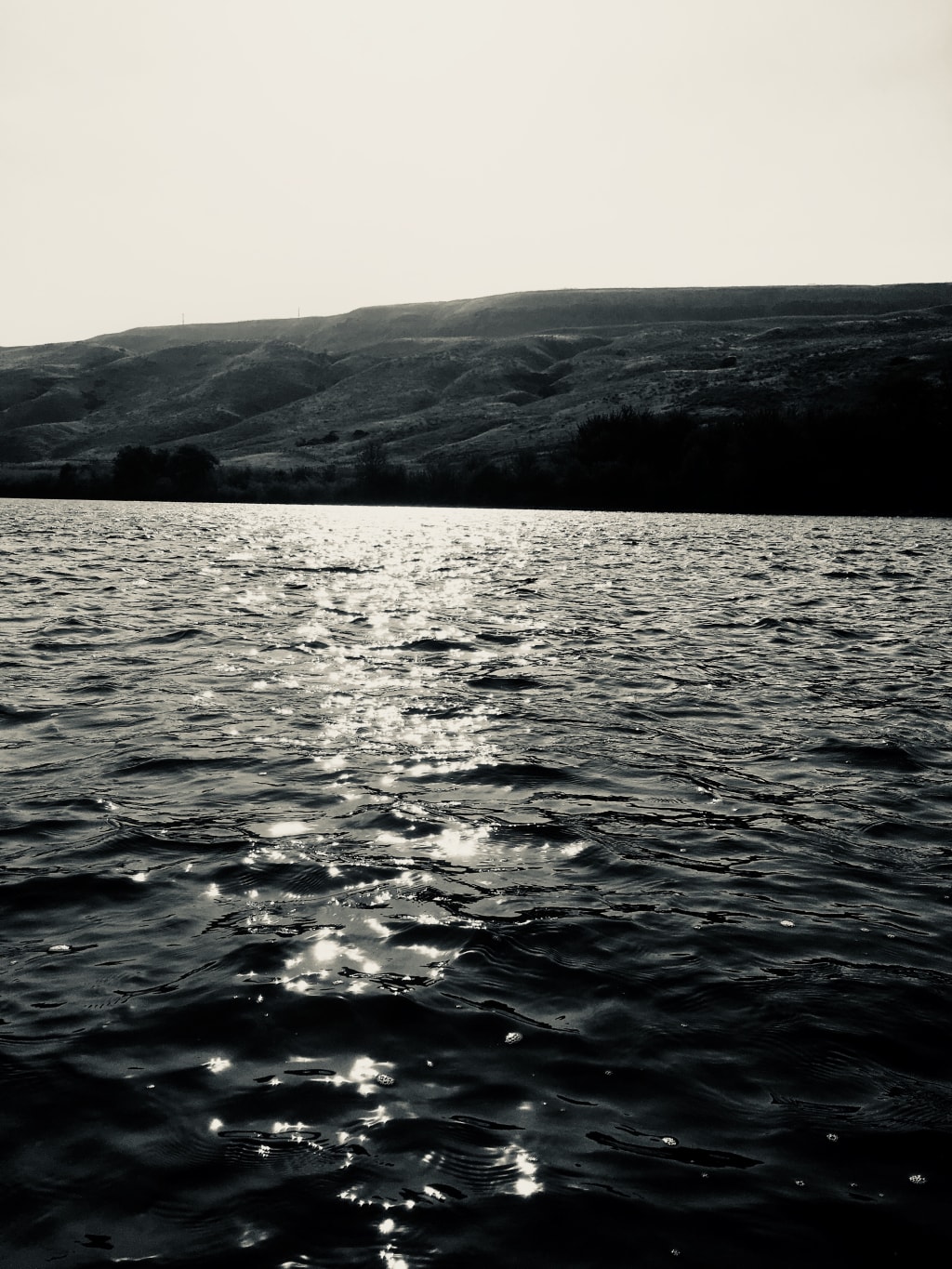
It was mid-November, so there was not much time between 5pm and dark to wet a line but I was determined to call myself a steelhead fisherman. I was a far cry from tube flies and spey rods, but we all have to start somewhere. Every day after I punched the clock I would drive to the same section of river and rig up the same fly to swing the same riffle. It was a bottlenecked stretch of water with a small shelf and decent staging area along the near bank where the fish would stop and rest before climbing the next run.
Days came and went without a whiff of a fish and my motivation began to deteriorate. At the time, I was thinking that drinking gin and tying flies would be a more productive use of my energy but the fisherman inside of me was sodden with guilt. I felt like if I gave up, I would somehow be insulting the fish and the past generations of anglers that have pursued them with the same defeats. I soldiered on and fished the same water and the same fly day in and day out mainly because I didn’t know what I was doing. I picked the only fly in my box that looked half decent and the skinniest stretch of river within 10 minutes of the office. It seemed like a fair approach for a rookie.
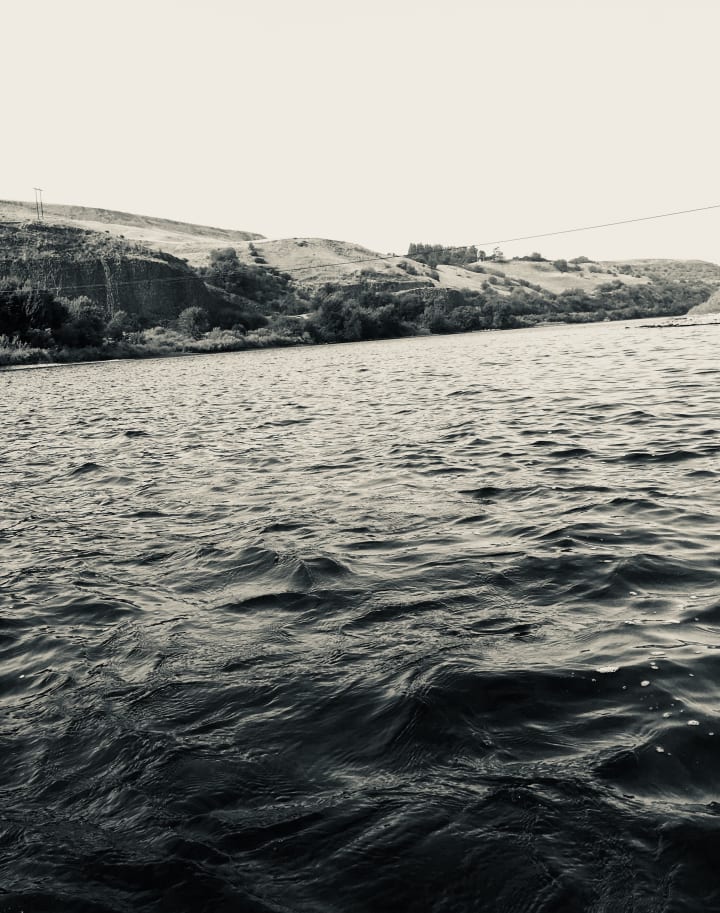
The river was cold. Anyone who has ever spent more than an hour fishing for steelhead in breathable waders knows the feeling. You find yourself in a trance, casting and stripping until you eventually shake yourself awake and realize that you are numb from the waist down. It’s the worst possible time to hook a fish, which means that’s usually when it happens.
I was slowly stripping my fly back through a small staging pool when suddenly it felt like a mule had fallen asleep on the end of my float line. It took me a minute to process what was happening. My first reaction was one of skepticism. I was convinced for a split second that I was snagged on the bottom…until I set the hook. It was at that moment that all fishing dexterity in my body ceased to exist. The animal went completely berserk and I felt like a two-year-old walking a water buffalo. I was hooked into a large steelhead that no longer had any intention of swimming upstream. The fish took a hard-right turn into heavy current and headed straight down river. I was lucky enough to see him breach the water twice before I hit my backing.
One of the horror stories that I had read, regarding cheap rods and reels, was centered around whether you should let someone else tie your nail knots. I was new enough to fly fishing that I didn’t know what the hell a nail knot was, let alone ever have a fish run me into to my backing. For those of you that are also confused by that term…a nail knot is the connection between your float line and your backing. It is a self-tightening knot that is supposed to be extremely strong when tied and cinched correctly. The only other time I had ever seen my backing was when I stripped all the line off of my Dad’s old reel to dig a piece of tippet out of the bearing. Regardless, the steelhead didn’t care. The nail knot rolled through my fingers and as soon as I placed tension on the backing the knot came untied and it was all over. It clearly hadn’t been “tied and cinched” very well. That beautiful, powerful, majestic bastard took my fly, tippet and float line down the river with him. It was all over in a matter of seconds.
I was numb and shaking with adrenaline. It’s like thinking you’ve won the lottery only to find out your brothers taped the recording and forged your ticket. An extreme, nerve wracking high followed by a shot to the marbles. I slowly turned and made my way back to the bank without drowning. When I hit dry land, I had my bargain rod clutched in both hands with every intention of snapping it over my knee like Bo Jackson. I’ve lost plenty of fish in my life but none with that level of drama. The walk back to the pickup only took a few minutes, although it felt much longer as I kept peering down at the river yearning for a glimpse of my float line. Maybe I could miraculously handline the beast in. Thoughts of grandeur faded to reality.
I started the truck and drove straight to the fly shop, saddled my pride and fixed my rig. This time I checked the knot myself.
Since that sad November day, I have managed to land a few steelhead on a fly rod, yet not as many as I would like to claim. I can honestly say that it is worth the frustration. The countless hours of casting, often times in unpleasant conditions, can pay dividends in the form of fly fishing moxie. Large anadromous fish are like trophy bulls or monster pintails. The journey to catch these fish is eerily similar to that of a hunt. You may spend hours or days waiting for the elements to align with no payoff. Sometimes we get lucky and sometimes we don’t. Part of what we tend to forget about fishing is that there is a certain, intangible piece of the experience that depends on perspective. Our frame of mind can be the difference between a good day and a bad day regardless of productivity. Henry David Thoreau said, “many men go fishing all of their lives without knowing that it is not fish they are after”. The journey becomes convoluted when we start to lust over an animal and steelhead fishing is certainly a great illustration of this fact. People that don’t share my passion for hunting and fishing like to quantify my successes and failures by the number of fish caught or ducks shot. In all reality, the activity itself is supposed to be the payoff and we have to be careful to maintain that perspective.
About the Creator
Sam Lavigne
I am a hunter, fisherman and father living in the Pacific Northwest. Most of my writing is related to one or all of those things. I hope you enjoy!
Keep reading
More stories from Sam Lavigne and writers in Wander and other communities.
Top 10 Fly Fishing Mistakes/Tips
We’ve all done it. You spend days and weeks (sometimes longer) waiting for a fishing trip or a weekend on the river with grand ideas of trout as fat as footballs. And then we hit the water…only to realize that we forgot a crucial piece of gear, left our lunch sitting on the kitchen counter, or god forbid, found someone else sitting in our fishing hole. Sometimes the only way to avoid these problems is to make sure they don’t happen in the first place. This is obviously easier said than done but, a small amount of preparation and pragmatic thought can set you up for success.
By Sam Lavigne5 years ago in Wander
Worth the Wait: Puerto Viejo, Costa Rica
Beach bumming in a small Caribbean beach town sounded like a perfect way to end our 6-month trip through Mexico and Central America. Or so we thought. The foul, fishy stench of rotten seaweed hit our nostrils as we stepped from the cramped bus and looked out at a rather depressing, empty, and underwhelming black sand beach. It was pouring with rain, and we had to quickly fish out our ponchos. We thought, this couldn’t be it, could it?
By Sh*t Happens - Lost Girl Travel4 days ago in Wander




Comments
There are no comments for this story
Be the first to respond and start the conversation.