

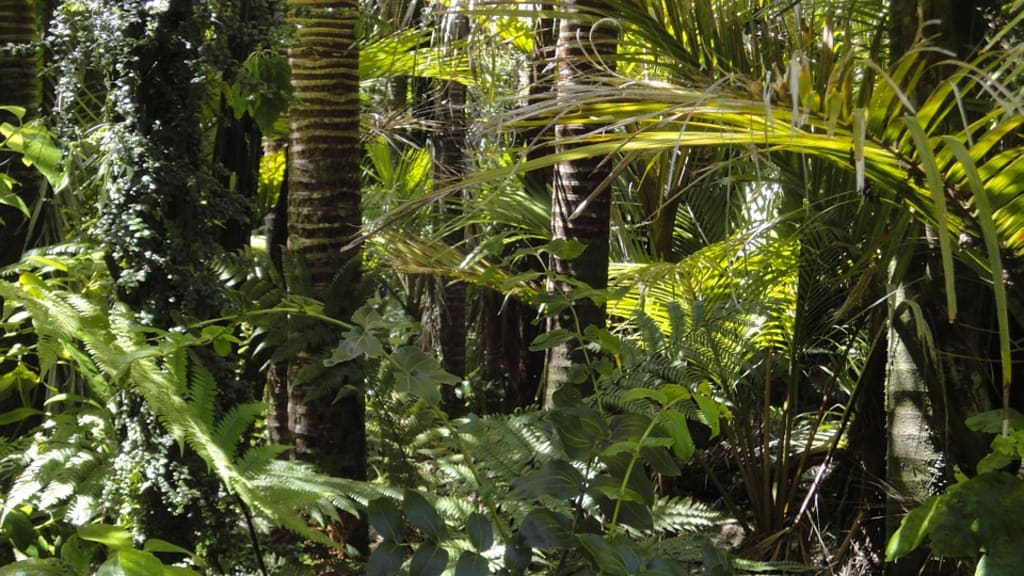
Into the darkest untamed jungles of Amazon went Percy Fawcett, the man who never returned. The Enigma of Col. Percy Fawcett has fascinated the media and explorers ever since he vanished in the Amazon rain forest some 90 years ago. He was considered the greatest explorer of his day. Like Amelia Earhart a decade later, both leave a lasting legacy of mystery surrounding their disappearances. To first find out what motivated Percy Fawcett to undertake such perilous journeys only to vanish without a trace is to closely identify with the man himself.
With his steely blue eyes, manicured beard and trademark Stetson hat, Colonel Percy Fawcett looked like the quintessential swashbuckling adventurer that he actually was. A 20th century Indiana Jones. His resume included a stint as a British artilleryman in Sri Lanka, a tour of duty in World War I and as a spy in Morocco. It was in 1906 when the President of the Royal Geographical Society in London asked the Colonel if he knew anything about Bolivia. Already eager to fine tune his surveying skills sparked a renewed interest into the vast uncharted lands of South America. With the Royal Geographical Societies backing, Colonel Fawcett embarked on what was to become seven expeditions into the wilderness of the Amazon, the last great blank space in the world.
So, in 1906 Fawcett ventured into previously uncharted territory of Bolivia and Brazil. Dodging poisonous pit vipers, massive anacondas and other deadly insects and animals not to mention savage native Indian tribes, the first of Fawcett's expedition succeeded in mapping some of the Amazon basin. His exploits grabbed headlines around the world and won him the prestigious Founders Gold Medal from the Royal Geographical Society. His journals inspired Sir Arthur Conan Doyle to write the 1912 novel The Lost World. As with many a great adventurer, they get caught in a web of intrigue and fascinating tales of lost cities, gold and other riches waiting to be discovered. When Colonel Fawcett stumbled upon references to these lost cities from previous accounts dating back to the 16th century he was smitten with the obsession that these accounts had to be true. Great ancient jungle metropolis of immense grandeur and size had to be somewhere hidden in the vast reaches of the Amazon. After all, his reputation as a great explorer demanded that he find that all elusive city of gold, this El Dorado, the City of Z
As the years passed, Fawcett became increasingly obsessed with seeking out this El Dorado. He launched two searches for it in the early 1920s, but was driven out of the jungle on both occasions by poor weather, fever, and exhaustion. It took more than three years of campaigning before he finally secured funding for this third and final mission. Despite warnings that he was taking off on another futile attempt, now at 57 he remained convinced that the Lost City of Z was lurking somewhere in the unexplored Mato Grosso region of Brazil. The Col. had no shortage of volunteers either for his final expedition. Was it luck or destiny that T.E. Lawrence was replaced by Colonel Fawcett's older son? We will probably never know but his 21-year-old son, Jack, shared this near-religious zeal that the Lost City of Z, this El Dorado, was waiting to be discovered somewhere in the dark jungles of the Amazon.
The account of this last expedition started when the Col. set sail from New Jersey in January 1925 vowing to return with riches beyond belief. The Fawcett expedition sailed to Rio de Janeiro before trekking inland to the remote Amazonian outpost of Cuiabá, where they purchased pack animals and hired a pair of native guides. On April 20, 1925, they ventured into the jungle for the last time. What was ahead of them was sweltering heat, miles of dense undergrowth, piranha-infested rivers, blankets of blood sucking swarming insects, and hostile savage native tribe
On May 29, the team reached “Dead Horse Camp." This camp is called Dead Horse because this was the spot where Fawcett had been forced to shoot his spent horse during a previous failed attempt to find that lost city, the fabled El Dorado. Here again, preferring to travel light here, they unloaded their equipment and sent their guides back to Cuiabá. Before the natives left, Fawcett handed over the last of the expedition’s dispatches. Among them was a letter to his wife, Nina. “Jack is well and fit and getting stronger every day,” it read. “You need have no fear of any failure.” At that, the trio struck off into the bush alone and into legend as the man who never returned.
Fawcett had warned that his expedition would go dark, a term that no dispatches would be able to be sent, once it entered uncharted territory. But, by 1927, after nearly two years with no word from the Colonel or his son even though newspapers that had previously hailed Fawcett as being impervious to the perils of the jungle they began speculating that he was dead. Witnesses surfaced with bewildering rumors about his whereabouts. One man claimed Fawcett had gone native and was living in the jungle. Yet, another claimed that he was being held prisoner by Indians. Others maintained that he had become chief of a tribe of cannibals along the Xingu River.
In 1928, the Royal Geographical Society’s George Miller Dyott launched the first expedition to search for Fawcett and his party. He emerged from the jungle convinced that expedition had perished, but he had no evidence of any kind that would indicate what actually happened to Colonel Fawcett or his son. In the years since the Dyott expedition, the mystery surrounding Fawcett’s disappearance has lured scores of other would-be rescuers and investigators into the Amazon. It’s estimated that more than 100 have perished in the attempt to find what happened to the Fawcett expedition. Of those explorers who followed in the footsteps of Col. Fawcett many have vanished without a trace. As recently as 1996, a team retracing the footsteps of Col. Fawcett led by James Lynch was captured by Amazonian Indians and held for ransom. It was only after they agreed to surrender over $30,000 worth of equipment that they managed to escape otherwise they too would have undoubtedly perished in the jungles of the Amazon.
What really happened to the Fawcett expedition? His fate may never be known. Researchers have blamed its disappearance on everything from malaria and parasitic infection to starvation, drowning and Jaguar attacks. But, in recent years, evidence has shown that his theory about a sophisticated jungle city was not all myth. In David Grann's book The Lost City of Z, Grann points that archaeologists now have definitive proof the Amazon was home to dozens of bustling settlements in the centuries before the arrival of first Europeans. In fact, excavations have revealed the ruins of garden cities with earthen defensive walls, complex road networks and enough space for thousands of inhabitants. Some of these sites are nestled deep in the modern day state of Mato Grosso, the very region where Percy Fawcett hoped to find his mythical city of Z. For the man who never returned that lost city, that El Dorado, the Lost City of Z to this day is one the most elusive historical finds in history.
About the Creator
Dr. Williams
A PhD in Economics. Author of National Economic Reform's Ten Articles of Confederation.
Keep reading
More stories from Dr. Williams and writers in Wander and other communities.
The Road To Timbuktu
No, this is not a remake of a Bing Crosby and Bob Hope movie. You know, those road trip movies of the 1940's. Although they were quite funny. When we think of Timbuktu it conjures up images of such a far away remote place, so isolated very few really know where it is. To even reach Timbuktu is a remarkable trek to one of the world's most fascinating places. A rich history of scholars and scribes. Timbuktu was once the meca that supported a flourishing industry of scribes who copied texts brought by traders, merchants, and other scholars.
By Dr. Williams9 years ago in Wander
The Top 10 Traditional French Dishes That Warm the Heart
French cuisine is not only about fine dining or artistic plates. At its core, it is home cooking. It is the smell of butter melting gently in a pan, onions slowly turning golden, herbs filling the kitchen with warmth. These are dishes that have been passed down through generations. Recipes we watched our parents and grandparents prepare. Meals that comfort, gather people together, and awaken memories.
By Bubble Chill Media 6 days ago in Wander
Away from the Crowds in Wisconsin
Located on Lake Superior, the Apostle Islands are great for outdoor adventures. They are known for pristine beaches and sea caves. Cliffs offer awesome views. Visitors enjoy hiking along scenic trails or getting out on the water and sailing.
By Rasma Raisters3 days ago in Wander
When the Shelter Closes
Across the street from my house, a man slept under a tree, his dog by his side. My first, naive thought: he must be traveling through. But he kept coming back, often sleeping there during the day. Then it hit me—that person might not have a home.
By Bride of Sound3 days ago in Humans




Comments
There are no comments for this story
Be the first to respond and start the conversation.