
The Kindness of Strangers
In the warmth of a library away from the unforgiving streets of London that are not paved with gold
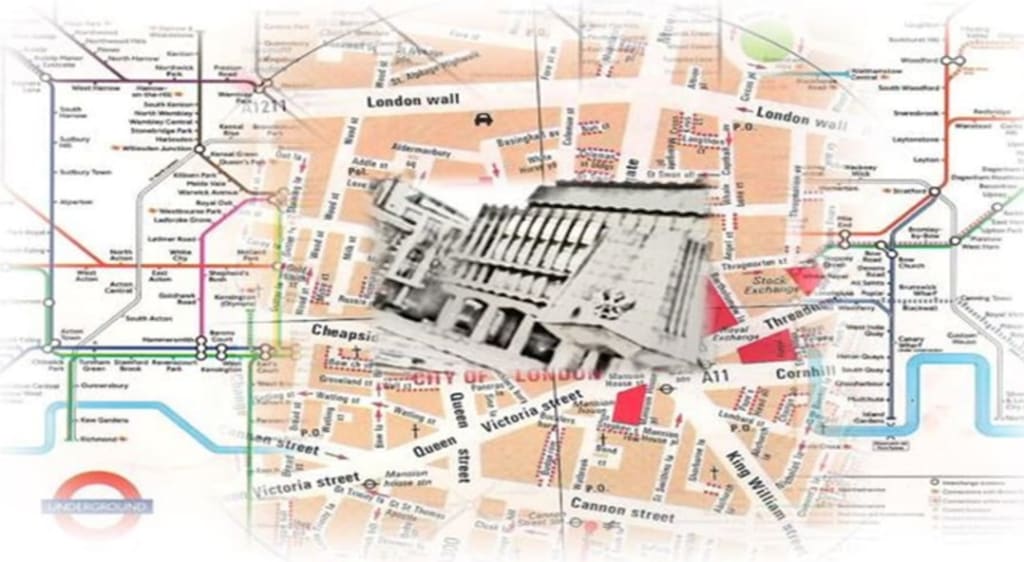
London was shrouded in a continuous cloche like cloud of greyness this one Saturday in February. The cold air vortexing through the streets and alleyways was impregnated with the aroma and threat of snow. What sunlight that did filter through the clouds was so diffused it could not cast any shadows. The wind’s cold energy had infiltrated the weft and weave of my multiple layers of clothing, some of which were sold as being suitable for even the most extremes of climate.
I walked the very same streets as, that prime example of mediaeval upward social mobility, Richard Whittington (1354-1423), did nearly six hundred years ago. It was futile for me to look for gold as what this country has was all locked away in the vaults of The Bank of England; we are led to believe. All of the markets that are, or if you like, the chapels where the supreme being known as ‘Mammon’ is worshipped and revered were closed. Even the betting shops tucked away in the side streets were shut.
I had a planned escape and hoped for refuge from these cold arteries of capitalism. It was the Guildhall Library in the Guildhall complex of buildings between the Bank of England and St Paul’s Cathedral.
When I walked into the reception area my glasses fogged up as they always do during these sudden transitions from the cold to the warmth. My hands were too cold to fumble in my pockets looking for something to wipe them with without looking positively indecent. I stood under a warm air vent and looked blindly at the noticeboard. At first I was unable to read the A5 and A4 sized notices pinned to it. As my glasses cleared the vague shapes slowly became legible. It was as if some invisible optician had changed my lenses as I studied the random letters cascading from large to small on his Snellen letter eye test chart. The notices advertised exhibitions, talks, concerts and most importantly of all, the opening hours of the library. I could stay here until four thirty before having to meet my wife and travel home with her from Waterloo.
The library had filled up with readers from the back towards the front where the reception desk sat. I found a table near the front. Once settled I continued studying the so called ‘Tiger Economies’ of the Far East and their rise to immense wealth while hanging on to the tiger like tail of rapid industrial expansion.
For a break and leg stretch I went over to the nearest shelf and randomly selected a book. I didn’t make a note of the title or the author but was struck by the following quote:
“Two nations between whom there is no intercourse and no sympathy, who are ignorant of each other’s habits, thoughts and feelings as if they were dwellers in different or inhabitants of different planets…..”
Those words resonated and echoed around my chamber of feelings about the referendum in June 2016 to decide the country’s relationship with the European Union. The country had been divided between vehemently binary battle lines of ideology. Neither side was either able or willing to understand the other. Instead, especially on the LEAVE side, defending positions with vitriol and opinions which were shouted across all possible channels of communications.
The result of the Referendum was very close. 52% for leaving and 48% for staying.
Extremely sadly the whole tragic episode in Britain’s history split families, friendships and communities in a way that had not happened since the mining strikes of the 80’s and 90’s. Granted those strikes were local by comparison to a national referendum but as divisive as a meat cleaver separating a lamb shank from a leg of lamb.
For another break from the Far East, I settled down to some reading and scribbling of notes about the history of the streets I had just walked. I glanced up at the nearby window. The light outside was still a dull cold grey. A couple of droplets of water surrendered to gravity on the glass. Rain or snow? Around the room the occupants at the other desks and tables were busy reading and writing. A couple of them had been overcome by the heat and were in a snooze position over their books. A sort of bibliophile’s temporary rigor mortis.
My concentration was broken when I felt a sudden draft of cold air sweep around my legs and across my table. I could hear whispered voices from the desk at the entrance. There were two men standing where I had stood under the vent while I was clearing my glasses. They both had back packs and a couple of bulging bin liners. They left their ‘luggage’ in the reception area while a librarian guided them to a table near me that had a computer screen. There was some rustling of clothes as they sat down, hushed conversations between them and the librarian. I heard the word ‘rugby’.
Some other readers looked up. They were silent disinterested witnesses. Others made facial expressions of disdain and one even let out a ‘tut tut’. There were a couple of exaggerated exhalations of breath of disapproval. No doubt there would be some letters of complaint arriving on the chief librarian’s desk next week. Or, the arrival of the two men into the warm library was going to be convoluted into an excuse for failing to complete whatever they had set out to achieve. Two nations again. They all returned their attentions to their books and notepads.
The librarian came back to where the two men were sitting. He was carrying two sets of headphones and two mugs of steaming hot drinks.
‘Cheers mate, that’s right bloody kind of you.’
A couple of more audible expressions of disdain fought their way towards me against the flow of cold air.
The librarian then leant over the keyboard of the computer and clacked in a few characters.
‘There, that’s all set up now. You can watch the rugby and listen to it on these’ he whispered as he offered them the headphones.
This was the day that two nations, England and France, divided by physical borders and centuries of rivalry on the world stage met on the pitch at Twickenham in the ‘Six Nations’ rugby series. A chance for fans on the streets, in bars, at home, in a library or at the match itself to express their passionate support not so much for their ‘team’ but for that most tribal of concepts, their nation.
I carried on with my reading and writing as the others around me. The two new arrivals were craned forward from their chairs and were only a couple of degrees from climbing inside the screen. It must have been a close game as every nuance on the pitch flexed through to their hands which gripped themselves with frustration, pain, agony and ecstasy. All the passionate ingredients that spill out from any sport to the spectators played to its best.
The late Sir Michael Parkinson wrote about sport:
‘It is not war and death and famine. It’s not that at all. It’s the opposite of that, it’s to persuade us there’s a world outside of that.’
These two men with their worldly goods in bags around them were for a brief few minutes confirming Parkinson's words. They were being persuaded that there was a world beyond their current one. A world where there was warmth, comradeship through shared passions and compassion away from the cold and unforgiving streets of London if only for a few minutes.
At twenty-five past four the librarian announced the place would be closing in five minutes. Around the room there was a flurry of rustling papers, books being shut and the luggage that regular inhabitants of libraries carry their own worlds in was being stuffed and filled. I started clearing my table. The librarian came over to the two men. When they saw him, they removed their headphones.
‘Stay and watch the end of the game. It’ll take at least twenty minutes to put all the books back and tidy up’ he said.
‘Cheers mate……it’s right bloody close…..England could win but I don’t trust those French’ one of the men replied.
I packed my things away, put on my scarf, coat and hat. Outside it looked dark and cold. I would be back home in about two hours. I walked past the table where the two men were sitting. I asked how the game was going and was told it was ‘right crackin and England might just win. Just can’t trust the French until the final whistle goes’.
At Waterloo Station I surfaced from the underground and looked up at the huge TV screen above the departures board. The post-match review was taking place and in the bottom right hand corner of the screen was the score. England won by the narrowest of margins that could so easily have been reversed during some extra injury time allowing the French attack to get a try or be awarded a penalty.
The closeness of that rugby result got me thinking again of how close the result of the referendum was just eight months ago. Our democracy and its constitution does not make allowances for injury time, penalties to be awarded and no video assisted referee (VAR) to review controversial situations.
Note: The earliest and most authoritative source I could find for the expression 'The Kindness of Strangers' is from Tennessee William's play 'A Streetcar Named Desire' first performed in 1947. They are amongst the last words spoken by the lead female character 'Blanche DuBois'.
About the Creator
Alan Russell
When you read my words they may not be perfect but I hope they:
1. Engage you
2. Entertain you
3. At least make you smile (Omar's Diaries) or
4. Think about this crazy world we live in and
5. Never accept anything at face value
Keep reading
More stories from Alan Russell and writers in Wander and other communities.
The Grand Hotel Scarborough revisited
After a tortuous rail journey from The New Forest to Scarborough we were so looking forward to checking in at The Grand Hotel. We decided to walk from the station to the hotel to stretch our legs and get some much needed fresh air. Our conversation was about a comfortable bed, dinner overlooking the sea and maybe even a stroll along the shore before our long day was going to end. The hotel’s imposing façade began to loom ahead of us and our hopes rose with each further step we took.
By Alan Russellabout a year ago in Wander
Worth the Wait: Puerto Viejo, Costa Rica
Beach bumming in a small Caribbean beach town sounded like a perfect way to end our 6-month trip through Mexico and Central America. Or so we thought. The foul, fishy stench of rotten seaweed hit our nostrils as we stepped from the cramped bus and looked out at a rather depressing, empty, and underwhelming black sand beach. It was pouring with rain, and we had to quickly fish out our ponchos. We thought, this couldn’t be it, could it?
By Sh*t Happens - Lost Girl Travel6 days ago in Wander
Looking The Total Lunar Eclipse and Blood Moon...March 3rd 2026.
By a stroke of good luck - I just happened to be in Colorado to watch (or squint) at the 2026 Lunar Eclipse in the wee hours of the morning. It was freezing cold, but who can resist the beautiful Rocky Mountain peaks as the antics in the sky compete with dawn. The advent of morning grudgingly pausing in its beginning of yawning awake.
By Sudais Zakwan2 days ago in Wander




Comments
There are no comments for this story
Be the first to respond and start the conversation.