

I’ve walked past this old Westminster remnant plenty of times, but usually on the other side of the Road. Thankfully, on this occasion, I stopped to find out more. The Jewell Tower has an impressive history behind it.
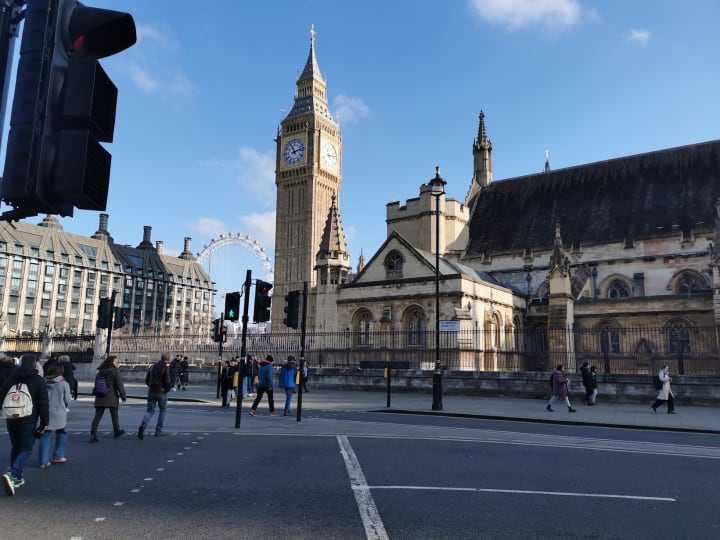
The Jewell Tower
It was once part of the vast, sprawling Palace of Westminster and was built between 1365 and 1366 during the reign of King Edward III. It might be small, but it’s made out of stone and was originally built to safeguard the monarch’s personal treasures. As a result, it was named the “King’s Privy Wardrobe."

It overlooked the king's private garden in the secluded southwest corner of the palace complex. It was surrounded by a moat fed by the River Thames, which gave it a defensive advantage.
The tower was initiated by William of Sleaford, a cleric overseeing the project, and Henry de Yevele, a master mason whose architectural work is still admired today. They designed the three-story structure with crenellated walls. Its ground floor was covered with an intricately sculpted vaulted ceiling—a feature historian Jeremy Ashbee has hailed as "an architectural masterpiece" for its elegance and craftsmanship.
The Royal Loot
The tower’s primary role was to house Edward III’s private collection of valuables, distinct from the ceremonial Crown Jewels stored at the Tower of London or Westminster Abbey.

These treasures included jewels, gold and silver plates, luxurious fabrics, and other items the king used as portable wealth—assets he could pawn to fund military campaigns or bestow as diplomatic gifts. Managed by the Keeper of the Privy Wardrobe, the tower was a secure royal depository until the early 16th century.
Fire Damage
However, after the fire in 1512 ravaged parts of the Palace of Westminster, Henry VIII abandoned the site for Whitehall Palace. With the royal residence gone, the Jewel Tower found a new calling.
By the late 1500s, it began storing parliamentary records for the House of Lords, a role it maintained for centuries. In 1621, a brick vault was added to the upper floor to protect these documents from fire—a practical move that reflected its evolving significance.
Still Standing
The Jewel Tower’s survival through history’s upheavals is remarkable. In 1834, a catastrophic fire gutted most of the Palace of Westminster, reducing the medieval complex to ashes. Yet the tower endured one of only four structures spared—alongside Westminster Hall, St. Mary Undercroft, and St. Stephen’s Cloisters—thanks to its isolated position and a fortunate shift in the wind.
After the blaze, its parliamentary records were relocated to the newly built Victoria Tower within the neo-Gothic Palace of Westminster designed by Charles Barry and Augustus Pugin. In 1869, the Jewel Tower transitioned again, becoming a testing and storage facility for the Standard Weights and Measures Department.
For nearly seven decades, it housed official weights and measures, including the imperial standards, until 1938, when vibrations from growing street traffic disrupted its precision work.
World War II
During World War II, the tower faced another trial: bombings in 1941 damaged its structure, shattering windows and scarring its exterior. Post-war restoration by the Ministry of Works in 1948 preserved its medieval character and was opened to the public as a historic site.
Today, managed by English Heritage, the Jewel Tower stands on Abingdon Street, opposite the Houses of Parliament and a stone’s throw from Westminster Abbey. One can visit this three-floor exhibition that offers a window into its layered past.
Visitors can explore a model of the lost medieval palace, admire replicas of royal treasures, and step into a reimagined 18th-century clerk’s office. Outside, remnants of the original moat hint at its fortified origins, while inside, the 14th-century vaulted ceiling remains a standout feature, its delicate stone ribs a testament to medieval artistry.
Parting Comments

I suspect many people will walk past this and not think about it. Who could blame them, especially with Big Ben and Westminster Abbey nearby?
Only when you stop and read the English Heritage Plaque, do you realise how important the Jewell Tower was once upon a time.
I plan to visit soon, and I hear it’s more intimate than the other famous icons.
Admission is free for English Heritage members, with a small entrance for others.
It’s worth making time for this little gem, which gives you an insight into London’s medieval roots beyond the usual tourist trail.
If you liked reading this article, feel free to support me by buying me a ☕️coffee https://www.buymeacoffee.com/TabbyLondon
Thank you for your attention.
Best wishes
Tabby
About the Creator
Tabby London
The London I've been discovering is usually off the well-beaten track.I love the nooks and crannies and walking along the streets steeped in centuries worth of history. I'm fond of Zone 1 because that's where it all began centuries ago.
Keep reading
More stories from Tabby London and writers in Wander and other communities.
Signs That You Grew Up in Texas
Greetings, Vocal creators! We're going to talk about arguably the best state in this country. I'm talking about Texas and it's also my home state, in case you didn't know. Nicknamed The Lone Star State, it has over 31 million people as of 2024 and is the second largest in the country. Last year, I wrote a story about the things that I loved about Arlington, which is where I'm originally from and where I grew up. Some notable people from the 28th state include Matthew McConaughey, Nolan Ryan, Matthew Stafford, and Willie Nelson. You can read the full story by clicking the link down below. The following entries are not in any particular order.
By Mark Wesley Pritchard 6 days ago in Wander


Comments
There are no comments for this story
Be the first to respond and start the conversation.