

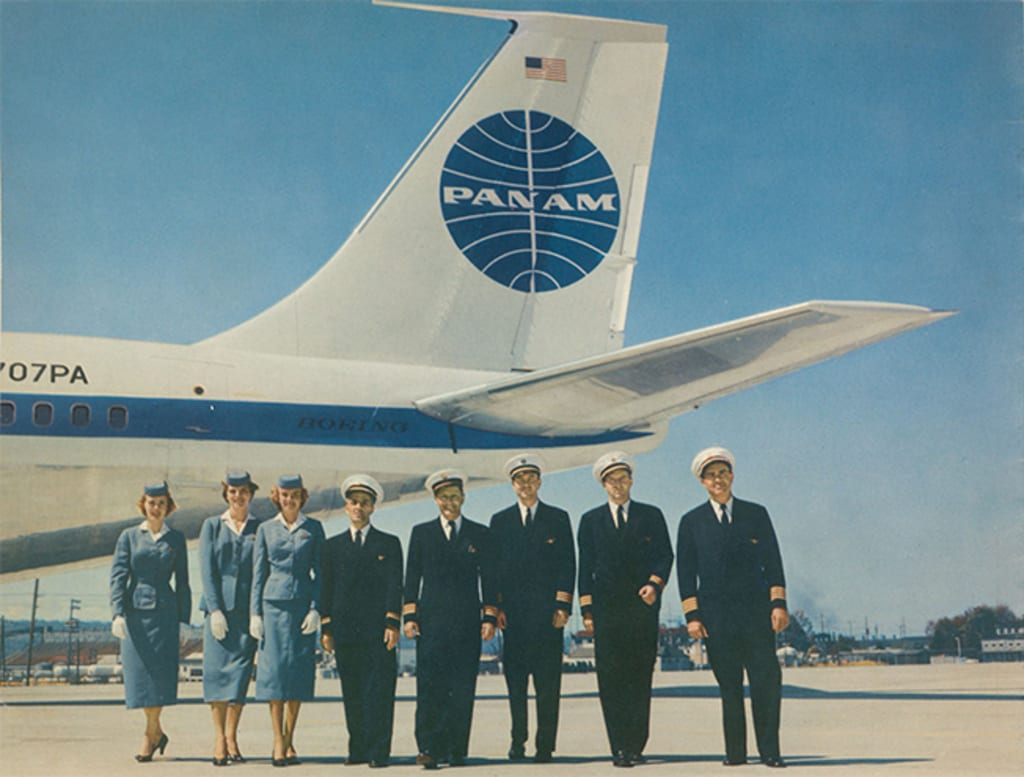
The history of Pan-American World Airways, or Pan Am, is a captivating saga of innovation, luxury, and global connectivity. Founded in 1927, Pan Am was more than just an airline; it was a symbol of progress and sophistication that left an indelible mark on the world. Central to Pan Am’s identity was its iconic blue globe logo, a symbol that transcended mere branding to become a powerful cultural icon. This blog post explores the cultural impact of Pan Am and how its blue globe logo became emblematic of an era.
The Birth of an Icon
Pan Am’s blue globe logo, introduced in the 1950s, was more than just a design choice; it was a statement. As the airline expanded its global network, the logo came to represent more than just a brand — it symbolized the dawn of the jet age and the emergence of air travel as a symbol of modernity and luxury. The blue globe was not only visually striking but also conveyed a sense of global reach and connectivity, perfectly aligning with Pan Am’s mission to connect the world.
In 1958, Pan Am made aviation history with its introduction of the Boeing 707, the world’s first commercially successful jet airliner. This aircraft marked a significant leap in air travel, cutting transatlantic flight times from 18 hours to just under 8 hours. The blue globe logo adorned these revolutionary jets, symbolizing Pan Am’s role as a leader in global aviation. The airline’s growth was reflected in its expanded route network, which, by 1960, included over 80 international destinations, showcasing its pioneering spirit and global reach.
The Golden Era: A Symbol of Luxury and Prestige
The 1950s and 1960s, often referred to as the golden era of Pan Am, saw the airline rise to prominence as the epitome of luxury and sophistication. During this time, the blue globe logo became synonymous with high-end travel. Flying on a Pan Am jet was more than just reaching a destination; it was about experiencing a journey marked by comfort and elegance. The introduction of the Boeing 707, known as the “jet that changed the world,” further cemented Pan Am’s status as a trailblazer in aviation. This aircraft, with its sleek design and faster speeds, helped Pan Am revolutionize air travel. The blue globe logo, prominently displayed on these state-of-the-art aircraft, symbolized the cutting-edge technology and unparalleled service that defined Pan Am’s reputation. In the 1960s, Pan Am’s fleet included 35 Boeing 707s, and the airline carried over 2.6 million passengers annually, showcasing its dominance in the industry.
Pan Am’s luxurious service included amenities such as gourmet meals, spacious seating, and attentive in-flight service, which were groundbreaking at the time. The airline’s high standards were reflected in its cabin design and customer service, making it a symbol of luxury travel. For many, the sight of a Pan Am aircraft was a signal of a world of opportunity and adventure just a flight away.
Cultural Impact and Media Presence
Pan Am’s cultural impact extended beyond its role as an airline. The blue globe logo became a fixture in popular culture, representing not just an airline but an entire way of life. Movies, books, and advertisements of the era often featured the logo, embedding Pan Am deeply into the public’s imagination.
Pan Am’s presence in popular culture was significant. The airline was featured prominently in films such as Catch Me If You Can (2002), which depicted the glamorous era of air travel in the 1960s. Additionally, Pan Am’s advertising campaigns, which often featured the blue globe logo, portrayed the airline as a symbol of sophistication and global adventure. The logo appeared in various forms of media, from magazine advertisements to Hollywood films, further entrenching its status as a symbol of luxury and global prestige. Pan Am’s association with celebrities and dignitaries also amplified its image as a status symbol, reinforcing the cultural cachet of the blue globe logo. The airline’s influence was so pervasive that its name became synonymous with international air travel, and its logo was often used to evoke a sense of high status and adventure in media and advertising.
The Decline and Legacy
Despite its eventual decline, Pan Am’s legacy remains significant. The airline faced numerous challenges in the 1970s and 1980s, including economic turmoil, increased competition, and tragic events like the Lockerbie bombing in 1988. These setbacks eventually led to the airline’s demise in 1991. However, the blue globe logo continued to evoke nostalgia and admiration long after the airline ceased operations.
At its peak, Pan Am was a major player in the aviation industry, but financial difficulties and competition from newer airlines took their toll. The airline’s final years saw a decline in passenger numbers and profitability, culminating in its bankruptcy and cessation of operations in 1991. Despite this, the blue globe logo remains a powerful symbol of a bygone era. Its cultural impact endures, reflecting the broader transformations in aviation and global connectivity. The logo remains a symbol of a time when Pan Am was at the forefront of technological innovation and international travel.
Conclusion
The cultural impact of Pan Am and its iconic blue globe logo is a testament to the airline’s influence on the world of aviation and beyond. From its golden era of luxury and prestige to its enduring legacy in popular culture, Pan Am’s story is a powerful reminder of the transformative power of innovation and vision. As we look back on Pan Am’s remarkable journey, the blue globe remains a symbol of a bygone era, capturing the imagination and reflecting the enduring spirit of global connectivity.
About the Creator
Horace Was
Essay Writer, Aviation and Technology Expert
Keep reading
More stories from Horace Was and writers in Wander and other communities.
Boeing’s Safety Crisis
Boeing, a name once synonymous with aviation excellence and safety, now finds itself entangled in a significant safety crisis. This turmoil has been further amplified by the courageous testimonies of whistleblowers who have exposed deep-seated issues within the company. As the aviation giant faces intense scrutiny and legal battles, the accounts of these whistleblowers provide a critical lens into the systemic failures that have jeopardized safety and trust in the industry.
By Horace Was2 years ago in Wander
Worth the Wait: Puerto Viejo, Costa Rica
Beach bumming in a small Caribbean beach town sounded like a perfect way to end our 6-month trip through Mexico and Central America. Or so we thought. The foul, fishy stench of rotten seaweed hit our nostrils as we stepped from the cramped bus and looked out at a rather depressing, empty, and underwhelming black sand beach. It was pouring with rain, and we had to quickly fish out our ponchos. We thought, this couldn’t be it, could it?
By Sh*t Happens - Lost Girl Travel5 days ago in Wander
Lost in Translation: How Getting It Wrong in Asia Taught Me How to Travel Right
My first morning in Hanoi started with a sensory assault. I was sitting on a tiny blue plastic stool, knees touching my chin, watching a woman whisk an egg yolk into a cup of robusta coffee. The air smelled of charcoal smoke, cilantro, and exhaust fumes. It was chaotic, loud, and utterly mesmerizing.
By Eleni N. Markou2 days ago in Wander



Comments
There are no comments for this story
Be the first to respond and start the conversation.