
The Eternal Stone
The Story of the Great Pyramid of Giza — Egypt’s Monument to the Heavens

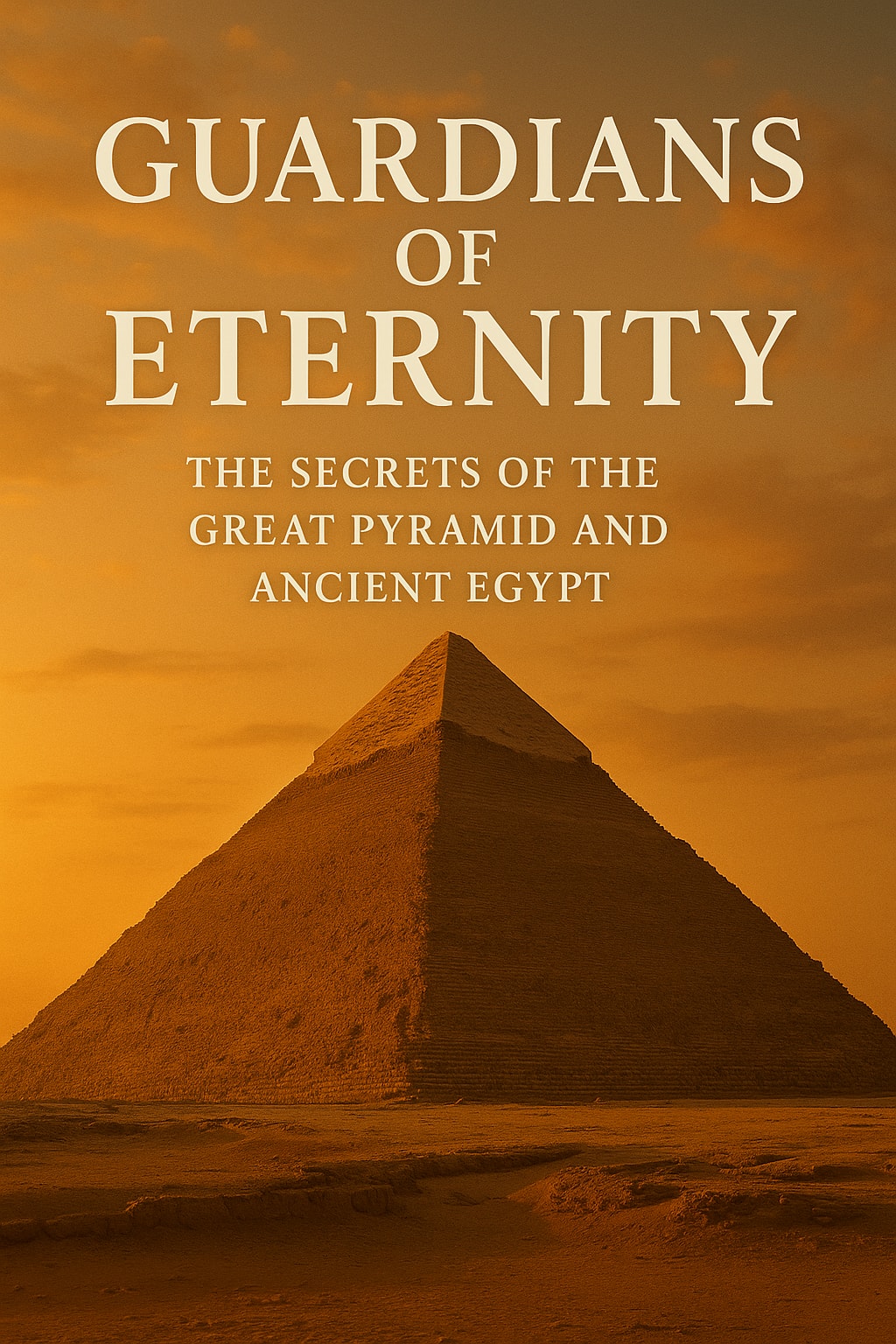
In the golden sands of the Giza Plateau, beneath a sky that has watched over civilizations for millennia, stands a monument unlike any other — The Great Pyramid of Giza. Carved from stone and time, it is not just a structure, but a legacy written in limestone.
It was built not merely to house a king’s remains, but to echo through eternity.
---
The Vision of a Pharaoh
More than 4,500 years ago, in the 26th century BCE, Pharaoh Khufu of Egypt’s Fourth Dynasty envisioned a tomb unlike any ever built. Where other rulers had constructed step pyramids and modest monuments, Khufu dared to build a pyramid so vast, so perfect in geometry, that it would touch the gods.
“Let the desert know my name,” he is said to have declared. “Let the heavens remember my soul.”
To turn that dream into reality, architects, engineers, and thousands of workers were gathered along the Nile. The chosen site — a limestone plateau west of the river — offered stability and a commanding view of the horizon.
---
The People Behind the Stone
Unlike popular myths, the pyramid was not built by slaves but by skilled laborers, artisans, and seasonal workers who lived in nearby workers’ villages. They were paid in grain, beer, and shelter. Many took pride in their part of history.
Among them was Amun, a young stonecutter from a village south of Memphis. His father had helped build temples in Thebes, but Amun wanted his work to last longer than any scroll or statue.
“We are building for the gods,” his supervisor once told him. “Every stone you place is a word in the story of the stars.”
For over 20 years, these workers toiled through the burning heat and cool desert nights, carving and transporting more than 2 million limestone blocks, each weighing several tons. Wooden sledges, copper tools, and human ingenuity turned the impossible into stone reality.
---
The Sacred Design
The pyramid, rising over 146 meters when completed, was more than a tomb — it was a symbol of cosmic harmony. Its sides aligned almost perfectly with the cardinal directions, and some believe its proportions reflect celestial and mathematical significance still debated today.
Inside the core were passageways, hidden chambers, and the King’s Chamber, designed to cradle the pharaoh’s body — and possibly his soul — on its journey to the afterlife.
“Not just a tomb,” Amun whispered one night, touching the cold wall of the chamber. “But a stairway to eternity.”
---
The Mystery of Time
As dynasties fell and centuries passed, looters stripped the pyramid of its smooth white casing stones, exposing the rough core. The polished surface that once glowed in the sunlight like a beacon for miles slowly disappeared.
And yet, the Great Pyramid stood firm — its shadow stretching across time.
Greek historians like Herodotus wrote about it in awe. Travelers from Asia and Europe came to witness it. Scientists measured, mapped, and marveled. Still, no one could fully explain how it was built with such precision, especially with Bronze Age tools.
Was it ramps? Levers? Water power? Some claimed it was aliens. But the truth is simpler and far more profound: human brilliance, patience, and purpose.
---
Legacy in Stone
Today, the Great Pyramid of Giza is the only surviving member of the Seven Wonders of the Ancient World. It has outlived empires, earthquakes, and invasions. It watches silently as the modern city of Cairo hums nearby. Planes fly over it, tourists pose beside it, and yet it remains unchanged.
Archaeologists continue to explore its inner mysteries, discovering new voids and secrets through cutting-edge technology. But no scan can fully capture the spirit of those who built it.
People like Amun, long buried in unmarked graves, who left behind no titles or treasures — only a few chisel marks in the heart of a monument that still reaches for the stars.
---
The Voice of the Pyramid
It speaks not in words, but in silence.
It tells us that the human desire to be remembered is eternal. That we are capable of greatness when we work together, stone by stone, towards something that lasts beyond our lives.
And when the wind blows across the plateau at dusk, some say you can still hear it whisper:
“I am not only of Egypt.
I am of the Earth.
I am the dream made stone.”
About the Creator
Raza Ullah
Raza Ullah writes heartfelt stories about family, education, history, and human values. His work reflects real-life struggles, love, and culture—aiming to inspire, teach, and connect people through meaningful storytelling.
Keep reading
More stories from Raza Ullah and writers in Wander and other communities.
The Endless Wall
High above the misty mountains of northern China, where the wind sings through stone towers and the sky meets the earth, stretches one of the greatest feats in human history — The Great Wall of China. Built over centuries, brick by brick, life by life, it stands not just as a wall, but as a silent witness to the ambition, fear, and unity of an empire.
By Raza Ullah8 months ago in Wander
A Texas Homecoming
Greetings, Vocal readers and subscribers! Recently, I had the opportunity to visit a familiar place that I haven't been to in almost 15 years. I've expressed my love for my hometown of Arlington, Texas in numerous stories on Vocal. Fow two days, it was my time to do some sight-seeing and nothing more. This long overdue vacation was solely about me, not about visiting family, as I've been estranged from them since 2011. I'll share a collage of pictures from my two-day stay in Arlington throughout this story. Just for reference, I took over 200 photos, so not every one of them will be featured.
By Mark Wesley Pritchard 6 days ago in Wander
Tatt~Master
— Assembly Line Tatt Machine ~ Impressions to Impress — As I begin to understand more about the Tattoo Phenomenon. I've written silly, yet verbatim, dating site anecdotes in 'Frazzled.' So let me ask you: Would you be More attracted to someone slathered with tattoos, or Less?
By Jay Kantora day ago in Humor




Comments (1)
Phyramids of egypts