
The era of DIY ushered in the history of mash-up art
DIY
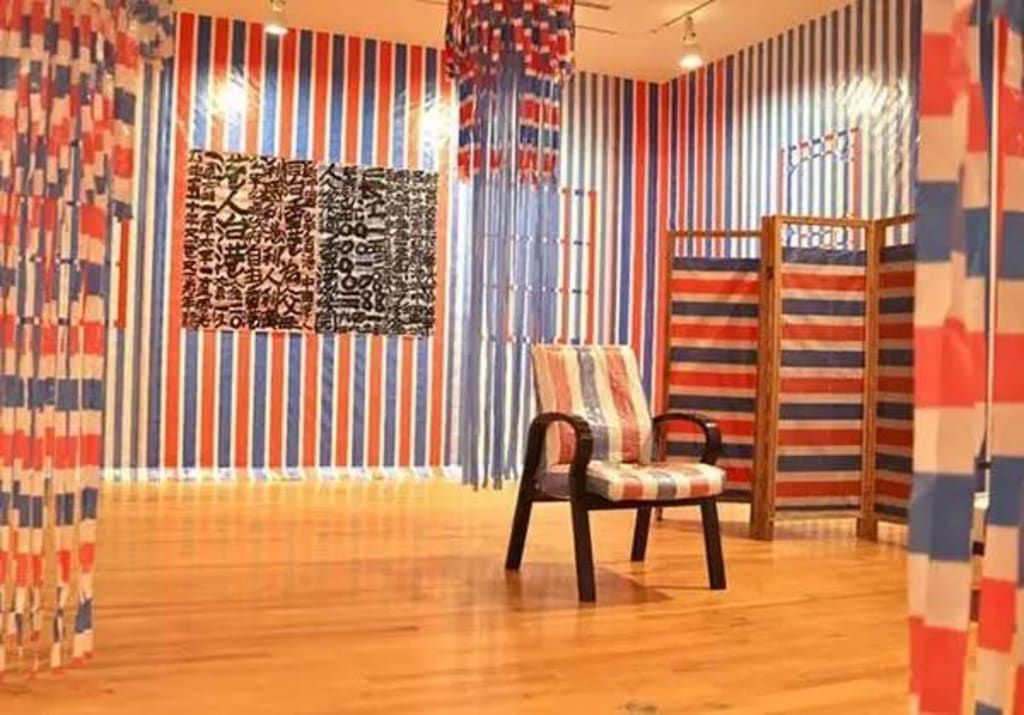
The proliferation of "movements" and "isms" gave 20th-century art its diversity and experimentation, and the involvement of a variety of media gave it more possibilities. "Mixing" - a creative style that began to form and evolve in the late 19th century - has become the dominant form of cultural production in the early 21st century.
The widespread use of digital technology in the 21st century is like the origin and evolution of photography, and new technologies for the creation, dissemination and consumption of visual culture have been rapidly assimilated. An entire generation has grown up in an environment where they have easy access to a vast array of images, sounds, and a greater ability to cut, reproduce, and mix new art forms.
The growth of DIY and amateur culture has broadened the realm of cultural production, giving rise to a new class of cultural producers who have repackaged and repurposed almost everything digital. Along with such artists as Ellen Gallagher, the new generation of DIY and amateur culture has created a new class of cultural production that repackages almost everything digital. Ellen Gallagher, Bing Pei Huang, and other artists who redefined collage and sculpture assemblages for the 21st century. Artists committed to "mash-ups" explored the instability of the image by reconfiguring things to give them new meaning and context.
As the economic depression and political turmoil affected the optimism of the post-war generation, a bleaker and more suspicious cultural landscape emerged in the 1980s. This generation of artists used "mash-ups" as a way to question media culture, consumerism, identity politics, and gender relations. New media began to emerge during this period, with multichannel recordings, portable video, instant photography and mass printing, as well as a massive expansion of image and object distribution in an increasingly globalized economy.
Artists in this wave of "mash-ups" questioned the nature of representation through parody and parody, demonstrating the appeal of the image and creating instability in the dominant power structures.
In addition, the use of personal computers and improvements in electronic drawing, sound, and design programs in the 1980s propelled the use of computers as a unique medium for cyber art. By the end of the 1990s, technology applied to music and the digital realm had definitively transformed into a visual culture, which became a sample of the creative power of modern culture in the 21st century.
In the aftermath of World War II, the mass production of consumer goods and the spread of radio broadcasting triggered a second wave of cultural mash-ups, driving globalization and cross-media development. The "mash-up" trend quickly spread to all areas of cultural production, creating new models in music, architecture, art, design, film and literature. Artists such as Andy Warhol Andy Warhol and Robert Rauschenberg. Artists such as Andy Warhol and Robert Rauschenberg not only plagiarized the imagery of advertising and pop culture, but also copied the production processes of modern manufacturing.
The use of existing shots and montages in film also increased dramatically during this period, with artists such as Dara Birnberg and Robert Rauschenberg replicating modern manufacturing processes. Artists such as Dara Birnbaum and Nam June Paik reconstructed images of mass media to present a dynamic critique of modern culture.
With the euphoric acceptance of consumer goods, advertising and mass media imagery, post-war artists radically transformed the premise and practice of art making, and the boundaries between art and life became increasingly blurred. By incorporating commodity culture into their practice, these artists' work is both a product of post-industrial society and a critique of it.
Although today "mash-ups" permeate almost every innovative idea, this exploration of cultural production is only a century old. The early 20th century witnessed a fundamental shift in public perception and the circulation of images, driven by the development of mechanical reproduction techniques. Victorian-style photographic collages and fantasy montage postcards were early popular manifestations of this technique, which later transformed traditional artistic excellence.
During the experimental period from 1912 to 1914, Picasso and Georges Braque were the first to use this technique. Georges Braque created collage and the initial practice of artistic assemblage. By introducing natural forms into their paintings and paper constructions, they created a new model of drawing. Although Picasso and Braque abandoned these practices shortly thereafter, this short-lived model of scholarship profoundly influenced several key pioneering movements.
From Hannah Hoch Hannah Hoch and John Heartfield. The Dadaist and Surrealist montages of John Heartfield to Joseph Cornell's Dadaist and Surrealist photography. Joseph Cornell's use of collage in film, and Luigi Russell's use of collage in film. From Luigi Russolo's noise detection to Marcel Duchamp's ready-made works, the period is characterized by radical experimentation that resists the conventional forms of painting.
Artists broke down barriers between disciplines, redefined what constituted "good" art and set out to respond collectively to the emergence of mass production and the changing nature of creativity in modern life. The recontextualization of everyday art forms using natural forms of objects, images, sounds and vocabulary will be one of the themes of artistic practice in the next century.
About the Creator
A Mountain Overture Beneath the Alps
I met this mountain feast at dawn, the moment I pushed open the window. The wind rushed in, carrying the damp scent of pine needles and fresh grass. Lifting my eyes, I saw the Alps stretching their boundless arms in the morning light. The distant peaks wore crowns of silver, their snow gleaming with a sacred glow beneath the rising sun. Dark gray mountain faces, like ancient books worn smooth by time, stood in silent devotion, bearing this purity upon their backs.
By CeeCee Yanabout 15 hours ago in Wander
Literary Heartbeats
Step through an unassuming storefront in Saratoga Springs, New York. Let the city’s familiar bustle fade behind you. Sink into the creak of hardwood floors as your gaze is drawn toward a labyrinth unfolding, room after room, swollen with stories. This is the Lyrical Ballad Bookstore—a place where literary ghosts linger, and generations of readers, writers, and dreamers have lost themselves amid 200,000 volumes of wonder.
By Kristen Barenthaler4 days ago in Wander



Comments
There are no comments for this story
Be the first to respond and start the conversation.