
Thailand is an extremely friendly place with diverse regions and mouth-watering food. Have you ever visited Thailand? Did you ever know that in Thailand people wear Yellow to show respect to the monarchy?
Here are the regions of Thailand so that you don’t get mixed up with them. The first region is the South. This is where the Muslim population lives and is very rich and green. It has an assorted culture with great food and very green, and lush land that is famous for its coconut. The next region is the Issan region. This is the northwest region and is a region that has a lot of influence from Laos and Cambodia. It is a desert land that is not that inhabited. The next region is the north region. The north region is a very tasty region with wonderful temples and culture. The final region is the central region. This is where big cities like Bangkok are. This is the main industrial region where a lot of people live.
Religion
The central religion in Thailand is Theravada Buddhism. This is a form of Buddhism that doesn’t focus on Buddha being god rather it focuses on Buddha being a teacher and the followers being his disciples. The core teaching in Buddhism is the four noble truths, which dictate that underpinning all existence is suffering. This Buddhism came to Thailand from Sri Lanka and is shared by Cambodia, Laos, and Thailand. The center of this religion is the Sangha a group of monks. Every settlement in Thailand has at least one temple which is very important. When Thailand was an agrarian society Buddhist teaching and ceremonies were the centers of daily life. Monks also conveyed the teachings of the Buddha through sermons and actions that exemplified the lessons. Thai religion has incorporated beliefs and practices from local religions as well as from Hinduism.
There are Muslims in Thailand who comprise 4.9 percent of the population. They are mostly Sunnis and are a minority, moreover, they mostly reside in the eastern part of Bangkok where about 600,000 of them reside. There are 13 mosques in that region and is dominated by Muslims. But there is also a decent amount of them in Southern Thailand.
Christians in Thailand are mostly in the Northern region where there are a lot more churches and Christians. This region holds the most Christians. This is mostly because in the Central part, Buddhism is the main one with some Islam. And the rest of the area hasn’t been reached by Christian Missionaries yet.
Events to celebrate
The first event is the Vishaka Puja. In the Vishaka Puja, the Thai people wake up very early and buy street food to give to monks. This is a very common practice and the monks take it back to the temple. An interesting thing is that the monks have assistant’s on a motorcycle to carry all of their food back to the temple. When the people give food to the monk the monk blesses them. This day is celebrated because it is the day Lord Buddha reaches enlightenment and dies. On this day everyone takes part in the Vien-Thian where people carry candles and make a procession around the main temple in the local area.
The second event is Maga Puja Day. Maga Puja day is when 12,500 Buddhist Monks assembled before Buddha with a prior appointment. This event takes place on the 3rd lunar month. On this day when the monks arrived the Buddha ordained them as monks by saying “Come monks”. They all became orphans and the Buddha gave them special instructions called the Ovada Patimoka. These instructions laid down the fundamental rules of his teaching. This day is called Sangha Day. This day is celebrated by offering food to monks, holding huge parades, lighting candles, and chanting. Buddhists go to the temple and observe the priests doing the rituals and participate in many other Buddhist Activities.
Food
Thailand has four central diverse and distinctive cuisines. The first one is Southern cuisine which is famous for its seafood and curries. Southern Thailand is Peninsula stretching down to Malaysia and is surrounded by the Andaman Sea on one side, and the Gulf of Thailand on the other. Southern food is famous for being very hot and very fiery. Coconut is one of the main ingredients whether it’s being grated fresh as a condiment, for the milk, or the oil. There is also an abundance of cashew nuts and oil in this region. The warm seas provide fish, lobsters, crabs, mussels, squid, prawns, and scallops. These are usually cooked, stewed, or cooked in a pot with noodles. A very typical southern dish is Gangbanged Flour, a hot curry with fish stomachs, green beans, pickled bamboo shoots, and potatoes.
The second region is the Central Region which is also known as the “ Rice Bowl of Thailand”. This region is famous for producing fragrant jasmine rice which is famous around the world. The famous Tom Yam, the hot and sour soup originates from here as does the Tom Yams, those crunchy little salads.
The third region is the Northern region. In this region, the influence of Laos and Myanmar in the cuisine is very visible. Khai Soi is a chicken broth with chicken and. And the other dish that comes from this region is Kaeng Hang Lay, a pork curry seasoned with turmeric, ginger, and tamarind are northern creations.
The Northeast also known as Isaan also has similarities with Laos in cuisine and even Cambodia. The most famous dish from this region is the Sontam. A fiery and spicy papaya salad. The green papayas are pounded in a mortar with lime juice, ginger, fish sauce, and several other ingredients including dried shrimp, cherry tomatoes, and roasted peanuts. Sontam is often eaten with sticky rice to help extinguish the spice in your mouth when you eat it.
5. Respect and Customs
The Wai is a very important custom in Thailand and is the equivalent of a handshake. Doing a Wai is very important to everyone you meet. There are 3 levels of Wai depending on the people you meet. The first level of Wai is used to greet monks and the Royal Family. First, you should put your palms together near your chest. Then lower your head and raise your hands until your hands touch between your eyebrows and bow at the same time. The second level is used to greet your parents, teacher, or people that are older than you. You should place your hands together until your thumbs touch your nose. Then lower your head until your fingers touch between your eyebrows. The last level is used to greet people that are younger than you. You should place your hands together so your thumbs touch your chin and your fingers touch your nose. If someone Wai’s to you, you should accept it by placing your hands together at your chest.
Religions From
https://www.britannica.com/place/Thailand/Tai
Thailand’s main religion is Theravada Buddhism which focuses on the student-teacher relationship between the Buddha and the followers. Its followers are in all parts of Thailand and contain 90% of the population. The Muslim population of Thailand varies between the Southern and the Eastern part of Bangkok. There are 7.5 Million Muslims in Thailand. That is 4.9% of the population. They are mostly Sunnis. The Christian population in Thailand mostly lies in the Northern Region where there are more missionaries. The Central region is dominated by Buddhists and Muslims and the missionaries haven’t been able to reach out to the other parts. So that explains why all of them are in the North. In the Christians, most the are Catholics while there is a small Protestant population there.
6. Conclusion
As you can see Thailand has a rich culture from its diverse religions to its mouth-watering food. And don’t forget about all of the fascinating festivals people there celebrate along with the heart-warming culture of Wai. I would highly encourage you to visit the “ Land of Smiles” as it is affectionately called for its heart-warming friendliness. And thank you for reading.
About the Creator
Sunkrith Amerineni
I am a 12 year old History, Culture, and political enthusiast.
Keep reading
More stories from Sunkrith Amerineni and writers in Wander and other communities.
Napoleon Bonaparte
Napoleon Bonaparte was born on a small island in Corsica, France. You see what makes his story fascinating is that many great conquerors had impressive origin stories. They were usually aristocrats or nobility. But Napoleon Bonaparte was from a humble middle-class family who was making just enough money to live comfortably. So now let’s begin our story. Napoleon Bonaparte was born on August 15, 1769, in Corsica. When Napoleon was born Corsica was a part of the Republic of Genoa, but 1 day it declared independence and left the republic. So the Republic of Genoa asked France if it wanted to buy the island and France accepted. And That’s how Napoleon was born French. But the Corsicans hated their new conquerors and did many anti-French things. Because of that Napoleon developed anti-French sentiments. However, his dad embraced the French people and loved them. Because of this, tension grew between them. After Napoleon finished his primary education his family sent him off to France where he went to military school. He got bullied a lot there for his height and Corsican accent. But he was very intelligent and read a lot of books about the great conquerors of the past. He graduated from his military school at the age of 16 and was put in as a second lieutenant in the army. Now that might seem like a pretty nice role to get but Napoleon wasn't satisfied. He didn’t want to be some junior officer. He wanted to rise the ranks and become an important general. But the problem was this would be very difficult. Since he was Corsican and didn't come from a rich family it would be very hard. You see in that time jobs were given on your family’s rank in the social classes. And even though Napoleon was the most talented officer there it would be hard to get up the ranks because of his family’s social status. But luckily for him, the French Revolution came along. He helped the revolutionaries. First, he put down a counter-revolutionary uprising. Then he put down a royalist uprising. Because of his deeds, he was given his army and was given a very high rank. He was making astonishing progress and was making his dream come true. But right around this time after the monarchy was abandoned the other European nations were starting to threaten France. They were worried that their peasants would uprise as France did. So they formed a coalition against France. This was the whole Europe vs France. Because of this the war of the First Coalition Began. At first, France struggled. But then they started to do surprisingly well in their conquered territories created sister republics and spread their revolutionary ideas across Europe. Then they planned a three-pronged attack on Vienna to knock Austria out of the war. The 2 main armies in the north were to attack Vienna and Napoleon’s army in the south as a diversion. This was the first time Napoleon led a military campaign and was his chance to prove himself. And boy he did. The army he was given was underpaid, demoralized, and lacked food and arms. But Napoleon Galvanized them with speeches and got them fired up and took them into Italy. He was outnumbered and his campaign was supposed to be a sideshow, but he made it the main show. While the 2 northern armies were being held back Napoleon was making astonishing progress in the south. He masterfully split his opponent's armies into 2 and took them on separately. This would mean he was able to defeat the armies more easily. In the battle of Lodi, he was getting covered in mud and firing the cannons himself. This got him the respect of his army and when he told them to charge on abridging that was almost suicidal they did it and took the bridge. Because of all of his victories, the Austrians were on the run. Napoleon plundered as he went and sent money back to France to help its economy. As he marched towards Vienna the exhausted Austrians were forced to make peace. And like that, Napoleon almost single-handedly took Austria out of the war. He also created sister republics in the territories he conquered and created their constitutions himself. When he went back to France he was hailed a hero by the people and the unpopular government was afraid that he would get some power-hungry ideas. So they sent him to Egypt so that he could maybe undermine British access to Egypt. But Napoleon couldn’t. He wasn’t trained to fight naval battles and the British had much better ships. So he returned to Egypt. But one thing you should know is that Napoleon was a great propagandist, and he published his newspapers which often exaggerated his achievements. Because of this when he returned to Paris he was again hailed as a hero. At this time the government’s worst fear came true. He started to get some power-hungry ideas. He was then approached by a very influential person Emmanuel Joseph Seiyes who told him he wanted to stage a coup on the government. He needed Napoleon’s help. Napoleon agreed. The plan was to trap the government inside a building. So this is how it happened. Napoleon said that there was a Jacobin Plot to kill them and if they got inside that building they would be safe. After they went inside they were able to make them give up their power. They formed a new government called the Consulate and Napoleon got all the power. For the next few years, Napoleon worked on stabilizing France’s economy. But since Napoleon was stabilizing the economy and France was solidifying its sister republics the European powers decided to start the war of the Second Coalition. The difference in this war was that Russia was also part of the Coalition. At first, Russia was on the offensive and they pushed France back deep into their territory. At this point, it looked hopeless for France. But Napoleon called the reserve guard to the front lines and he took the fight to the opposition. This is where Napoleon’s art of deception comes in. Napoleon went and occupied Geneva an important city. It looked like he would go north and take on the Austrian forces in Germany. But he instead went for the crazy idea of marching his army through the Alps and launching a surprise attack on Austria’s second force in the south which was deployed to siege Genoa. This was a hard trip for Napoleon’s army and they suffered badly. But Napoleon’s plan paid dividends. When he emerged out of the Alps the Austrians expected him to come from the back and try and fight them, But instead, he went for the supply lines of Austria. This forced Austria to come and face Napoleon head-on. This helped Napoleon because his army was able to attack from the north and the other army was able to attack from the south. Then after the army in Germany won there Vienna was exposed and the Austrians sued for peace. This ended the War of the Second Coalition with another French victory. But there was still one nation still at war with France. The United Kingdom. They were using their powerful navy to take control of French Ports and were hijacking even neutral ships. Because of all this, the European countries now got mad at the British and embargoed them. In response, Britain went to Copenhagen and blew a bunch of stuff up. But because the British were out of money they had to make a treaty with France. For a long time, Europe was at peace. Now Napoleon proved to be a great governor. He made the economy prosper with a new national bank, currency reform, and an improved taxation and welfare system. He got rid of corrupt government officials and improved the infrastructure. H also created an organized legal system that was easy to follow. He built on the ideas of the French Revolution and gave equality to all. He also reformed the educational system and ensured jobs weren’t given by social status but by talent. That meant everyone had to compete with everyone. What this also did was give Napoleon the best possible generals. The last thing he did was bring back the Catholic Church to ensure no Catholics rioted… To be continued
By Sunkrith Amerineni3 years ago in The Swamp
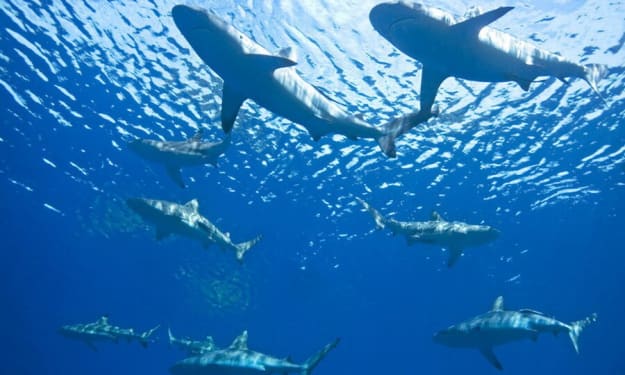
Why Hanifaru Bay is a Dream Destination for Marine Life Enthusiasts
Hanifaru Bay, situated in the Baa Atoll in the Maldives, is one of the earth's most bizarre protected marine areas. This protected zone has a special reputation for the annual visitation of mantas and whale sharks and provides a chance for a nature enthusiast to explore the wonders of the ocean.
By ameliarosanna6 days ago in Wander
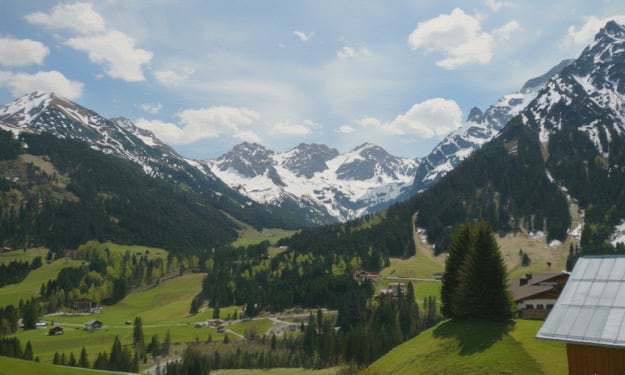
A Mountain Overture Beneath the Alps
I met this mountain feast at dawn, the moment I pushed open the window. The wind rushed in, carrying the damp scent of pine needles and fresh grass. Lifting my eyes, I saw the Alps stretching their boundless arms in the morning light. The distant peaks wore crowns of silver, their snow gleaming with a sacred glow beneath the rising sun. Dark gray mountain faces, like ancient books worn smooth by time, stood in silent devotion, bearing this purity upon their backs.
By CeeCee Yan5 days ago in Wander

Comments
There are no comments for this story
Be the first to respond and start the conversation.