
Temple of Hatshepsut: The Most Famous Temple in Egypt for Its Dramatic Cliffside Design
Written by Walid Muhammad
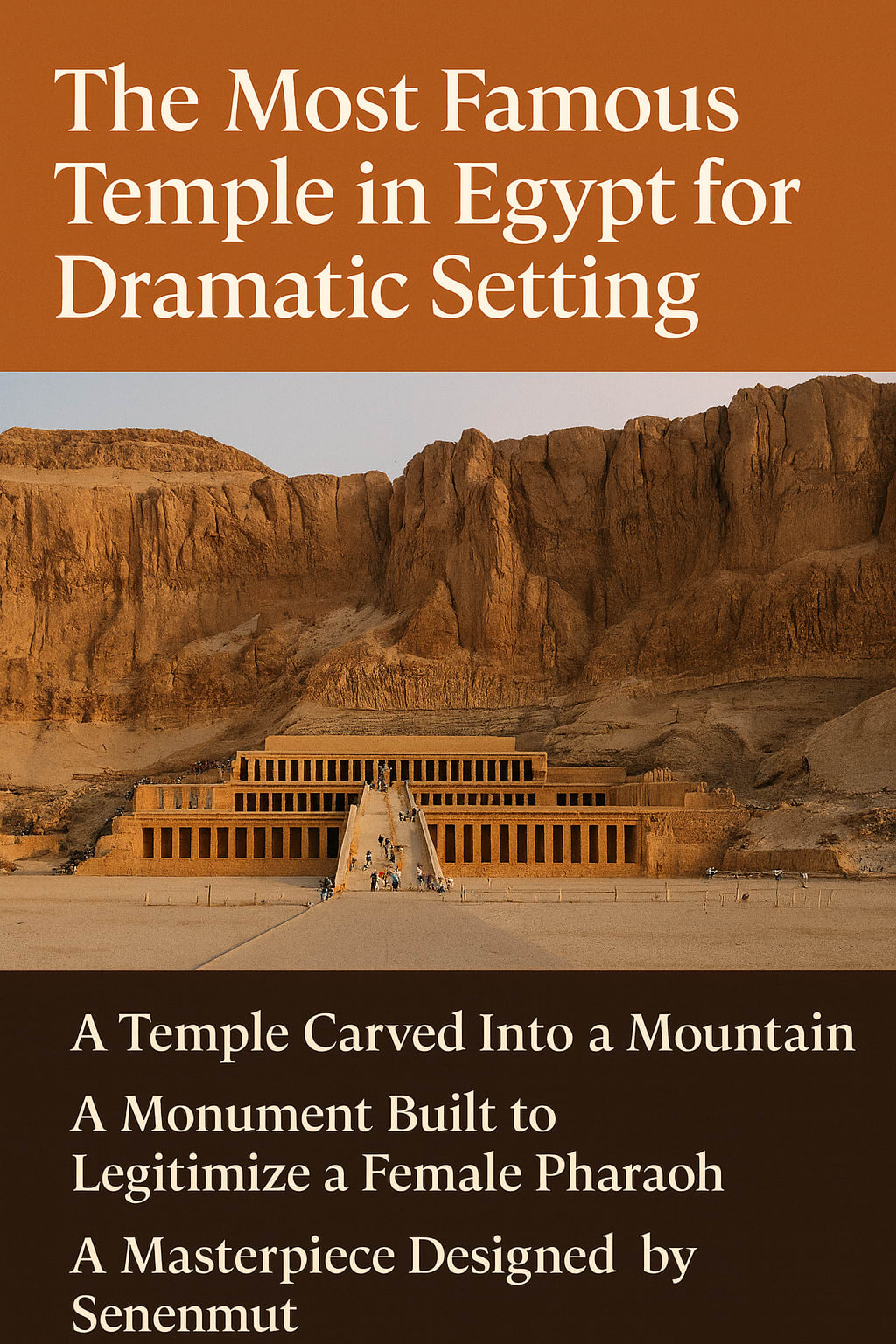
The Temple of Hatshepsut is often considered the most famous temple in Egypt for its breathtaking architectural style and powerful historical story.
Unlike other temples that stretch horizontally across riverbanks or deserts, Hatshepsut’s mortuary temple rises in three monumental terraces carved directly into the cliffs of Deir el-Bahari — creating one of the most striking visual experiences in ancient architecture.
This temple is more than stone and symmetry; it is a political declaration, an artistic masterpiece, and a symbol of one of Egypt’s most extraordinary rulers.
For travelers exploring the list of ancient Egyptian temples, Hatshepsut stands out not only for its beauty but also for the story it tells about a woman who became king.
Why This Is the Most Famous Temple in Egypt for Dramatic Setting
A Temple Carved Into a Mountain
No other structure in Egypt blends so seamlessly with its natural surroundings.
The entire design mirrors the limestone cliffs behind it, creating a harmony between human craftsmanship and the natural landscape.
The three terraces are connected by long ascending ramps, forming a geometric masterpiece that feels almost modern despite being nearly 3,500 years old.
A Monument Built to Legitimize a Female Pharaoh
Hatshepsut wasn’t just a queen — she declared herself pharaoh, a role traditionally reserved for men.
To solidify her authority, she built a temple that rivaled the grandest monuments of her era.
The reliefs here are essential to her legacy:
- her divine birth myth
- coronation scenes
- successful trade expeditions
- offerings to the gods
These inscriptions make the temple a political autobiography carved in stone.
A Masterpiece Designed by Senenmut
Senenmut, Hatshepsut’s chief architect (and rumored confidant), created a design unmatched in Egyptian architecture.
His vision turned the rugged cliffs into an architectural frame, making the temple feel both eternal and intentionally integrated into the mountain.
This innovative design is a major reason Hatshepsut’s temple ranks among the most famous temples in Egypt for visitors who appreciate artistry and engineering.
What to See Inside Temple of Hatshepsut
- The First Terrace
This lower level sets the stage with elegant colonnades that lead visitors toward the temple’s central axis.
Many scenes here celebrate Hatshepsut’s achievements and her connection to the gods.
- The Second Terrace
This level includes some of the most iconic reliefs in the temple:
- The Expedition to Punt
A stunning visual record of a trading mission that brought back incense trees, gold, myrrh, and exotic animals.
- the Birth Colonnade
Where Hatshepsut’s divine origin story is carved in exquisite detail.
- The Third Terrace
The highest level was dedicated to Amun-Ra, the chief god of Thebes.
From here, you can enjoy sweeping views of the Nile Valley and Luxor’s West Bank — a sight many travelers call unforgettable.
- Restoration Efforts
After years of damage, modern restoration has helped revive Hatshepsut’s temple.
Today, the crisp reliefs, bright lighting, and careful excavation allow visitors to experience the temple in remarkable detail.
Why Temple of Hatshepsut Belongs on Every Traveler’s List
For visitors exploring history, architecture, or photography, this temple provides a unique blend of:
- dramatic scenery
- political storytelling
- perfect symmetry
- well-preserved reliefs
- a compelling female narrative
It also consistently appears on curated lists of Popular Places in Egypt because of its accessibility and emotional impact.
Unlike sprawling temples like Karnak, Hatshepsut offers a concentrated experience — immersive, memorable, and visually stunning.
Experience Hatshepsut’s Legacy with Expert Local Guides
Ready to explore the most famous temple in Egypt carved into a cliffside masterpiece?
Visit our homepage to plan a guided journey through Hatshepsut’s temple and other major historical sites, designed to give you a deeper appreciation of Egypt’s royal stories, architecture, and sacred landscapes.
FAQs
1. Why is Hatshepsut’s temple considered the most famous temple in Egypt for its design?
Because it blends architecture with natural cliffs in a way unmatched by any other ancient structure.
2. Who built the Temple of Hatshepsut?
It was commissioned by Pharaoh Hatshepsut and designed by her chief architect, Senenmut.
3. What makes the temple historically important?
It documents Hatshepsut’s rise to power, her divine birth narrative, and her successful trade expedition to Punt.
4. How far is the temple from Luxor’s city center?
Approximately 30 minutes by car, located on the West Bank near the Valley of the Kings.
5. When is the best time to visit?
Early morning, before the cliffs intensify the heat and crowds arrive.
About the Creator
Egy Trips
https://www.egypttourstraviio.com/
Keep reading
More stories from writers in Wander and other communities.
Worth the Wait: Puerto Viejo, Costa Rica
Beach bumming in a small Caribbean beach town sounded like a perfect way to end our 6-month trip through Mexico and Central America. Or so we thought. The foul, fishy stench of rotten seaweed hit our nostrils as we stepped from the cramped bus and looked out at a rather depressing, empty, and underwhelming black sand beach. It was pouring with rain, and we had to quickly fish out our ponchos. We thought, this couldn’t be it, could it?
By Sh*t Happens - Lost Girl Travel10 days ago in Wander
The "Alternate Route" Guide: Navigating the 2026 Sri Lanka Transit Shift
For the first two months of 2026, Sri Lanka was the undisputed darling of the global travel scene. The island shattered arrival records, welcoming over 550,000 visitors who flocked to our shores for the T20 World Cup and the blooming hills of the tea country. But as of early March, the "aerial bridge" through the Gulf—the massive transit corridor through Dubai, Doha, and Abu Dhabi that typically carries over a third of our island’s tourists—effectively shifted into a complex logistical puzzle due to regional airspace closures.
By Seth Marshal7 days ago in Wander
Sometimes It's Like That and That'sThe Way It Is
It was the late 1960s, and ten-year-old Gloria Coleman was standing with her grandmother on the side of the highway waiting for the bus. As the Greyhound pulled up, it seemed monstrous and intimidating. Grandma Elizabeth grabbed Gloria's hand, holding it tightly as they boarded.
By Cheryl E Preston3 days ago in Fiction




Comments
There are no comments for this story
Be the first to respond and start the conversation.