
Strolling Through Beautiful Castles Ireland
The castles and fortresses of Ireland

Ashford Castle
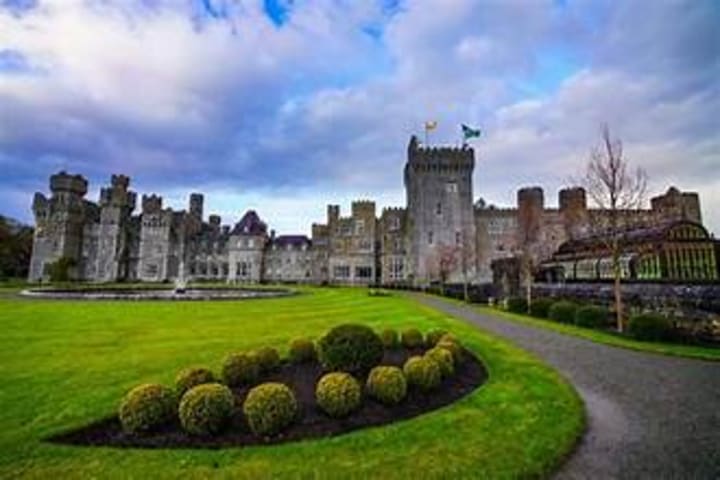
Ashford Castle is located in northwest Ireland. Today it is a five-star hotel. The castle dates from the 13th century and rebuilt in the 18th. The castle originally was the family home and hunting lodge for the Brown family of Baron Oranmore and Browne. It is built with a combination of Victorian and Medieval architecture. Ashford Castle has accommodated dignitaries and celebrities such as President Reagan. This is where the film stars of the "Quiet Man" stayed.
Blarney Castle
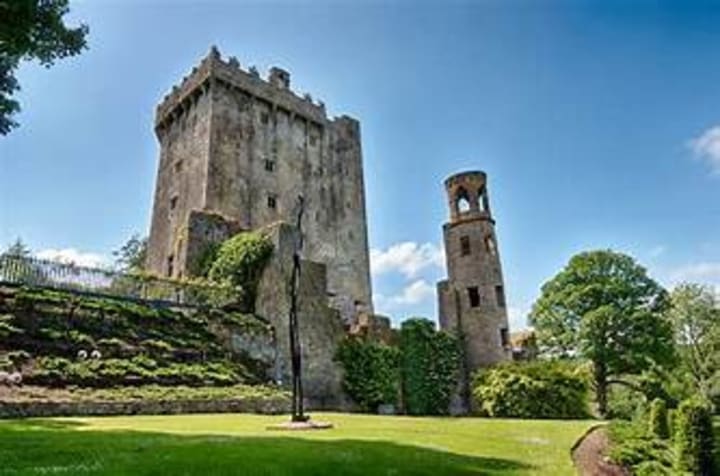
Blarney Castle is best known for its famous Blarney Stone. According to legend, hanging backward over the bridge and kissing the stone grants a person the gift of eloquence. However, today the structure is partially in ruins. It is a medieval stronghold in Blarney, a town in Cork, Ireland. Blarney Castle is surrounded by extensive gardens. There are paths touring the grounds, with signs pointing out the various attractions such as several natural rock formations with fanciful names such as Druid's Circle, Witch's Cave, and the Wishing Steps. The grounds include a poison garden with numerous poisonous plants, including wolfsbane, mandrake, ricinus, opium poppies and cannabis. Blarney House is also open to the public.
Bunratty Castle
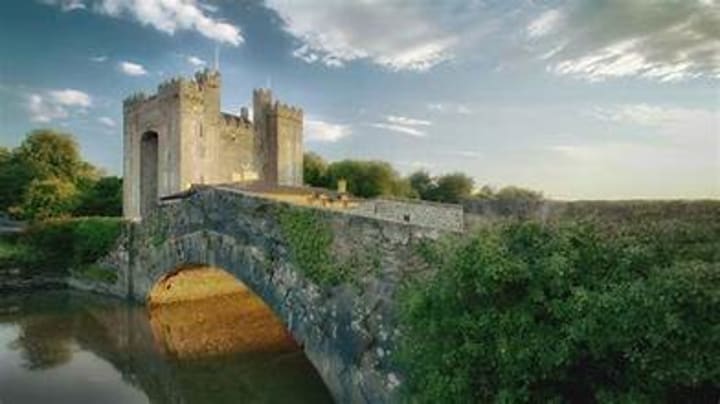
Today this is a well-preserved square tower in western Ireland, located in County Clare dating from the 14th centruy. Three structures previously stood on the site, including an early Viking fort. The interior holds numerous works of art and furnishings from the 15th and 16th centuries.
Cahir Castle
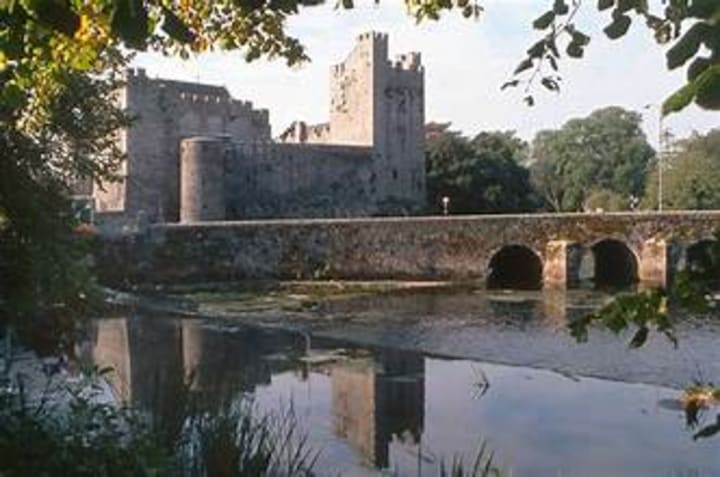
Cahir Castle is located in southeast Ireland and is one of the country’s largest castles. The castle stands on a rocky island on the River Suir. It was built as a medieval fortress with massive walls and a moat. It dates back to the 12th century and was heavily damaged by cannon fire in 1599. The keep was again besieged in the 17th century during the Irish Confederate Wars. In the late 20th century the castle was named a National Monument.
In 1973 Cahir Castle was used for the interior shots in the TV film "The Conflict". It was also used as a location for a battle scene in the film "Excalibur" among others.
Donegal Castle
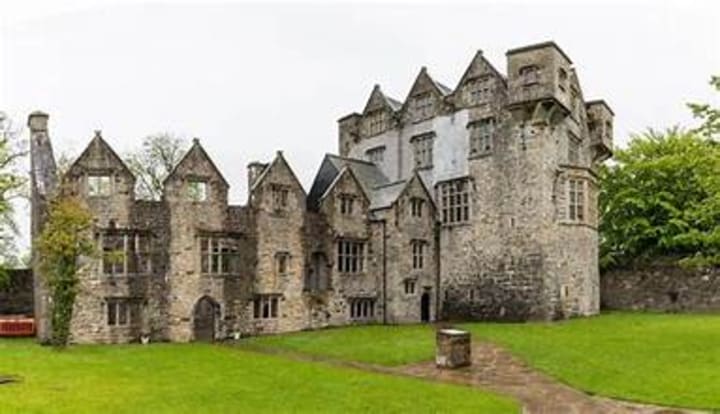
Donegal Castle resembles a traditional Jacobean country home more than a typical medieval castle. The castle was restored in the late 20th century. It is located in Donegal Town in Ulster. Donegal Castle sits near the River Eske. The castle is now open to the public and often hosts events such as Gaelic cultural evenings or Ulster Scots events.
Dublin Castle
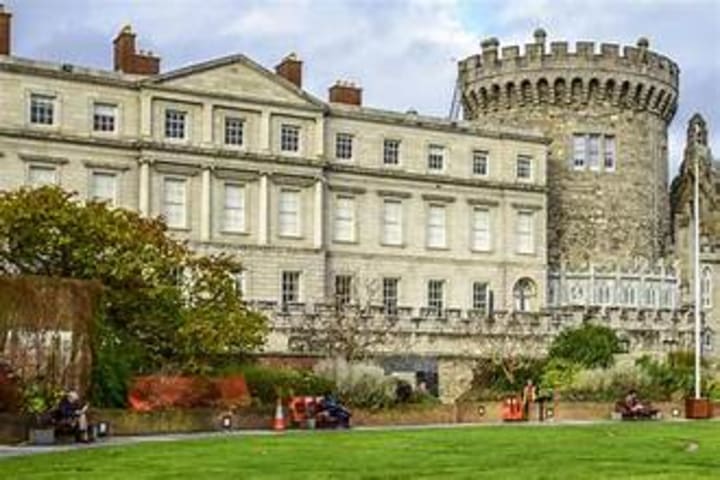
Located in the heart of Dublin, Dublin Castle is now an Irish government building.
The original medieval fortress caught fire in the late 17th century and was reconstructed as a Georgian Palace. The castle includes towers at two corners. In 1922, following Ireland’s independence, Dublin Castle was handed over to the new Irish government. It is now a major government complex and a key tourist attraction. The State Apartments, located in the southern range of buildings of the Upper Yard, contain the rooms formerly used by the Lord Lieutenant for personal accommodation and public entertaining during the Castle Season.
Dunguaire Castle
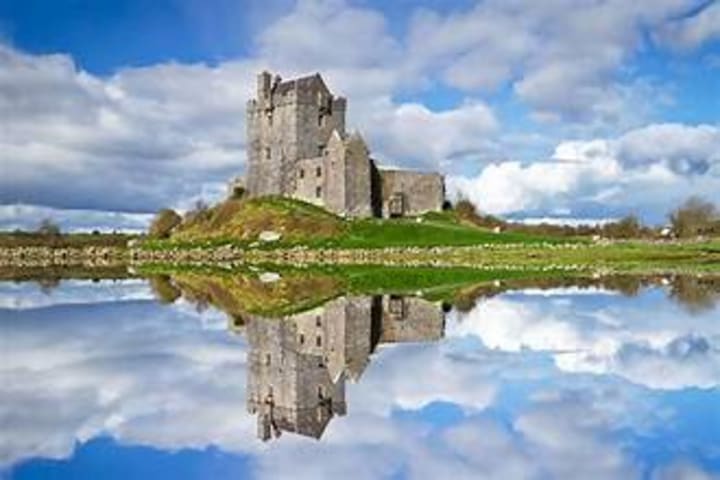
Dunguaire Castle is located in County Galway. Built in the 15th century, the castle eventually came under the ownership of the great Irish writer Oliver St. John Gogarty. During the time the writer lived here visitors included some of the 20th century’s greatest poets and literary figures, including George Bernard Shaw and W.B. Yeats.
Today, the castle is an immersive tourist attraction where visitors can learn about the history of the site and even enjoy a historical banquet.
Kilkenny Castle
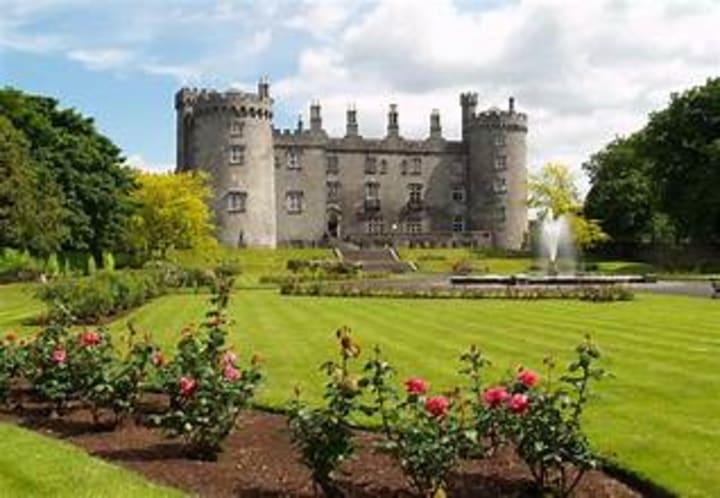
Kilkenny Castle dates back to the 19th century and three of its original towers still survive. It is located near Dublin in the province of Leinster. Today, Kilkenny Castle is open to visitors all year round and is largely a Victorian remodelling of the thirteenth century defensive Castle. Among the highlight is parkland with abundant wildlife, a formal terraced rose garden, and a man-made lake.
Lismore Castle
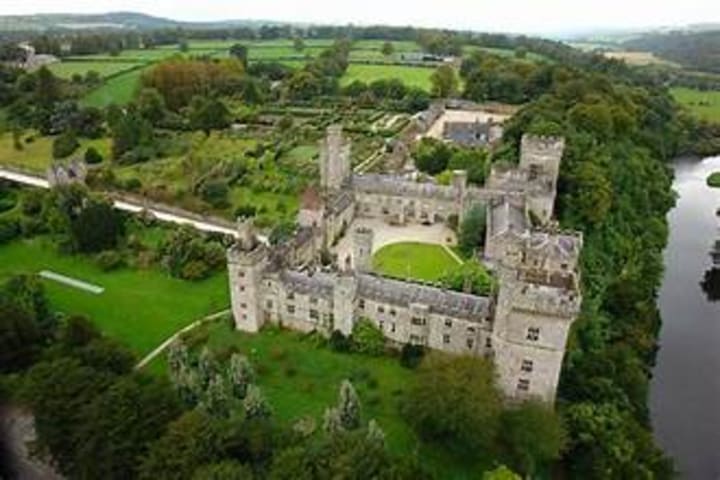
Lismore Castle in South Ireland in the seat of the Duke of Devonshire is a regal royal residence. The derelict west range was converted into a contemporary art gallery, Lismore Castle Arts in 2005. The rest of the interior is not open to the public, but is available for hire by groups of up to twenty-three visitors.
The castle features gardens, which are open to the public. The upper garden is a 17th-century walled garden while much of the informal lower garden was designed in the 19th century. Under Lord Burlington the planting has been enhanced, and contemporary sculpture added, including works by Sir Antony Gormley, Marzia Colonna and Eilís O'Connell.
Malahide Castle
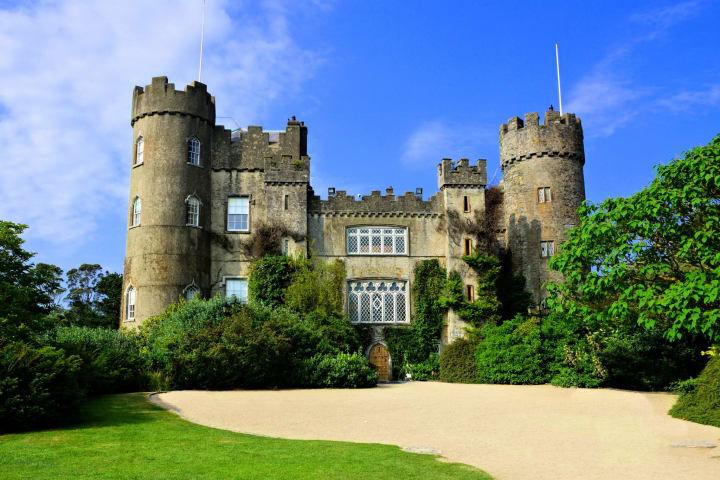
Malahide Castle is a short distance from the center of Dublin. The oldest portions of this structure date to the 12th century. During the 15th century, King Edward IV ordered enlargement and renovation projects. Malahide Castle and Gardens is on 250 acres of parkland in the pretty seaside town of Malahide in County Dublin.
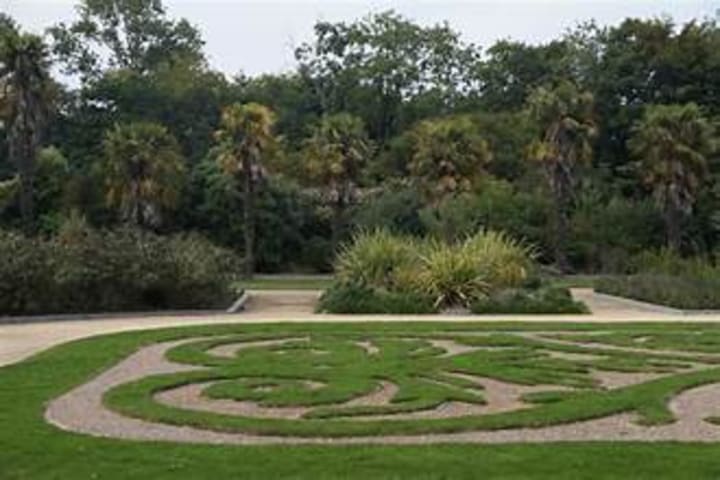
The castle is known for its guided tours of the interior, children's palyground, fairy trail, butterfly house, old Abbey ruins, walking trails, Avoca store and cafe, and the Talbot Botanic Gardens with exotic specimens.
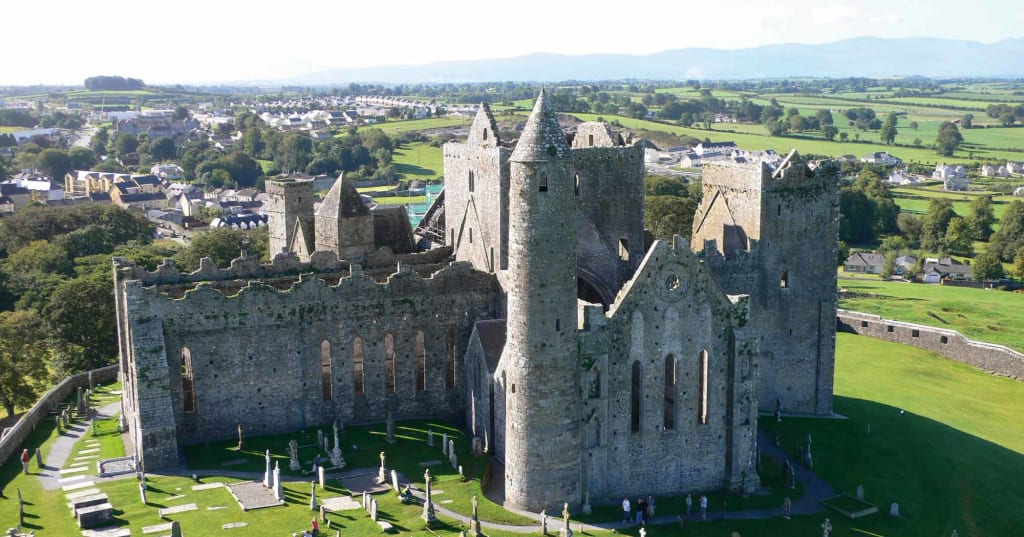
The Rock of Cashel (Pictured above)
The Rock of Cashel is located in County Tipperary and serves as a main focal point for the landscape. The castle’s oldest portions are its tallest, with a round tower. The famous Cormac’s Chapel is visually stunning with wide arches and vaulted ceilings. Among the monuments to be found there is a round tower, a high cross, a Romanesque chapel, a Gothic cathedral, an abbey, the Hall of the Vicars Choral and a fifteenth-century Tower House. It is a UNESCO World Heritage Site.
About the Creator
Rasma Raisters
My passions are writing and creating poetry. I write for several sites online and have four themed blogs on Wordpress. Please follow me on Twitter.
Keep reading
More stories from Rasma Raisters and writers in Wander and other communities.
Strolling Through Beautiful Castles Scotland
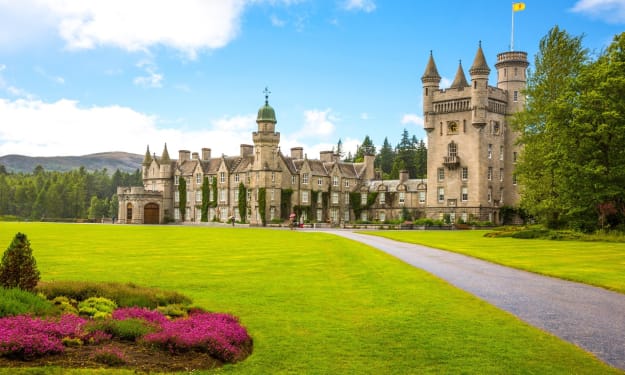
Balmoral Castle Balmoral Castle sits in the countryside of Aberdeenshire. It is an example of Scottish Baronial architecture. Queen Victoria referred to it as her "dear paradise in the Highlands". It remains as the privated home of the Royal Family. When they are not in residence visitors can enjoy exhibitions in the Castle Ballroom which is the largest room in the castle. You can explore the beautiful gardens.
By Rasma Raisters7 months ago in Wander
What a Truly Comfortable Travel Experience Feels Like — Beyond Hotels and Flights
When people talk about comfortable travel, the conversation usually revolves around hotels, flight classes, or airport lounges. While these details matter, comfort in travel often comes from something less visible: how smoothly everything fits together.
By Jeffrey Mathew4 days ago in Wander
Postcard from Castle Hill
Close your eyes and let the sea wind carry you. Hear the hush of tide through salt grass, the crunch of gravel beneath footfalls, and the low call of a distant bell. Before you unfurls a vision as layered as history itself: a rolling drumlin crowned by a Stuart-style mansion, its pale walls gleaming above a velvet lawn that tumbles half a mile toward the Atlantic—a landscape as finely composed as poetry and as resonant as legend. This is Castle Hill, the luminous core of the Crane Estate in Ipswich, Massachusetts, where stories—both spoken and unspoken—gather like morning mist over marsh.
By Kristen Barenthaler3 days ago in Wander
The Devil's Cut
“Comrade, finally you’re awake.” The voice was smooth, sensual. A flickering incandescent bar was all that lit the white, sterile room. All Vladimir remembered was everything going black. He tried to move his arms and found them strapped to the gurney.
By Matthew J. Fromm4 days ago in Fiction


Comments
There are no comments for this story
Be the first to respond and start the conversation.