
Sri Lanka, the "Wonder of Asia," is Seeing a Tourism Revival in 2025
Wonder of Asia

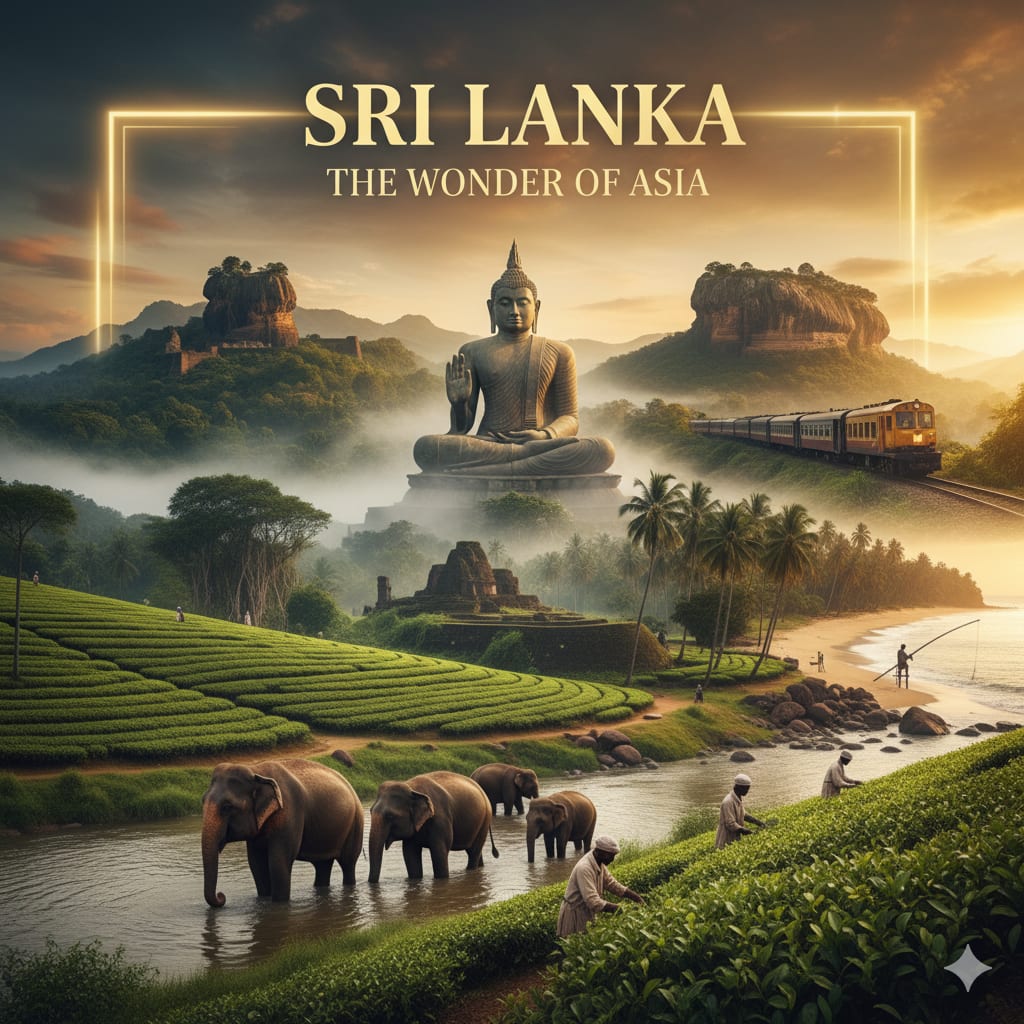
Sri Lanka has for decades been admired as the “Wonder of Asia” for its stunning landscapes, deep cultural heritage, and biodiversity. In 2025, the country is seeing a marked tourism revival, driven by a mix of bold policy moves, infrastructure upgrades, marketing strategies, and new attractions. These changes are helping Sri Lanka re-establish itself on the global tourism map and attracting a broader, higher-spending traveler base.
One of the most important improvements has been visa policy reform. The government has expanded visa-free or visa-on-arrival access for many countries, including major source markets such as India. By making it simpler and cheaper for tourists to enter, Sri Lanka is reducing hurdles that previously discouraged spontaneous or shorter trips. This liberalized entry policy has led to increased visitors and has helped the tourism sector recover strongly from recent financial and travel-crisis setbacks.
Another key driver is strategic branding and rural destination development. Rather than focusing only on popular traditional spots, Sri Lanka is investing in improving lesser-known rural destinations—enhancing roads, accommodations, and local services—so tourists can explore more deeply beyond the usual beach, temple, and safari circuit. The government has designated many rural towns and cities for infrastructure upgrades and is injecting funds to better connect them to major travel hubs. This opens up new experiences (tea-country journeys, village homestays, eco-tourism) and helps distribute economic benefits more evenly across the country.
Closely tied to this is the push for quality and sustainability over mass, low-cost tourism. Authorities and private industry are increasingly targeting higher-yield visitors—those who spend more per trip, stay longer, and seek richer experiences. New luxury resorts, wellness retreats, and eco-friendly lodges are being developed, especially in areas of natural beauty and cultural heritage. Also, marketing campaigns emphasize Sri Lanka’s biodiversity (wildlife parks, marine life), cultural festivals, historical sites, and scenic train rides. This gives travelers compelling reasons to choose Sri Lanka not just for beaches but for immersive experiences.
In addition, major new attractions and developments are helping draw in visitors. One headline project is the City of Dreams resort in Colombo, an integrated resort and casino complex designed for high-end tourism. Opened in 2025, it signals Sri Lanka’s intention to tap into luxury tourism and attract travelers looking for more upscale entertainment and hospitality options.
Enhanced international connectivity is also part of the plan: more flights, improved airport services, and better internal transport make it easier for tourists to both arrive and explore multiple regions without long delays or discomfort.
Tourism numbers in 2025 support that these improvements are bearing fruit. Arrivals are up versus 2024; for example, August 2025 saw nearly 200,000 foreign visitors, a year-over-year increase of over 20%. The growth is coming from both longstanding markets (India, UK, Germany) and new ones. Also, revenue from tourism is rising, showing that the average spend per tourist is going up.
Social and community dimensions are part of the rise too. Efforts are underway to make the tourism boom more inclusive—supporting small and rural hospitality businesses, training local guides, improving infrastructure in lesser visited regions, and ensuring cultural and environmental preservation. The goal is not just more tourists, but better experiences for tourists and stronger benefits for local people.
Still, challenges remain. Sri Lanka must balance growth with sustainability to prevent over-tourism in fragile areas, maintain quality in services as demand scales up, manage environmental impact, and ensure safety and hygiene standards meet global expectations. If those are managed well, Sri Lanka has strong momentum in 2025 to re-claim more firmly its reputation as a “Wonder of Asia.”
4 Reasons Why Sri Lanka is Called the “Wonder of Asia”
- Rich Cultural Heritage – Home to ancient cities like Anuradhapura, Polonnaruwa, and Sigiriya, showcasing over 2,500 years of history and Buddhist civilization.
- Breathtaking Natural Beauty – Golden beaches, misty hill country, lush tea plantations, and wildlife parks make Sri Lanka one of the most diverse tropical paradises.
- Warm Hospitality – Sri Lankans are known for their friendly smiles, generosity, and welcoming nature that make every traveler feel at home.
- Compact Travel Destination – Within a few hours, visitors can experience beaches, mountains, jungles, and cultural wonders all in one small island nation.
About the Creator
Keep reading
More stories from Shiran Pallewatta and writers in Wander and other communities.
Unveiling Sigiriya's Ancient Water Supply System: A modern Discovery
In a remarkable development, recent maintenance work at Sri Lanka's iconic Sigiriya rock fortress has unveiled the sophisticated workings of its ancient water supply system. Director General of the Central Cultural Fund (CCF), Dr. Nilan Cooray, confirmed that the fountains, which typically activate during the rainy season, remained inactive towards the end of the previous year. This anomaly prompted restoration efforts, leading to the discovery of the system's underlying mechanisms.
By Shiran Pallewatta4 months ago in Wander
Eating in Morocco With Food Allergies by Morocco Family Vacation
Traveling with food allergies is stressful no matter where you go. Traveling with kids who have food allergies can feel overwhelming. When we planned our family trip to Morocco, this was the part that worried me the most. I kept asking myself the same questions: Would people understand allergies? Would language be a barrier? Would I be constantly on edge at every meal?
By Ariel Cohena day ago in Wander
Center Stage with Paul Stewart
*** I'm keen to republish the interviews I did for my series with Vocal creators. It's been a few years and I thought it might be nice to revisit these wonderful conversations. I'll be releasing them one at a time for a few weeks/months.
By Heather Hubler4 days ago in Interview



Comments
There are no comments for this story
Be the first to respond and start the conversation.