
Space Race
China or the US: Who Leads in Space Race Right Now?

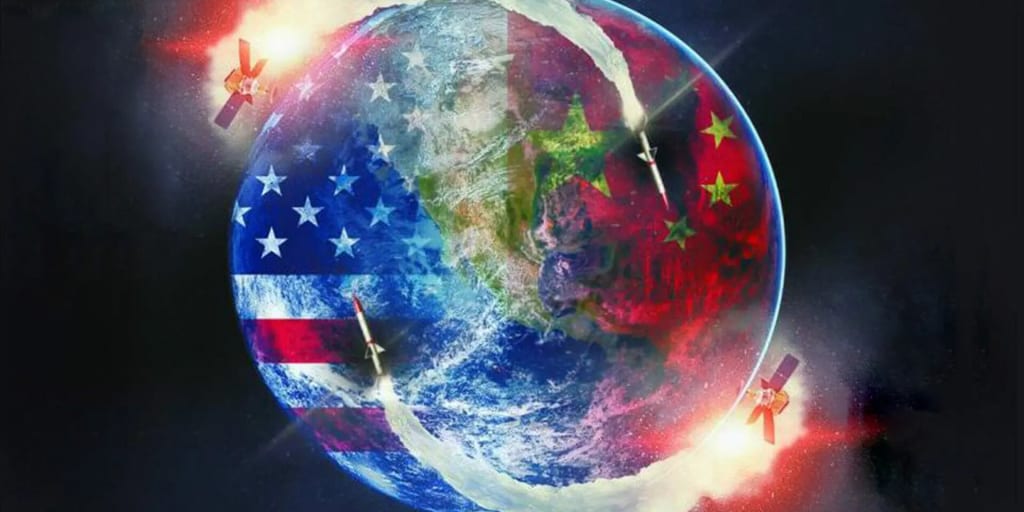
We’re in the midst of a new space race—and this one’s moving a lot faster than the Cold War-era moonshot of the 1960s. The skies above Earth are becoming increasingly crowded as global powers vie for orbital dominance. But with so much activity happening above us, a vital question emerges: Who actually leads in space right now—China or the United States?
Let’s launch into it.
The U.S.: Still the Undisputed Leader?
For now, the United States remains the dominant force in space, and by a wide margin. It boasts the most satellites—over 8,000 as of the latest count—many of which are operated by private companies like SpaceX, Amazon, and OneWeb, alongside military and government-owned ones. These satellites span everything from GPS navigation and internet access to military surveillance and climate monitoring.
America’s edge is not only in sheer numbers but also in cutting-edge innovation. Elon Musk’s SpaceX has revolutionized spaceflight with reusable rockets and is deploying thousands of satellites as part of the Starlink project to provide global internet. NASA, though less in the public eye lately, still leads in deep space exploration, with missions to Mars, asteroid retrievals, and advanced research at the International Space Station (ISS)—which it co-manages with international partners.
Then there’s the U.S. Space Force, a military branch dedicated specifically to space operations. It’s not just sci-fi anymore—militarized space is a real and growing domain. With billions in annual funding and advanced capabilities, the U.S. continues to set the pace for space dominance.
China’s Rapid Ascent
But don’t count China out. Far from it.
In recent years, China has surged to second place, overtaking Russia in both launch volume and satellite count. With more than 700 active satellites, including several for military and strategic use, China is quickly narrowing the gap.
Their ambitions are bold. China has its own space station, Tiangong, which it built and staffed independently of Western cooperation. It’s the only country currently operating a national space station after the planned retirement of the ISS. It has landed rovers on the Moon and Mars and is planning a crewed lunar mission by the 2030s.
Beyond that, China’s Beidou Navigation System is a full-blown rival to the U.S. GPS network, offering global positioning services for both civilian and military use. And Chinese rockets are launching at a furious pace, rivaling—even surpassing—the U.S. in annual launches some years.
Beyond Satellites: Cyber, Strategy, and Space Warfare
What’s happening in space isn’t just about science or exploration—it’s also a theater of conflict.
During the early hours of Russia’s invasion of Ukraine in 2022, a lesser-known event occurred: a cyberattack on the KA-SAT satellite disrupted wind turbine communication across Europe. This satellite was also critical for Ukrainian military communication. It was a stark reminder that wars today—and in the future—won’t just be fought on land, but also through space-based infrastructure.
Here’s the chilling part: you don’t even need to be in space to conduct a space attack. Cyberattacks, signal jamming, and even lasers and anti-satellite missiles are all on the table. China, the U.S., and Russia all have demonstrated anti-satellite (ASAT) capabilities, and that’s deeply concerning for global stability.
In this regard, the U.S. maintains an edge in both defensive and offensive capabilities, with the Space Force and Pentagon pouring resources into protecting its vast network of satellites. However, China has been investing heavily in space security and dual-use technologies, which could tip the balance in the future.
Looking Ahead: Crowded Skies and Growing Risks
Projections estimate that by 2030, there could be over 60,000 satellites orbiting Earth. That’s a massive leap—and with it comes increased risk of collisions, signal interference, and space debris. With so many stakeholders—including governments, private companies, and international organizations—the need for rules and cooperation has never been greater.
Right now, the U.S. leads in terms of numbers, infrastructure, and private sector innovation. But China is quickly catching up, fueled by centralized state planning and ambitious national goals.
The real question isn’t just who leads in space—it’s whether we can coexist peacefully in an increasingly militarized and commercialized orbital arena.
Final Thoughts
So, who leads in space? As of today, the United States still holds the throne—but China’s rocket-fueled rise is undeniable. The gap is shrinking, and the stakes are rising. What’s happening up there affects everything down here—from military defense to global communication to climate tracking.
Whether this remains a race or turns into a collaboration will define the future of space for decades to come.
Look up. Because space is no longer the final frontier—it’s the next battleground.
About the Creator
Horace Was
Essay Writer, Aviation and Technology Expert
Keep reading
More stories from Horace Was and writers in Wander and other communities.
The Engine dilemma
Jet engines are the heart of any commercial aircraft—massive, meticulously engineered machines that can cost upwards of $10 to $15 million to overhaul. In 2025, as the aviation industry continues recovering from pandemic-era disruptions, airlines are taking bold steps to extend the life of their engines. But why is this happening now, and what does it mean for the future of air travel?
By Horace Was11 months ago in Wander
The Top 10 Traditional French Dishes That Warm the Heart
French cuisine is not only about fine dining or artistic plates. At its core, it is home cooking. It is the smell of butter melting gently in a pan, onions slowly turning golden, herbs filling the kitchen with warmth. These are dishes that have been passed down through generations. Recipes we watched our parents and grandparents prepare. Meals that comfort, gather people together, and awaken memories.
By Bubble Chill Media 5 days ago in Wander




Comments (1)
Thanks for all news.