
Shanghai on the Yangtze River
The biggest city in China

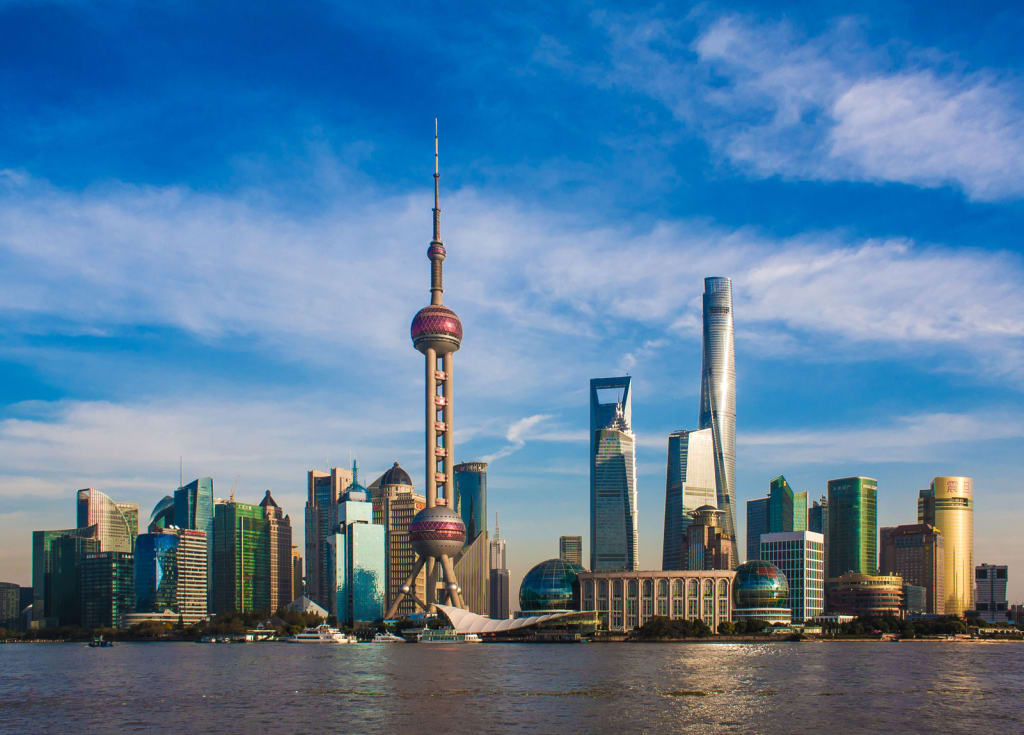
Shanghai is located on the central coast of China. The city sits on the southern estuary of the Yangtze River with the Huangpu River flowing through it. It is the country’s biggest city and a global financial hub. The heart of the city is the Bund, a popular waterfront promenade that is lined with colonial-era buildings. When you take a look across the Huangpu River you can see the fantastic futuristic skyline rising high into the sky in the Pudong District. The city also has many green spaces for rest and relaxation.
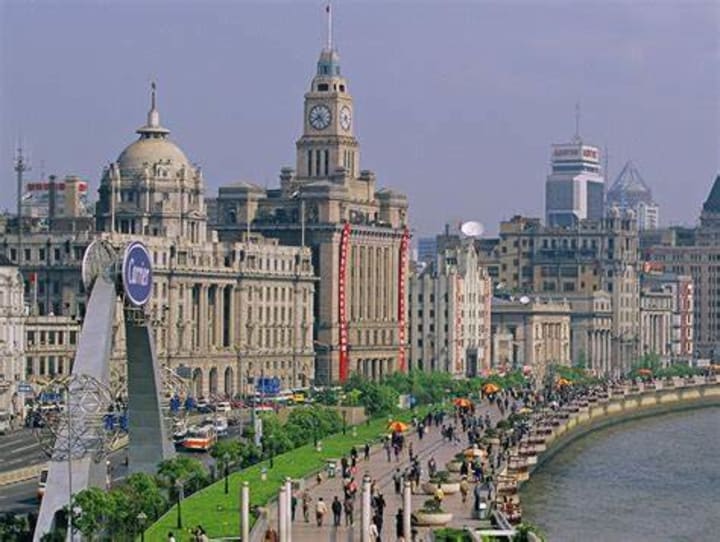
A most symbolic part of the city is the Bund which at one time was the city’s Wall Street for financial wheeling and dealing. The name of the area is an Anglo-Indian term for the embankment of a muddy waterfront. For visitors, it is a great place to take a stroll and get an awesome view of Pudong’s skyline.
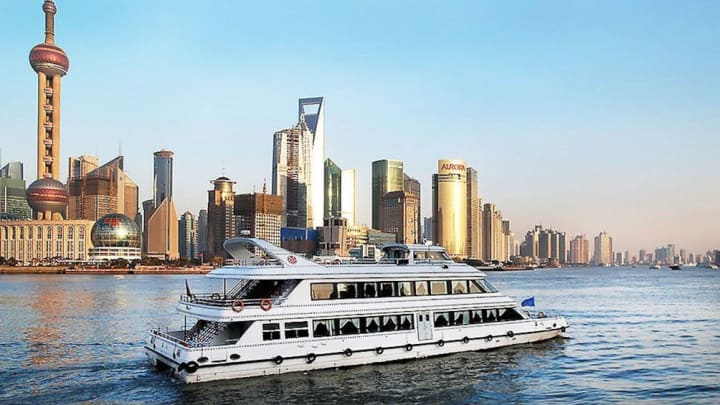
A great many of the Art Deco and neo-Classical buildings along the Bund were built in the early 20th century. Today this is a designer retail and restaurant zone and the place where you can find the city’s most exclusive boutiques, restaurants, and hotels. At night the buildings all along the Bund are alight. You can take a boat tour on the Huangpu River for great views and a relaxing time. You can enjoy the peace and beauty of Huangpu Park.
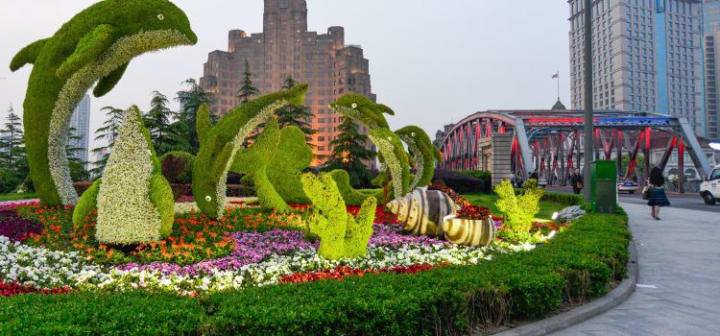
Huangpu Park is one of the most lovely spots on the Bund. It was completed in 1868. Here you can enjoy wide trees and flowers and relaxing garden landscapes. To the west of the park, you can see old Western buildings that were built at the beginning of the 20th century in a region known as Rockbund. This is the origin of the Bund with the earliest buildings.
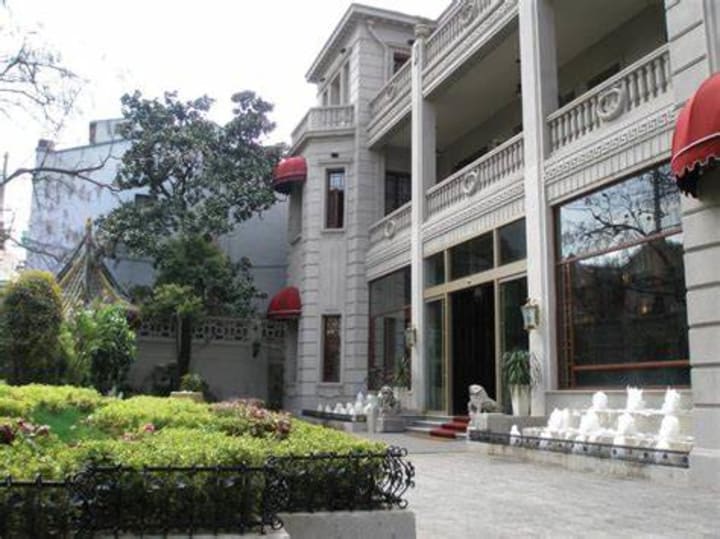
Shanghai Mansion also known as Broadway Mansion is a five-star foreign hotel. It stands in a prominent position at the north end of the bridge. It was built in 1930 and completed in four years.
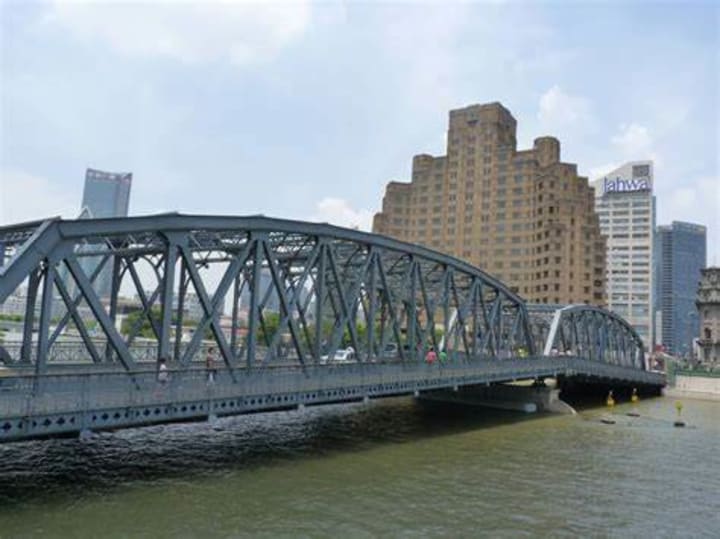
Waibaidu Bridge is one of the city’s landmarks spanning Suzhou Creek and at the confluence of this creek with the Huangpu River. This is Shanghai’s earliest and largest steel bridge. It joins the north end of the Bund and faces the rippling river. From the bridge. people can get great views of the skyline.
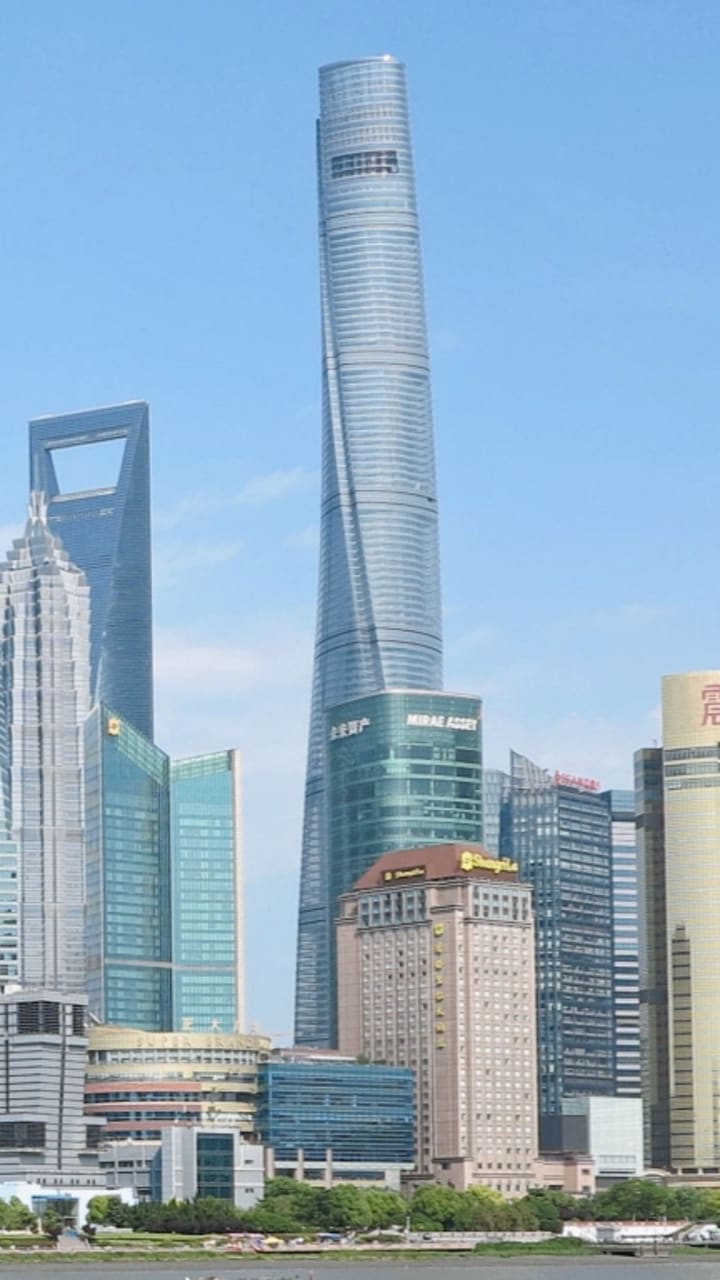
Shanghai Tower is China’s tallest building. The tower rises 632 m into the sky and has 121 stories. It opened its doors in mid-2016. This spiral-shaped tower has office space, entertainment venues, shops, a conference center, a luxury hotel, and “sky lobbies”. It has a corkscrew form and its nine interior cylindrical units are wrapped in two glass skins. At this time it is the second-tallest building in the world. The observation deck is the world’s highest on the 118th floor. Visitors are greeted by breathtaking views on the sky deck transported there by the world’s fastest lifts at 40 mph designed by Mitsubishi. A six-level luxury retail podium fills the base of the tower.
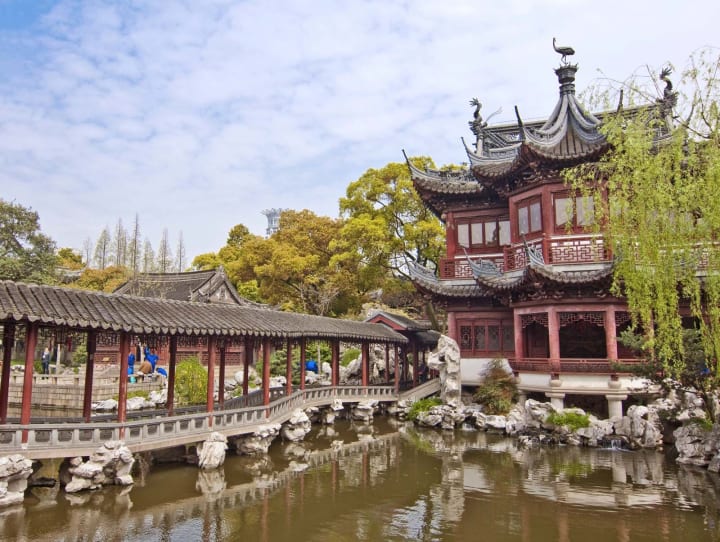
Yuyuan Garden is a beautiful place to visit. It was once the private garden of the Pan family during the Ming Dynasty. It is uniquely designed with elaborate pavilions, shimmering pools, zigzag bridges, pagodas, and impressive rockeries. Visit the famed Jade Rock, a 5-ton beautifully-shaped rock, or climb to the top of the Great Rockery. Here you can see Shanghai’s flower the Magnolia grandiflora. Among the trees here are the luohan pine, willows, ginkos, cherry trees, and redwoods.
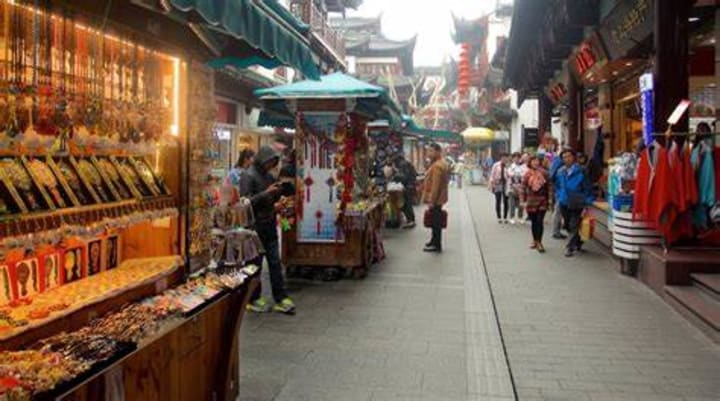
Next to Yuyuan Garden is Jyuan Bazaar with many small streets and lanes among them restaurants, tea houses, and shops. It is a great place to try some local snacks and buy souvenirs.
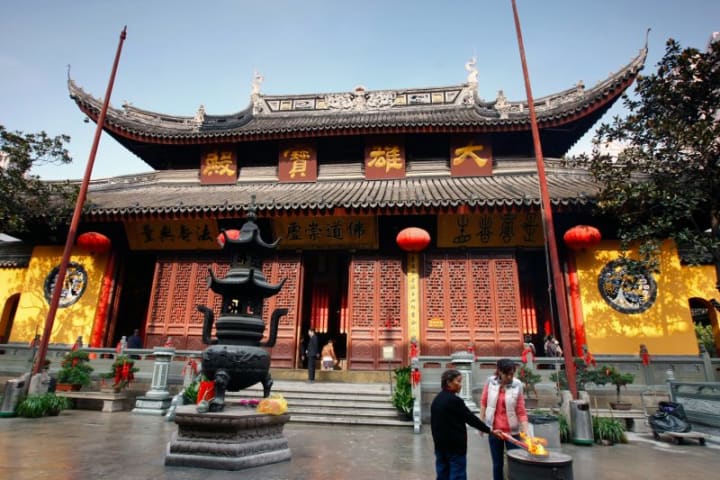
An active temple with 70 resident monks is the impressive Jade Buddha Temple. It was built between 1911 and 1918 in the style of the Song Dynasty. Here there are symmetrical halls and courtyards and bright saffron yellow walls. The centerpiece is a 1.9 m high white jade Buddha. The seated Buddha is encrusted with jewels and weighs about one thousand kilograms.

A smaller, reclining Buddha lies on a redwood bed. In the large hall, you’ll find three gold-plated Buddhas. There are also many other artifacts and about 7,000 Buddhist sutras line the walls.
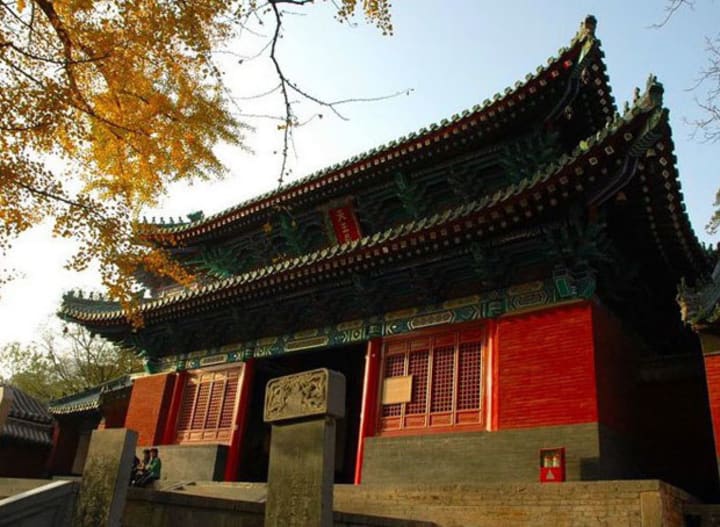
The first temple on the left is the Hall of Heavenly Kings with the statues of Four Heavenly Kings, looking upon the four cardinal points.
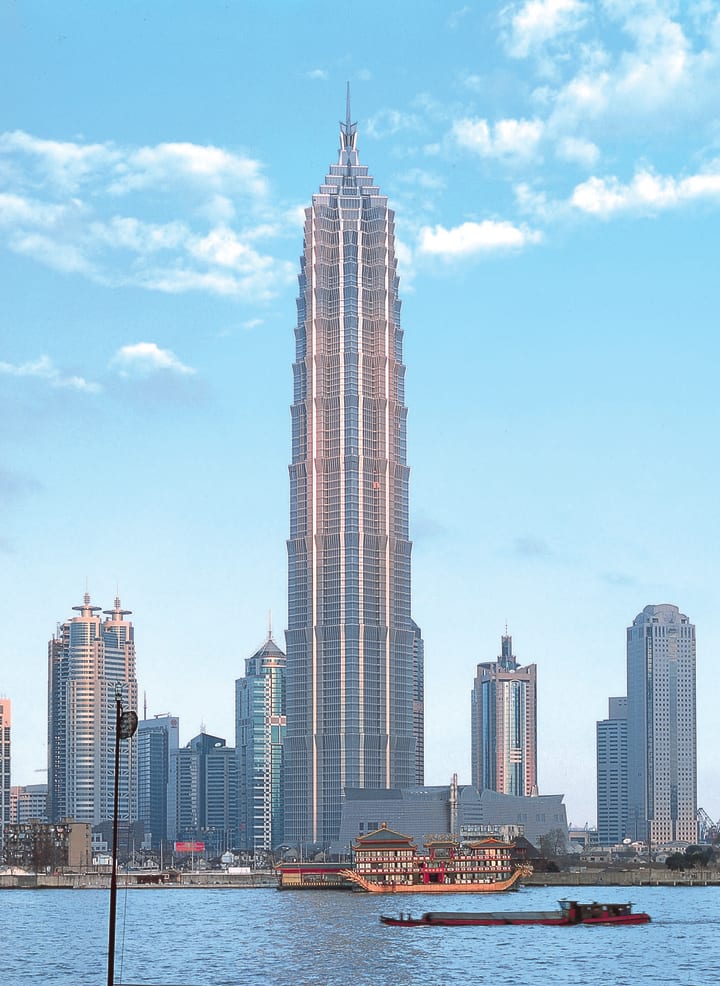
The Jin Mao Tower is a complex with offices, a convention space, and a hotel.
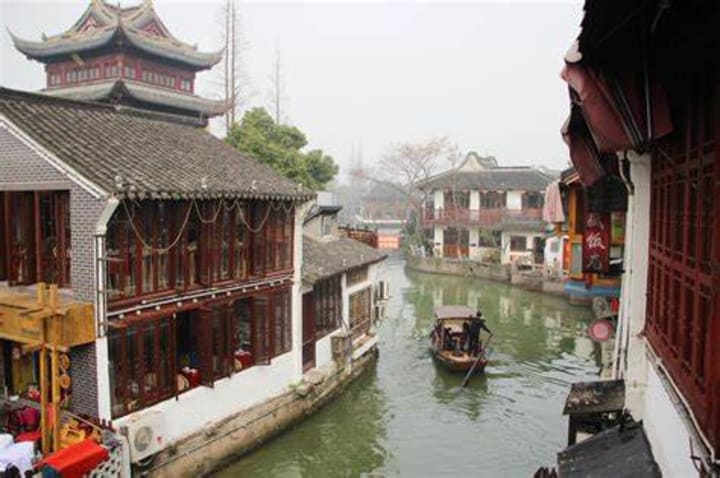
50 km from the Bund is Zhujiajiao Water Tower. This gives visitors a feel of an ancient town. It is similar to Venice, Italy with well-preserved bridges and boats for transport. Zhujiajiao is a township in the Qingpu District of Shanghai. In the past, it was a trading area with many canals used to provide products in little boats and barges. There are 36 ancient bridges and traditional Chinese-style residences.
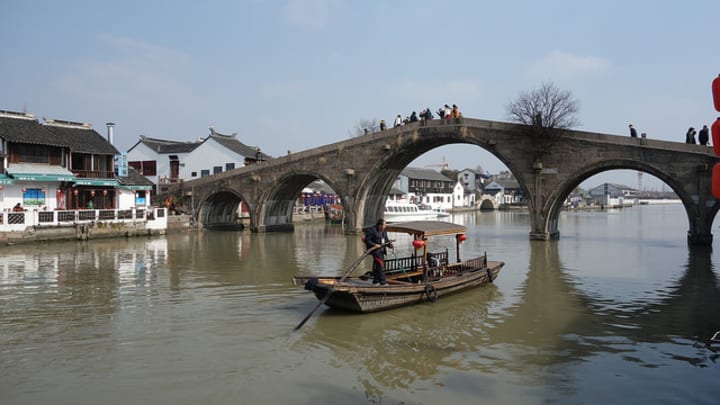
Fengsheng Bridge is one of the main attractions among the ancient 36 stone bridges. It was built in 1812 and is thought to be the largest stone arch bridge in Shanghai.
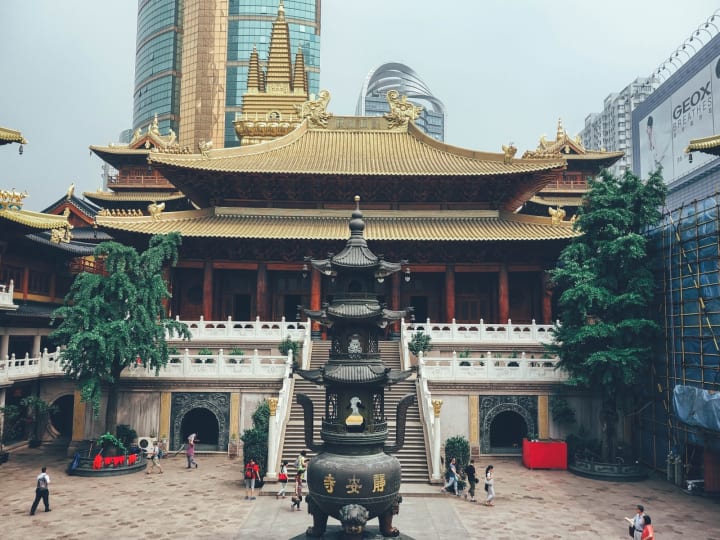
Jing’an Temple/Temple of Peace has been restored. The original dates back to 1216 AD. It brings visitors back into the past with the tinkle of wind chimes and the scent of burning incense. The temple was constructed mostly of Burmese teak.
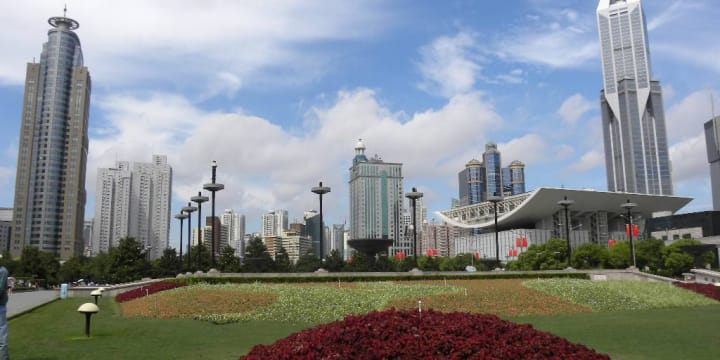
In the very center of Shanghai is the Shanghai People’s Square. By 1993 after reconstruction the square encompassed an area of around 140,000 square meters and it has become the largest public square in the city.
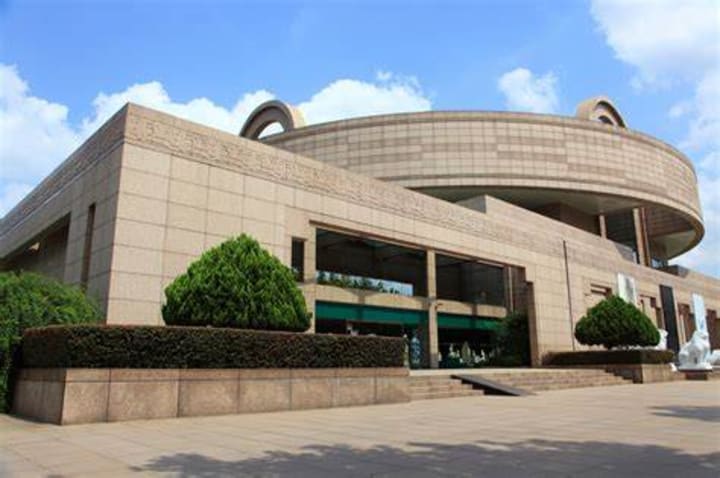
The Shanghai Natural History Museum offers displays of stuffed animals, dinosaurs, and interesting interactive features. The architecture of the building is a highlight set in the art-filled Jing’an Sculpture Park. The exhibitions are spread over five levels and you can see realistic animals, birds, and reptiles. One of the highlights is The African Savannah exhibit in the basement.
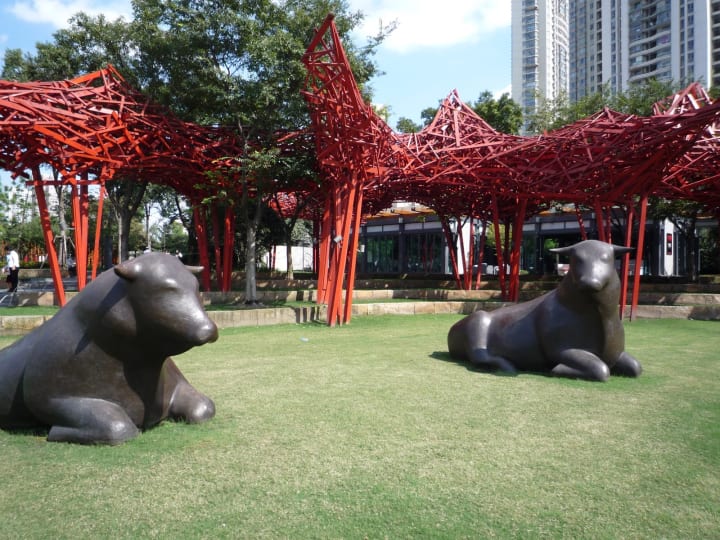
Jing'an Sculpture Park
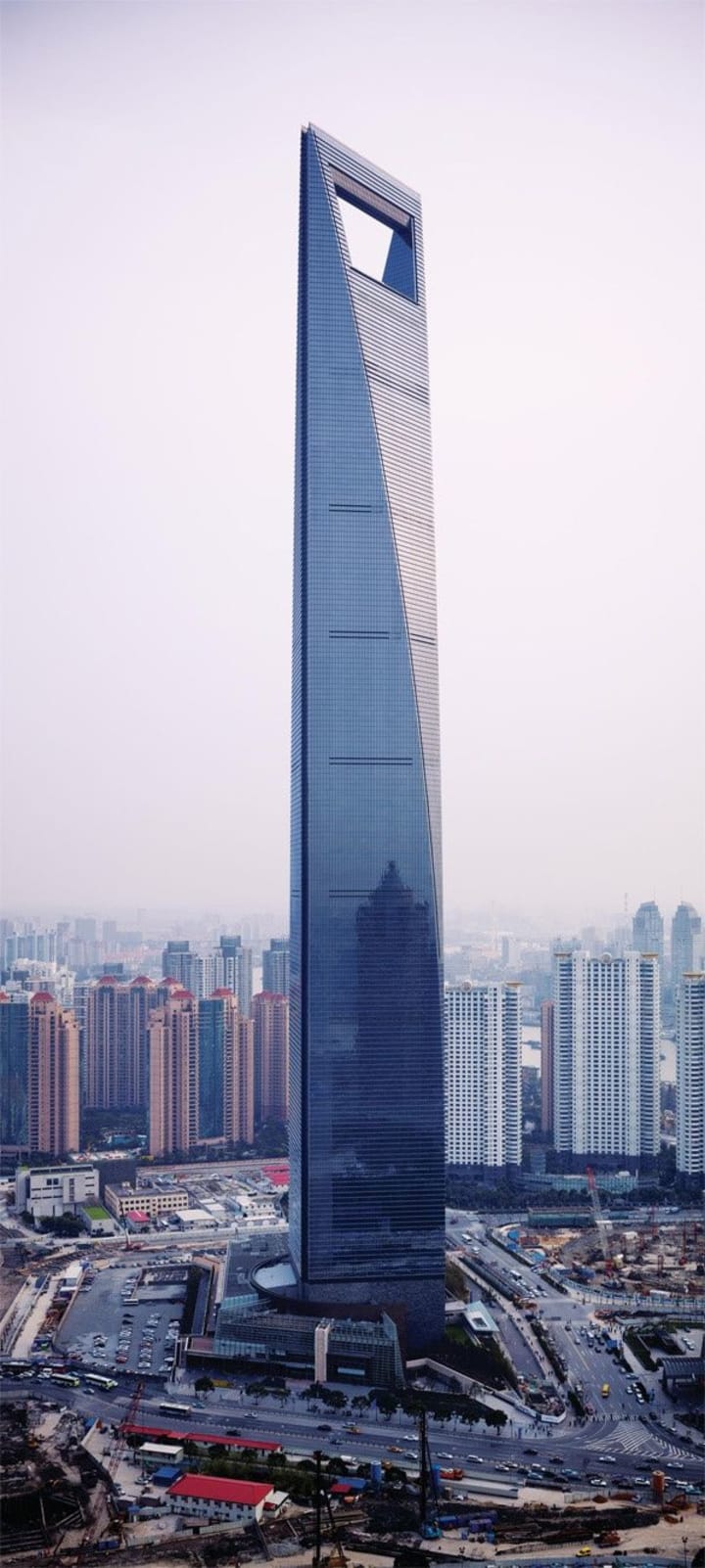
You’ll be amazed at the Shanghai World Financial Center rising 492 m high. This building has three observation decks on levels 94, 97, and 100. The top two are known as Sky Walks, offering a floor of transparent glass. You can enjoy the Park Hyatt Restaurant on the 91st floor.
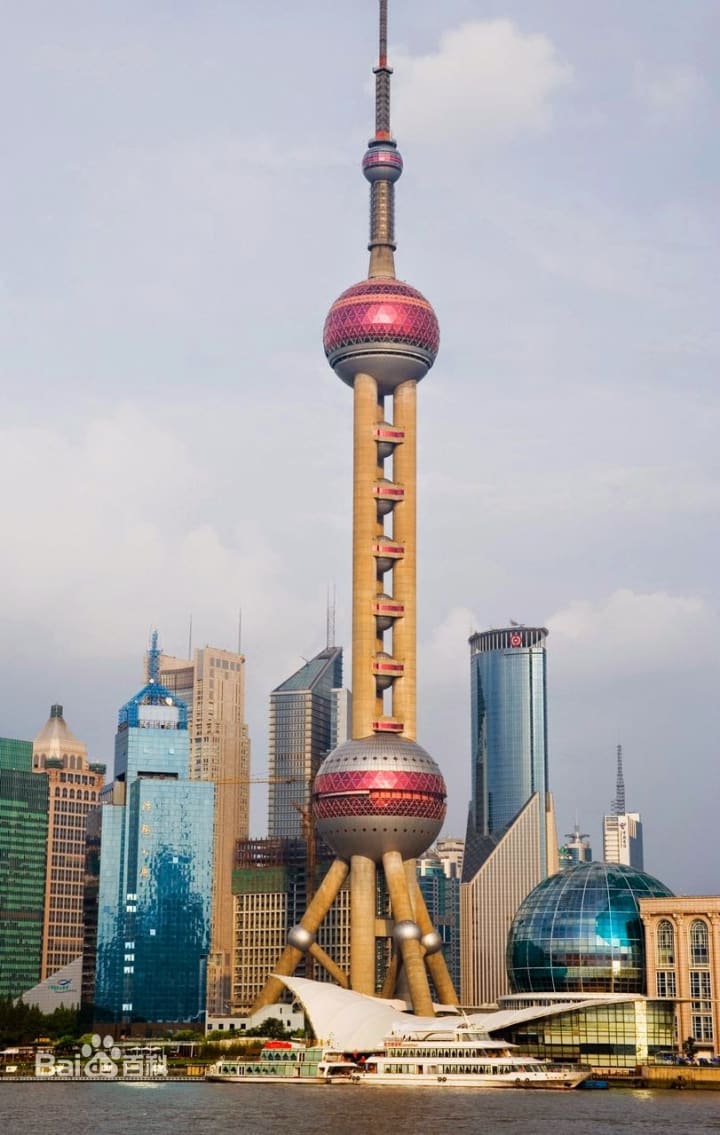
Visit the Oriental Pearl TV Tower. This is a 468 m tall poured-concrete tripod tower. Its image can be seen all around the city on postcards and T-shirts. It was built in the Deng Xiaoping-era design. The highlight is the Transparent Observatory where you can look down through a glass-bottomed walkway. In the basement, you’ll find the Shanghai History Museum. On the Sightseeing Floor at 263 m you’ll have fantastic 360-degree views across the city. Other features of the tower include a revolving restaurant at 267 m, a Space Capsule Sightseeing floor, a 5D cinema, and an indoor roller coaster.
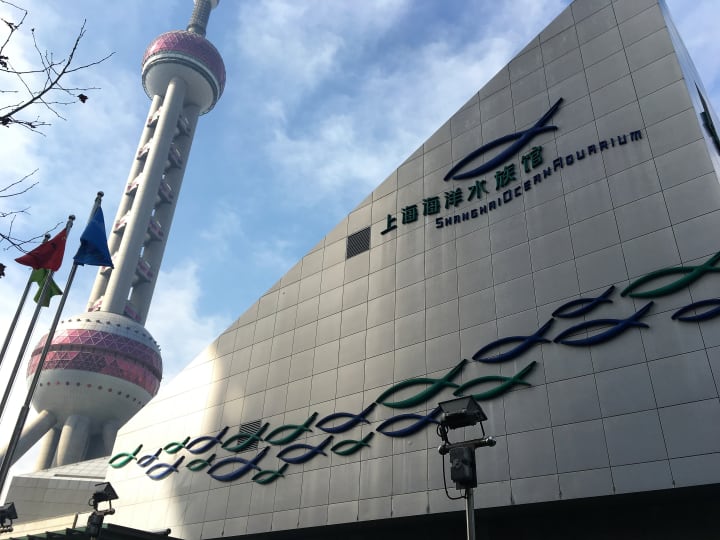
The Shanghai Ocean Aquarium is adjacent to the popular Oriental Pearl TV Tower and is one of the largest ocean aquariums in the world with the world’s longest submarine viewing tunnel that measures 155 meters in length. The aquarium consists of two pyramid-shaped buildings. Along with the exhibition area, there is a gift shop and a restaurant that can seat up to 300 people.
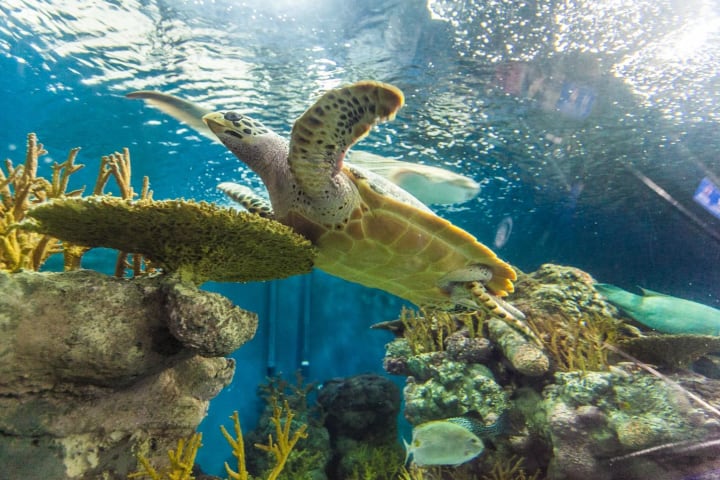
The main building is divided into different exhibition zones – China, South America, Australia, Africa, Southeast Asia, Cold Water, Polar, Sea and Shore, and Deep Ocean Zones. Exhibits include over 300 types and 15,000 water creatures and rare fish like poison dart frogs, jellyfish, moonfish, leafy sea dragons, and emperor penguins.
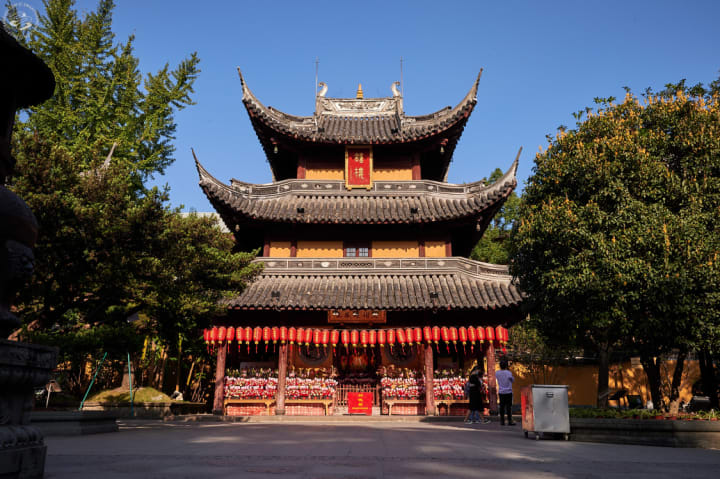
Longhua Temple and Pagoda is Shanghai’s oldest and largest monastery that is named after the pipal tree (Longhua) under which Buddha achieved enlightenment. Here trees are decorated with red lanterns and the scent of incense fills the air. Monks can be heard chanting. The temple dates back to the 10th century. The main halls here are Maitreya Hall, the Hall of the Heavenly Kings, the Grand Hall of the Great Sage, the Three Sages Hall, and the Laughing Buddha Hall. This temple is popular for its 6500 kg bell, cast in 1894.
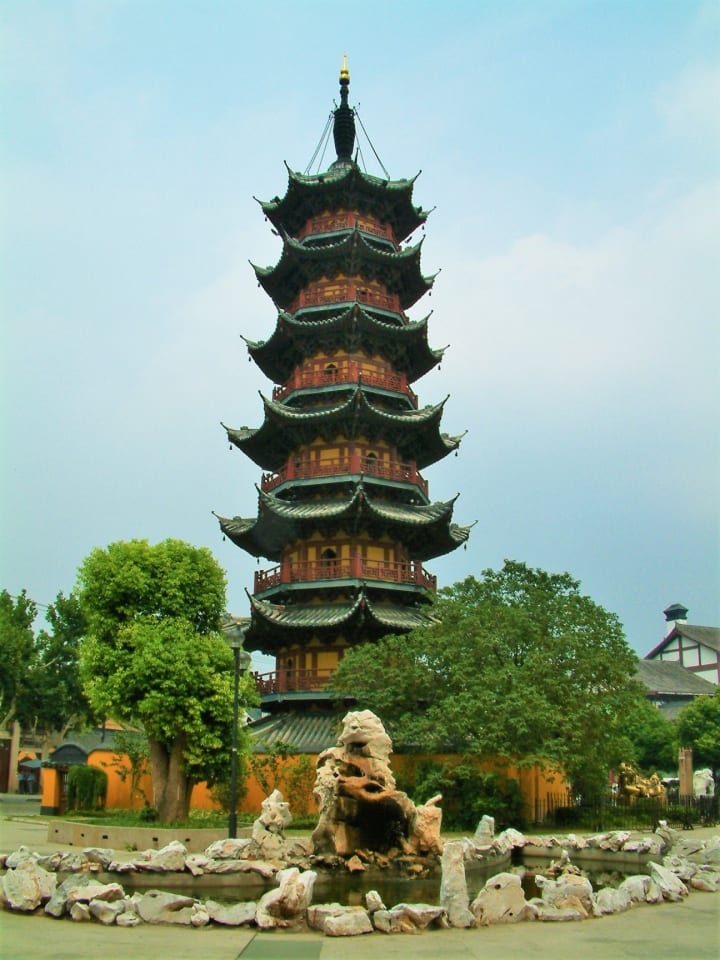
Opposite the temple entrance, you’ll see the Longhua Pagoda rising seven stories at 44 m high. It was originally built in 977 AD.
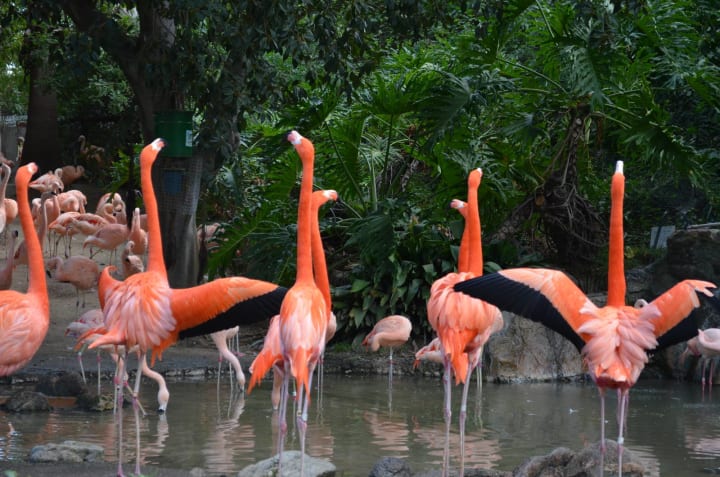
Shanghai Zoo is a large-scale state-level zoo. It is located on the western outskirts of Shanghai. The zoo exhibits over 6,000 animals among them 600 rare animals. Among the animals from China are giant pandas, golden monkeys, South China tigers, Manchurian tigers, Yangtze alligators, and elks. There are also animals from other parts of the world like giraffes, kangaroos, penguins, hippopotamuses, sea lions, ostriches, and cougars. The zoo is divided into five exhibition areas – Primates, Herbivores, Carnivores, Birds, and Amphibians.
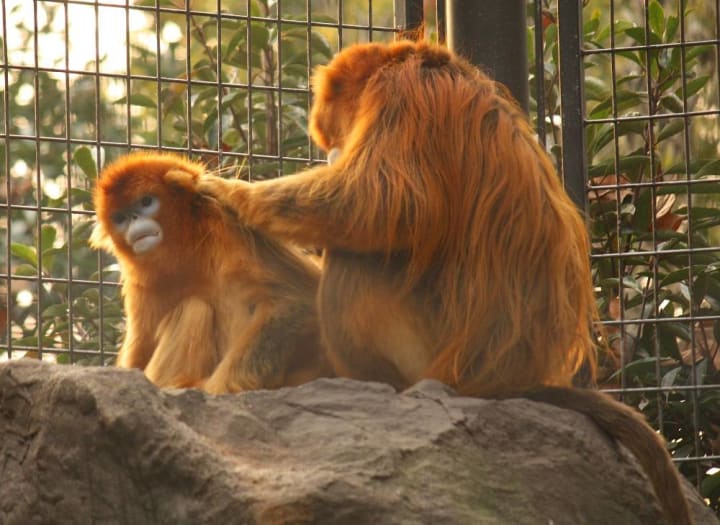
Walking into the zoo you’ll find the Primate Zone with golden monkeys, hamadryas baboons, gorillas, and chimpanzees. The golden monkey is a unique and rare animal from China.
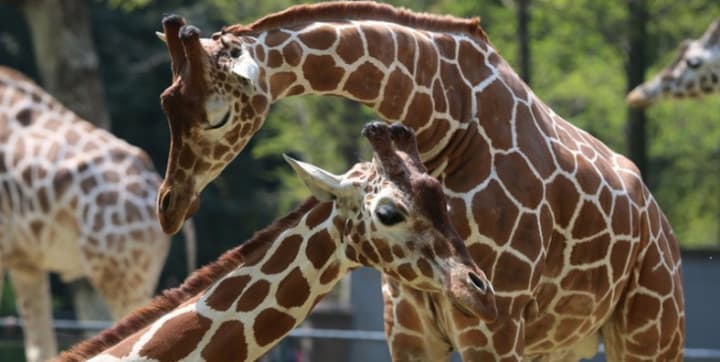
In the Herbivore Zone, you’ll see giraffes, Asian elephants, hippos and alpacas.
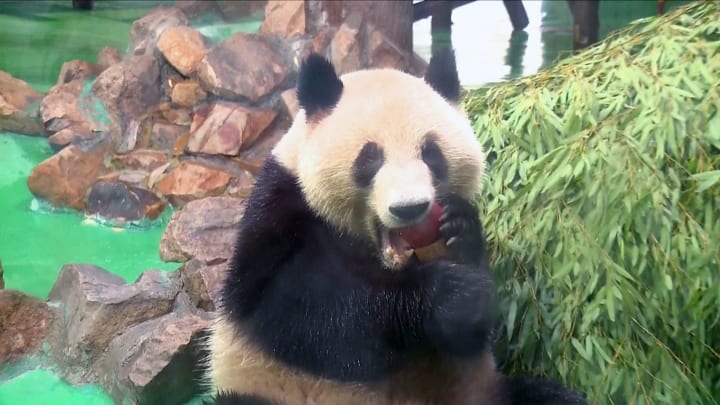
Giant Pandas live in the Carnivore Zone along with Bengal white tigers, South Chinese tigers, African lions, and Sun bears.
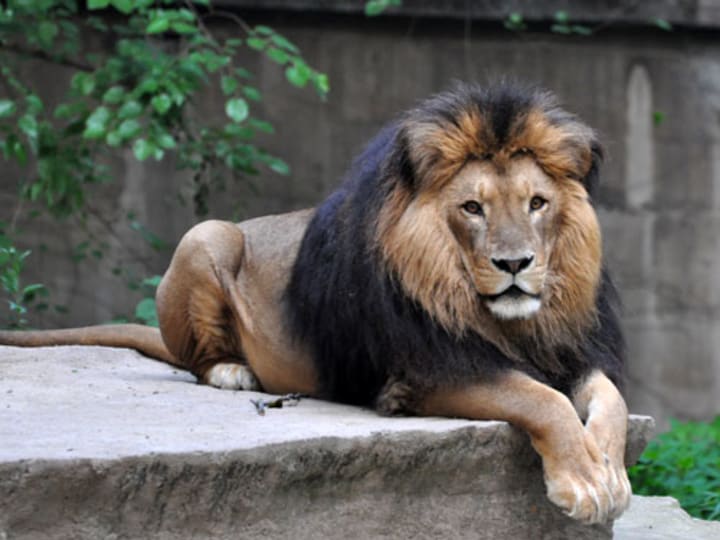
The Carnivore Zone also includes Lion and Tiger Hill. It is divided into east, central, and west hills. Here you can see Manchurian tigers, African lions, and South China tigers.

You can view lovely birds like an elegant swan or the beautiful Jackass Penguin. The Bird Zone is amazing. 40 kinds of birds nest in the zoo, among which the oriole, skylark, swan, cuckoo, and mandarin duck are famous. The Oriental egret, black swan, whooper swan, flamingo, and peacock can also be seen here. Swan Lake is particularly lovely surrounded by various plants.

In the Amphibian Zone, you’ll see Yangtze alligators, sea turtles, and pythons among others. All around the zoo are lovely flowers and more than 100,000 trees. The Scientific Building is the first of its kind established in China.
About the Creator
Rasma Raisters
My passions are writing and creating poetry. I write for several sites online and have four themed blogs on Wordpress. Please follow me on Twitter.
Keep reading
More stories from Rasma Raisters and writers in Wander and other communities.
Worth the Wait: Puerto Viejo, Costa Rica
Beach bumming in a small Caribbean beach town sounded like a perfect way to end our 6-month trip through Mexico and Central America. Or so we thought. The foul, fishy stench of rotten seaweed hit our nostrils as we stepped from the cramped bus and looked out at a rather depressing, empty, and underwhelming black sand beach. It was pouring with rain, and we had to quickly fish out our ponchos. We thought, this couldn’t be it, could it?
By Sh*t Happens - Lost Girl Travel5 days ago in Wander
Why Wadduwa Beach Is Sri Lanka’s Must-Visit Serene Escape in 2026
Wadduwa Beach is a hidden treasure on the southwest coast of Sri Lanka. While many travellers rush to the busy shores of Galle or Bentota, Wadduwa offers a rare sense of peace. In 2026, it has become the go-to spot for those wanting to escape the noise and find a quiet slice of paradise.
By Daphne Olgaa day ago in Wander
Guard Your Battery
Why are some people so attractive just by standing there? It’s not because they are "likable," but because they don’t need everyone to like them. I realized later that truly charismatic people allow themselves to be criticized, but they never criticize themselves. They never try to please the world; instead, the world stops to watch them.
By Emily Chan - Life and love sharing7 days ago in Poets



Comments
There are no comments for this story
Be the first to respond and start the conversation.