
Rome vs Florence 2025: 7 Key Insights for History Buffs
If you’re a traveler with a passion for history, you know how tricky it can be to pick the perfect city that truly satisfies your curiosity. Italy offers two shining stars — Rome and Florence — both packed with centuries of art, culture, and monuments that shaped the world. But when time (and budget) is limited, which one should you choose?

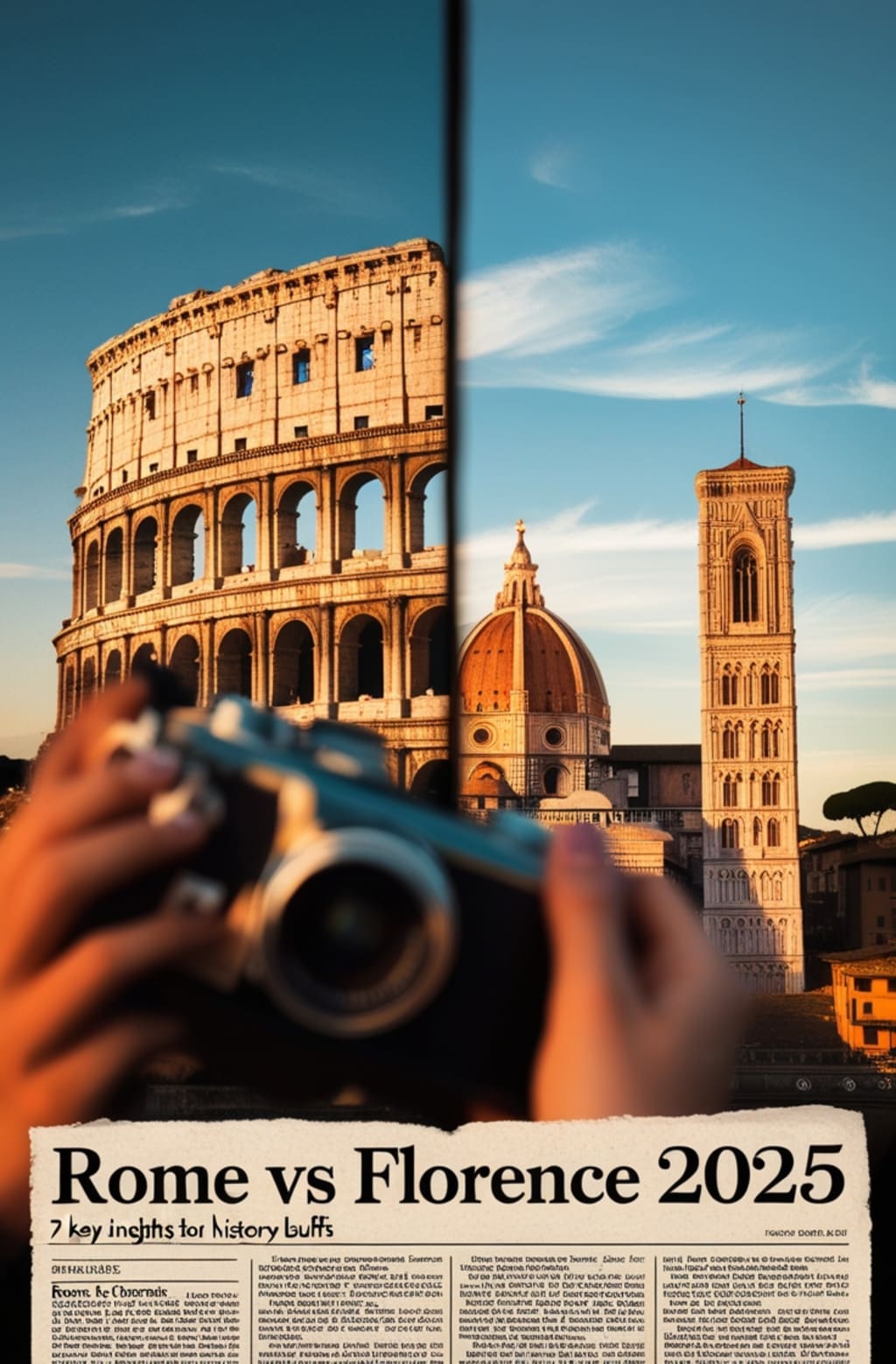
Introduction
If you’re a traveler with a passion for history, you know how tricky it can be to pick the perfect city that truly satisfies your curiosity. Italy offers two shining stars — Rome and Florence — both packed with centuries of art, culture, and monuments that shaped the world. But when time (and budget) is limited, which one should you choose?
In this post, we’ll break down the highlights of Rome vs Florence, compare their pros and cons, and help you discover which destination is the better fit for your travel style. Whether you’re a first-time visitor or a returning explorer, you’ll walk away knowing exactly which city deserves a spot on your bucket list.
Rome vs Florence: Which City Is Better for History Buffs?
Rome: The Eternal City
Rome isn’t called the Eternal City for nothing. With roots stretching back over 2,500 years, Rome is a living museum where ancient ruins, Renaissance palaces, and Baroque fountains stand side by side. The Colosseum, Roman Forum, and Vatican City attract millions every year, making it a top choice for anyone obsessed with classical history.
Key Features
- Ancient Roman architecture: Colosseum, Pantheon, Roman Forum
- Vatican treasures: St. Peter’s Basilica, Sistine Chapel, Vatican Museums
- Baroque masterpieces: Trevi Fountain, Piazza Navona, Spanish Steps
- Immersive experiences: walking tours, underground catacombs, gladiator schools
Pros
- Unmatched variety of historical eras (ancient, medieval, Renaissance, Baroque)
- Larger city with more activities, nightlife, and dining options
- Easy access via international flights
- Countless museums and UNESCO sites
Cons
- Crowds and long queues at major attractions
- Higher prices for hotels and restaurants
- Busy traffic and less walkable than Florence
Ideal For
- First-time visitors to Italy
- History buffs who want ancient ruins and Vatican highlights
- Travelers who want both history and modern city life
👉 Check current Rome travel deals on Trip.com
Florence: The Cradle of the Renaissance
Florence may be smaller than Rome, but its impact on history is enormous. Known as the birthplace of the Renaissance, Florence is home to legendary artists like Michelangelo, Leonardo da Vinci, and Botticelli. Its compact layout makes it easy to explore on foot while soaking up centuries of art and architecture.
Key Features
- Renaissance landmarks: Florence Cathedral (Duomo), Uffizi Gallery, Accademia Gallery
- Iconic art: Michelangelo’s David, Botticelli’s Birth of Venus
- Picturesque piazzas: Piazza della Signoria, Ponte Vecchio
Walkable city center: UNESCO World Heritage Site
Pros
- Smaller, more intimate city vibe
- Walkable — most landmarks are within 20 minutes of each other
- Incredible Renaissance art collection unmatched anywhere else
- Stunning views from Piazzale Michelangelo and the Duomo’s dome
Cons
- Less variety of historical eras compared to Rome
- Fewer international flight options (usually connect via Rome or Milan)
- Attractions can feel crowded in peak season despite smaller size
Ideal For
- Art lovers and Renaissance enthusiasts
- Travelers who prefer a walkable city experience
- Visitors who want a slower pace with deep cultural immersion
👉 See Florence vacation packages on Trip.com
What to Look for When Choosing Your Destination
When planning your history-focused trip, here are a few key factors to consider. Using platforms like Trip.com makes comparing hotels, flights, and activities much easier.
1. Type of Historical Experience
Rome: best for ancient ruins and varied eras.
Florence: best for Renaissance art and compact exploration.
2. Accessibility & Transportation
Rome has two international airports and a metro system.
Florence is walkable but usually requires a connecting flight or train.
3. Length of Stay
Short trip (3–4 days)? Florence may be ideal since it’s compact
Longer trip (5–7+ days)? Rome offers more variety.
4. Budget
Rome is generally more expensive for hotels and dining.
Florence offers mid-range options and cozy boutique stays.
5. Season & Crowds
Rome stays busy year-round.
Florence is busiest in summer, quieter in spring and fall.
👉 Plan smarter with real-time deals on Trip.com
FAQ: Rome vs Florence
1. Can I visit both Rome and Florence in one trip?
Yes! Many travelers combine the two since they’re only 1.5 hours apart by high-speed train. If you have a week, you can comfortably enjoy both.
2. Which city is better for first-time visitors to Italy?
Rome is usually the top pick for first-time travelers because of its sheer variety of landmarks and easier international access. Florence is perfect for those returning to Italy or specifically seeking Renaissance treasures.
3. Is Florence cheaper than Rome?
Generally, yes. Florence has more affordable mid-range hotels and dining options, though attractions like the Uffizi can still be pricey. Rome, being larger, offers luxury and budget extremes but tends to cost more overall.
Conclusion
So, Rome vs Florence — who wins for history buffs in 2025?
- If you’re fascinated by ancient ruins and diverse eras, Rome is unbeatable.
- If your passion lies in Renaissance art and walkable charm, Florence is your dream destination.
For many travelers, the ideal choice is to combine both cities. But if you must pick one, consider your interests, trip length, and budget.
👉 Ready to make your choice? Start planning today with Trip.com and lock in the best deals for your Italian adventure!
About the Creator
Rayan Brook Vardy
✈️ Explore the world with us
🌍 Travel guides, tips & best deals
🔗 Book with discounts 👇
Keep reading
More stories from Rayan Brook Vardy and writers in Wander and other communities.
Dubai vs Doha: Which City Should You Choose? 2025 Results
Introduction If you're a traveler planning your next Middle Eastern adventure, you know how challenging it can be to find a destination that truly offers limitless possibilities. Both Dubai and Doha have emerged as world-class cities, each promising unique experiences that blend traditional Arabian culture with cutting-edge modernity.
By Rayan Brook Vardy6 months ago in Wander
Worth the Wait: Puerto Viejo, Costa Rica
Beach bumming in a small Caribbean beach town sounded like a perfect way to end our 6-month trip through Mexico and Central America. Or so we thought. The foul, fishy stench of rotten seaweed hit our nostrils as we stepped from the cramped bus and looked out at a rather depressing, empty, and underwhelming black sand beach. It was pouring with rain, and we had to quickly fish out our ponchos. We thought, this couldn’t be it, could it?
By Sh*t Happens - Lost Girl Travel7 days ago in Wander
Turkey: Take THEM With You.
The first time I went to Istanbul, I went with my sister. The second time, I brought family. Picture from the trip. Same city. Same accommodation - right in the center of everything, the spot we'd found the first time and couldn't justify leaving.
By Destiny S. Harris6 days ago in Wander
Early March 2026: 4 Goals Accomplished
It's early March and I've now accomplished my 4th writing goal for the year of 2026. Before diving into the behind-the-scenes of it... why not tell you up front what that accomplishment was? I was published in a 2nd publication for this year. Published in Helix Literary Magazine out of Central Connecticut State University. You can read it for free right now!
By Stephen Kramer Avitabile7 days ago in Writers




Comments
There are no comments for this story
Be the first to respond and start the conversation.