
Pilgrimage from La Hiniesta
A tradition of over seven centuries in Zamora, Spain (part 2)

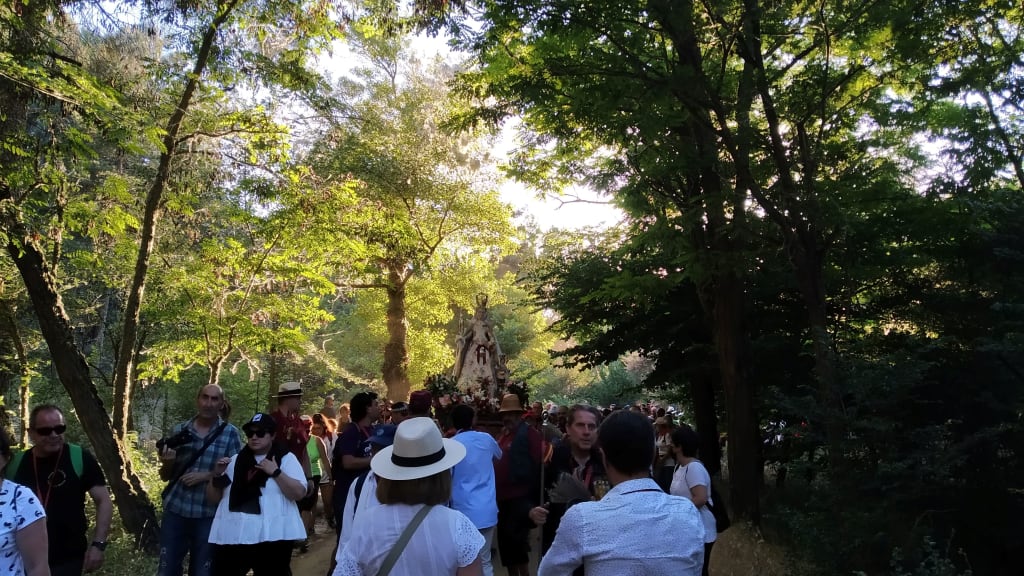
The yearly Pentecost Monday romería with the Virgen de la Concha (Our Lady of the Shell) to the nearby town of La Hiniesta occupies a permanent place in Zamoran hearts.
When I walked to La Hiniesta with my roommate in 2019, we hitchhiked home before the midday meal, unaware that it was our last opportunity to participate in the afternoon festivities for two years due to the COVID pandemic.
This second post will take you through two important sections of the afternoon romería, headed back to Zamora after an eventful midday in La Hiniesta, based on my experiences in 2023 and 2022.
The pandemic is the only time this pilgrimage has been canceled in over seven hundred years.
That's right, Zamora's passion for this event is too great to tolerate canceling it for something as trivial as bad weather. This fact came in handy this year, in 2023.
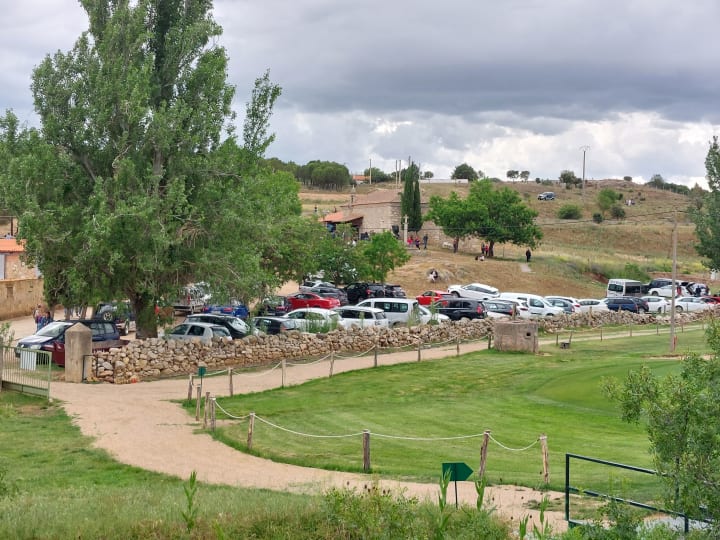
I was bound and determined to visit the Hermitage of the Crucifix of Valderrey, a medieval building I hadn't yet been able to investigate. I needed to go the afternoon of La Hiniesta because the romería stops there and otherwise, the hermitage is shut up tight.
I somehow managed to convince my roommate, Fernando, to guide me once again despite his "fears" of being struck by lightning.
The fears were well-founded. After a drought-provoking spring, the weather is making up for lost moisture all over Spain in a big way, to the point that some locations were flooded several times over in May.
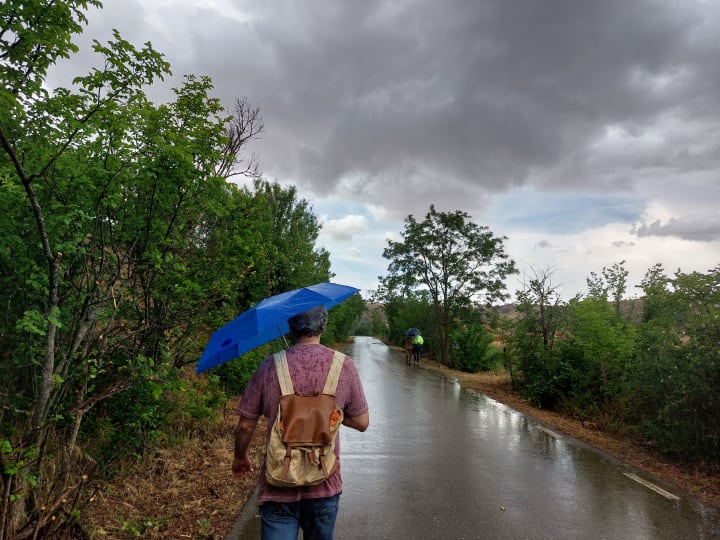
The pattern in Zamora has been clear or cloudy mornings and afternoons of constant rain--or earthshattering storms with thunder and hail. Our 3.7-km walk had the splattering of rain on our umbrellas and thunder in the distance as its musical backdrop.
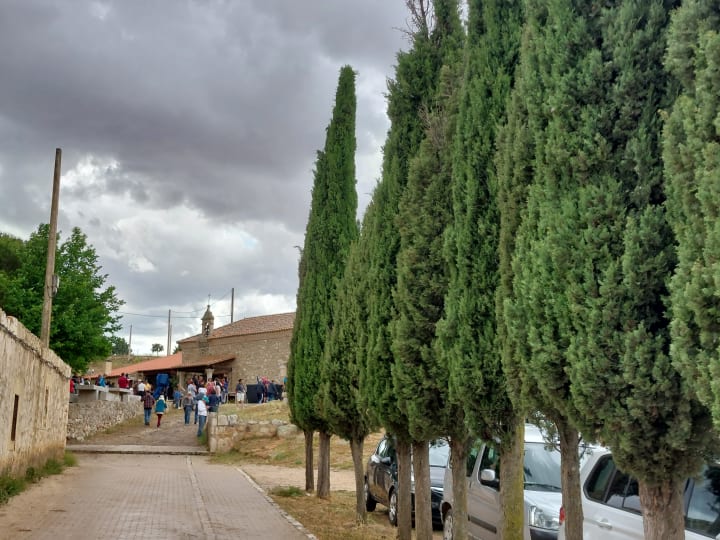
We arrived more quickly than Fernando expected in spite of the bad weather to find the hermitage in the single spot where it wasn't raining profusely and surrounded by a golf course Fernando had never seen before.
It may or may not have been many years since he'd been there.
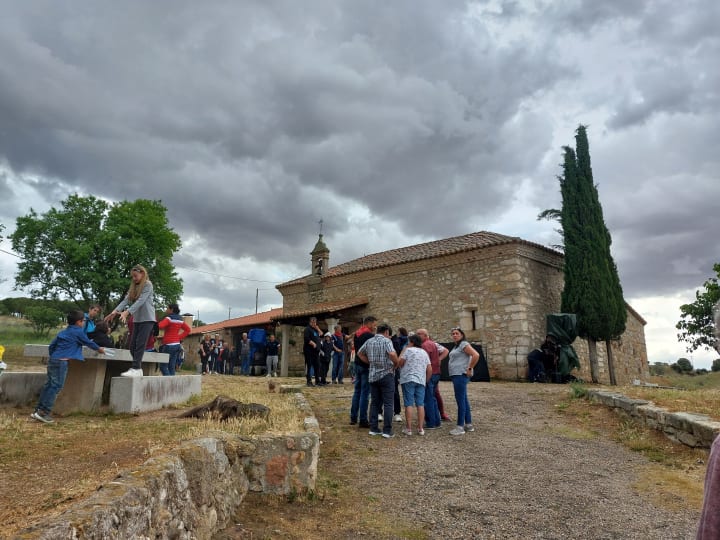
The first documents that mention this hermitage are from the thirteenth century. I haven't found a source that tells me whether any of that medieval building survives in what we're looking at today. It's so simple, the style is hard to pin down.
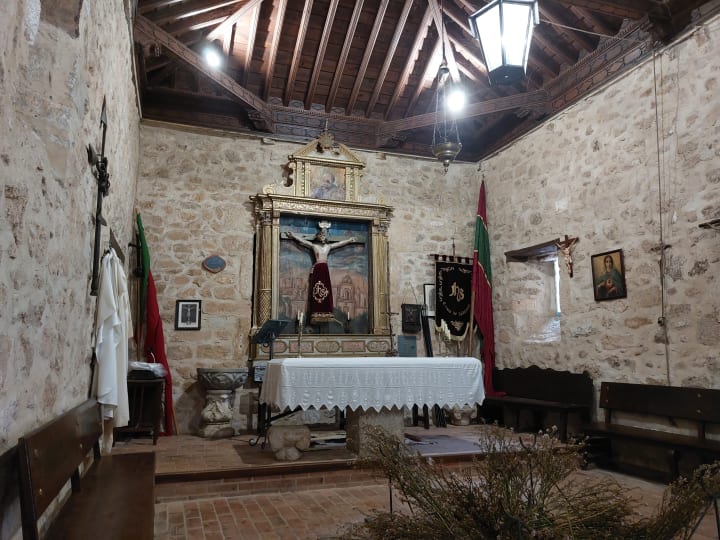
The single nave of the hermitage chapel is just wide enough to accommodate the main altar. By definition, a hermitage is only meant to serve a small congregation, so they don't need a lot of space. Bernardo Ramos restored the wooden ceiling in 1903.
Notice the little mountain of branches and aromatic herbs in the middle of the floor. They've created this mat every year through the centuries, ever since the first medieval romeros couldn't find a worthy place to rest their patroness. At least with the grass and herbs they gathered, the Virgen de la Concha wouldn't touch the floor.
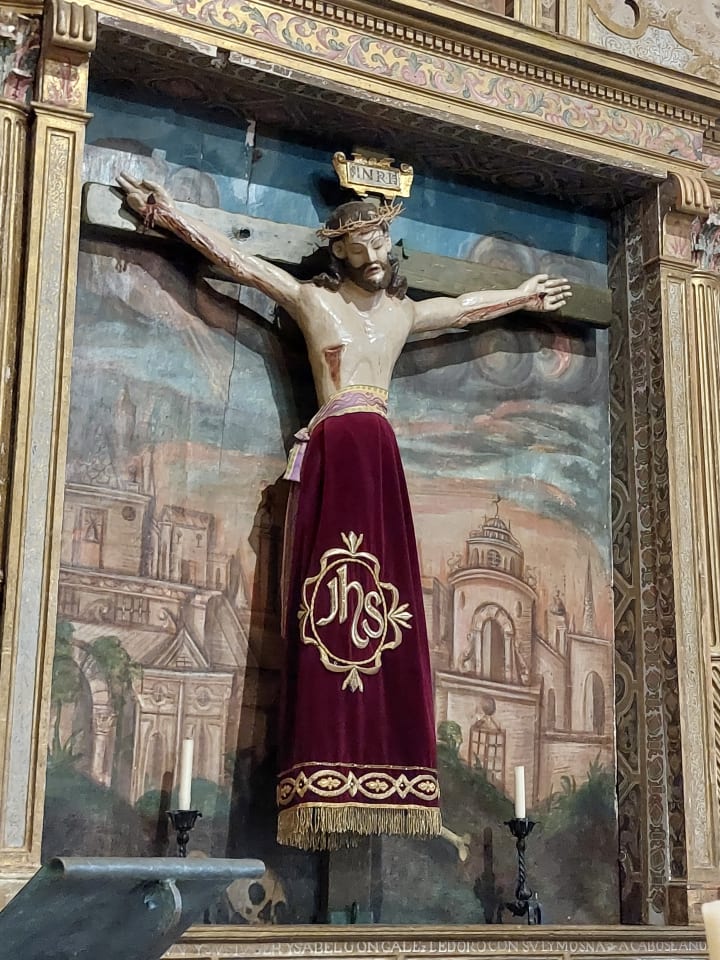
The Cristo de Valderrey that gives the hermitage its popular name is a Gothic crucifix of local artistry from the sixteenth century. These rustic Gothic sculptures have a delightful tendency to look older, more "primitive" than they really are. In an urban context, this Cristo would've been in style in the thirteenth and fourteenth centuries.
He's never seen without his red velvet modesty skirt, which lends him a Baroque air in tune with the rest of the altar. The painting, dated 1670 on the frame, gives the Cristo a fanciful Jerusalem for a backdrop. The altarpiece's attic (visible in the previous photo) shows the Eternal Father from the same period.
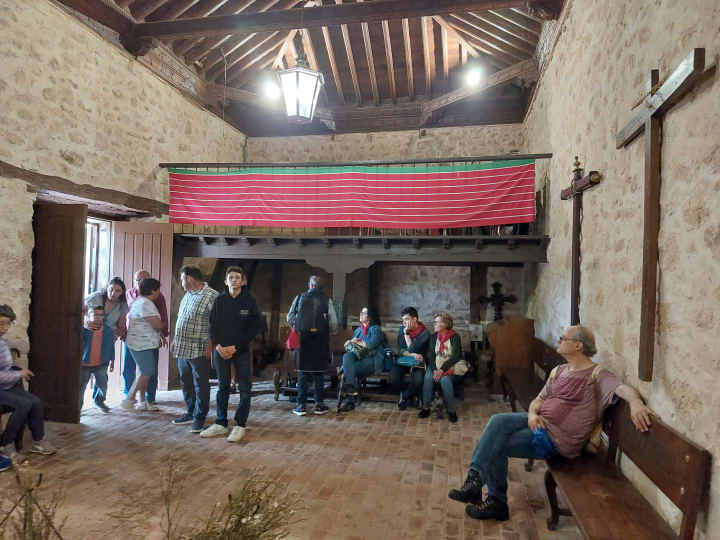
Though other romeros and onlookers like us were waiting for the arrival of their patroness, few of them entered the hermitage, so it was an opportunity to quietly appreciate the history and the dry seating.
Fernando told me his brother had gotten married there, and he sang in the choir loft. I imagined a rapturously beautiful and intimate ceremony.
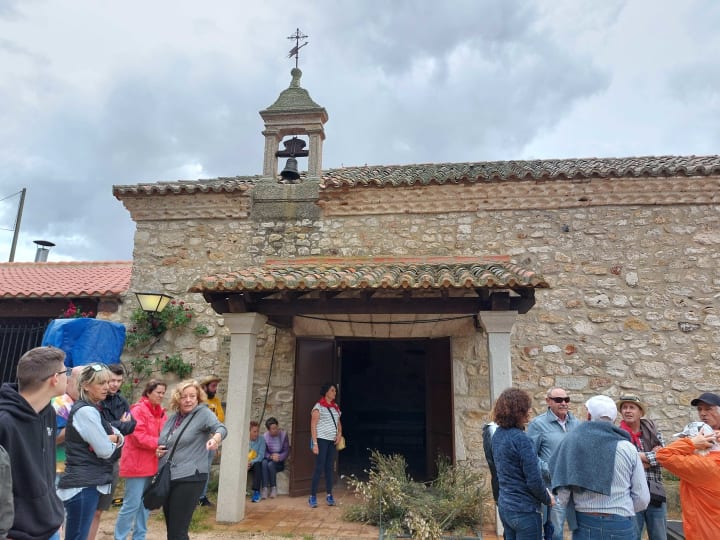
Then one of the romería officials came in and saw us, comfortable and out of the rain. "You're going to have to leave," he said good-naturedly. "We're taking the mat into the doorway, and then you won't be able to leave."
Left to our own devices, we watched some golfers practicing their swings, and Fernando chatted with someone he knew from his theatre days, who was setting up the sound system near the little platform where the priest would lead the prayers.
When we came back to the doorway, it didn't look so terribly blocked. But there was no time to try and go back in, because they were taking the Cristo to meet the Virgen de la Concha at the entrance to the hermitage grounds.
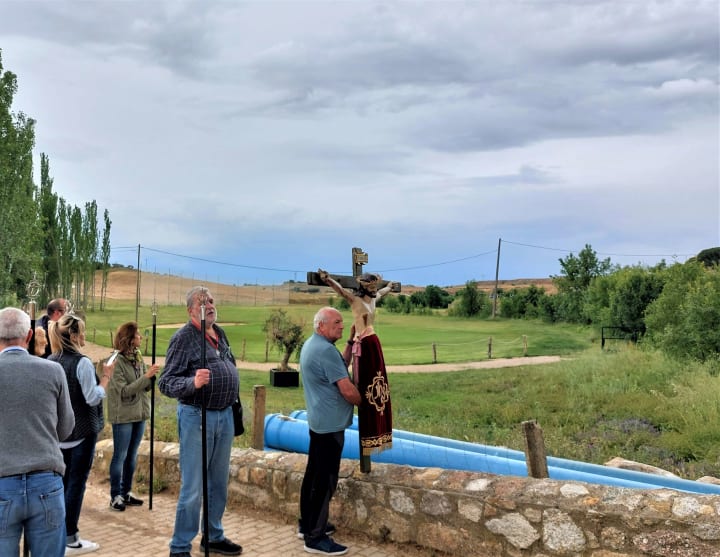
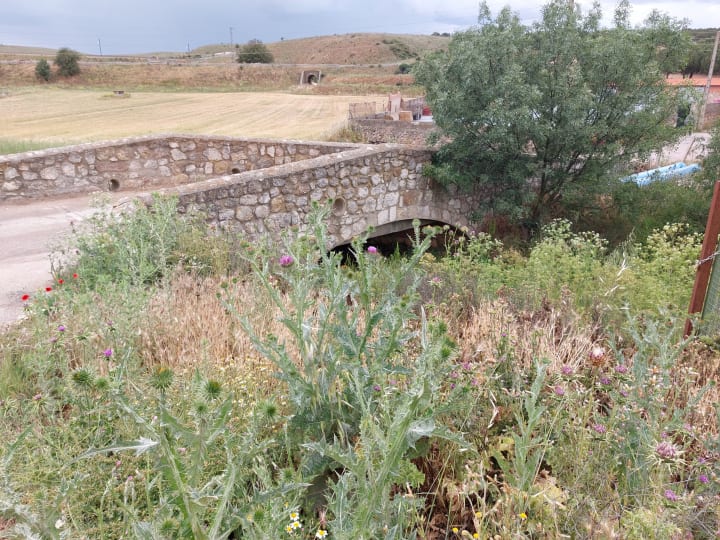
An official lifted the Cristo by the cross and carried him out to the bridge, looking for all the world like an illumination in a medieval manuscript. This is the way all these events with statues started, without giant floats bathed in flowers and candles. Simple gets the job done.
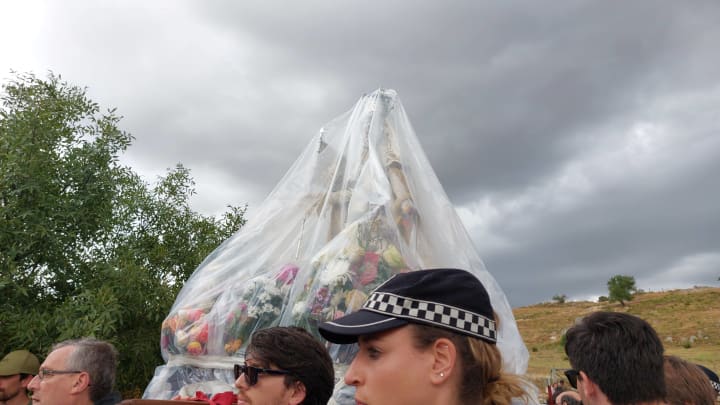
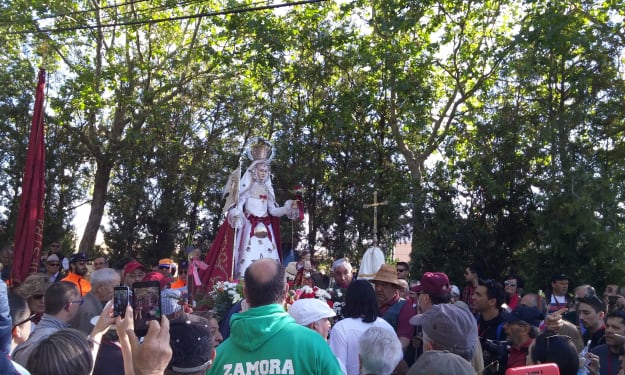
Soon enough, the Patroness of Zamora arrived on the shoulders of four of her brotherhood members, looking ghostly in her her white brocade cape--and a thick layer of plastic.
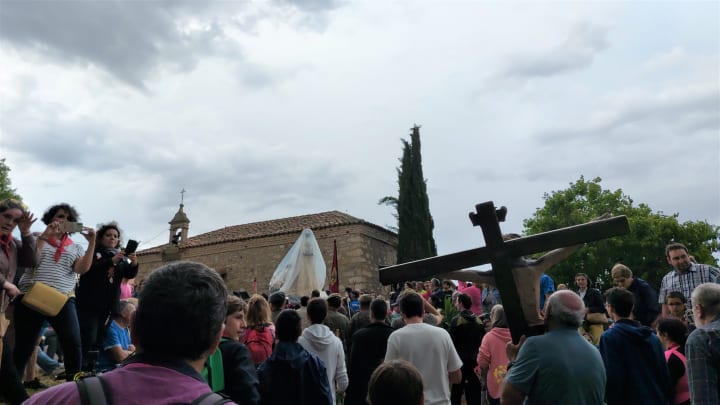
The Cristo acknowledged her and followed her among the crowd with great fanfare up the path to the hermitage, where he returned to his altar just in time to avoid the next downpour.
See the procession in action starting at 1:00 in this video.
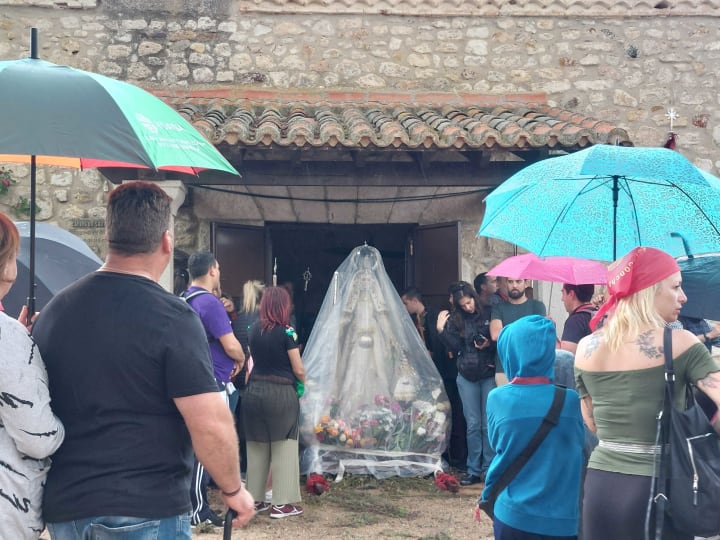
They placed the Virgen de la Concha on her bed of branches and aromatic herbs in the doorway. The priest got up on the platform, refusing an umbrella, saying not another drop was going to fall. Shortly thereafter, it really started to rain, and all the romeros huddled under umbrellas, highly distracted from the ceremony.
The priest stoically recited a rosary and prayers in praise of Zamora's patroness, saying we should be grateful for the rainfall after the drought, and representatives of the military stood impassive through the whole affair.
Watch some of the rainy service starting at 3:03 in this video, or go straight to the thunder at 4:59.
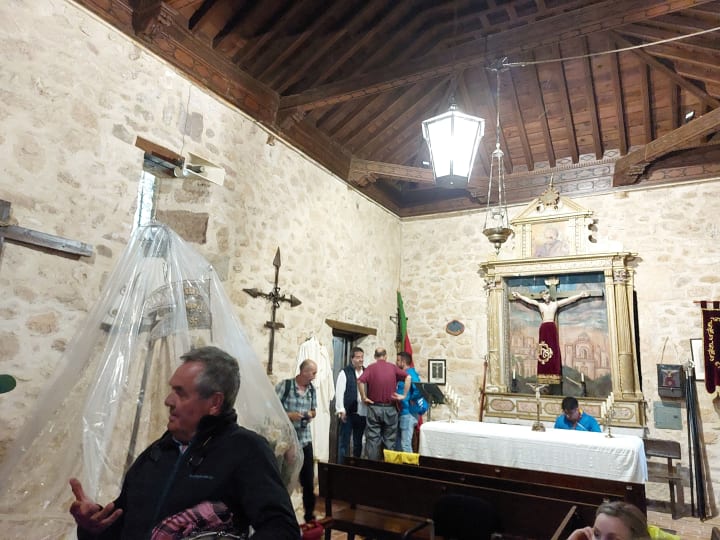
After the prayers, they took the Virgen de la Concha inside, and I peeked in to witness the fulfillment of a 520-year-old obligation.
The 1503 Ordinances of the Brotherhood of Our Lady of San Antolín (the Virgen de la Concha) officially established this rest period. By these laws, the romeros must place the patroness inside the hermitage and take respite until Vespers (evening; in practice, about a half-hour before sunset), when they have to continue the romería through Valorio Forest.
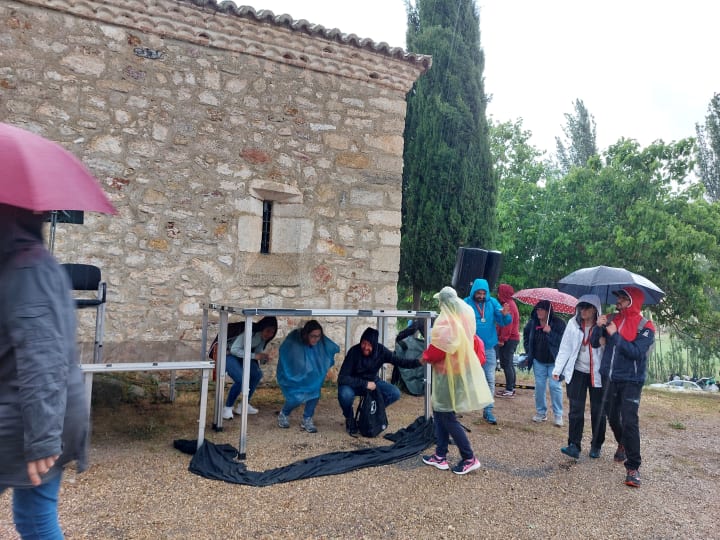
On day like today, this law meant the romeros were left out in the rain.
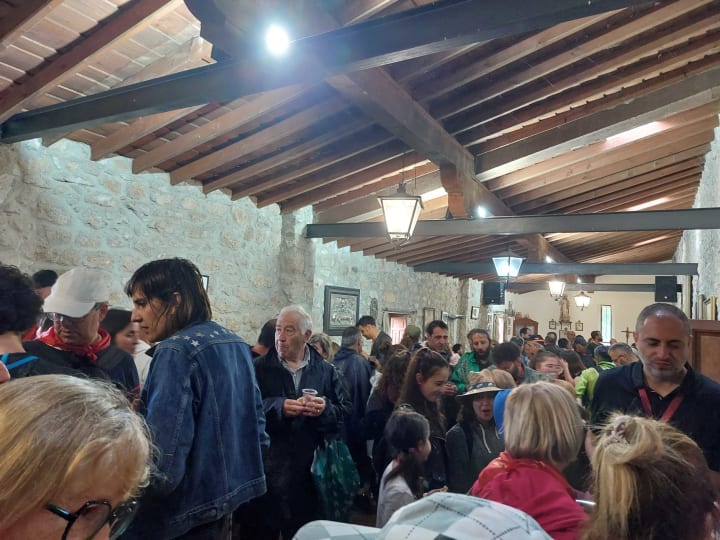
Being that it was our legal obligation to rest and have fun for at least a little while, we squeezed through a gate at the foot of the chapel and into a surprisingly large reception hall, where the brotherhood was giving away that "lemonade" I tried in 2019, cookies, and other delightful confections.
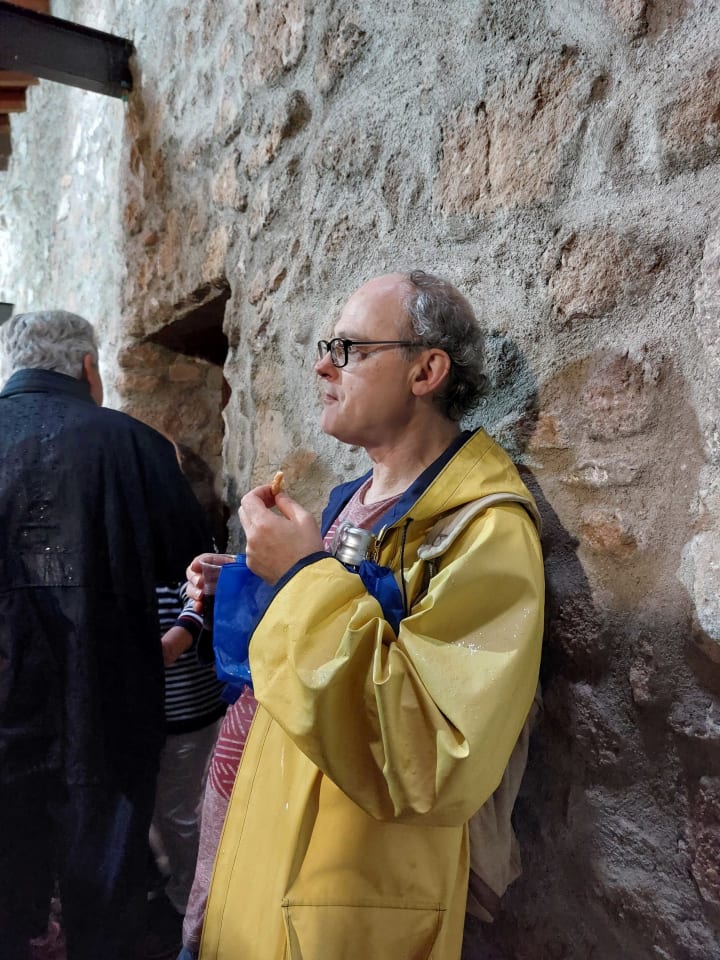
We found more people we knew and greeted them as if we hadn't seen them in years--in some cases, it was true. Crazy old pandemic.
It was getting kind of late, and it seemed like time to head home. We had several kilometers of rain to get through before dinner, after all!
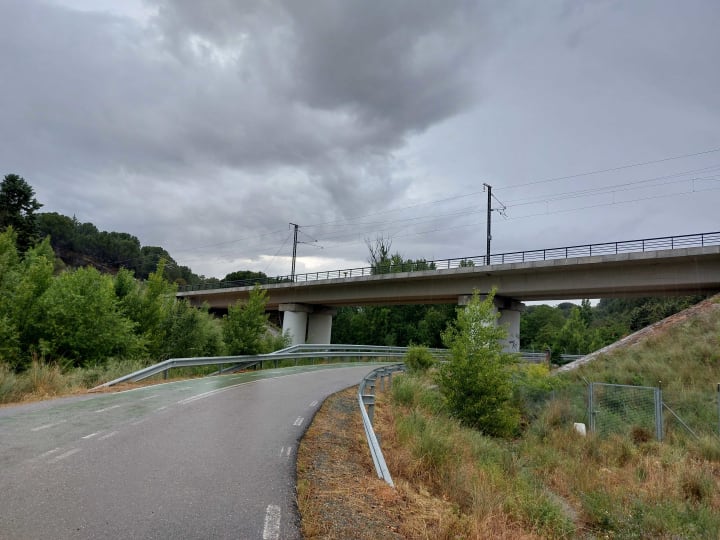
The rain seemed lighter on the way back. This overpass, which takes trains through the hill, was a major hub for people sheltering from the storm on the way over. On the way back, everyone had found a better place to wait out the weather.
Here we leave the 2023 romería.
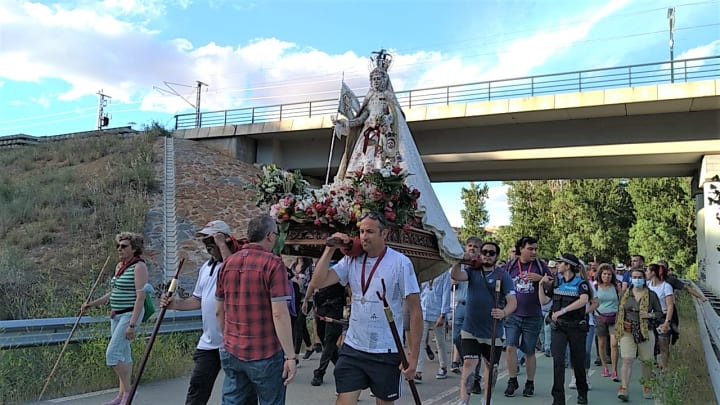
We join the 2022 event at the same overpass, where the highway meets the forest.
On Pentecost Monday 2022, we were slow to realize the romería was taking place again after two years of the only interruption in its centuries of history.
When we did realize, we decided to meet the procession near the end, when it entered Valorio Forest.
Hear the music and witness the fast pace of the procession as it enters Valorio starting at 6:08 in this video.
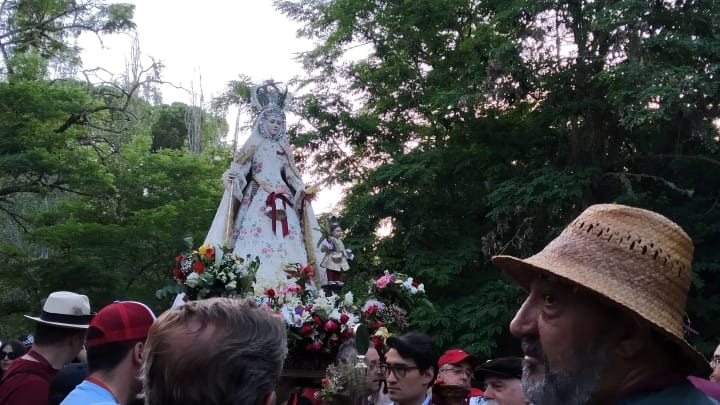
I was happy we remembered in time. Not all the COVID restrictions had been lifted, but an outdoor event like this allowed for all the music and marching the event requires.
The elegance of the Virgen de la Concha in her white cape contrasted beautifully with the natural environment. People were so thrilled to take part in this tradition again that they were singing and even breaking into dance in the middle of the trees.
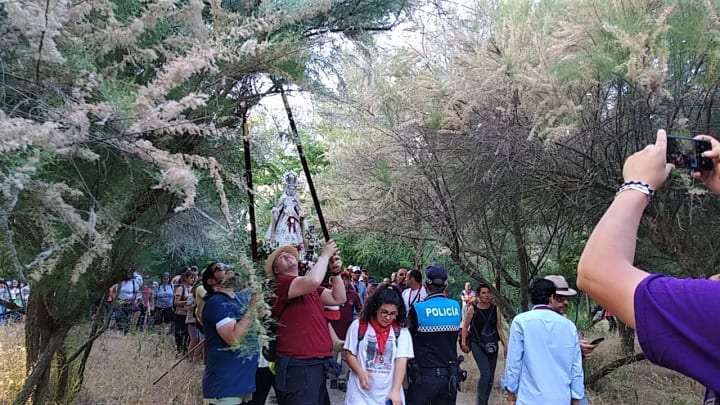
Is it just me, or are plants more aggressively fertile after 2020? I'm talking about pollen, baby. This is relevant because at some points in the forest, the tree branches grew into the path too far to take a priceless religious statue through it without preparation.
Some of the brotherhood officials went ahead of the Virgen de la Concha to lift the branches with long poles, clearing the way for their patroness. These branches were laden with pollen, probably from various species, as Zamora is home to many varieties of plants with volatile spores.
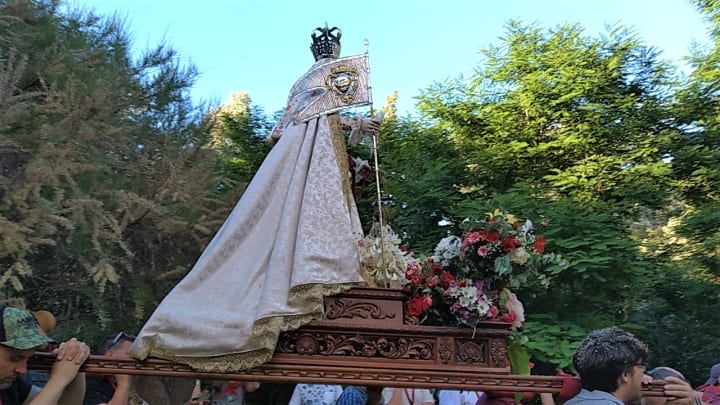
Some of the officials were sloppy with their pole work, letting the branches dip dramatically and dousing romeros and bystanders with pollen.
Watch a not-very-clear video of the disaster starting at 7:53 here.
The romería makes a final ceremonial stop at a hermitage outside the city wall before returning to the Virgen de la Concha's home temple. I was unable to convince Fernando to stick with the procession to see that in 2022, and as I mentioned, in rainy 2023, it was time to go home long before that point.
Maybe next year!
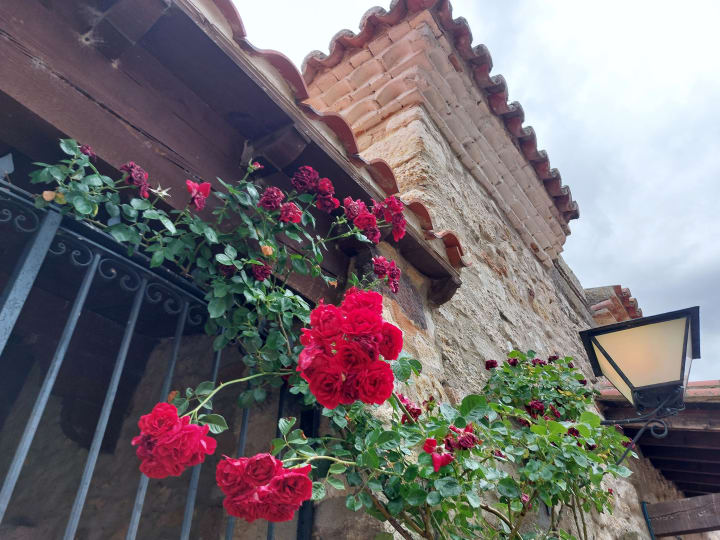
Relive the first leg of the romería (in 2019) here.
Here's the video for your reference and enjoyment:
Some historical facts in this post were found in this article.
Other facts came from Por la catedral, iglesias y ermitas de la ciudad de Zamora by José Ángel Rivera de las Heras (Edilesa, 2001), pp. 168-169.
Thank you for coming along on the romería with us! Let me know if you'd like to share in more Spanish cultural adventures.
About the Creator
Jessica Knauss
I’m an author who writes great stories that must be told to immerse my readers in new worlds of wondrous possibility.
Here, I publish unusually entertaining fiction and fascinating nonfiction on a semi-regular basis.
JessicaKnauss.com
Keep reading
More stories from Jessica Knauss and writers in Wander and other communities.
Pilgrimage to La Hiniesta
Spring in Spain is synonymous with Holy Week, but also with the beginning of romería season. The translation for romería is "pilgrimage," but something is lost in that transfer. A romería, unlike what we usually think of as a pilgrimage, is a local affair, something that can be undertaken in a single day by an entire community.
By Jessica Knauss3 years ago in Wander
10 Reasons to Choose a Beach Villa with Private Pool
A beach holiday is about more than warm sand and gentle surf. When you choose a beach villa with a private pool, you unlock a level of comfort, privacy, and personalised experience that simply cannot be matched by standard hotel rooms. But what makes a private-pool villa genuinely worth it — beyond the glossy photos?
By Island Life Maldives6 days ago in Wander
Guard Your Battery
Why are some people so attractive just by standing there? It’s not because they are "likable," but because they don’t need everyone to like them. I realized later that truly charismatic people allow themselves to be criticized, but they never criticize themselves. They never try to please the world; instead, the world stops to watch them.
By Emily Chan - Life and love sharingabout 20 hours ago in Poets



Comments
There are no comments for this story
Be the first to respond and start the conversation.