
Philadelphia Getaways Far From Center City
Seeing Real Communities in the City

Philadelphia Getaways Far From Center City
John W. Gilmore
To skip out of the Philadelphia tourist scene and hang out with the locals visit Chestnut Hill. Chestnut Hill is right above Mt. Airy, one of the most racially diverse areas in the city, as well as very close to Germantown. Both parts of the city have a very rich history. You can take an easy ride on the Chestnut Hill West or the Chestnut Hill East line from Center City Philadelphia, or you can take a bus that leads you right into the center of the Chestnut Hill Business District.
In the 60s and 70s the area started out as a place where an average middle or working class person could at least afford the moderate sized homes, like most parts of the city. Soon after, housing prices skyrocketed making this serene part of the city (everywhere outside of the business district) unaffordable to most Philadelphians except those who got in early. The area resembles a European town, with many upscale shops sculpted into the buildings and infrastructure from the 17th, 18th and 19th centuries.
Lined along Summit streets you pass large houses described as mansions by many, but not by their inhabitants, leading to the central avenue. There are no Mc Mansions, each home was individually designed--created as a work of art instead of the cheaply made boxes created quickly for the nouveau riche. Some houses consist of thick, granite blocks of individually cut stones with a green tint from weathering through the years, and the algae; with some houses pastel yellow close to white stucco, or pink stucco with wooden framed black windows and doors standing out sharply against the soft, muted background of the gentle pastel colors.
They stand strong and angular against the backdrop of trees, flowers and open blue sky, but their muted colors exude an unexpected softness and gentleness. They do not over power their surroundings, but blend in smoothly, reflecting the desires of the builders during that time period,
Lawns surround them, but not just large swaths of grass. Beautiful sculpted gardens seem to intrude into the serenity of the grassy lawns, unmanicured and wild by design--a bit of wilderness bursting into the otherwise manicured living spaces. One finds trees everywhere. Spruce, pine, magnolias, and Oaks fill the spaces. The Chestnut trees, the ones this section of the city was named after, died from a suspected, Asian fungal disease that hit the US in 1904 in New York and quickly spread throughout the East Coast. By 1911 it had already arrived in Pennsylvania and the state government was working hard trying to find ways to protect the American Chestnut.
The large Chestnut trees did not only provide food from the fruit, but durable wood, easy to work with. Some grew as high as one hundred feet. Most of the Chestnut trees died. You still find quite a bit of vegetation despite the lack. In fact, Chestnut Hill seems a town within a city, like its neighbors Mt. Airy and Wyndmoor, Parking the car far from the main street and walking proves this to any new visitor. Just looking at the houses and beautiful landscape of the large homes and simple family homes delivers you from the tension of the smog and the traffic jams you find in downtown Philadelphia and allows you to breath.
But be careful walking down Summit St., one of the best streets for parking without pay. Some of the sidewalks are made of emerald green slabs of shale two or three feet wide. Over the years some of them have tilted at various angles that can quite easily trip up the visitor unaware and caught up in the surrounding beauty of the houses, yards, and gardens.
Stone fences, wrought iron gates, lawns, and common hedges so large they have attained the height of trees, draw one into the surroundings to the extent that one may become unaware of where their foot treads. So take your time. If you are a coffee drinker the spot to go to is Chestnut Hill Coffee. Parking near the end ol Summit Street and heading West solves any parking issues you might encounter, and gives you an opportunity to see some of the neighborhood.
Chestnut Hill Coffee Shop, the larger, local coffee shop, carries many more selections than the franchised shop down the hill. When you come in you are greeted with a smile and a warm welcome because of the atmosphere. There is a lot of wood in the coffee shop, old wood with many tables and sofas downstairs. You can climb the stairs to the second floor where you will always find more seats, If you would like.
Watching the constant flow of traffic and the many people travelling up and down the sidewalks from the second floor tables and window seats provide entertainment. The hard to come by, but frequently available seats on the first floor facing the street, provide the same opportunity.
A bus stop stands just around the corner, hidden behind a Children of America Educational Childcare school located in what used to be a large Borders Bookstore. On an angle from the Coffee shop you see the large, three story Baptist church where a clock tower stands. An off white, concrete building with black double doors and three large arched, white windows on the second floor, and a white clock at the top stands out with only a few perfectly placed trees surrounding it like the setting of a large, white jewel. From the window of Chestnut Hill Coffee you look right onto a stone path with only two steps leading to a crushed stone walkway taking you straight into the front door.
The cobblestone street with trolley tracks on a width of concrete leading up the middle bereft of trolley cars, just serves as a testament to the previous life of the community when trolleys that went to all parts of Philadelphia and the rest of the Eastern Seaboard were the norm.
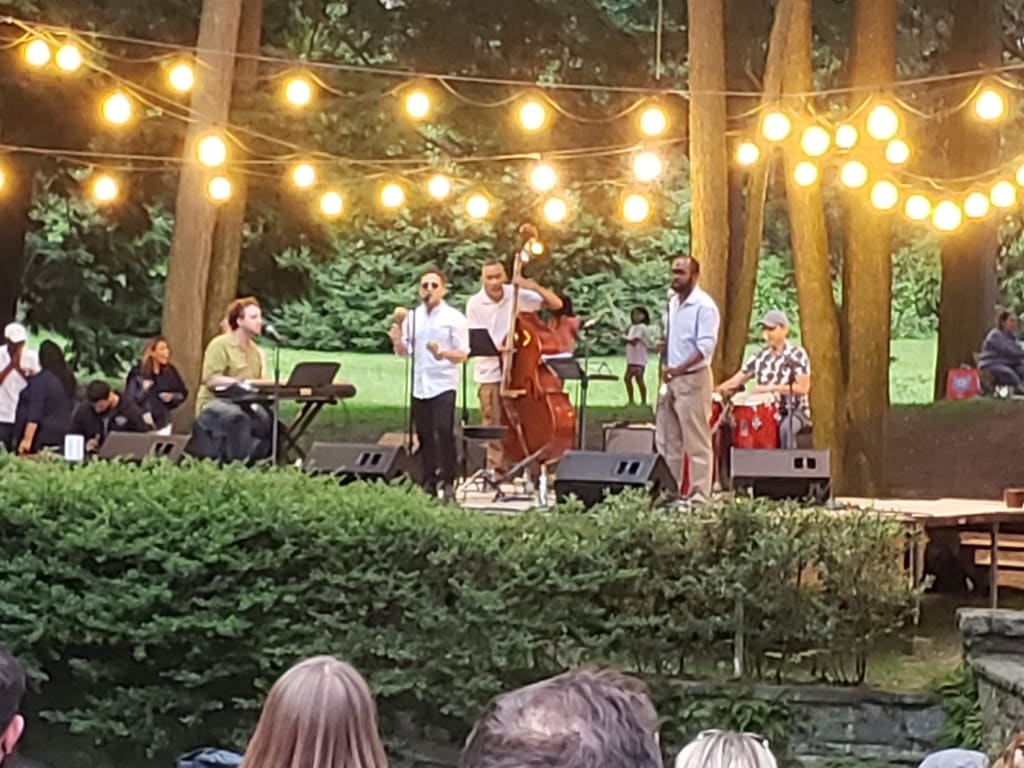
Despite the frequent, quiet moments activities abound for those who seek them. You can enjoy anything from free concerts in the summer, organized walks through the park that touches Chestnut Hill, the Wissahickon (part of the largest urban park in the United States) to Restaurants, Cafes, Small Malls, upscale shops, even a retro music shop called Hideaway Music that sells stereo component sets and vinyl records.
You will find Chestnut Hill Coffee, a local institution since 2005 in Chestnut Hill, just around the corner from the bus station, near what used to be Hideaway Music before it went bust during the pandemic. A bulletin board in the back will show you all of the local activities and you can get a good cup of coffee.
About the Creator
Om Prakash John Gilmore
John (Om Prakash) Gilmore, is a Retired Unitarian Universalist Minister, a Licensed Massage Therapist and Reiki Master Teacher, and a student and teacher of Tai-Chi, Qigong, and Nada Yoga. Om Prakash loves reading sci-fi and fantasy.
Keep reading
More stories from Om Prakash John Gilmore and writers in Wander and other communities.
What's Next Your Highness
We were escorted down a long hallway that took many twists and turns almost like a maze. There was no way we could have found our way out of there had we escaped. Yet again, there was no place to escape to. We came to a small doorway at the end of a hallway. It was so narrow we had to turn sideways to slip through. The guards closed and secured the door behind us.
By Om Prakash John GilmoreExclusive • 8 months ago
Small Town Beauty in Washington
Coupeville is part of Ebey’s Landing National Historical Reserve and is the second-oldest town in Washington. It was settled in the 1850s. The town has a lovely waterfront with its historic red wharf. Many of the buildings date from the 19th century. The seafood restaurants serve locally sourced mussels.
By Rasma Raisters7 days ago in Wander




Comments
There are no comments for this story
Be the first to respond and start the conversation.