
One of the Surprising Inconveniences of Living Abroad is Cash
Challenges are different from those faced in a home country; often they are irritating or amusing

Joys of Living in an Idyllic Place
It is no secret that I adore the peacefulness and adventures of living outside my native country.
In myriad ways, life is exceedingly more pleasant, comfortable, and serene. For those residing in the States, there’s no need for me to enumerate even a partial list of “gratefuls.” I am an unabashedly enthusiastic cheerleader for the expat life and incredibly content with abdication.
From India to Thailand to Mexico to Indonesia, my nearly thirteen years as a vagabond have often been exquisite and enlightening. Naturally, the flip side, as always in life, has included a handful of brutal and mercilessly lesson-instilling encounters.
Not one moment doth I regret, however.
Remarkable Experiences Only Gleaned From Travel
Those who likewise salivate transporting themselves on their next imaginary journey well comprehend. Travel — especially if to places utterly upside-down from our comfort zones — has the power to transform and educate like nothing else.
Life-altering occurrences. Memories that comprise more than a single lifetime. Serendipitous encounters. Every single day abroad, I Feel. Live. Revel. In the unfamiliar or bizarre. I try to approach life as if through the eyes of a child.
The experience may be as elementary as stumbling upon a new eatery, exploring a different route on my motorbike, chatting with a local, or plunging the scooter into an open 5-foot pit on the highway.
With no severe damage to either trusty Scooty or me, mentioning that wee accident to its owner from whom I rent seemed irrelevant.
Meanderings
Since giving up an established home and beginning the life of a wanderer, I’ve shared my foibles, observations, and gripes with friends and family.
My emailed “meanderings” — an outsider’s take and reflections wherever I might be — today come from the “Island of the Gods,” as Bali is referred to.
Challenges of Any Lesser Developed Country
In reply to my blathering about specific locales, it’s not uncommon to receive replies from residents in the States or other industrialized countries. Usually, they comment about dismal aspects that, in their minds, they couldn’t possibly abide or tolerate.
Those conclusions amuse me. The conditions or blips that sound unacceptable eventually become routine or simply ‘part of life’ after residing somewhere for an extended time. It’s not unlike moving to a different city or region of one’s native country. You adapt and adjust.
The one caveat is that certain modern conveniences to which we’ve become accustomed and spoiled in our home countries either differ widely or aren’t available. When residing in a vastly dissimilar culture, it’s prudent to adopt a few rules for survival or at least contentment. They revolve around accepting the country’s conditions and trashing haughty comparisons to our own more “sophisticated or modern” one.
Challenges can be monumental, with some more daunting to roll with than others. India and Arizona differ in a zillion ways. Mexico and California, too. We all miss explicit familiar things — specific foods, favorite restaurants, shopping at Costco or Walgreens, or unavailable products.
Cash is King
Often, it’s a unique experience or daily activity that is most frustrating. Today, it was ensuring I had sufficient stashed rupiah for rent due in a few days.
Cash is king in developing countries. Credit and debit cards may be accepted in larger businesses, but by and large, cash remains the preferred payment for most transactions.
Therein lies the irritant. Why, in all these countries — Mexico, India, Thailand, and Indonesia — must I still make multiple bloody trips to the ATM to withdraw cash?
The Trip to the ATM
Multiple trips, you ask, “Why?” What’s the big deal about popping by the ATM to withdraw some fast cash? That typical two-minute jaunt in the States is exceedingly more complicated in lesser-developed countries.
First, there is typically a daily country withdrawal limit. It’s always less than what I need to withdraw for that month. Automatically, that’s two or three trips.
Sometimes, you can trick the system by going to multiple ATMs of different banks. Nevertheless, it means driving around to several locations. And there is no guarantee that the workaround will be effective anyhow.
Then, my favorite gripe: Many banks CHARGE you to park in their lot while you pop to the ATM for cash. Yep! It’s a nominal amount, but paying to use a bank’s facility is, in my mind, ludicrous. Paying to park at a pharmacy or eating at a restaurant is also common.
It’s fascinating these bizarre customs occur in the poorest countries isn’t it? The average Balinese subsists on near-starvation wages. Hence, even 1,000 to 2,000 rupiah to park is cruel when it’s possible to buy a meal on the street for 5,000.
Next, there is the issue of non-functioning machines. This is commonplace. It was a given in India, for example, that I might have to run to three or four ATMs before finding one that either worked that day or had rupees.
When was the last time the ATM was “out of money” in the States? Never. However, in these countries, there is no consistent refill schedule. The machine nearest me was sans cash on three visits over four days. Also, never is there a sign indicating the machine is out of order or has no money.
I cannot enumerate how many times I’ve tried my card, tried it again, and then grabbed another bank card, only to finally realize, “Oh, there’s no cash in this machine.”
Then, there’s the indescribable joy of one day cruising to five — yes, five — different bank ATMs. None dispensed cash despite their signs indicating the logo of my US bank debit card.
Customer service at my bank is terrific, with 365/24/7 contact with a life humanoid. Their answer to why my card wasn’t working? “So very sorry, we have no idea. Our system shows it’s functional with no blocks or red flags.”
Forget getting money on weekends from ATMs in the resort town I lived in Mexico for more than two years. Either there was a nominal limit imposed or zero pesos remained in the machine. Why? Because as soon as the partying visitors hit town, they also hit the ATMs.
Payment to Landlords
A major hassle, annoyance, or irritation is the payment of rent. Why can’t the landlords accept transfers online? I suspect that some can.
In Mexico, none of the owners wanted online transfers or deposits into their bank accounts. Most operated illegal rentals and wanted to avoid paying the government-imposed rental tax. An electronic transfer, indeed, may be possible on Bali to some owners.
However, it requires maintaining a sufficient local bank account balance and making the online transfer to their account.
I don’t do that because if I have to withdraw monies from my US account, then redeposit them into a local one, and then make an online transfer, well, you get the idea.
My current landlady does accept debit and credit cards but assesses her bank’s 3 to 4% processing fee. That surcharge passed on to patrons is commonplace in many small businesses. It was the same in Mexico.
Someday Fantasy
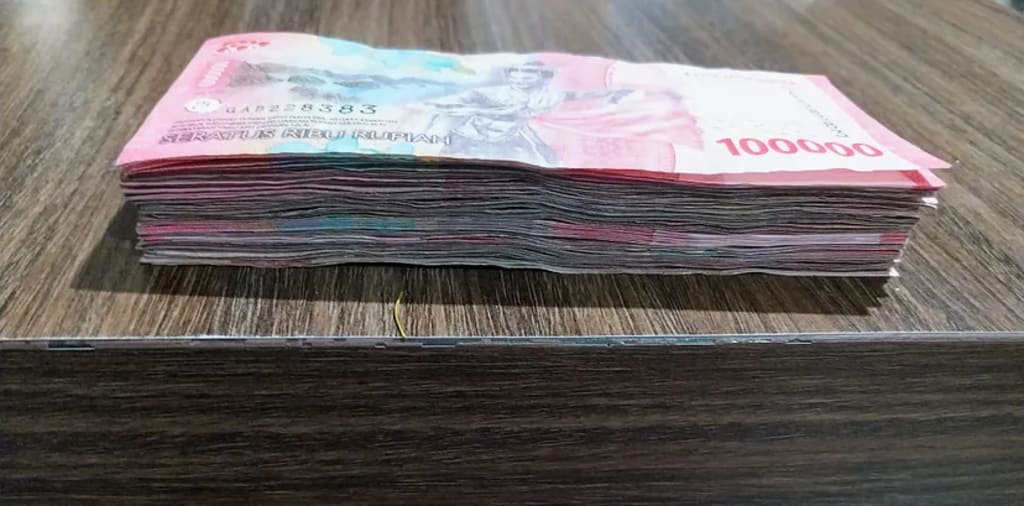
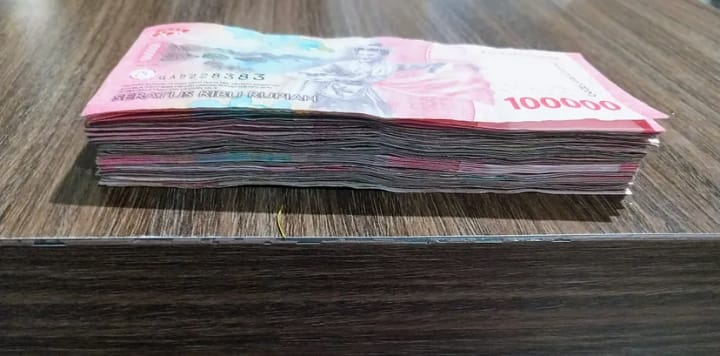
I await — although convinced it won’t transpire during my current incarnation on planet earth — the day when I don’t feel as though I’m making a drug buy with my 1-1/2 inch stack of cash for rent.
This stack was four times thicker for my annual health insurance premium.
Your time is valuable. Thanks for spending some of it here.
Victoria
About the Creator
Victoria Kjos
I love thinking. I respect thinking. I respect thinkers. Writing, for me, is thinking on paper. I shall think here. My meanderings as a vagabond, seeker, and lifelong student. I'm deeply honored if you choose to read any of those thoughts.
Keep reading
More stories from Victoria Kjos and writers in Wander and other communities.
Merzouga, Morocco Golden Dunes by Morocco Family Vacation
Standing at the edge of the Sahara in Merzouga, watching golden dunes stretch endlessly into the horizon, I realized this was one of those rare travel moments that stays with you forever especially when you experience it with your children.
By Ariel Cohenabout 24 hours ago in Wander
Top 10 colonial hotels in sri lanka
Sri Lanka, once known as Ceylon, carries a rich colonial legacy shaped by Portuguese, Dutch, and British rule. This history is beautifully preserved in a number of colonial-era hotels scattered across the island. From grand seaside mansions to hill-country retreats and fortified townhouses, these hotels offer travelers a chance to step back in time while enjoying modern comfort. Staying in a colonial hotel is not just about accommodation—it is about experiencing stories, architecture, and traditions that have survived for centuries.
By Buddhika Jayanath2 days ago in Wander


Comments