
Old Lifestyle vs. Modern Lifestyle: A Journey from Simplicity to Speed
"A heartfelt comparison of peaceful pasts and fast-paced presents — and what we can learn from both."
Introduction
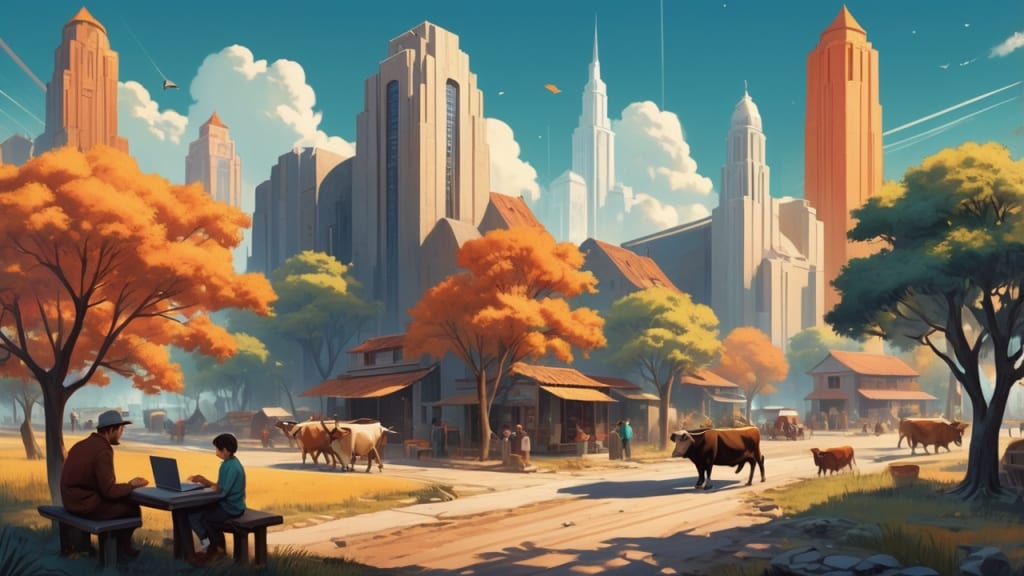
Life is a journey, and over the years, this journey has taken many different paths. From the quiet, peaceful rhythms of our grandparents’ days to the fast-paced, technology-driven life of today, a lot has changed. But in this race toward progress, one question continues to echo: Have we truly moved forward, or have we left behind something precious?
This article explores the stark contrasts between the old lifestyle and today’s modern way of living. We will dive into areas like health, relationships, food, work, values, and peace of mind — and try to understand which lifestyle truly offers a better, healthier, and more fulfilling life.
1. The Pace of Life: Slow vs. Fast
Old Lifestyle:
In the past, life moved at a slower pace. People woke up with the sunrise, did their chores manually, walked to nearby places, and enjoyed long conversations over simple meals. There was no hurry. Time was not just money — it was life itself.
Example: A farmer would start his day by feeding the animals, walking through the fields, and tending to crops. There was rhythm, purpose, and a deep connection with nature.
Modern Lifestyle:
Today, the pace is lightning-fast. Alarms buzz before sunrise, coffee is gulped on the way to work, and schedules are packed with meetings, deadlines, and digital distractions. Technology has made life easier but also more hectic.
Example: A modern office worker wakes up to dozens of phone notifications, rushes through breakfast, and spends the day staring at screens, often with barely a break.
Difference:
Old life was peaceful but slower. Modern life is efficient but stressful. One gives calm, the other gives speed.
2. Health and Food: Natural vs. Processed
Old Lifestyle:
Health was rarely a concern in the old days. People ate fresh food cooked at home with natural ingredients. There were no preservatives, soft drinks, or fast food. Physical work kept them fit.
Example: A simple diet of lentils, vegetables, whole wheat bread, and seasonal fruits kept people healthy and energetic. Herbal remedies were common, and walking was a daily routine.
Modern Lifestyle:
Today, fast food, packaged snacks, and sugary drinks dominate. Most people spend hours sitting — at desks, in cars, or on couches. Health issues like obesity, diabetes, and heart disease are more common than ever.
Example: A teenager today might eat pizza, drink soda, and skip exercise, spending more time on video games than in outdoor play.
Difference:
Old lifestyle promoted natural health. Modern lifestyle often damages it — unless one makes conscious efforts to stay healthy.
3. Relationships: Deep vs. Digital
Old Lifestyle:
Family and community bonds were strong. People spent time together, shared stories, ate meals as a family, and supported each other in tough times. There was real, face-to-face connection.
Example: Grandparents lived with the family, and festivals were celebrated together with neighbors and friends.
Modern Lifestyle:
Social media has connected us globally but distanced us emotionally. People are constantly online, but real relationships are often shallow. Loneliness and depression have increased.
Example: A person today might have 1,000 Facebook friends but not one true friend to talk to when feeling low.
Difference:
Old relationships were close-knit and meaningful. Today’s are more virtual and often lack depth.
4. Work and Career: Manual vs. Mental
Old Lifestyle:
Work was mostly manual — farming, craftsmanship, small businesses. There was physical activity, and people took pride in what they made with their hands. Work ended with the sunset, and rest was respected.
Example: A potter would spend the day shaping clay, feeling proud of every piece made.
Modern Lifestyle:
Now work is mostly mental — coding, marketing, online businesses. Though earnings are higher, stress, burnout, and dissatisfaction are common. Work often follows people home via laptops and phones.
Example: A software engineer may earn more in a month than a farmer in a year, but might suffer from anxiety, back pain, and sleep issues.
Difference:
Old work life was balanced and physical. Modern work is brain-heavy and often overwhelming.
5. Entertainment: Natural vs. Screen-based
Old Lifestyle:
People found joy in nature — walks, games, music, storytelling. There were fewer options, but more real fun. Children played in the fields; adults sang songs or told tales under the stars.
Example: Kite flying, board games, or simply sitting on rooftops were sources of joy.
Modern Lifestyle:
Entertainment is now digital — movies, games, reels, scrolling. Children stay indoors; adults binge-watch shows. Screen time replaces sunlight.
Example: A child today may spend hours on YouTube, losing touch with the joy of climbing trees or running barefoot on grass.
Difference:
Old fun was outdoor and simple. Modern fun is digital but often addictive and isolating.
6. Values and Mindset: Contentment vs. Competition
Old Lifestyle:
People lived with fewer things but more gratitude. There was contentment in what they had. Morals, honesty, and simplicity were valued.
Example: A person with one pair of shoes felt thankful and took great care of them.
Modern Lifestyle:
Today, success is measured by material things — the latest phone, luxury cars, branded clothes. There’s constant comparison and pressure to “keep up.”
Example: A person with a good phone might still feel unhappy if a friend buys the latest model.
Difference:
Old mindset focused on inner peace. Modern mindset often chases outer approval.
7. Environment: Eco-Friendly vs. Polluted
Old Lifestyle:
Old life was close to nature. There was less waste, more reuse. People lived in harmony with the environment. Pollution was minimal.
Example: Water was stored in clay pots, food in leaves, and cloth bags were reused for years.
Modern Lifestyle:
Plastic, chemicals, and industrial waste have poisoned air, water, and soil. Climate change is real. Natural resources are overused.
Example: Fast fashion, one-time-use plastics, and electronic waste pile up every day.
Difference:
Old lifestyle preserved the earth. Modern lifestyle exploits it.
Which One is Best and Healthier?
It’s not about glorifying the past or hating the present. Both lifestyles have their strengths and flaws. The old lifestyle gave us:
- Simplicity
- Peace of mind
- Physical fitness
- Strong relationships
- Connection with nature
- The modern lifestyle has given us:
- Comfort
- Convenience
- Technological advancements
- Global connection
- Access to information
But if we talk about health, both physical and mental, the old lifestyle certainly had the upper hand. People lived longer, suffered fewer lifestyle diseases, and had stronger immunity and family support.
Can We Combine the Best of Both Worlds?
The answer lies in balance. We don’t need to throw away our phones or live without electricity. But we do need to slow down, eat better, reconnect with people, spend time outdoors, and reduce stress.
Imagine this: You work online but take regular breaks, cook your meals at home, go for a walk every evening, spend time with your loved ones, and practice gratitude every night.
That’s the sweet spot — a modern life with old values.
Conclusion
The old lifestyle and modern lifestyle are two ends of a timeline — one rooted in simplicity, the other in speed. One gave us rest; the other gives us rush. Yet both are part of our journey as humans.
We may not go back to living like our ancestors, but we can certainly learn from them. The health, happiness, and harmony they enjoyed came not from having everything, but from needing less and loving more.
So, let’s take the wisdom of the past and the tools of the present — and build a lifestyle that truly nurtures the body, the mind, and the soul.
Humanized Note from the Author
I grew up hearing stories from my grandmother — of how she walked miles to fetch water, how the whole neighborhood celebrated weddings like one big family, and how a simple mango in summer brought joy beyond words.
Now, when I look around, I see everything is faster, bigger, brighter. Yet I wonder: are we really happier?
I wrote this not just as a comparison, but as a reminder — that we don’t have to choose one over the other. We can slow down without going backward. We can embrace technology without letting go of tenderness. We can live modern lives with old hearts.
And maybe, just maybe, that’s the healthiest life of all.
About the Creator
Keep reading
More stories from Muhammad Adnan and writers in Wander and other communities.
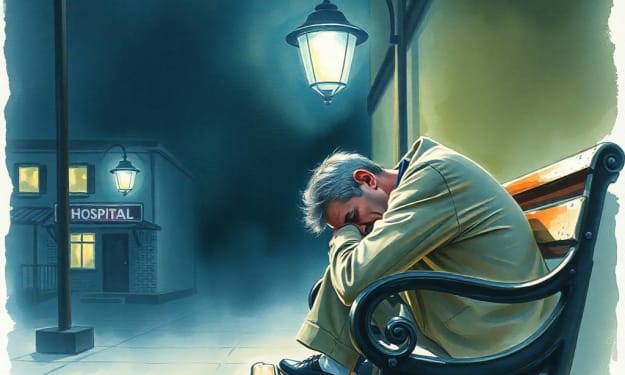
The Night I Saw My Father Break
To the outside world, he was a man of quiet strength—stoic, composed, the kind who always knew what to do, even when everything else was falling apart. He had the kind of presence that made children sit straighter and strangers instinctively nod in respect. His hands were worn and calloused, his back a little hunched from years of hard work, but there was nothing weak about him.
By Muhammad Adnan8 months ago in Families
Worth the Wait: Puerto Viejo, Costa Rica
Beach bumming in a small Caribbean beach town sounded like a perfect way to end our 6-month trip through Mexico and Central America. Or so we thought. The foul, fishy stench of rotten seaweed hit our nostrils as we stepped from the cramped bus and looked out at a rather depressing, empty, and underwhelming black sand beach. It was pouring with rain, and we had to quickly fish out our ponchos. We thought, this couldn’t be it, could it?
By Sh*t Happens - Lost Girl Travel9 days ago in Wander
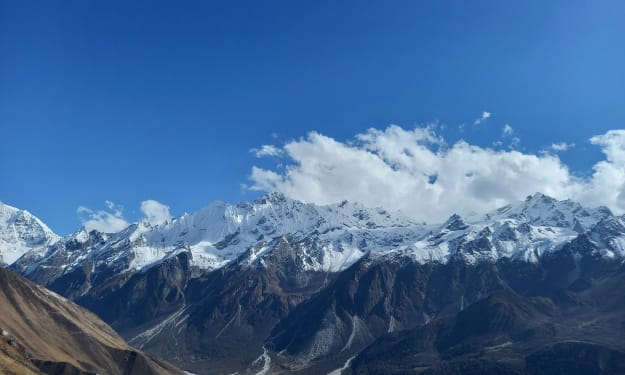
Langtang Valley Trek: The Complete Guide to Nepal's Hidden Himalayan Gem
If you are searching for a trek that combines breathtaking mountain scenery, rich Tamang culture, and an off-the-beaten-path adventure the Langtang Valley Trek is your answer. Nestled just 50 kilometers north of Kathmandu, Langtang is one of Nepal's most accessible and rewarding trekking destinations. Often overshadowed by the fame of Everest Base Camp and the Annapurna Circuit, this Himalayan trek offers an equally spectacular experience without the crowds. Whether you are a first-time trekker or a seasoned adventurer, the Langtang Valley Trek promises soaring peaks, dense rhododendron forests, ancient monasteries, and warm hospitality that will stay with you long after you return home.
By RP Adventures4 days ago in Wander


Comments
There are no comments for this story
Be the first to respond and start the conversation.