

Norway, established in 1905 after its separation from Sweden, is one of the more tranquil destinations of Europe. Scandinavia as a whole is a quieter place than its bustling touristy counterparts in the south or the west, for a variety of factors constituting of the weather, a smaller population, and a lesser public awareness of what this region has to offer.
I have travelled to Norway twice before and this time I was graced with the opportunity to take the popular Norway in a Nutshell tour from Bergen which, as the name suggests, presents its buyers with all the essentials of the country. Packages differ, each tour lasts around ten hours with additional sightseeing and interactive experiences available for purchase if one so chooses. I only chose the self-guided option that would take me by train, bus, and ferry in a loop from Bergen to the mountains and fjords deep in the country, and back.
Norway has the mountains and fjords in questions carved into it all along the western coastline, a result of glacial movement and subsequent melting tens of thousands of years ago, producing stunning scenery that spans for miles, vistas that have awed tourists from around the world for centuries.
My tour would be relatively uneventful until I reached the famous Nærøyfjord, save for the fog-and-snow-laden cliffs that flanked us on the first train and bus ride.
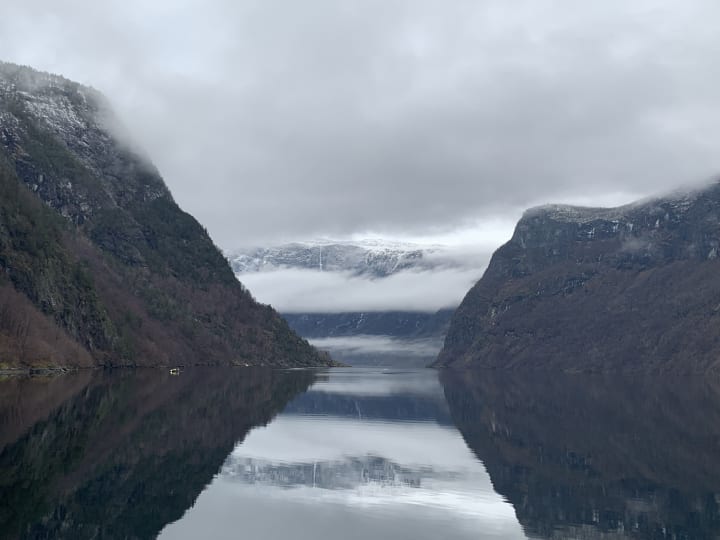
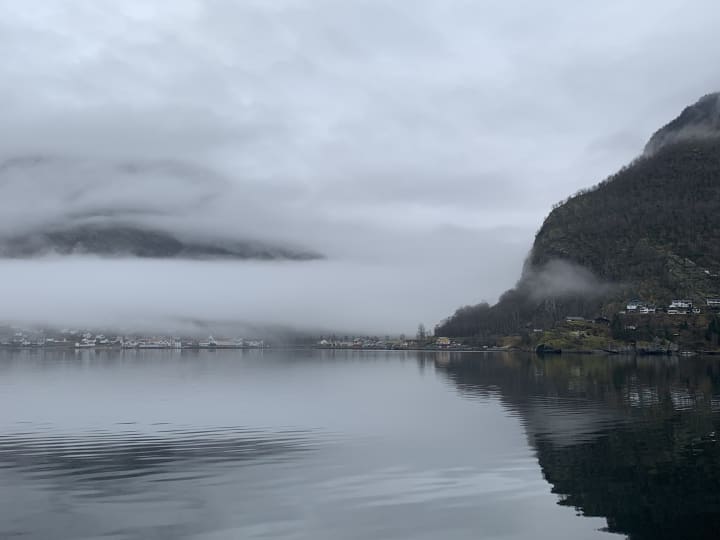
What followed, then, was a leisurely two-hour ferry ride, taking us past tumbling waterfalls like the Laegdafossen, secluded communities hugging the shores of the fjord, and an ice sheet or two that, at first, made it sound like the boat had run aground.

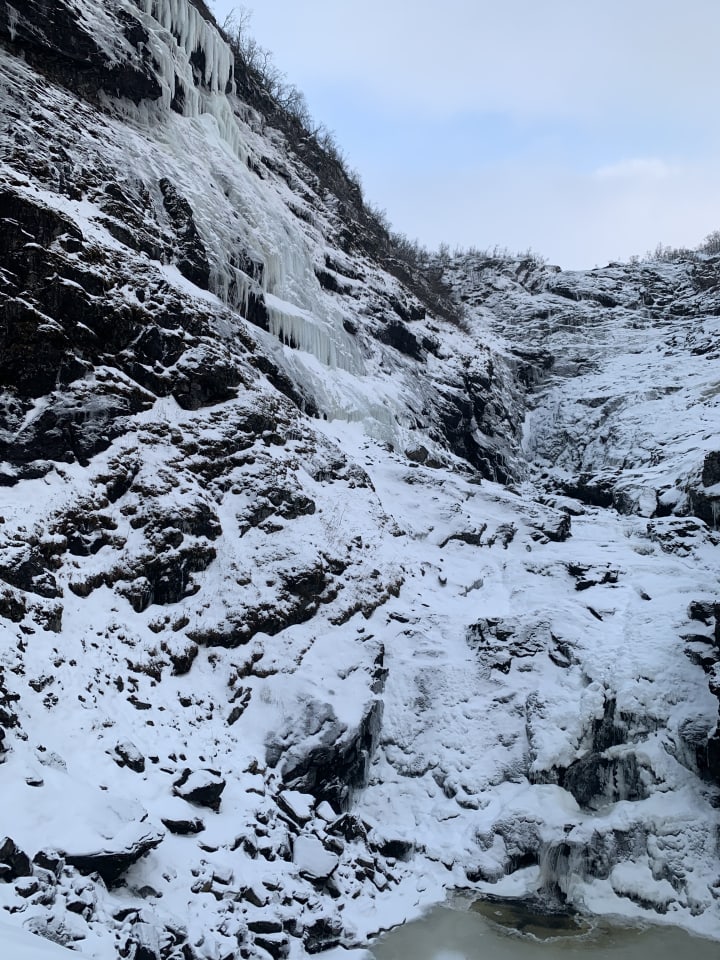
But my personal highlight came after the landmark attraction of the tour, when I took a vintage train through the mountains from Flam to Myrdal, and espied, again, communities living comfortably in narrow careening valleys frosted with snow, along with the frozen Kjosfossen waterfall (for which we had time to not only stop the train, but step outside and take photos).

The only regret from the tour is noticing the ‘Viking menu’ on the ferry, consisting of seal and whale, as I was already stepping off the boat. While in Bergen itself, I also had enough time to stop by the UNESCO World Heritage Site of Bryggen, an old village from the time of the Hanseatic League that would house its merchants and traders.

The next stop was Oslo, and while it does not compare to Sweden’s capital of Stockholm when it comes to the presence of historical architecture, it is still a captivating city to visit. The main street, Karl Johans Gate, which runs from the Oslo central station to the King’s Royal Palace, will show you just about everything you need to see outside of the museums. The palace itself is in the neoclassical style, and although I’m not an expert one can assume the shops and the hotels leading to its iconic position on the hill at the end of the street are also of the same period.

Stortinget, the parliament of Norway, stands on the side of the cobbled road opposite the national theatre, and looking past them both in the direction of the fjord one can spot the Oslo City Hall, or as its better known around the world, the Nobel Prize Hall.

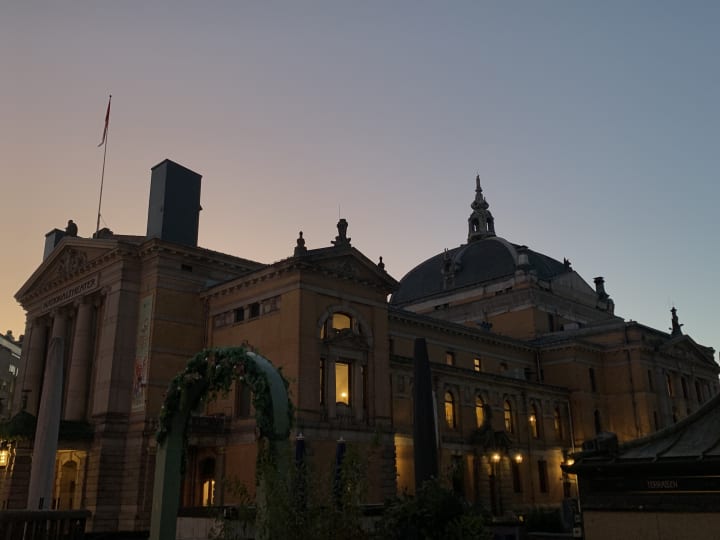
Coming to Norway’s capital so close to Christmas meant that this stretch of road before the palace was lined with stalls and twinkling lights, embodying the cosy European winter aesthetic one has come to know through Hollywood.
Oslo boasts many museums on architecture and art, some of which I’ve been to before, so this time I paid a visit to the Munch, in memory of the painter Edvard Munch, known for “The Scream”.

Although the website boasted of holding all eight copies of the iconic painting, only ever displaying three at a time, I was unsuccessful that day in finding even one (and I searched every floor of the skyscraper you see above). Though I did appreciate this quote they had of Munch’s on the wall, relevant for any artist inspired to create.

The most surprising sight of the Norway trip was the Vigeland Park which, according to our guide, was fully designed and its sculptures built by one man – Gustav Vigeland. 200 sculptures in total, with a sprawling monolith at the park’s apex like something out of a Hironimus Bosch painting, or a Lovecraftian nightmare (in the best of ways, of course). Vigeland was always working, and the magnanimous results are astounding.

If you don’t mind the cold, brave the trip to Norway in the winter. Locals claim that the country’s at its most beautiful in the summer, for obvious reasons, but the November-to-December majesty can be just as special and majestic.
About the Creator
Keep reading
More stories from Andrei Babanin and writers in Wander and other communities.
USA & Mexico 2024
Visiting Washington DC means seeing select landmarks as a must, and enhancing your stay with some more peripheral sightseeing. Although I had visited the capital of the modern empire less than two years before, notable changes can still be felt, and seen. The Capitol, a stunning marble sight cresting the Mall’s eastern hill, had yellowed and lost its sheen, most likely a result of the elements prior to what must be regular cleans. The walkway surrounding the Lincoln memorial was barricaded off, and the White House, its south fence already unapproachable on my last visit due to further barriers, had even its Ellipse and national Christmas tree inaccessible for most of my stay.
By Andrei Babaninabout a year ago in Wander
A Historic Declaration
We the People of the Husbands of the United States of America, in Order to form a more perfect Union, and I mean you...with me...establish Justice, insure domestic Tranquility, provide for the common defence, promote the general Welfare, and secure the Blessings of Liberty to ourselves, after Puberty, do ordain and establish this Declaration of Co-Dependence.
By Gerard DiLeo4 days ago in Humans



Comments
There are no comments for this story
Be the first to respond and start the conversation.