
Leaving France for Tunisia: The Right Move?
Between sunshine, cost of living and everyday realities, moving to Tunisia can be appealing—but it’s not for everyone.

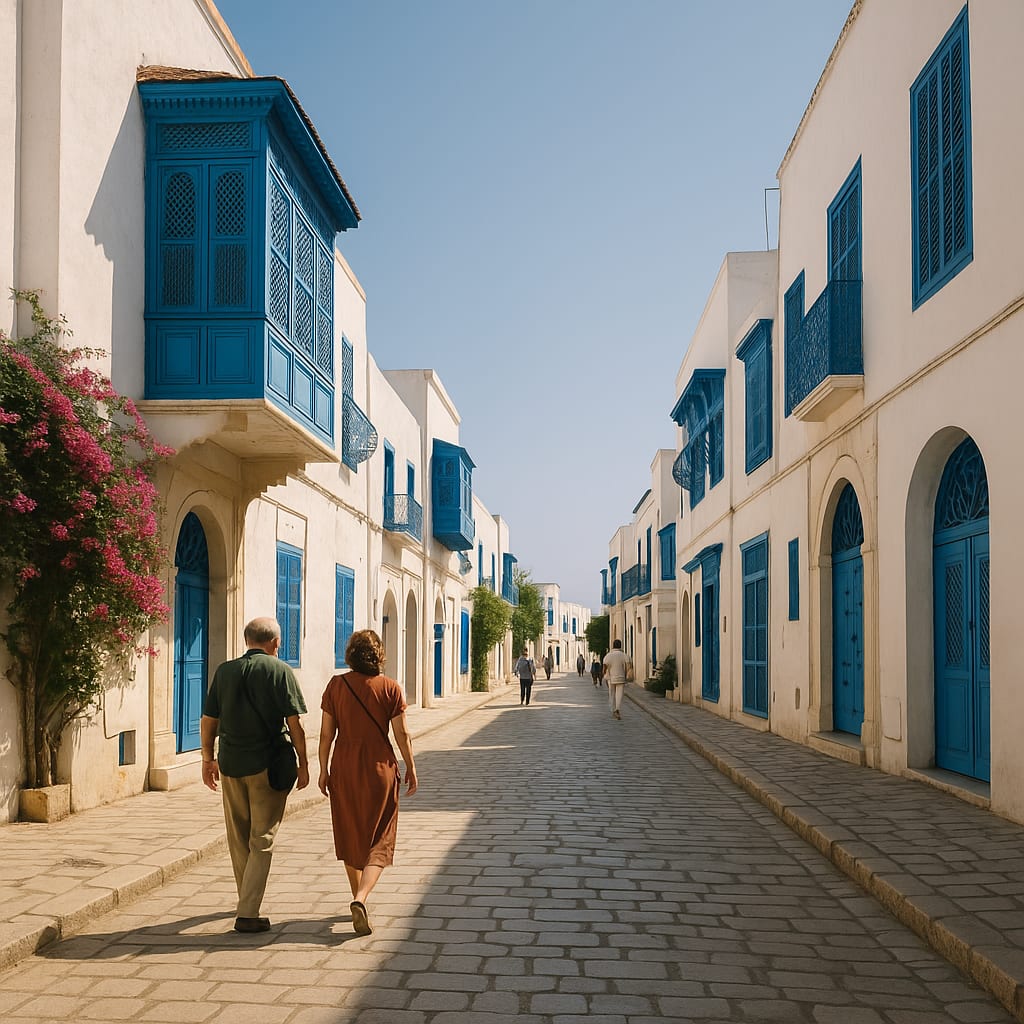
Leaving France to settle in Tunisia is a decision more and more French citizens are considering. The reasons vary: a desire for sunshine, a slower pace of life, cultural rediscovery, or simply the need to escape a France that feels increasingly stressful to some. But behind the Mediterranean dream, reality is often more complex. Between the promise of a fresh start and the challenges of adapting to a new system, what are the true pros and cons of relocating to Tunisia?
⸻
A More Pleasant Lifestyle
The first thing that draws people to Tunisia is the climate. With over 300 days of sunshine a year, mild winters, and easy access to the sea, the country offers an outdoor lifestyle that surpasses what most of France can offer. Add to that a rich cultural heritage, historical depth, and delicious, affordable cuisine, and the appeal becomes clear.
Cost of living is also a major incentive. For the same income, people often find they live better in Tunisia than in France. Rent is cheaper, services like cleaning, dining out, and transportation are far more affordable, and many expats say they can enjoy a lifestyle in Tunisia that would have been unreachable in France.
⸻
A French-Speaking Environment
One big advantage is language. French is widely spoken in Tunisia—at work, in administration, in public life—making it much easier to settle in. There’s no language barrier to deal with, which is often one of the biggest challenges of moving abroad.
Moreover, Tunisia shares some cultural references with France. The historical relationship between the two countries—though complicated—means there’s a common ground of understanding. For many French citizens, Tunisia doesn’t feel like a completely foreign country.
⸻
Opportunities and Economic Realities
Professionally, Tunisia can offer opportunities, especially in growing sectors like tech, digital services, and entrepreneurship. The lower cost of doing business attracts many young entrepreneurs looking to test ideas in a more flexible environment.
That said, the labor market can be unstable. Youth unemployment is high. Local salaries are often very low by European standards, and some job categories are reserved for nationals. Expats generally find it easier to move with an existing job, or to launch their own business rather than rely on the local job market.
⸻
Social and Political Tensions
As for safety, opinions vary. Tunisia is generally considered a safe country, especially compared to other parts of the region. However, like anywhere, certain areas and political periods can be more tense. Protests and demonstrations still happen, and the political situation, though stable for now, remains somewhat unpredictable.
Expatriates must stay informed, exercise caution, and above all, avoid projecting French expectations onto Tunisian systems. Tunisia doesn’t operate under the same institutional logic, and adapting means understanding that.
⸻
A Different Approach to Social Life
On a social level, Tunisia can be surprisingly warm. People are often more open, generous, and welcoming than in major French cities. But that human proximity can also be disorienting for those used to more private or formal social norms.
Gender roles, time perception, family structures, and public behavior may differ. While not usually a barrier, these differences require emotional flexibility. Those who arrive with rigid expectations—or an overly romanticized view—can quickly feel out of place.
⸻
Escaping Doesn’t Fix Everything
This might be the biggest trap of all: thinking that a new country will solve old problems. Some French people come to Tunisia chasing simplicity, authenticity, or escape from stress. But problems don’t vanish with geography. Bureaucracy can be slow, culture shock can creep in, and homesickness is a real possibility.
Tunisia isn’t a postcard. It’s a real country, vibrant and complex. Those who succeed in their move are usually those who arrive with humility and an open mind.
⸻
A Personal or Political Act?
For more and more French citizens, moving to Tunisia feels like more than just lifestyle change—it feels like a form of protest. Rising insecurity in France, housing shortages, inflation, institutional distrust, and cultural fatigue are driving some to seek something new.
But leaving France doesn’t automatically mean building a better future. A move abroad demands real engagement, patience, and compromise. Expat life changes you—but it doesn’t fix you. And sometimes, the hardest part is rebuilding your identity far from home.
⸻
Conclusion
Leaving France for Tunisia can offer a sense of freedom, a better quality of life, and the chance to reconnect with what matters most. But that choice should be made with clarity, not illusions. Because moving abroad isn’t a shortcut to happiness—it’s a challenge, an adventure, and a test of who you are when you’re no longer “home.”
About the Creator
Bubble Chill Media
Bubble Chill Media for all things digital, reading, board games, gaming, travel, art, and culture. Our articles share all our ideas, reflections, and creative experiences. Stay Chill in a connected world. We wish you all a good read.
Keep reading
More stories from Bubble Chill Media and writers in Wander and other communities.
Why Leaving Paris Might Be the Best Decision
For decades, Paris was seen as a dream. The city of lights, love, culture, and opportunity. But behind the postcards and cinematic glow, the daily reality for many Parisians is far more difficult. Stress, precarious living conditions, and emotional exhaustion have become part of the urban routine. More and more young professionals, families, and even retirees are deciding to leave the city — not to escape, but to recover a sense of balance and freedom.
By Bubble Chill Media 6 months ago in Wander



Comments
There are no comments for this story
Be the first to respond and start the conversation.