

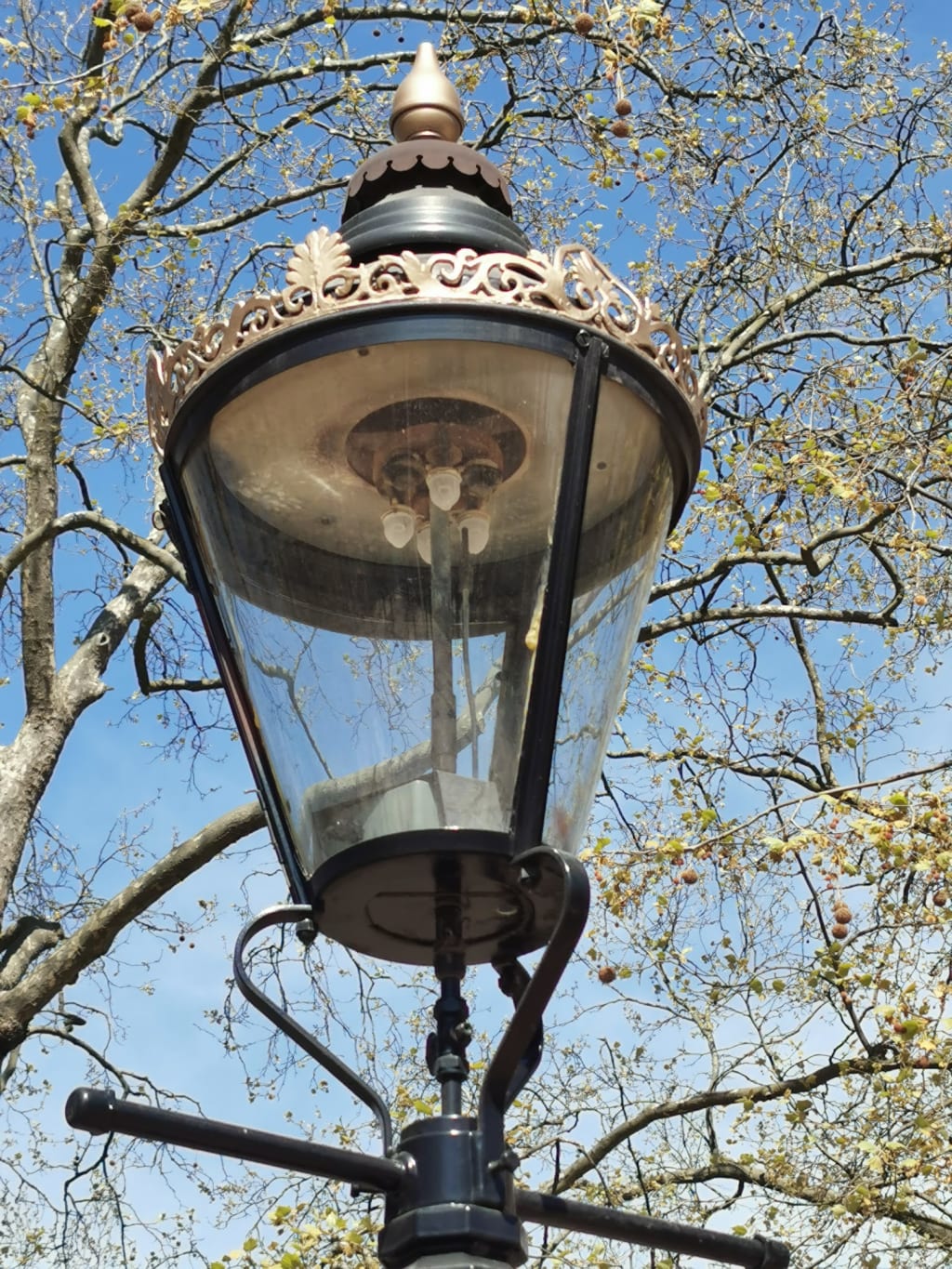
I love a good lamppost, especially in the historic parts of the Big Smoke. There are all sorts of Lamp posts, some intricate, some plain and some are old. I saw one with a small arch in Green Park the other day. It got me thinking, hence the title of this post.
Lampposts in London have a rich history, evolving from early oil lamps in the 17th century to the modern electric versions seen today. The first public street lighting was introduced in 1684 with oil lamps, managed by the City of London.
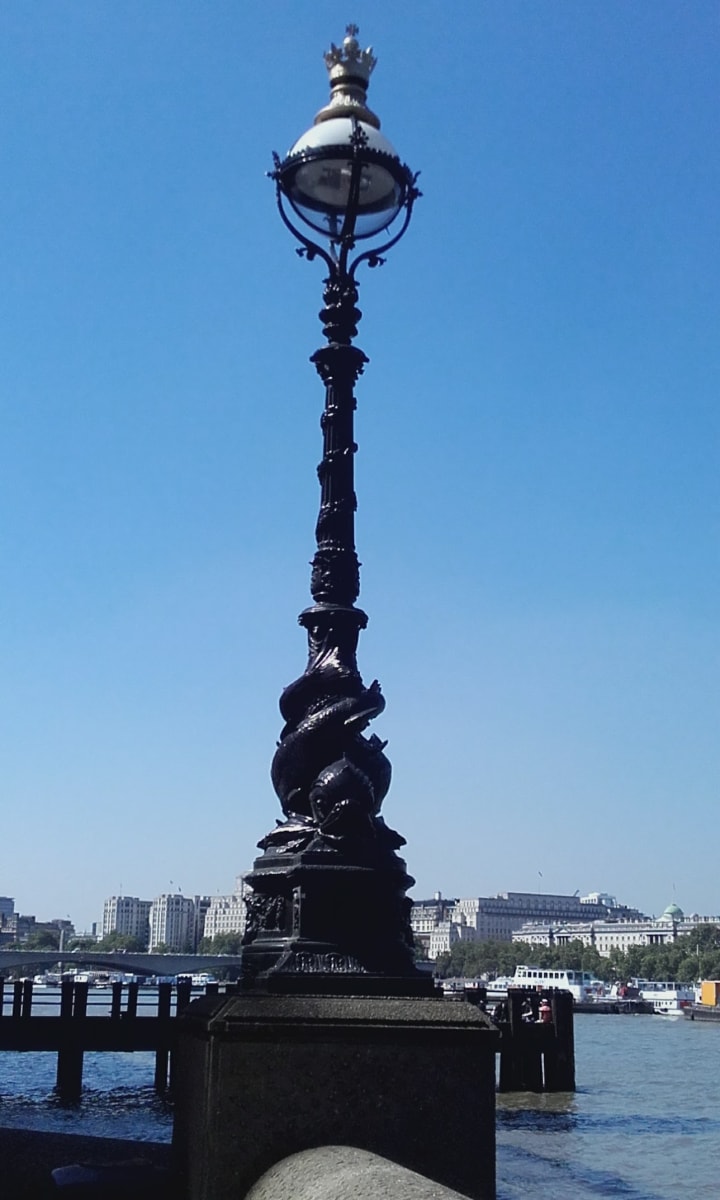
By the 19th century, gas lighting became common, with iconic designs like those by William Murdoch and later the ornate cast-iron columns still visible in areas like Westminster and Hyde Park. Gas Lamps started making way for electric lighting began in the late 19th century, with the first electric streetlights installed in 1878 near the Thames Embankment.


History
The history lamp posts dates back to the 16th century, with the earliest street lighting appearing in Europe. In 1417, London introduced a basic system where residents hung lanterns outside their homes during winter months. This process was formalised by a 1694 act requiring oil lamps.
The first purpose-built public street lighting emerged in 1667 in Paris, using oil lamps, followed by London's adoption in 1684 under the care of lamplighters who manually lit and extinguished them.
19th Century
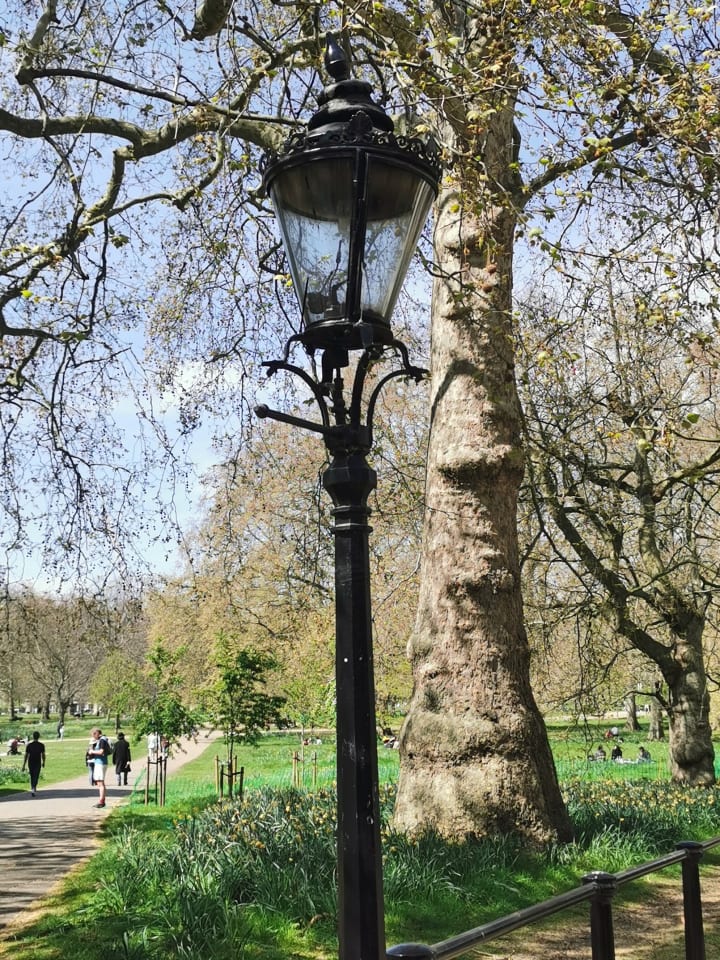
The 19th century was a turning point with the invention of gas lighting. In 1807, London’s Pall Mall became the first street illuminated by gas lamps, designed by Frederick Winsor and later refined by William Murdoch.
Gas lampposts, often ornate cast-iron structures, became widespread, with companies like Boulton & Watt mass-producing them.


Early 20th Century
By the early 20th century, incandescent and later fluorescent bulbs replaced gas, with modern LEDs introduced in the 21st century for efficiency. Today, lampposts are key to urban infrastructure worldwide, blending historical designs with advanced technology.

Arched Lamppost in Green Park

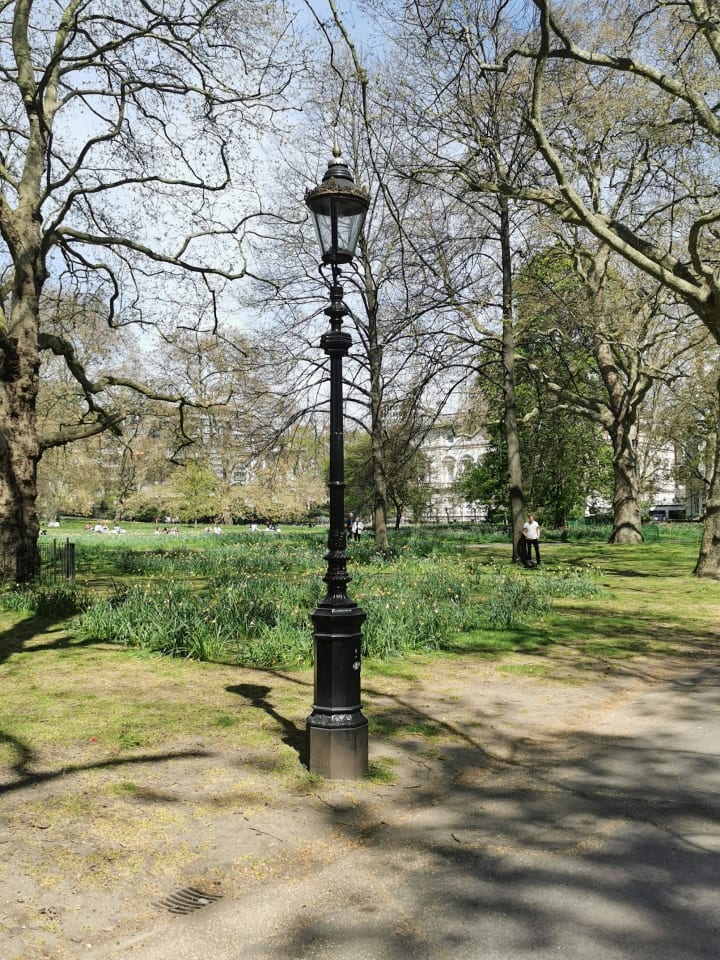
I saw one with a small arch at the base of the structure. I researched into this and found out that it’s likely designed to allow grass to grow underneath and prevent water from pooling around the base, which could cause erosion or damage. Plus, It also helps in maintenance by providing access for cleaning or clearing debris. This type of design is common in outdoor fixtures like lampposts or bollards, especially in parks or historic areas.

The Purple Lamp post
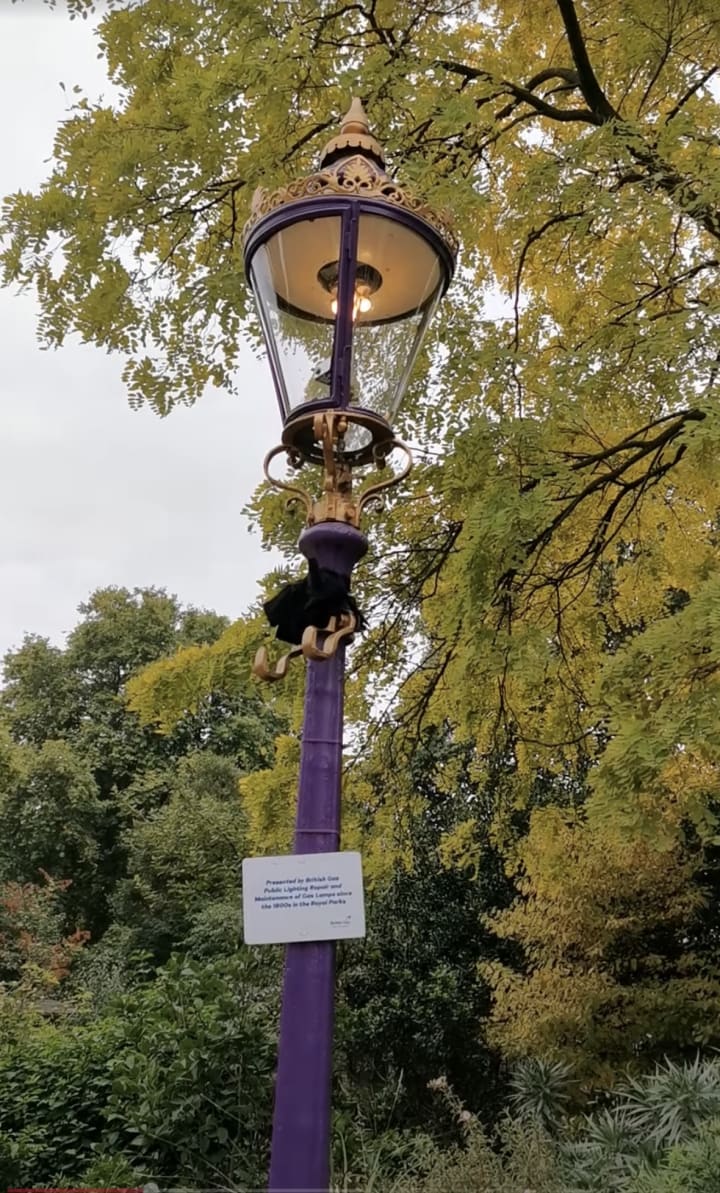

Lamp Posts are usually black in London, however, there was a historic gas lamp found in one of London's Royal Parks, which was painted purple for Queen Elizabeth II’s jubilee.
Gas lamps have been maintained and repaired by British Gas since the 1800s.
The ornate design, with a decorative top and glass enclosure, is typical of Victorian-era gas lighting introduced in the 19th century.


Parting Comments
Today, while many are converted to electric power, although many still retain their historic charm. Today, over 1,000 gas lamps remain in London, maintained by Westminster City Council and British Gas, which appreciates its heritage and evolving functionality.
About the Creator
Tabby London
The London I've been discovering is usually off the well-beaten track.I love the nooks and crannies and walking along the streets steeped in centuries worth of history. I'm fond of Zone 1 because that's where it all began centuries ago.
Keep reading
More stories from Tabby London and writers in Wander and other communities.
Worth the Wait: Puerto Viejo, Costa Rica
Beach bumming in a small Caribbean beach town sounded like a perfect way to end our 6-month trip through Mexico and Central America. Or so we thought. The foul, fishy stench of rotten seaweed hit our nostrils as we stepped from the cramped bus and looked out at a rather depressing, empty, and underwhelming black sand beach. It was pouring with rain, and we had to quickly fish out our ponchos. We thought, this couldn’t be it, could it?
By Sh*t Happens - Lost Girl Travel5 days ago in Wander




Comments
There are no comments for this story
Be the first to respond and start the conversation.