
La Cueva
a Colombian cultural landmark


Introduction
In 1954, a modest restaurant and bar was opened in the city of Barranquilla, on Colombia's Caribbean coast. Named La Cueva, it has endured for 70 years.
The establishment became prominent in the 1950’s and 60’s as the regular haunt of writers, musicians, and artists. The intellectual exchanges at La Cueva would not only influence those associated with the place but by extension, impacted the philosophical and political atmosphere of Colombia and the greater Latin American region.
Though it is still a restaurant and bar, the term modest may not be the best descriptor these days.
La Cueva was destined to become an icon of Colombian culture. It played a key role in shaping the country’s literary, musical, and artistic heritage that resonates to this day.

Literary Heritage
Perhaps the greatest legacy of La Cueva is its association with Colombia’s literary history.
In the 50’s and 60’s, a group of local writers came to be known as the Barranquilla Group. Most of them were journalists, at least originally, who became novelists, poets, and political philosophers. La Cueva became a sort of home base for this informal collective of intellectuals and writers.
Notable members of the Barranquilla Group included Gabriel García Márquez, Álvaro Cepeda Samudio, Germán Vargas, and Alfonso Fuenmayor. At La Cueva, they not only drank and socialized, but they shared ideas and, collectively, influenced each other’s work through their interactions.
The Barranquilla Group dominated the Colombian literary landscape during their heyday, but their influence did not end at their country’s borders. The Barranquilla Group had a direct impact on what would become known, in literary circles, as the Latin American Boom.
The Latin American Boom of the 1960’s and 70’s was known for its avant-garde nature, its experimental narrative style, and magic realism. All these literary currents were fostered by the Barranquilla Group and spread across the region.
Prominent writers of the Latin American Boom, such as Mexico’s Carlos Fuentes and Julio Cortázar of Argentina, were influenced by the literary innovations of the Barranquilla Group.
The best-known of the Barranquilla writers was Gabriel José García Márquez, affectionately called Gabo. Márquez was awarded the Nobel Prize in Literature in 1982, on the heels of his acclaimed novel, “One Hundred Years of Solitude”.

Musical Heritage
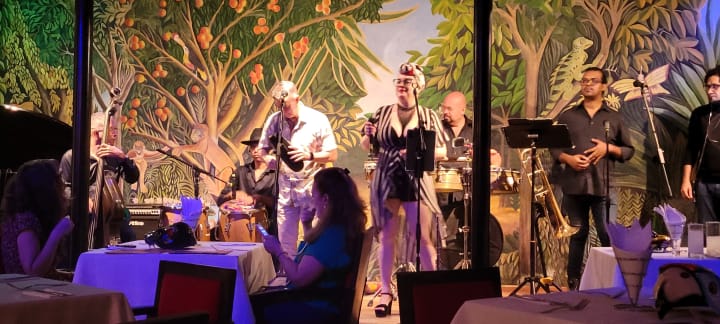
From its earliest days, La Cueva served as a music venue. Popular genres played on its stage have included jazz, cumbia, vallenato, and salsa.
Musicians associated with La Cueva included the famous Colombian salsa artist Joe Arroyo, as well as cumbia composers and band directors Lucho Bermúdez and Pacho Galán.
In the early days of La Cueva, these musicians and others were an integral part of the artistic milieu that found its home within its walls. Though there was certainly an intellectual element at play, particularly with the Barranquilla Group, it can’t be forgotten that La Cueva was a bar and restaurant – a bustling social hub – with a live soundtrack.
Despite its literary legacy, in contemporary times, La Cueva’s role as a hub of traditional Latin music styles has taken center stage. The establishment hosts live music performances, with a focus on local talent, as well as supporting music appreciation and education in the broader community.
Visual Arts
Visual artists have always found a home in La Cueva, along with their compatriots in the other arts. Regulars included Alejandro Obregón, Enrique Grau, Alfredo Guerrero, Sofía Urrutia Holguín, and Eduardo Ramirez Villamizar.
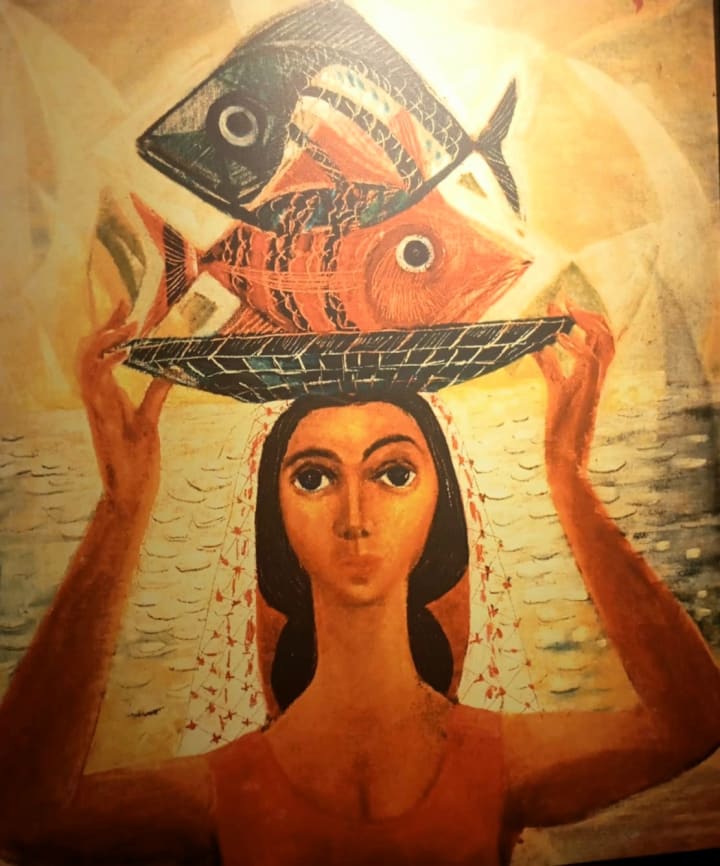
The walls of La Cueva are currently adorned with the works of prominent Colombian artists, both past and present. Notable works on display include multiple paintings by renowned painter and Barranquilla native, Orlando “Figurita ” Rivera (1920-1990).

Rivera was considered part of the Barranquilla Group’s non-literary faction. Besides being a painter, he was a cartoonist, and dancer and was known for designing floats for Barranquilla’s famed Carnival (2nd in size only to that in Rio de Janeiro).
Today, La Cueva continues to support the visual arts through art exhibitions and educational initiatives. The owners are intent on preserving the artistic heritage of the past and promoting the continued development of Colombia’s visual arts.
Legacy
Today, La Cueva continues to support the visual arts through art exhibitions and educational initiatives. The owners are intent on preserving the artistic heritage of the past and promoting the continued development of Colombia’s visual arts.
The fabled golden years of La Cueva came about as an organic part of the lives of those who it. Frankly, much of that mystique is gone, as the times and faces have changed significantly. Today, La Cueva might be seen as a living museum of Barranquilla’s artistic and cultural heritage.
To reiterate, however, it is a living museum. Photographs from its glory days adorn the walls and a multimedia presentation on the history of the venue can be enjoyed in the back room. Yet, the bar still serves drinks, the kitchen still churns out delicious meals and the bandstand still comes alive with the sounds of salsa and tropical music.
La Cueva may attract its share of tourists these days, but it is not an artificial environment. Its legacy endures, as does its active influence on the Barranquilla arts scene.
Time moves on, but it has not left La Cueva behind.

About the Creator
Randy Baker
Poet, author, essayist.
My Vocal "Top Stories":
* The Breakers Motel * 7 * Holding On * Til Death Do Us Part * The Fisherman
Keep reading
More stories from Randy Baker and writers in Wander and other communities.
Welcome to Cartagena
First Encounter It was on February 12, 1990, that we arrived off the coast of Cartagena. President George H.W. Bush was scheduled to be there for a much-lauded "anti-drug cartel summit". At that time, Colombia was considered among the most dangerous countries in the world and the center of the cocaine production industry. The United States was, of course, the center of the cocaine consumption industry. Thus, 4 heads of state convened for a meeting about their shared concerns.
By Randy Baker2 years ago in Wander
When the Shelter Closes
Across the street from my house, a man slept under a tree, his dog by his side. My first, naive thought: he must be traveling through. But he kept coming back, often sleeping there during the day. Then it hit me—that person might not have a home.
By Bride of Sound5 days ago in Humans


Comments
There are no comments for this story
Be the first to respond and start the conversation.