
Kurinjal Trek – A Serene Escape into Karnataka’s Untamed Wilderness
Kurinjal Trek, tucked away in the misty folds of Kudremukh National Park.
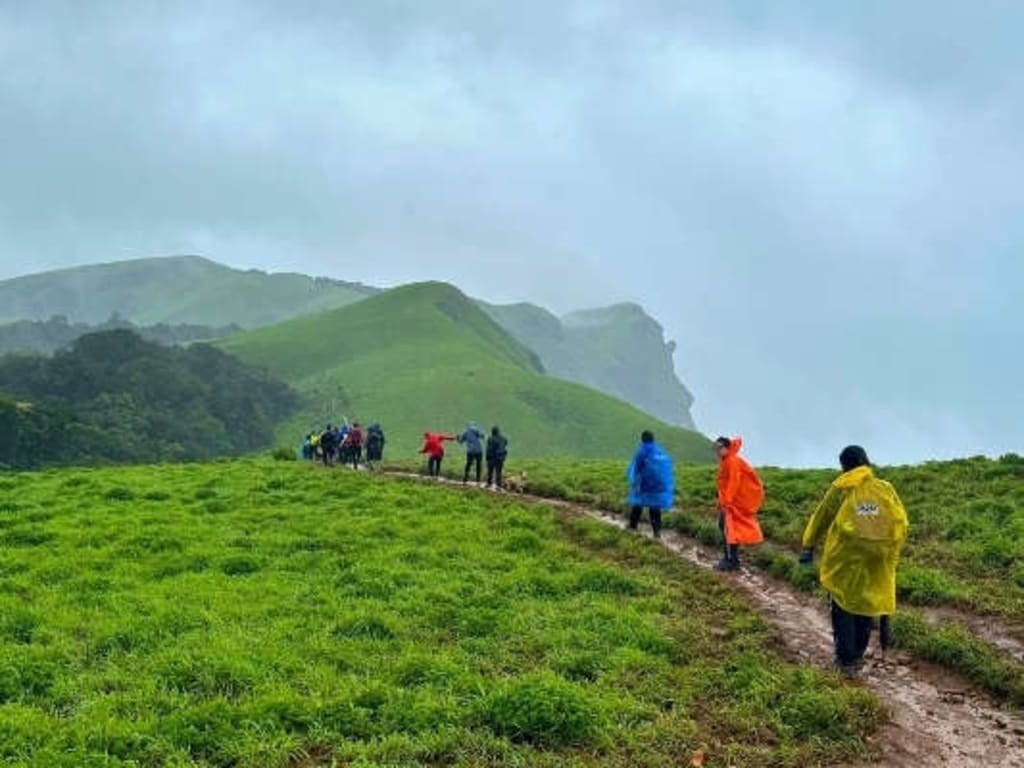
Tired of overcrowded hill stations and Instagrammed-to-death treks? I found a hidden treasure that most weekend warriors haven’t discovered yet—Kurinjal Trek, tucked away in the misty folds of Kudremukh National Park. With dense shola forests, quiet trails, and panoramic hilltop views, this trek is the kind of experience that helps you slow down, breathe, and feel connected to nature again.
Let me take you along on my recent journey to Kurinjal—a trek that’s not only beginner-friendly but refreshingly offbeat.
Why Kurinjal Trek Feels So Different
The first thing that struck me about Kurinjal is its unspoiled beauty. It doesn’t scream for attention like some of the popular Western Ghats trails. Instead, it quietly draws you in. Located in the Chikmagalur district of Karnataka, the Kurinjal Trek is roughly 14 km (round trip) and weaves through tropical forests, open grasslands, and whispering valleys.
It’s not just about reaching the summit—it’s about being present with every step. You’ll find yourself walking in silence, hearing the occasional birdcall or rustle of leaves, and feeling as if time has slowed down. And when you finally reach the top, the view of rolling green hills stretching endlessly before you is nothing short of magic.
Getting There: Your Route to the Trail
Reaching the base of the Kurinjal Trek is straightforward if you plan right. The trek begins near Balagal, inside Kudremukh National Park. From Bangalore, the drive is about 7–8 hours (330 km). The nearest town is Kalasa, and it’s a good idea to stay there or in nearby villages.
We left Bangalore on a Friday night and reached Kalasa early Saturday morning. Most homestays in this region will help you get permissions and connect with local guides—which are compulsory due to forest regulations. Don’t skip this—Kurinjal is a biodiversity hotspot, and trekking without permission is strictly prohibited.
What the Trail Is Really Like
The trail starts with thick forest cover, and within 10 minutes of walking, we were surrounded by towering trees, moss-covered logs, and birds darting between the branches. It’s like walking through a storybook forest.
The trek is mostly gradual with a few steep sections, especially near the summit. It’s not physically intense, but it keeps you engaged. We passed small streams, wildflowers, and even spotted the paw prints of a wild animal—probably a civet or a jungle cat, as per our guide.
As we climbed higher, the forest began to thin out, giving way to lush grasslands. And then, all of a sudden, the trees parted and we were standing at the top, looking over one of the most breathtaking panoramic views of the Western Ghats. No buildings, no crowds—just layers of green hills, clouds floating below us, and a breeze that carried all our tiredness away.
Best Time to Visit: Picking the Perfect Season
The best months for the Kurinjal Trek are between October and February. The post-monsoon greenery is at its peak, and the skies are usually clear, offering great views. The temperature stays cool, making the trek comfortable even in the afternoons.
Monsoon (June to September) transforms the trail into a lush rainforest, but it also brings slippery paths and leeches—only go if you're prepared for a wet, wild adventure. Summer (March to May) is less crowded, but it can get a bit warm, and the landscape isn’t quite as lush.
Travel Tips: What You Need to Know Before You Go
Here are some personal tips I wish I’d known earlier:
Forest permission is mandatory, and so is a guide. Book through a homestay or local contact to make this process smooth.
Wear trekking shoes with good grip—the forest floor can get muddy and uneven.
Start early, ideally by 7–8 AM, to finish before the sun gets too strong.
Carry a small backpack with water, snacks, and a poncho (just in case).
Leave no trace—Kurinjal is part of a sensitive ecological zone, so avoid plastic and don’t litter.
The cost of the entire trip (including transport, stay, permits, food, and guide) was around ₹3,000 per person. Budget-friendly and totally worth it.
Add More to Your Trip: What Else to See Around Kurinjal
If you’ve made it all the way to Kudremukh, why stop at one trek?
Hanuman Gundi Falls is nearby, and it’s a spectacular place to unwind after the hike.
You can also attempt the Kudremukh Peak Trek, which is longer and more challenging but just as rewarding.
The temple town of Horanadu, dedicated to Annapoorneshwari, is only a short drive away and offers a peaceful spiritual experience.
If you're staying in Kalasa or Samse, you can explore the local culture, riverside walks, and scenic drives that make this region one of Karnataka’s most underrated getaways.
Final Thoughts: Why Kurinjal is the Trek You Didn’t Know You Needed
Kurinjal is not just a trek—it’s a gentle reminder that nature doesn’t always need to be loud to be powerful. It’s for people who love stillness, who seek to wander off the main roads, and who find joy in small things—like dew on a fern leaf, or the sound of wind in the trees.
So if you're planning your next weekend trip from Bangalore, skip the usual and choose Kurinjal. It’s not just a destination; it’s an experience that lingers long after the hike is over.
About the Creator
Rohit SEN
Hey! Come along with me to explore beautiful places, learn about different cultures, and share my adventures. Let's Explore together! From a travel lover!
Explore Yourself
I am a follower of all things Travel and Adventure, my eyes light up at the discovery of a new flight route to Armenia, A camel trek in the Western Sahara or a Windsurfing trip in Naxos. I sometime discover information about destinations so far removed from any known tourist guides that I cannot even pinpoint them on the world map without tracing the steps of previous explorers with some kind of obsessive desire to find the answers. The thought of the unknown is what drives my spirit of adventure, I leave scribbles and notes in diaries about trips and ideas far into the future, even if they are not viable or I never embark on them, but each idea is what inspires and motivates me to keep taking those steps to find what is over the horizon.
By Malachai Hough5 days ago in Wander
City thrice holy
My visit to Israel in the 1990s felt like a homecoming. Don’t ask me why. A quick tour of Jerusalem took in many historic and religious sites. Not least the excavations beside the Western (or Wailing) Wall. Here, becloaked scholars read ancient Hebrew scrolls, praying with their voices, hearts, minds and bodies. Here, Roman street divides modern office and apartment blocks. Here, east meets west, Jew lives alongside Arab. Here the most holy of Christian monuments has a church that is bisected by a line cutting through two walls, floor, ceiling and alter. One side Catholic, the other Greek Orthodox.
By Raymond G. Taylora day ago in Wander



Comments
There are no comments for this story
Be the first to respond and start the conversation.