
KLM’s A350 Decision
Why the Airline Chose Airbus Over Boeing

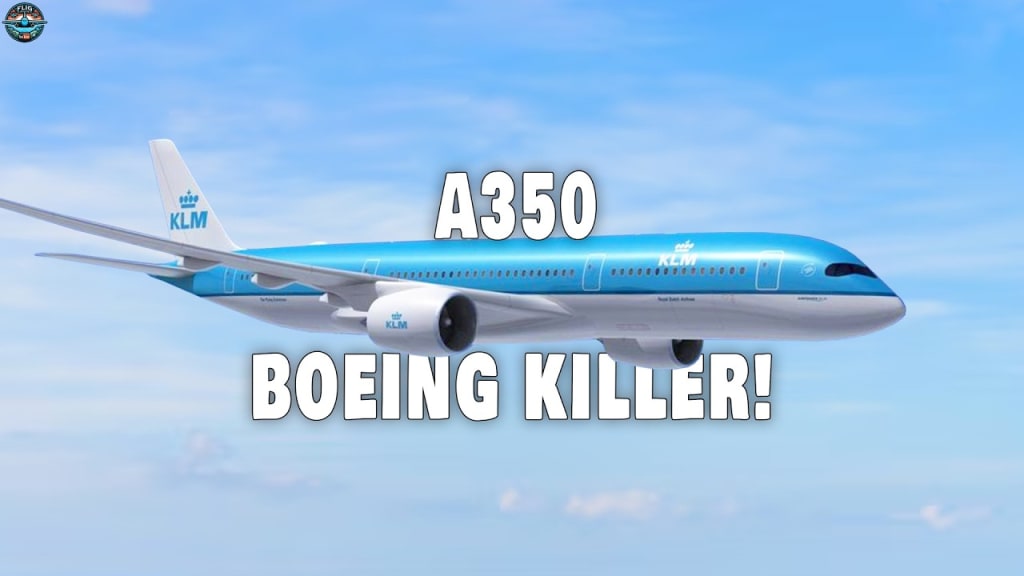
KLM Royal Dutch Airlines, the world's oldest airline still in operation, has recently made headlines with its decision to upgrade its long-haul fleet. Despite a long history of favoring Boeing aircraft, KLM has opted to purchase the Airbus A350 rather than the Boeing 787 Dreamliner. This decision marks a significant shift in the airline's procurement strategy and has sparked considerable interest in the aviation community. Here’s a detailed look into why KLM chose the A350 over the 787.
KLM’s Historic Preference for Boeing
KLM’s relationship with Boeing is deeply rooted, reflecting a long-standing preference for American-made aircraft that dates back to the early 20th century. This allegiance is evident in KLM’s fleet composition, which has predominantly featured Boeing models over the decades. The airline's operational history includes a range of Boeing aircraft, from the iconic 747 Jumbo Jet to the more recent 777 series. This preference is not merely traditional; it reflects KLM’s satisfaction with Boeing’s reliability, performance, and the support offered throughout their operational history.
When it came time for KLM to consider upgrading its long-haul fleet, the Boeing 787 Dreamliner seemed like a natural choice. The 787-10, an extended version of the original 787-9, promised improvements in fuel efficiency, range, and passenger comfort, making it an attractive option for airlines looking to modernize their fleets. The Dreamliner was designed to be more economical with better fuel efficiency and reduced operating costs, aligning well with KLM’s strategic goals for sustainability and cost-effectiveness. Furthermore, the 787’s advanced technologies, including its composite construction and quieter engines, were expected to enhance passenger experience and operational efficiency.
However, despite the compelling attributes of the 787-10, KLM’s decision to stick with Boeing faced a significant challenge in the form of production and delivery timelines. Boeing’s production issues with the 787, including delays and quality control problems, had raised concerns about the reliability of meeting delivery schedules. This uncertainty, combined with competitive offers from Airbus, made the decision-making process more complex for KLM. The airline’s historical preference for Boeing was thus put to the test as it weighed the benefits of the 787 against the evolving dynamics of the aircraft market.
The Surprise Move: Ordering Airbus A350s
KLM’s decision to order up to 90 Airbus A350s, a notable departure from its Boeing-centric fleet, has been one of the most significant shifts in its procurement strategy. This move was unexpected, given the airline’s long-standing partnership with Boeing and its prior interest in the 787-10. The decision to opt for the A350 instead of the Dreamliner has sparked extensive discussion within the aviation industry, highlighting a strategic pivot driven by multiple factors.
The Airbus A350, a modern and technologically advanced aircraft, offers several advantages that likely influenced KLM’s decision. One of the most compelling reasons was the A350’s superior range capabilities. The A350-900, for instance, can cover distances between 1,800 and 2,200 nautical miles further than the Boeing 787-10. This extended range is crucial for KLM, especially for long-haul routes that stretch to the edge of the 787-10’s operational limits. The ability to fly longer distances without refueling aligns well with KLM’s needs for serving destinations like South America and South Africa, where the 787-10 might struggle with operational efficiency.
Additionally, the decision to go with the A350 was influenced by cost considerations. The A350-900 is reported to be priced around $20 million less than the 787-10. For an order of up to 90 aircraft, this price difference translates into significant savings, making the A350 a financially attractive option for KLM. This cost efficiency is especially pertinent in an industry where operating costs are a major concern and where airlines are increasingly seeking ways to optimize their expenditures.
Key Reasons Behind KLM’s Decision
1. Range Capabilities
The extended range capabilities of the Airbus A350 played a pivotal role in KLM’s decision-making process. While the Boeing 787-10 offers impressive efficiency and performance, the A350-900’s ability to fly longer distances without refueling provides a distinct advantage for KLM’s long-haul operations. The A350’s range allows KLM to operate flights to more remote destinations and manage longer routes with greater flexibility, enhancing the airline’s ability to adapt to changing market demands and geopolitical constraints.
For KLM, operating longer routes without requiring additional fuel stops is a strategic advantage. The airline can offer non-stop flights to destinations that were previously challenging to serve with the 787-10. This capability not only improves operational efficiency but also enhances passenger convenience, aligning with KLM’s commitment to providing a superior travel experience.
In addition to range, the A350’s advanced aerodynamics and fuel-efficient engines contribute to its operational efficiency. The aircraft’s design minimizes drag and maximizes fuel efficiency, reducing operating costs and environmental impact. As airlines increasingly prioritize sustainability, the A350’s eco-friendly features make it a compelling choice for carriers looking to meet their environmental goals while maintaining competitive operational performance.
2. Cost Efficiency
Cost efficiency was a significant factor in KLM’s decision to choose the Airbus A350 over the Boeing 787. The financial implications of purchasing and operating a new fleet of aircraft are substantial, and KLM’s decision reflects a careful consideration of the cost-benefit equation. The A350’s lower starting price compared to the 787-10 provides KLM with immediate financial advantages, allowing the airline to allocate resources more effectively and invest in other areas of its business.
Beyond the initial purchase price, the A350’s operational cost benefits contribute to its overall cost efficiency. The aircraft’s fuel-efficient design, combined with its lower maintenance requirements, results in reduced operating expenses over the aircraft’s lifecycle. For KLM, these cost savings are crucial in maintaining profitability and competitiveness in a challenging industry landscape. Additionally, the availability of financing options and favorable terms from Airbus likely influenced KLM’s decision. Aircraft manufacturers often provide attractive financing packages and incentives to secure large orders, and KLM’s choice of the A350 may have been influenced by favorable terms offered by Airbus. The combination of lower purchase price, operational cost benefits, and financing options made the A350 a financially viable choice for KLM.
The Future of Boeing and KLM’s Fleet
While KLM’s decision to opt for the Airbus A350 marks a significant shift in its procurement strategy, it does not necessarily signal the end of Boeing’s involvement with the airline. The Boeing 777-9, which is currently under development, remains a potential candidate for KLM’s fleet. The 777-9 offers impressive size and capacity, making it a suitable replacement for the retired Boeing 747-400.
The 777-9’s advanced technologies and enhanced performance characteristics align with KLM’s needs for a high-capacity long-haul aircraft. If Schiphol Airport’s slot restrictions limit the number of flights KLM can operate, the 777-9’s larger capacity could help the airline optimize its route network and serve more passengers with fewer flights. As such, KLM’s future fleet could include a mix of Airbus and Boeing aircraft, reflecting a strategic approach to fleet management and route optimization.
Final Thoughts
KLM’s decision to choose the Airbus A350 over the Boeing 787 is a reflection of evolving needs and circumstances in the aviation industry. With considerations of range, cost, and availability playing pivotal roles, this move signifies a strategic shift that aligns with KLM’s current operational requirements. While Boeing has lost a major deal, the possibility of future orders for the 777-9 keeps the door open for continued collaboration with KLM.
About the Creator
Horace Was
Essay Writer, Aviation and Technology Expert
Keep reading
More stories from Horace Was and writers in Wander and other communities.
Airlines turning into banks
Airlines have long been synonymous with transportation, whisking passengers across the globe with speed and efficiency. However, a profound shift has taken place in the industry, one that has quietly turned airlines into something resembling banks rather than mere carriers of people. This transformation is not only intriguing but has also become a cornerstone of their business model, making their frequent flyer programs more valuable than the airlines themselves. Here’s how it happened.
By Horace Was2 years ago in Wander
Worth the Wait: Puerto Viejo, Costa Rica
Beach bumming in a small Caribbean beach town sounded like a perfect way to end our 6-month trip through Mexico and Central America. Or so we thought. The foul, fishy stench of rotten seaweed hit our nostrils as we stepped from the cramped bus and looked out at a rather depressing, empty, and underwhelming black sand beach. It was pouring with rain, and we had to quickly fish out our ponchos. We thought, this couldn’t be it, could it?
By Sh*t Happens - Lost Girl Travel5 days ago in Wander
Everest Three Passes Trek 15 Days: A Demanding But Rewarding Route
The Everest region is often associated with the classic Everest Base Camp trail. But for trekkers looking for something more challenging and less predictable, the Three Passes route offers a deeper experience of the Khumbu.
By Saraswati Karki8 days ago in Wander




Comments
There are no comments for this story
Be the first to respond and start the conversation.