
How a Mysterious 'Ancient' Artifact Turned Out to Be a 1920s Spark Plug"
When Ancient Theories Collide with Modern Science: The True Story of the Koso Spark Plug
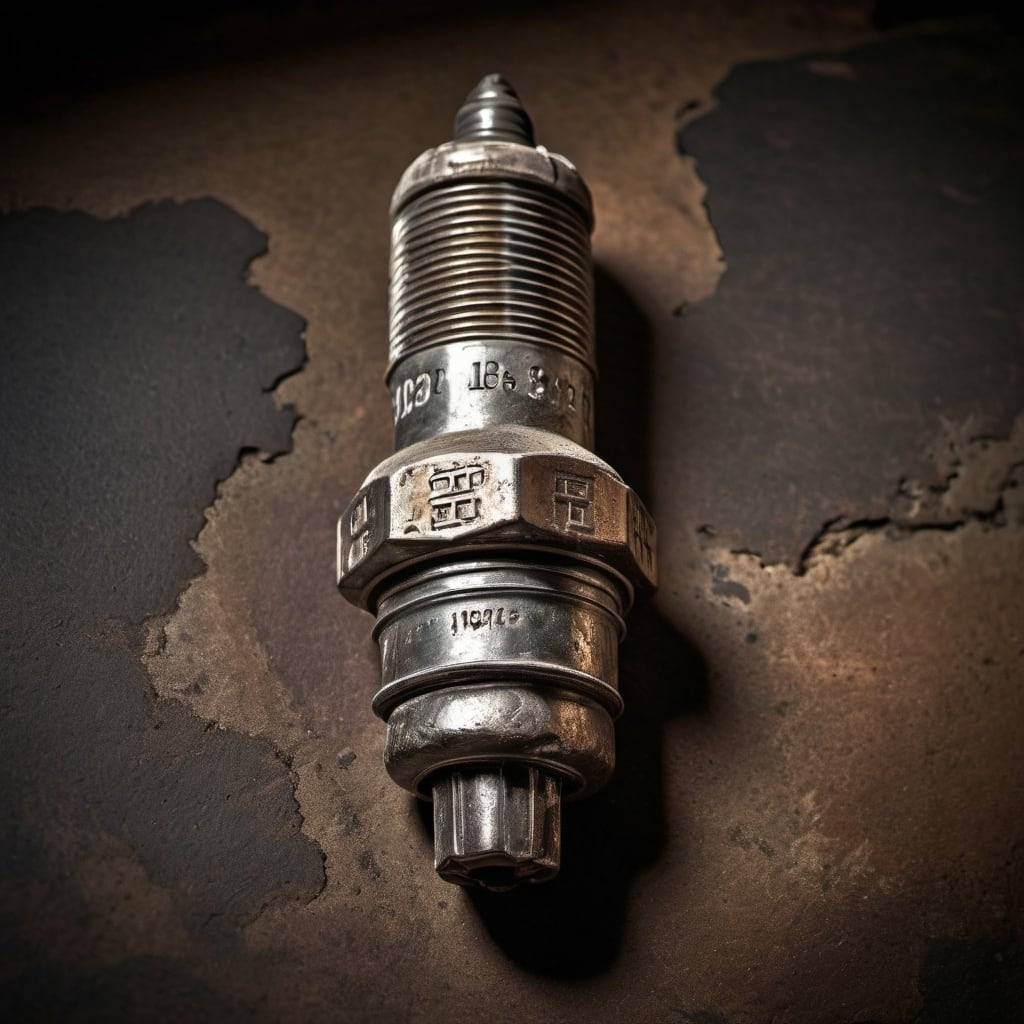
In February 1961, three adventurous rock enthusiasts were hunting for geodes near Olancha, California, when they stumbled upon something quite unusual. They took their finds home and cut into it, expecting to see the usual mineral formations. Instead, they discovered a cylindrical object inside that looked like it was made of porcelain. Inside this object was a metal shaft surrounded by a hexagonal sheath of copper and some unidentified substance. Their imaginations ran wild with possibilities—was this an artifact from a hyper-advanced ancient civilization like Atlantis, a relic from time travelers, or maybe a gift from extraterrestrial beings?
If any of these theories were true, scientists would have to rewrite human history entirely! But not everyone shared their excitement. Truth-seekers and alternative archaeology circles were abuzz with theories and debates about the so-called Koso artifact until the late '90s. That’s when a group of skeptics took images and x-rays of the discovery to spark plug collectors. Guess what? They identified the artifact as an old spark plug from the 1920s, not ancient technology at all. Nearly 20 years later, one of the co-discoverers took it to the University of Washington for a thorough inspection, which confirmed it was indeed a 1920s Champion spark plug. The stone matrix wasn’t a geode but a concretion formed by natural processes over decades, not millennia.
About the Creator
Worth the Wait: Puerto Viejo, Costa Rica
Beach bumming in a small Caribbean beach town sounded like a perfect way to end our 6-month trip through Mexico and Central America. Or so we thought. The foul, fishy stench of rotten seaweed hit our nostrils as we stepped from the cramped bus and looked out at a rather depressing, empty, and underwhelming black sand beach. It was pouring with rain, and we had to quickly fish out our ponchos. We thought, this couldn’t be it, could it?
By Sh*t Happens - Lost Girl Travel3 days ago in Wander
Everest Three Passes Trek 15 Days: A Demanding But Rewarding Route
The Everest region is often associated with the classic Everest Base Camp trail. But for trekkers looking for something more challenging and less predictable, the Three Passes route offers a deeper experience of the Khumbu.
By Saraswati Karki5 days ago in Wander
📢 Raise Your Voice Thread: 03/05/2026
Our “Raise Your Voice Threads” are hosted most alternating Thursdays at 12PM ET to offer creators more avenues to uncover exceptional stories on Vocal. As we are continuously searching for fresh creators and inspiring stories, this thread provides an opportunity to exchange and discuss the stories that have moved and motivated us on Vocal.
By Raise Your Voice by Vocal4 days ago in Resources




Comments (1)
Wow interesting