
GROWING UP ON THE 'COLORED' SIDE OF THE BORDER
Native of Marshall, Texas returns to her hometown only to find vestiges of the once-vibrant neighborhood where she grew up

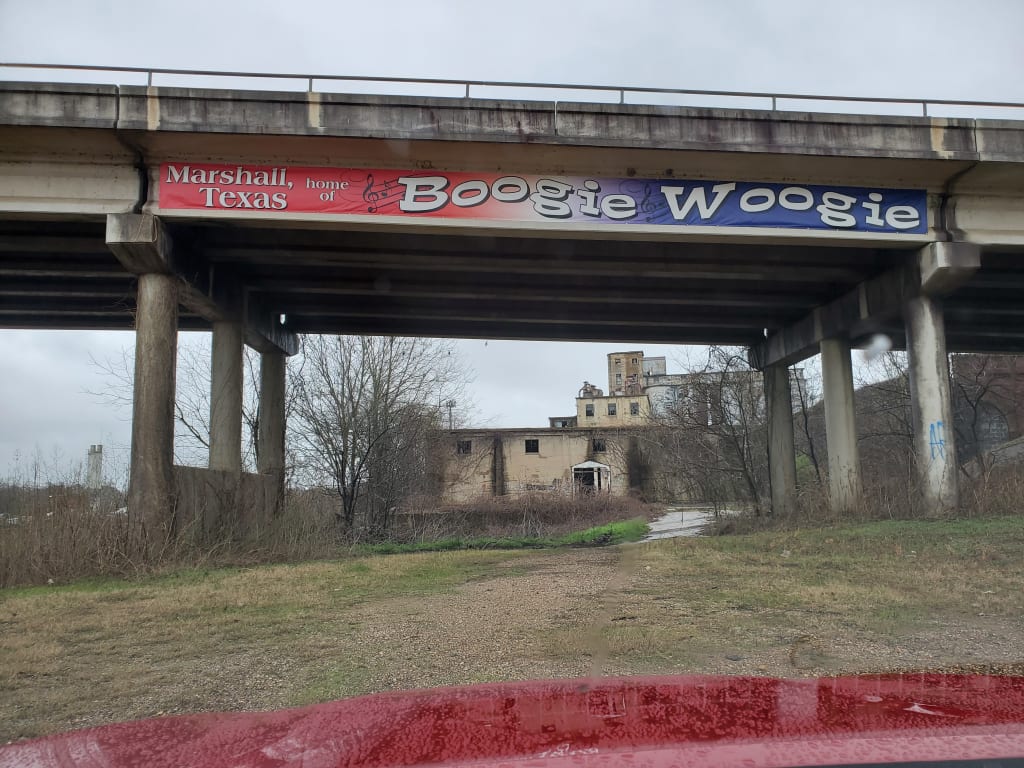
Marshall, Texas is known by several names that reflect its rich culture and heritage – everything from the "Pottery Capital of the World" to the birthplace of Boogie Woogie.
But for me as a Black girl growing up there in the 1960s and 70s, Marshall is the place that I called home.
My childhood memories are bittersweet.
On the one hand, it was filled with days upon days of carefree play in my grandparents' front yard. Hopscotch, mud pies, jacks and jump rope. Riding tricycles, sitting on the porch, sweeping the sidewalk, raking leaves, hanging clothes out to dry on washday, and enjoying the pecans and pomegranates that grew on our backyard trees.
But there was also an ugly side to my hometown – one I wish I were not the case. This ugly side was one of segregation and racial insults and indignities that were interlaced into everyday encounters – from the post office and the library, where I was once denied entrance, to department stores downtown. Some white folks in Marshall couldn't quite bring themselves to pronounce "Negro" – a common term at the time – opting instead to say "niggra," knowing full well that it was much closer to a certain infamous n-word that I won't repeat here.
Nowhere was the racial division more evident in Marshall than on the street where I grew up, which will be the first stop on this photographic tour of Marshall, which I visited in February 2021 to collect photographs, mementos and other material for this story.
Border Street (now Travis Street)
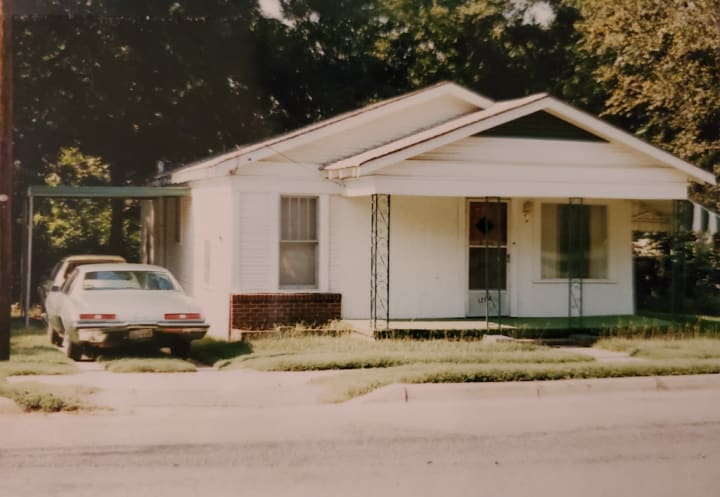
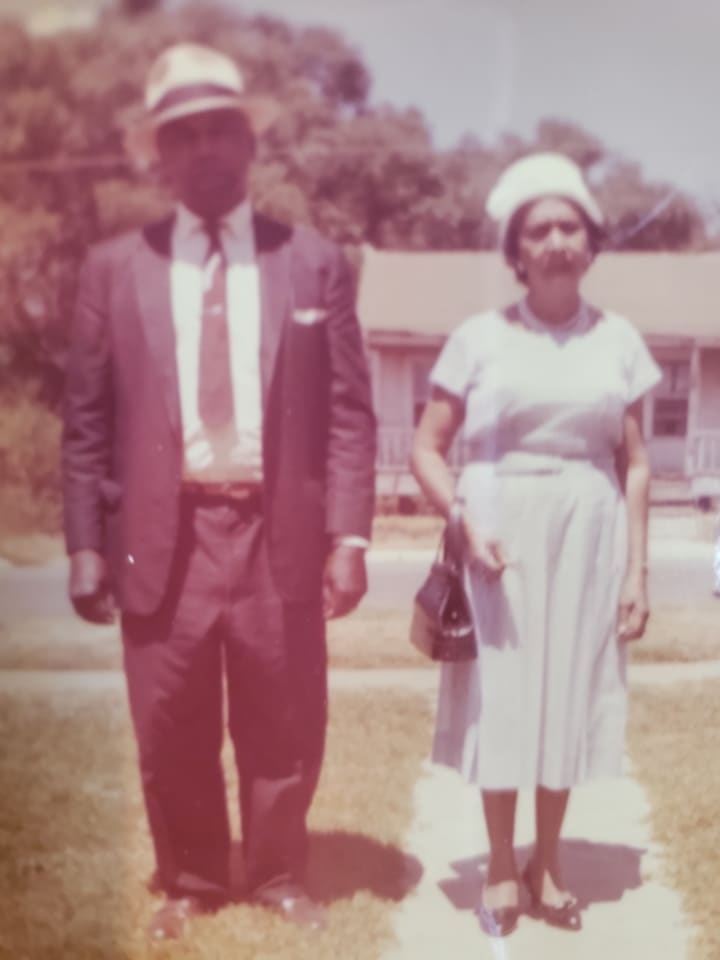
I was raised by my grandparents in a single-family home at 1208 E. Travis St. But when my mother was a girl – and even for a portion of my own childhood – the street was called Border Street.
The street's name seemed functional – Border Street served as a literal line of separation between the Black community situated south of the street and the white one on the north.

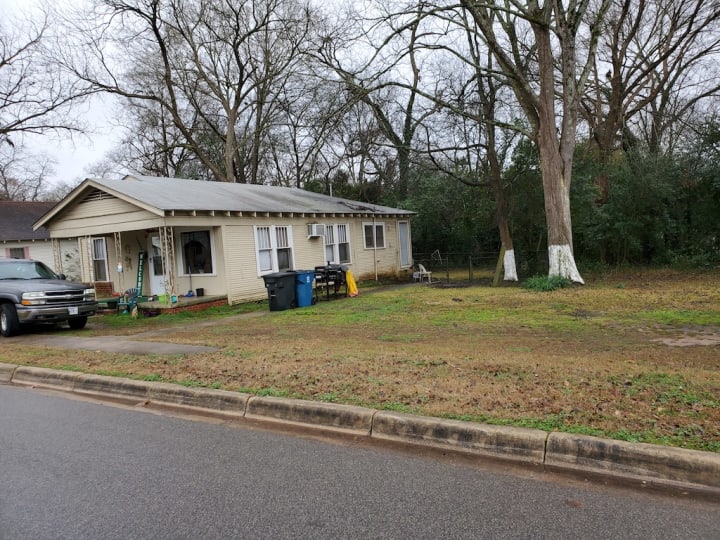
When I was growing up in the 60s and 70s, Travis was one of the nicer streets in the Marshall, especially for Black folks. Travis was a wide and well-known two-lane thoroughfare and the anchor street for the Black community known as East End, between Garrett and East End Boulevard. It was busy, vibrant and thriving.
In reality, the Travis Street I remember is gone. I believe it disappeared the day I left. Empty and overgrown lots, sad-looking houses in various states of disrepair now line this once productive, prospering and proud street.


The Family Farm
More evenings than I can remember, at sunset my grandparents and I would pile into their old but reliable green truck and head north on Highway 59 to our small farm on Fern Lake Road on the outskirts of town to tend the farm. My grandfather retired after more than 25 years as a laborer and later as a foreman for the old Texas and Pacific Railway and immediately went to work on the farm.

In a short number of years, he almost single-handedly transformed wild land that had been passed down through generations into a working farm.
Just one door down was a home and land owned by the Foreman family. I used to play in their yard. They had a grandchild named George who grew up to become the heavyweight boxing champion of the world.

Smith Steel

One of the things that made Travis St. so vibrant is that many of its residents worked at the nearby Smith Steel.
For instance, you could set your watch by my friend Linda Turner's father, Josh Turner, who would walk to his job at Smith Steel carrying his silver lunch pail.
Once a staple in the community and a major employer of Black men, the grounds of the old steel plant are now a desolate, deserted, pitiful jungle—not even worthy of a “Keep Out" or "No Trespassing” sign.

Higgins Street
This street was almost as central to my growing up as Travis. It was my gateway to Sunny South, a busy Black community that was home not only to my childhood church, Galilee Baptist, but also to my first elementary school, Paul Laurence Dunbar. It was also home to my kindergarten boyfriend, Jesse Fisher, and where the Hood brothers both sold snow cones to neighborhood kids.

Miss Bessie and Miss Fessie Dee, two sisters, both owned corner stores right around the corner from one another, and my Aunt Dorothy’s Beauty Shop – where I would find myself every other week “getting my hair done” – was located there as well. It's where Miss Flollie took in ironing for people all over the city and the corner laundromat.
This is also the street where my cousins – Bernard and Pettis – taught me how to ride a bike.
Galilee Baptist Church

While many of the adults on Travis Street worked throughout the week as cooks, farmworkers, domestics and manual laborers, on Sundays, you could find us all at Galilee Baptist Church.
This was my childhood church, and I spent many a Sunday there. It's the same church where my grandfather, a trustee, held the distinct honor of tossing the pastor out of the pulpit after an unforgivable transgression. Where I, along with all the other church kids, learned the Lord’s Prayer and Psalm 23, attended choir rehearsals, summer revivals, vacation Bible school and spent countless hours of preparing for Easter and Christmas programs.
Dunbar Elementary School

My first year in elementary school was spent at Paul Laurence Dunbar, the elementary school that served Black children on the south side of town. The school has long since been demolished and the site now houses Marshall Senior High School and its stadium.

I remember how Dunbar was positioned back off a hill that was surrounded by a ditch that would fill and overflow with rushing water when it rained. I was so afraid to jump over the gushing water that my grandmother would have to get out of the car in the rain to coax or lift me over what to me at the time looked like treacherous waters.
Sam Houston Elementary School

After growing tired of me and my fear of the waters at Dunbar, my grandmother suddenly decided to jump on the bandwagon of the landmark Brown v. Board of Education Supreme Court decision that ordered the end of segregation in public schools. For me, instead of going to Dunbar, that meant I would now become one of the first Black students to integrate Sam Houston Elementary School, which was closer to my home, in the fall of 1965.
For years, first-day-of-school rituals for the kids at the Black schools, such as Dunbar, included getting locker assignments, brown paper book covers and sandpaper to clean and cover the used textbooks handed down from the white schools. We didn't have those kinds of rituals at Sam Houston, where the textbooks were new.

In the sixth grade, I was so proud to be in the homeroom class of Mrs. Larnell Johnson, the first Black teacher at Sam Houston Elementary School.

Marshall Public Library
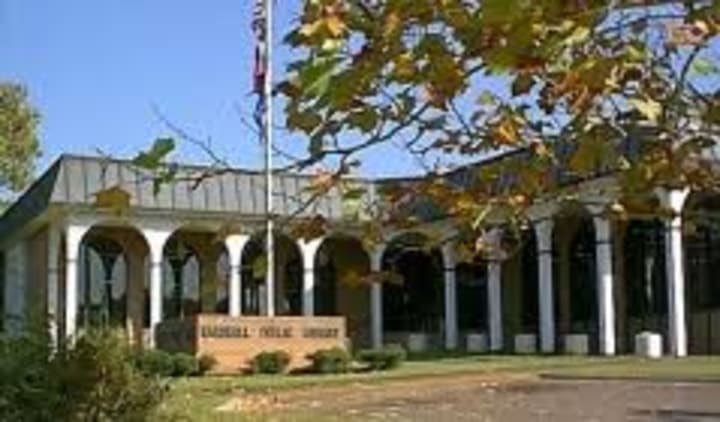
Every child should have a chance to visit their local library. But when I was growing up, there was no public library. There was a private library downtown, but when I went there upon the recommendation of my 4th grade teacher, I ended up having one of the most unpleasant episodes of my childhood.
A library worker denied me entrance because supposedly I was not a “mammal." If that sounds strange to you, imagine how it sounded to a young Black girl growing up at a time when segregation was still very much a part of the culture.
Marshall Post Office

There were no "colored" and "white" signs for water fountains and bathrooms in Marshall, but there was definitely different treatment at public places such as banks and the post office.
One of the longstanding complaints my grandparents had is how some post office clerks and bank tellers would never place change directly in the hands of Black customers, but on the counter instead.
Ezell's Barbecue
Of all the places where my friend Linda Turner and I used to go, one of our favorite was Ezell's Barbecue. We would scrape together 25 cents, jump on our bikes and race down the hill past the Pic N' Pay and Cole's Garage and Wrecker Service – both of which are still in business – to get a scrap plate from Ezell's, which was one of a handful of the city's Black-owned businesses.
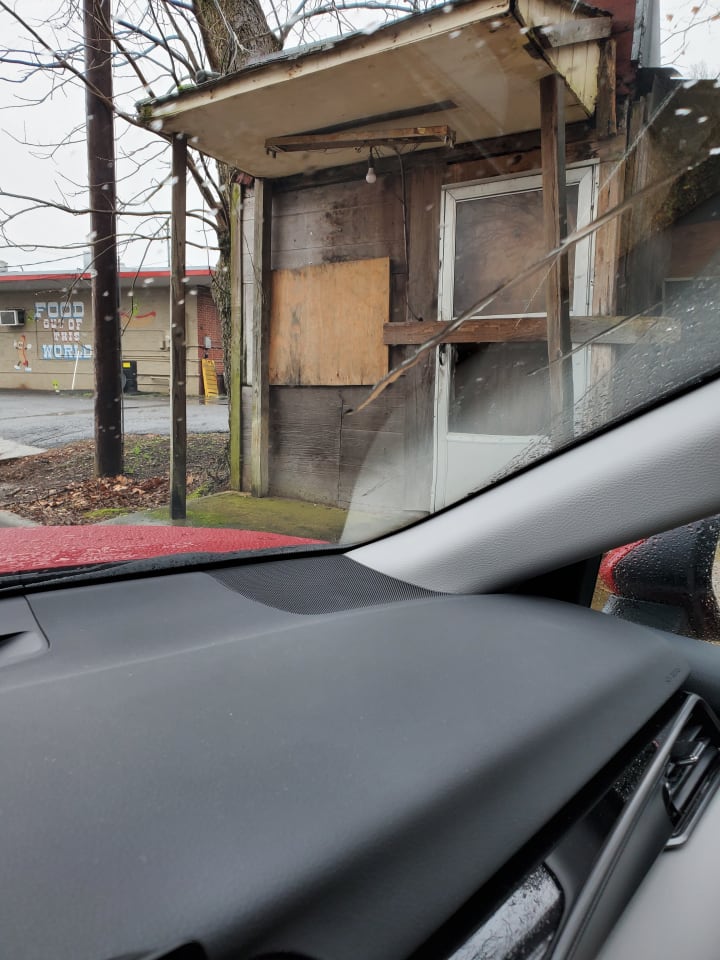
It's difficult to see the building that used to house Ezell's now. It's all boarded up and there's not a trace of the once vibrant place that it used to be.
Marshall Senior High

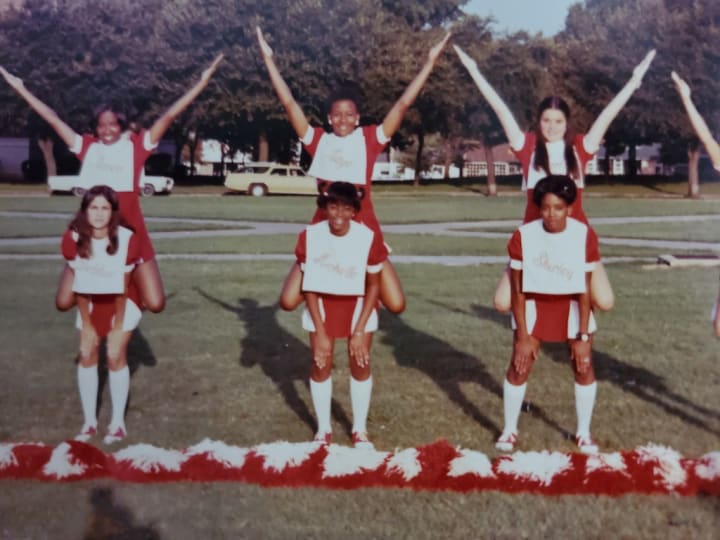
This is the place where – during my junior year – I made the cheerleading team. Football games would be held on Friday night and track meets took place on Saturday afternoons.
Mrs. Nancy McClaran, my high school English teacher, repeated her mantra, “If you think clearly, you will write clearly. My job is to teach you to think clearly.”
H.B. Pemberton Senior High School

Until forced integration in 1970 caused a shift, if you were Black and graduated from high school in Marshall, then you were most likely privileged to be a purple and gold Pemberton Senior High Panther.
At Pemberton, there were teachers like Mrs. Helen Shepherd, a home economics teacher who taught me and my mother back in the day. For many years she expanded her regularly scheduled summer school classes to include any teenage girls — whether they were formally enrolled or not— who wanted to learn how to cook and sew. She watched like a hawk for any unofficial "extracurricular activities" with the boys hanging at the adjacent swimming pool.
When I attended Pemberton during the 1972-73 it had been converted to a middle school. There, I engaged in my English teacher, Mr. Mohn, in vigorous debates over whether or not Langston Hughes was militant. I also surprised my classmates in Mrs. Virginia Jones' class when I chose "The Autobiography of Malcolm X" for an oral book report. The facility is now part of the Wiley College campus.
Wiley College
Many people may know of Wiley College – a historically Black college – because it played a central role in the 2007 film "The Great Debaters," which starred Denzel Washington. The movie was about the time when the school's debate team defeated the debate team at the University of Southern California, although USC was depicted as Harvard in the movie.
For me, the connection is much more personal. Both my grandmother and my aunt attended Wiley College.

In 1974, I myself attended Wiley as its first early admissions student, thanks to the tireless efforts of Mr. Johnny Stubblefield, the director of the school’s Upward Bound Program.

Bishop College
In its heyday, Bishop College, a private Baptist college, attracted Black students from around the country. It is the alma mater of both my mother and her older sister.


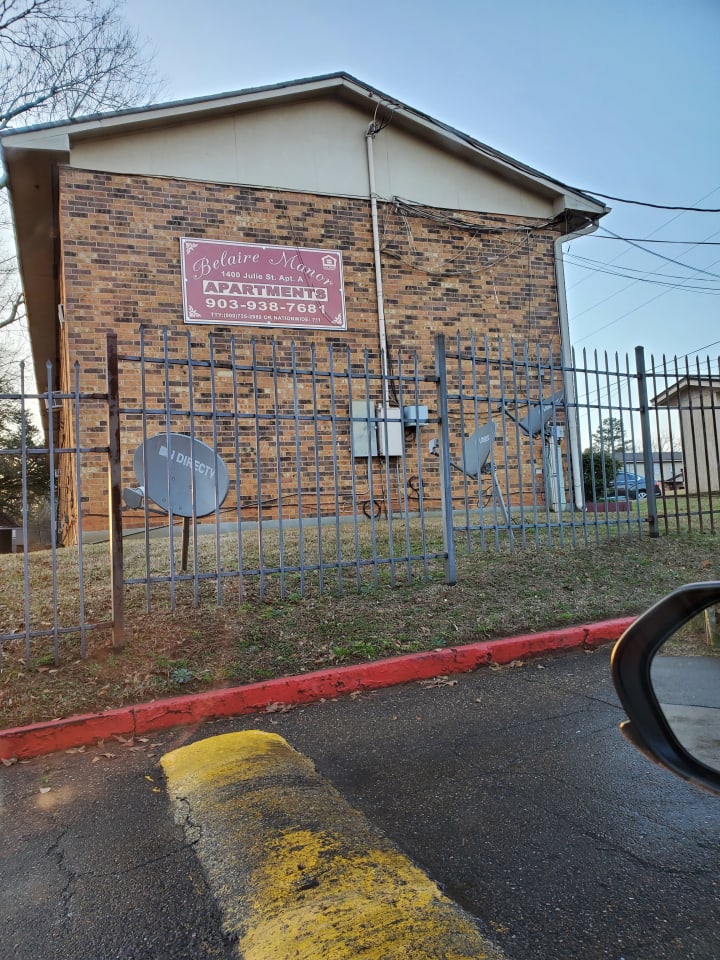
The college spawned generations of professionals in education, business, sports and ministry. Bishop remained in Marhsall until it moved to Dallas in 1961. It is now the site of Belaire Manor, a public housing project for low-income residents.
University Avenue

If there was one street in Marshall that signaled Black achievement, it would be University Avenue. It was an anchor street in a Black community known as Newtown. I remember how proudly Black folks in Marshall would announce that they were being treated by Dr. Anderson or Dr. Lamothe, the two Black doctors whose practice was located on that street.

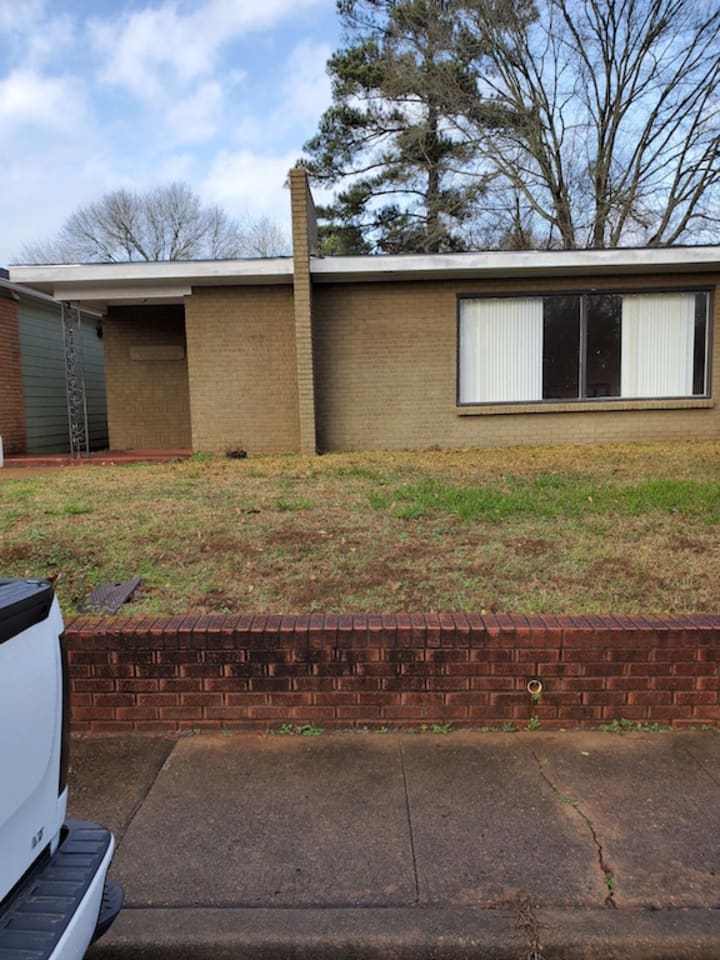

Less than a mile away from their office, the growing but compact campus of Wiley College spanned both sides of University Boulevard.
Lewis Funeral Home
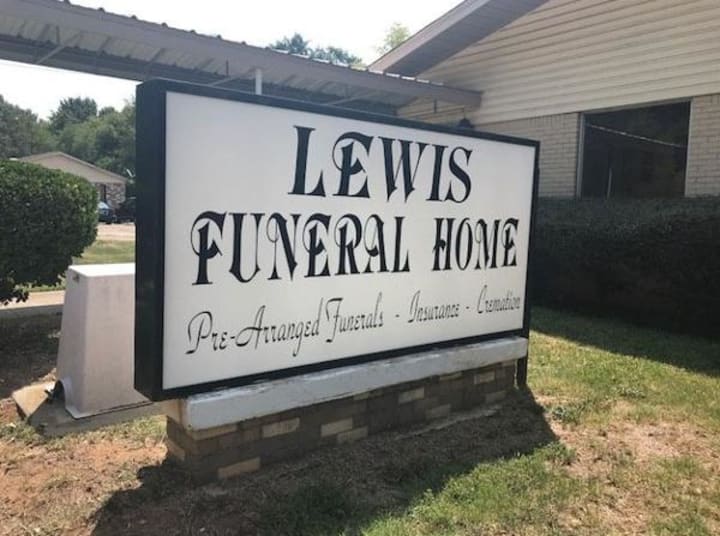
When he was alive, mortician Joe Lewis was a pillar of the business and Black community. His funeral home was well known all throughout the area. But I really remember his stylish, kind and particular wife, Mrs. Hazel Lewis. After I learned how to read, she gave me one of my first story books with small letters and instructed me to read moving my eyes side to side, rather than moving my head side to side. Like I said she was particular.
The Hub Shoe Store

When I was growing up, good quality shoes were of utmost importance. I cannot count the times that I heard, “cheap shoes will ruin your feet.”

Twice a year for as long as I can remember, my grandmother took me to the Hub Shoe Store to get my feet properly measured and fitted for my Easter and back-to-school shoes. She got them on credit and signed her name A.M. Petties. The reason is was to prevent white clerks from disrespectfully calling her by her first name: Annie Mae.
Paramount Theatre

Whenever we went to the Paramount Theatre, it was pretty much “customary” for Black folks to sit in the balcony. Even when my friends and I went to watch "Superfly" in 1972, we found ourselves sitting in the balcony.
The theater was once featured in a book titled “After the Final Curtain: The Fall of the American Movie Theater.”
Adkisson Donuts

My first experience Adkisson Donuts came when my mother took me there at the end of one of our outings to the local fabric store.
As soon as we stepped inside the Adkisson Donut Shop, the beautiful sugary balance of yeast, flour and bubbling canola oil owned the air. Trays filled with light puffy wheels of plain or glazed, lemon- and chocolate-filled delicacies lined the display cases. There were donut holes, cinnamon apple fritters and an array of donuts in varying degrees of completion, some rising, some lightly cooking in the fryers and floating to the top, others draining and waiting to be iced or filled. I found myself fascinated by the sheer process of what it takes to produce a perfect donut.
The experience proved to be one of the most delightful of my childhood.
Holiday Inn
You really couldn’t tell me much after I got my first job at the Holiday Inn Restaurant, now an America’s Best Value Inn, the summer after I finished high school in 1976. It was also a bicentennial year for America and I – like the rest of the nation in general – had plenty to celebrate. I was 18 and about to be making my own money. At the time, that Holiday Inn Restaurant was one of the few establishments in Marshall that was considered fine dining, two of the others that I recall were Gables Restaurant and the Marshall Country Club.
Washington Street

For years, this street was home of the most prestigious department stores in Marshall, Joe Weisman and Co. It now houses an opened space artsy collective of vendors and creatives. I remember that, back in the day, this street was the bustling center of commerce for the city’s downtown business district, featuring Sears and Roebuck, the Paramount Movie Theatre, McClellan’s 5 & Dime and Texas and Pacific Railroad on the upper north end of the street. Marshall’s Historic Courthouse and Peter Whetstone Square mark the city’s midpoint.

Birthplace of Boogie Woogie

Despite all the oppressive forces in Marshall, Texas, Black people were still able to influence American culture and the world through the creation of Boogie Woogie music, an upbeat genre of the blues.
My uncle Joe used to play boogie woogie for us on the occasional Saturday night before preparing for his Sunday morning deacon duties at Galilee Baptist Church. Boogie Woogie still draws out people in droves in Marshall, as can be seen in the video below featuring a performance by the late Omar Sharriff.
What Remains
In many cases, there’s not a single sign or piece of evidence to recognize the contributions and lives of the people that were once such an important force on the street where I grew up. These were people of my heart——cooks, teachers, farmworkers, domestics, a few professionals, plant and factory workers, skilled craftsmen, manual laborers, business owners, too— hard-working, Black folks just trying to make a living.
For a moment I am deeply saddened, even angered by the despair and abandoned homes in a neighborhood that was once bustling with activity. And then, I see past the destruction and sit in grateful awe. Joy bubbles up and overflows as I remember the names, lives and faces that made the neighborhood what it was in the first place.
I remember Marshall, the places for sure, but it’s the people that I will never forget. And it's the memories of the people that make Marshall home.
About the Creator
Michelle Petties
We all have unique stories that lead us. I speak to organizations, large and small, sharing unique perspectives and my story of hope, healing, and triumph. Need an engaging, thought-provoking, and transformative speaker? Ping me.
Keep reading
More stories from Michelle Petties and writers in Wander and other communities.
Worth the Wait: Puerto Viejo, Costa Rica
Beach bumming in a small Caribbean beach town sounded like a perfect way to end our 6-month trip through Mexico and Central America. Or so we thought. The foul, fishy stench of rotten seaweed hit our nostrils as we stepped from the cramped bus and looked out at a rather depressing, empty, and underwhelming black sand beach. It was pouring with rain, and we had to quickly fish out our ponchos. We thought, this couldn’t be it, could it?
By Sh*t Happens - Lost Girl Travel3 days ago in Wander



Comments (5)
Thank you for this story. It's very nostalgic for me, and I learned a lot. I grew up in Marshall, on Houston street - just a few streets north of where you were on Border/Travis. I was pretty ignorant as a kid... I didn't really know anything about Marshall's lingering racism at that time. I attended Sam Houston elementary from '71 to '76. Mrs. Johnson was one of my favorite teachers! I had no idea she was the first black teacher there. I remember that more than half of my classmates at Sam Houston were black, but I thought nothing of it. Ninth grade was at Pemberton High School. Mine was the first class to attend grades 10-12 at the new high school. My father, Robert Bacher, taught 8th grade Earth Science at Marshall Junior High for decades. I left Marshall after I graduated high school in 1983. My parents moved to MS in the '90s. The last time I was in Marshall was around '98. Even at that time it had changed a lot since my childhood. I have a child's mental image of Marshall's size. In my mind it's a big place, but when I look at maps now - at all the places I used to go - I'm amazed that they're all just a few miles apart. Thanks again for your well written and thought provoking story. I learned some things about my hometown, and you've left me wanting to research more.
Thanks so much Gina. I grew up there some Smiths, of course. I don't get home nearly as often as I would like. It's always wonderful when I go back home.
Thank you for this insightful account of Marshall. I am doing my research, as it appears that I may soon have a branch of family living there. I look forward to making lots of visits and supporting the businesses that remain.
Charlene, Thank you so much for your kind comments. So glad you enjoyed the story. This is a love story for my home town. An updated version of this includes in a forthcoming anthology, Black Memoirs Matter.
Wow, your story of growing up in Marshall, Texas, is very inspiring! It depicts a community spirit and perseverance in the face of hardship, weaving together a diverse range of events and memories that have molded the person you are now.