
Getting Around Tbilisi: Public Transport Guide
A Complete Guide to Navigating Tbilisi Like a Local


Metro: A Soviet Time Capsule
My first ride on the Tbilisi Metro felt like stepping back into the Soviet era. The stations are deep—so deep that the escalators seem endless—and the walls are decorated with mosaics from another time. But as soon as you reach the platform, there’s a futuristic sound: the train doors close with an electronic hum that could easily belong in a sci-fi movie.
With just two metro lines, the system is simple. Want to get across the city quickly and avoid Tbilisi’s infamous traffic jams? This is your best bet. For 1 GEL per ride, you can travel in just a few minutes from the ultra-modern Rike Park to the Soviet-style suburbs. And the best part? In summer, the underground stays pleasantly cool.
Pro Tip: Get a Metromoney card. It works for the metro, buses, and even cable cars. You can buy it at most metro stations and top it up using vending machines.

Useful Metro Stops:
- Liberty Square: Right in the center, perfect for exploring the Old Town.
- Station Square: The main hub for trains to other parts of Georgia.
- Didube: Your gateway to marshrutkas heading out of Tbilisi.

Buses: Surprisingly Modern and Comfortable
Imagine a bus with free WiFi, air conditioning, and USB charging ports. Sounds modern, right? That’s exactly what you’ll find on Tbilisi’s newest buses. However, on less popular routes to the outskirts, you may still encounter smaller minibuses. And yes, some old Soviet buses still run, spewing out more smoke than a barbecue.
Buses are a great option for reaching areas not covered by the metro. They are easy to spot—painted in bright blue or yellow—and most routes are clearly displayed at bus stops. Google Maps now includes all bus routes in Tbilisi, making navigation much easier.
Cost: 1 GEL per ride (free transfers within 1.5 hours).
Payment: Use your Metromoney card or pay contactless with a bank card.
One of the most useful bus routes is Bus 337, which takes you from the airport to the city center for just a fraction of what a taxi would cost. Why pay more when you can ride for less than a euro?

Marshrutkas: The Wild Ride You Didn’t Know You Needed
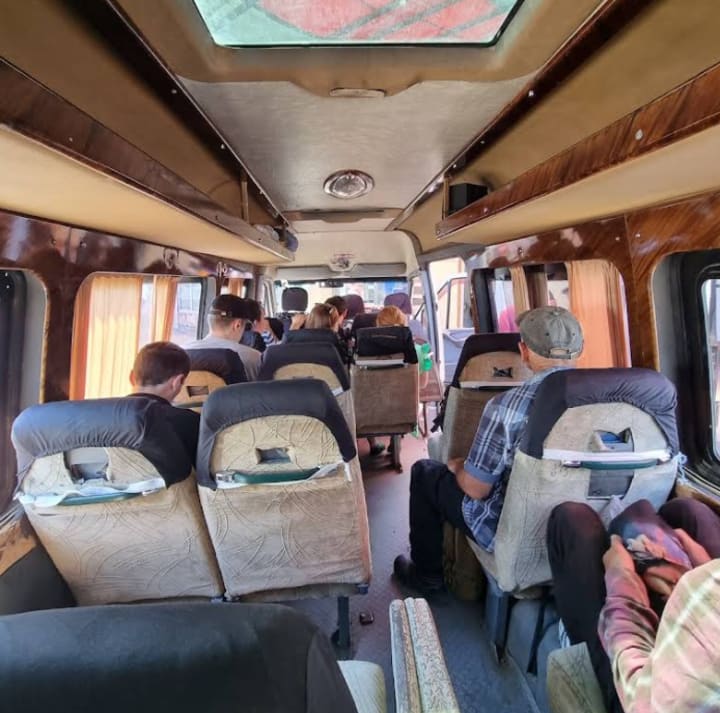
If you’ve traveled in former Soviet countries before, you might already be familiar with marshrutkas—the chaotic, unpredictable minibuses that stop anywhere and everywhere.
Inside, expect an eclectic mix of passengers: an elderly woman carrying a sack of vegetables, a man shouting into an old Nokia phone, and a driver who somehow manages to steer, smoke, and count money all at once. It’s an experience.
Marshrutkas aren’t very practical inside Tbilisi, but for trips outside the city, they are cheap and convenient.

How to Catch One:
- Head to Didube Bus Station, the chaotic hub for minibuses going in all directions.
- Finding the right one can be tricky—there are hundreds, and most signs are in Georgian. Just say your destination to any random driver, and someone will point you in the right direction.
Schedules? Forget it. Marshrutkas leave when full. Payment is made in cash directly to the driver after departure.
If you’re heading to places like Mtskheta, Gori, or Kazbegi, marshrutkas are the cheapest way to get there.
Trains: Slow but Comfortable
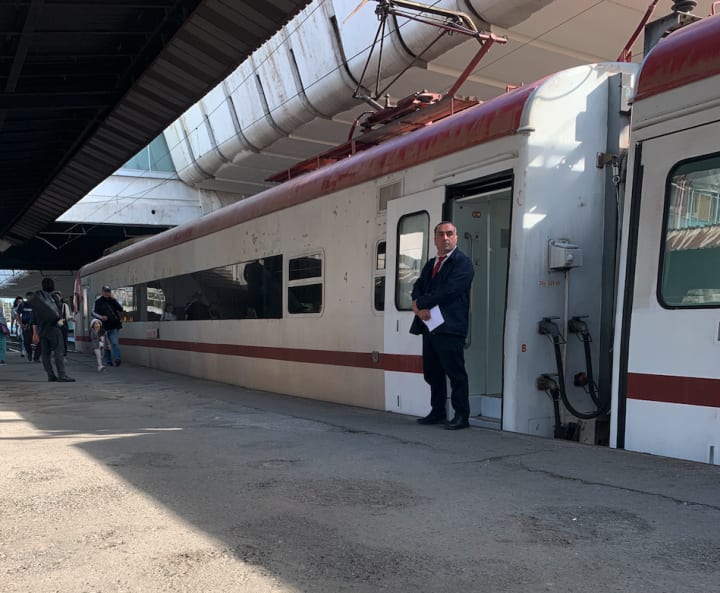
Unlike marshrutkas, trains in Georgia are clean, comfortable, and fairly reliable. While the train to Gori is a bit outdated, the most popular route—Tbilisi to Kutaisi and Batumi—offers modern carriages and a smooth ride.
Key Things to Know:
- Trains are mainly for long distances. If you want to travel from Tbilisi to Batumi or Kutaisi, this is a good option.
- They are cheap but not frequent. Most routes operate only once or twice a day.
- How to buy tickets? You can book online via the official website:
https://tre.ge/en, or buy an old-school paper ticket at the train station.

Funicular: The Most Nostalgic Way to See the City
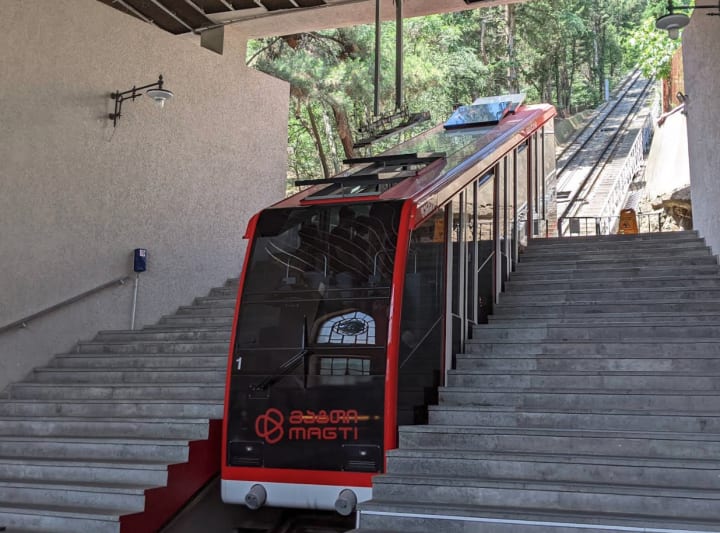
For a spectacular view of Tbilisi, you don’t even have to leave the city. The funicular to Mtatsminda Park is one of the most fun and nostalgic ways to get to higher ground.
It departs from Chonkadze Street and climbs steeply up to Mtatsminda Hill. On the way, you’ll watch the city shrink below you before reaching an amazing panoramic viewpoint. At the top, you’ll find a small amusement park, a huge Ferris wheel, and several cafés where you can sip coffee while taking in the view. Sunset is the best time to visit!

Cable Cars
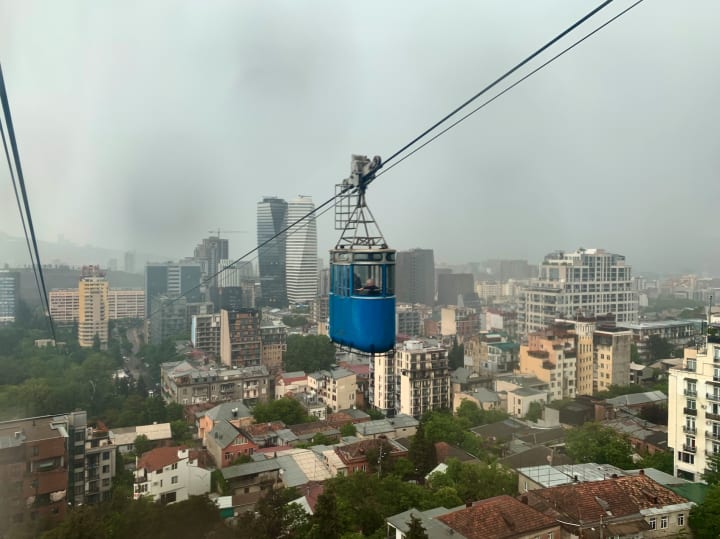
Rike Park → Narikala Fortress: From Rike Park, take a modern cable car up to Narikala Fortress, an ancient citadel towering over the city. The ride itself is spectacular—you’ll float over the river, watch the rooftops disappear beneath you, and arrive at one of Tbilisi’s most iconic landmarks. Cost: 2.5 GEL (pay with your Metromoney card).

Vake Park → Turtle Lake. A lesser-known cable car departs from Vake Park and takes you to Turtle Lake, a small and peaceful nature spot just outside the city. Cost: Only 1 GEL—a total bargain for an escape from the city’s chaos. Not a touristy spot! I only discovered it on my third trip to Tbilisi. Metromoney card accepted here as well.

So, What’s the Best Way to Travel Around Tbilisi?
- Want to get around quickly? Take the metro.
- Want to explore cheaply? Hop on a bus or metro.
- Want an adventure outside the city? Jump into a marshrutka.
- Want a spectacular view? Take a cable car or the funicular.
Tbilisi’s public transport system isn’t perfect, but it’s cheap, surprisingly diverse, and often an adventure in itself. With a little patience (and a Metromoney card in your pocket), you can travel like a local through this chaotic yet charming city.
Do you want more information about this article, or do you have any questions about this? Let me know in the comments, and I'll respond as soon as I can!
About the Creator
Hidden World Journey
🌍 Explored 38 countries & still counting! Sharing hidden gems, budget tips & off-the-beaten-path adventures.
Coming up: Armenia 🇦🇲
Keep reading
More stories from Hidden World Journey and writers in Wander and other communities.
10 Affordable European Cities for an Amazing Weekend
Do you want to escape for a few days without breaking the bank? Luckily, Europe is filled with stunning cities where you can enjoy culture, delicious food, and breathtaking sights at a fraction of the cost. These cities offer plenty of attractions to keep you entertained for a weekend or even longer. Here are the top budget-friendly destinations with tips on transport, accommodation, food, and activities!
By Hidden World Journey12 months ago in Wander


Comments
There are no comments for this story
Be the first to respond and start the conversation.