
Fabulous British Virgin Islands
A British overseas territory in the Caribbean


The British Virgin Islands in the Caribbean is a British overseas territory. It consists of four main islands and many smaller ones. The main islands are Tortola, which is home to the capital city, Road Town, Virgin Gorda, Anegada and Jost Van Dyke.

The Baths National Park located on Virgin Gorda is one of the British Virgin Island’s most famous landmarks. The bay is scattered with giant granite boulders that have created sea pools and grottoes just right for snorkeling and exploring. At one point, the boulders have formed a sand-bottomed cave which is one of the most photographed areas in the British Virgin Islands.

Gorda Peak National Park has two well-marked hiking trails that lead to the summit of Gorda Peak which is the highest point on Virgin Gorda. You can get spectacular views from the observation tower. The park is a mix of semi-rainforest and dry forest. There are rare plants among them sic species of native orchids. Wildlife includes reptiles, tree frogs, birds, bats, soldier crabs, and the Virgin Gorda gecko, the world’s smallest lizard.

The North Sound on the northeast shore of Virgin Gorda, is a major water sports center. There are well-protected waters and many anchorages. You can choose to dive, sail, windsurf, parasail, jet ski, water-ski or take trips in glass-bottomed boats. Another popular activity is hiking. The area is popular with boaters and private charters.

The most popular beach and one of the most beautiful in the British Virgin Islands is White Bay on Jost Van Dyke. The beaches have white sand and steep hills. It is a great place for swimming and snorkeling. Boats are allowed entrance through the center of the reef and can refuel at one of the restaurants along the beach.

Anegada Island is surrounded by a maze of coral reefs and is a great place for reef and bone fishing. The landscape features salt ponds, blooming cacti, wild orchids, and century plants. There are stretches of white sand beach.

The two favorites are Loblolly Bay and Cow Wreck Bay Beach.

This island is protected by the Horseshoe Reef, one of the largest reef systems in the world. Among other wildlife, you can find flamingos and the rare rock iguana.

On Tortola, you’ll find the capital of the British Virgin Islands, Road Town. It was named for Tortola’s principal harbor, Road Bay. Road Town is the commercial center of the entire British Territory. In the harbor, you can see charter yachts, ferries, and at times a cruise ship. There are shops and eateries as well as historic forts and sugar mills.

Among the attractions here are Dolphin Discovery Tortola, J.R. O’Neal Botanic Gardens, the Virgin Islands Folk Museum, and Government House.

Rhone National Marine Park is the only national marine park in the BVI. It could also possibly be the only national park in the world that owes its existence to a shipwreck.

In 1867 a hurricane caused The Rhone to crash against the rocks off the southwest coast of Salt Island. 124 people were killed and the 23 surviving washed up on the shores. Today this wreck is one of the best diving sites in the Caribbean for intermediate to advanced divers. It is possible to swim inside the coral-encrusted steel among schools of snappers, grunts, soldier fish, and parrotfish. The marine park also includes two coral caves, 26 meters below the surface of the sea. Another great dive site is Blonde Rock with overhangs, tunnels, caves, and abundant marine life.

Sage Mountain National Park on Tortola is the first national park established on these islands. Almost all of the park is 305 meters above sea level. Mount Sage at 523 meters is the highest peak in all of the Virgin Islands. There are twelve looped hiking trails that wind through the forest where you can see philodendrons, hanging vines, ferns, mahogany, cedar, and manilkara trees. Among the wildlife here are birds like martins, hummingbirds, and kestrels.

Since 1843 there have been legends that Norman Island is the site of buried treasure. It lies 10km southwest of Tortola. It is the largest uninhabited island in the BVI. The anchorage at the Bight is known for great snorkeling and here you can usually see sailboats, dinghies, and swimmers.

The underwater Treasure Caves are the caves to which author Robert Louis Stevenson referred when writing his novel “Treasure Island”. The four caves are great for diving and snorkeling.
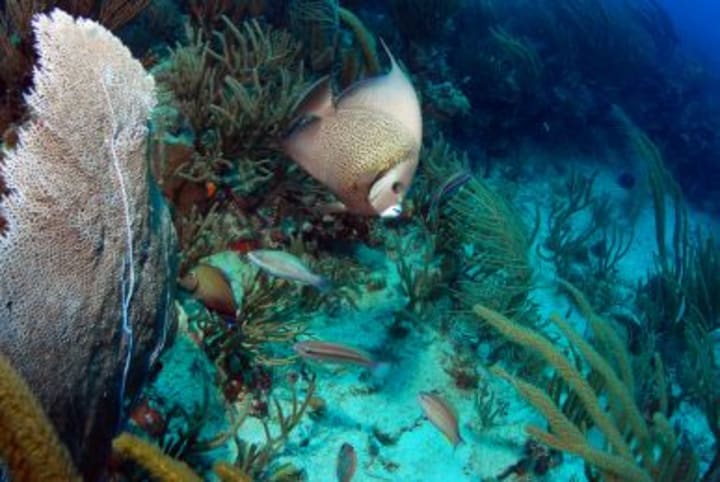
Santa Monica Rock is located 1.6 miles south of Norman Island. It is one of the best dive sites in the BVI. Divers can enjoy seeing spotted eagle rays and nurse sharks.
About the Creator
Rasma Raisters
My passions are writing and creating poetry. I write for several sites online and have four themed blogs on Wordpress. Please follow me on Twitter.
Keep reading
More stories from Rasma Raisters and writers in Wander and other communities.
Parma on the Parma River
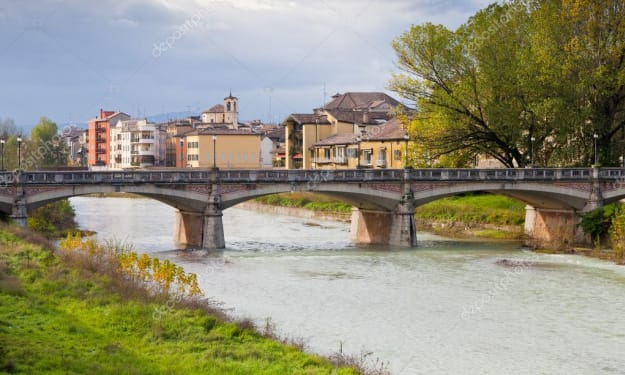
Parma is the second most populous city in the Emilia-Romagna region of Northern Italy. The city is known for its architecture, music, art, prosciutto ham, and Parma cheese. It is home to the University of Parma, one of the oldest universities in the world. The city is divided by the Parma River (a large stream).
By Rasma Raisters2 years ago in Wander
Everest Three Passes Trek 15 Days: A Demanding But Rewarding Route
The Everest region is often associated with the classic Everest Base Camp trail. But for trekkers looking for something more challenging and less predictable, the Three Passes route offers a deeper experience of the Khumbu.
By Saraswati Karkia day ago in Wander
How to Beat the Heat in Siem Reap
Siem Reap stands out as one of Southeast Asia’s most captivating destinations, famed as the entrance to the magnificent ancient temples of Angkor. But if you’re visiting during the rainy season (typically May to October), you’ll quickly realize that the heat and humidity can feel just as mighty as the monuments themselves. Fortunately, there are plenty of ways to stay cool and enjoy your Siem Reap adventure without melting under the tropical sun.
By william barrya day ago in Wander
I wanted to title this something different, but worried that my chosen title might cause problems entering the United States in the future so this is the new title. It's the greatest title. No one has ever written a title better than this. (All titles unrelated to content).
Let me be honest. I am finding this difficult. Now, I like a challenge, a stretch, a bit of an obstacle course. “Write about the decline of the British Empire in the form of a narrative poem in which your protagonist is an artichoke” I read, and flex my fingers. “Write a haiku to evoke the sensation of sibilance using only the first half of the alphabet.” “Well”, I think to myself, “this should be fun.” But “write about a system that isn’t working”? A system that isn’t working? Now? In 2026? ONE system? My favourite system that isn’t working? The sexiest system that isn’t working? The one giving me the most angst day to day? The one giving me the most existential dread? I am, as I say, finding this difficult. I will own that I have contemplated writing a thousand words on why the steady “all on” setting on my fairy lights is the EIGHTH of seven options which must be sequentially activated to get there, because that is a system that some fool came up with and it definitely doesn’t work, and now who is paying the price, eh? But how can I write about my fairy lights when…. When…. When….
By Hannah Moore7 days ago in Humans


Comments
There are no comments for this story
Be the first to respond and start the conversation.