
Driving from North to South in Portugal
The best guide for a road trip through beautiful Portugal

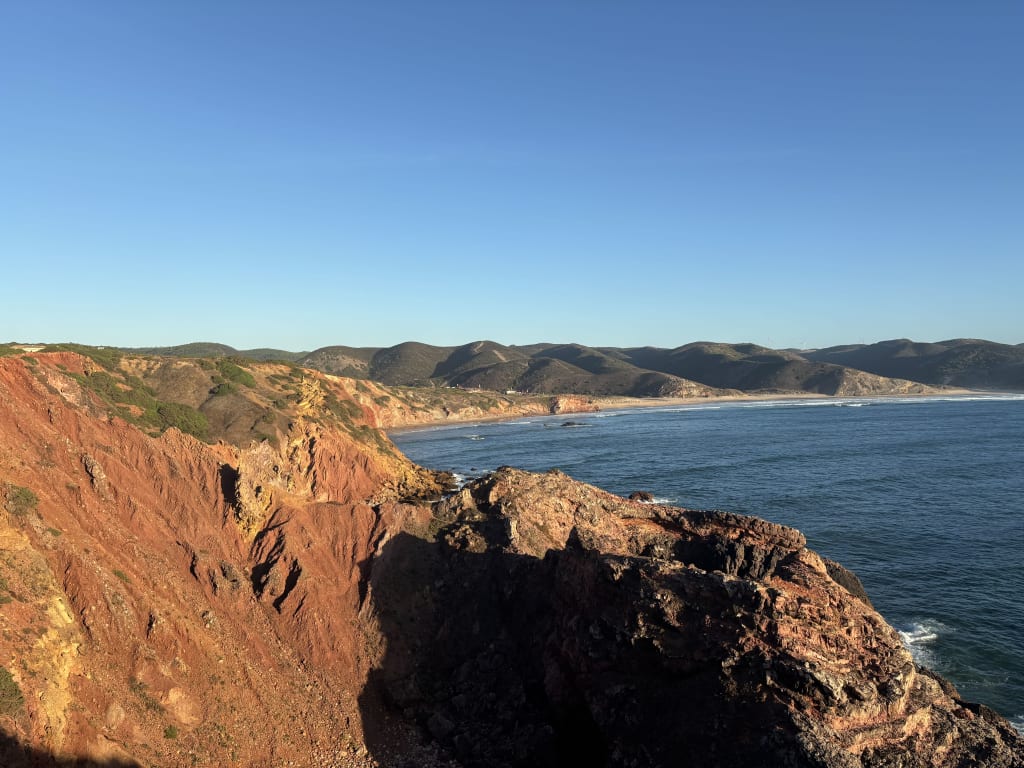
When my friends and I decided to book a trip to Portugal, we had a hard time choosing where we wanted to go. The choice between a city trip in Porto or Lisbon, or spending a week at the beach in Algarve was a hard one to make. Instead, we decided to cover it all. Cities, small fishing villages, and many opportunities for swimming in the atlantic ocean. We spent 10 days in Portugal and we visited in September. I recommend bringing warmer clothes alongside your swimgear and summer clothes at this time of year. Below you'll find our itinerary with tips and tricks along the way.
Day 1: Porto
On day one, after spending some hours on the plane, the first thing we did was visit Mercado do Bolhão to fill up our stomachs. This is a semi-covered food two story market where food, beverages, clothing, and accessories are sold. This was truly the best way to start our vacation. You are immediately submerged in the Portuguese food culture, and there are often street artists playing music. We drank a fresh juice, strolled around and found some breakfast at one of the many market stands.
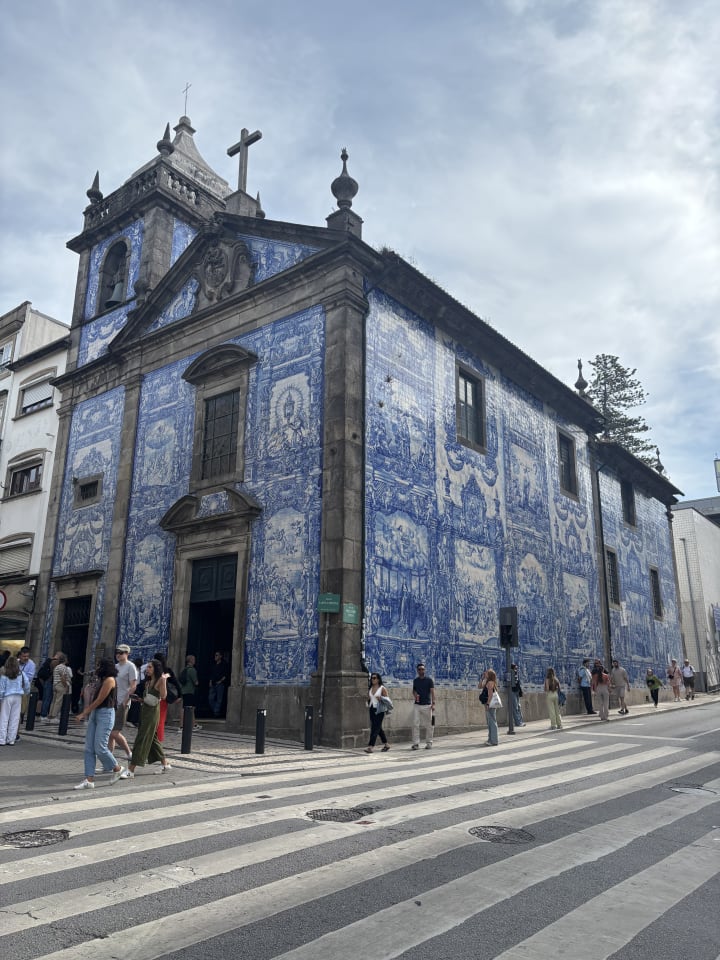
After that, we walked towards Capela das Almas, which is a chapel covered with blue azulejo tiles. These are typically Portuguese, and you will see much more of them later on the trip. We went inside of the chapel, but because it's quite small and very crowded with tourists it was not very interesting. The outside is definitely more beautiful.
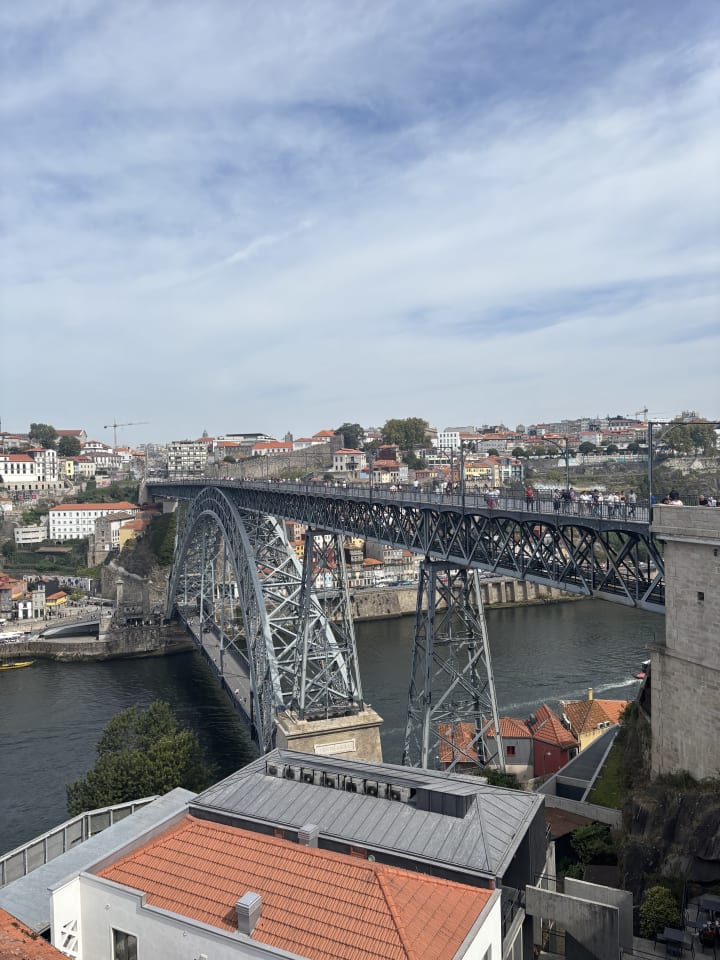
We then walked towards Dom Luís bridge, which we first crossed from the top where the trams ride. On the bridge you have a beautiful view of Porto. A day in Porto would not be complete without eating francesinha. This is a sandwich filled with various types of meat (you usually get to choose your type of meat), melted cheese, and the sandwich is almost drowning in a beer-and-tomato sauce. You can eat this delicacy when you walk down to the water from Dom Luís bridge.
To end the day, we visited a wine cave ("Vila Nova de Gaia" in our case). We booked the English tour where they explained their history of making Port Wine. After that we had the opportunity to see their wine caves, and we finished with a Port Wine tasting. We tasted both lighter and darker wines. Some were sweeter, some had really unique flavors, it was a wonderful expierence which we paid 31 euros per person for.
To walk back to our hotel we had to cross the bridge once more, so we decided to cross it from the bottom this time. In the evening we still spent some time in Santo Ildefonso, which is a neighbourhood in the heart of the city. This was the perfect opportunity for us to grab dinner.
Day 2: Aveiro - Nazaré - Peniche
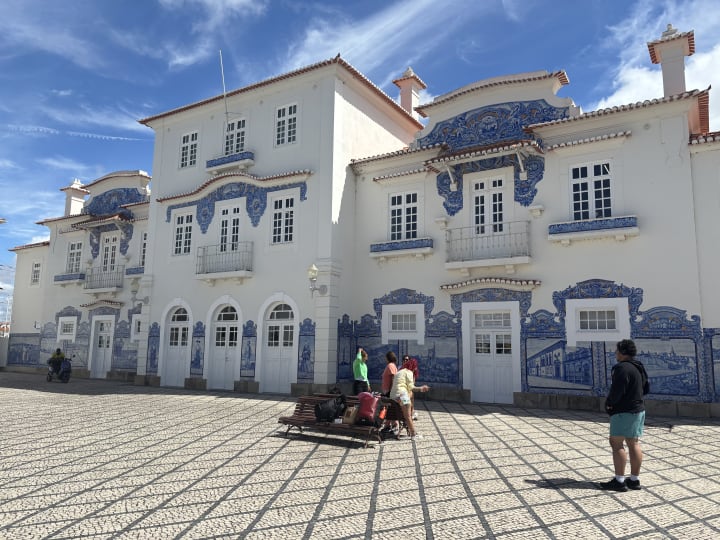
On day two we started driving towards Aveiro. This is a smaller city that has a clear resemblance to Venice. The city has canals running through its centre, and gondola-like boats (barcos moliceiros) are found in abundance. Additionally, the city is known for its "ovos moles", which is a dessert made of eggs and sugar. We strolled around the city for about an hour and had lunch there. You cannot miss the train station, which is again covered by blue azulejo tiles.
We then continued our trip towards Nazaré, which is known for its big waves. It's a true surfer's paradise, but be careful because the water is very cold. We spent some time relaxing at the beach and watching the waves, and then continued our drive towards Peniche.
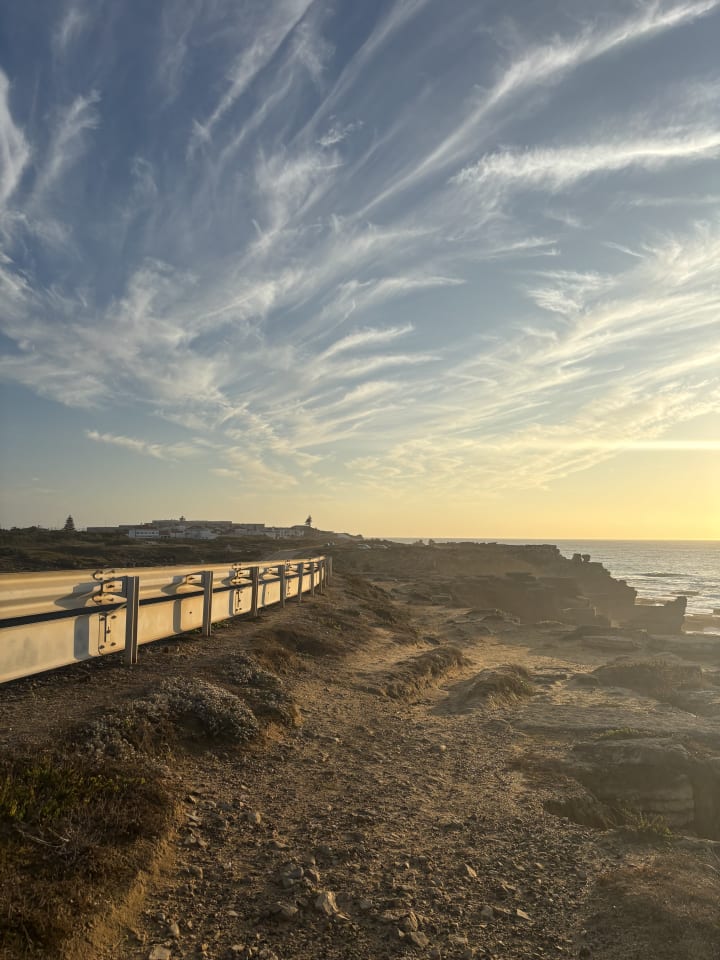
We stopped at Praia do Baleal, which is a beach with water on both sides. One side has calmer waters, the other side is usually full of surfers. We then drove towards the cliffs in Peniche and spent some time walking along them during sunset. This was a truly magical sight.
Day 3: Sinta + Lisbon
On day three we drove to Sintra, which is UNESCO world heritage. Sintra is the biggest tourist trap you will encounter on this trip, but it's still worth the visit. When you arrive in Sintra, it seems like you have ended up in a fairy tale. There are beautiful houses and castles left and right, and the area itself is picturesque. The parking, however, is where they overcharge you. Try to plan ahead and ignore the people trying to show you their private parking, I promise you will pay more than necessary. I also don't recommend buying tickets to Palacio Nacional da Pena itself, only to its gardens. This allows you to get up to the castle for a fraction of the price, get your beautiful pictures, and still avoid the long queues. It is quite the hike up to towards the palace, so bring good shoes!
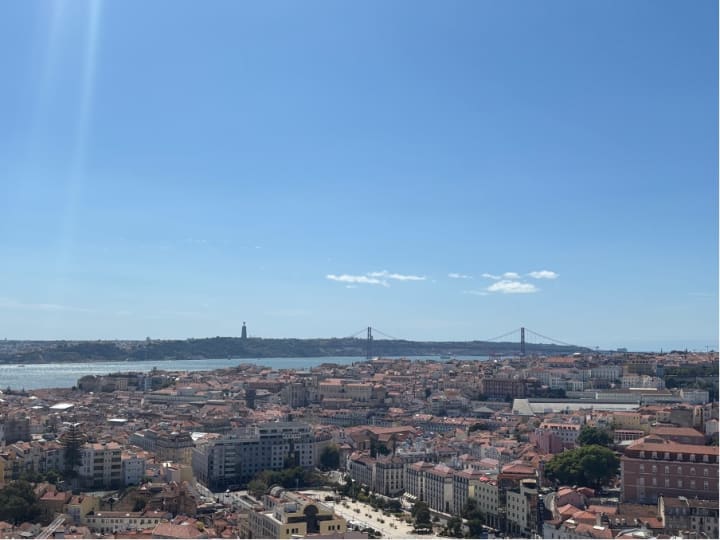
We then drove to Lisbon, where we got the first glance of Ponte 25 de Abril, also known as the famous red bridge of Lisbon. We spent some time exploring the city by walking towards Praça do Comércio, and visiting one of many miradouros (lookout points) over the city. If you feel comfortable, it's perfectly doable to see every miradouro on foot, although the tuk tuk drivers will tell you differently. In the evening we went to Alfama, which a neighbourhood famous for its Fado concerts. This is a type of music that is very typical for Portugal. It brings and amazing atmosphere, and is the best area to have dinner.
In Lisbon I also recommend trying some pastéis de nata. We tried several, and found that "Fabrica de Nata" and "Manteigaria" had the best ones. We rated them 10/10 and 9/10 respectively! Pastéis de Belém, which are only found in Belém next to the monastery, got a solid 9.5/10 on our scoreboard.
Day 4: Lisbon
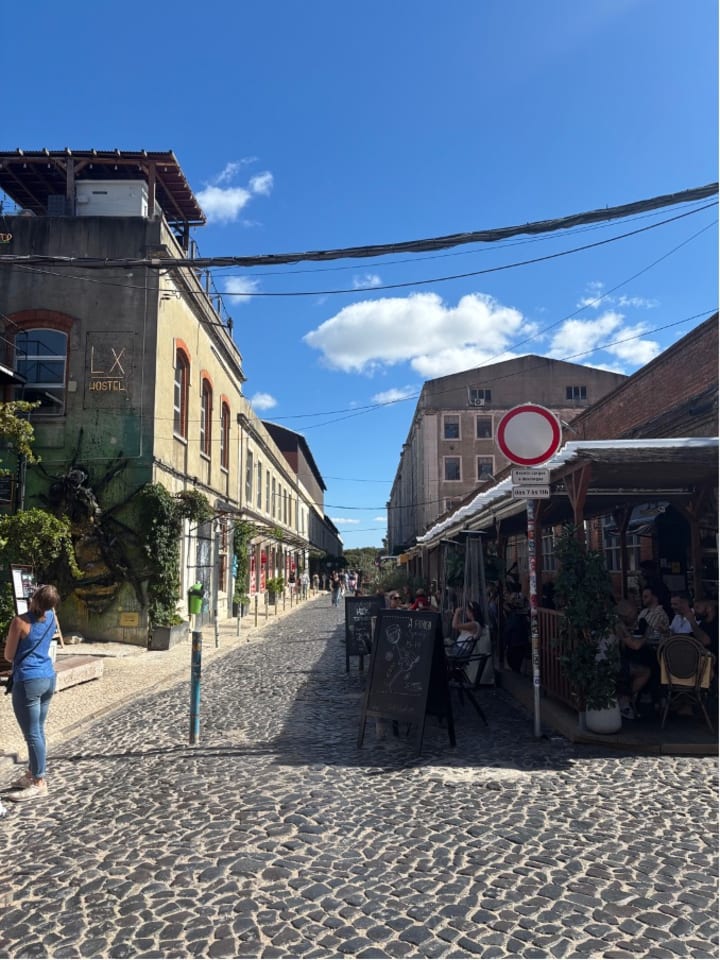
On day four we continued our walk through the city and we visited the Santa Justa lift, which is accessible on foot for free via the back of the lift. After that, we took the tram (yes, the yellow one) to LX factory which is located under the famous red bridge. This is a more alternative area with lots of shops, bars, and restaurants. We tried some Super Bock, which is a local beer, and visited many of the stores.
To end the night, we spent time at Bairro Alto which is known for its bars and music.
Day 5: Odeceixe
Before leaving Lisbon, we visited the Mosteiro dos Jéronimos. Expect long queues here. We also wanted to visit the tower of Belém, but unfortunately it was closed when we visited.
We then drove towards Odeceixe, but first we stopped at Vila Nova de Milfontes, which is an adorable town next to the water. I highly recommend stopping here to walk around and spend some time at the beach. The water is still very cold here, but this is the first time we actually managed to fully dip into the water.
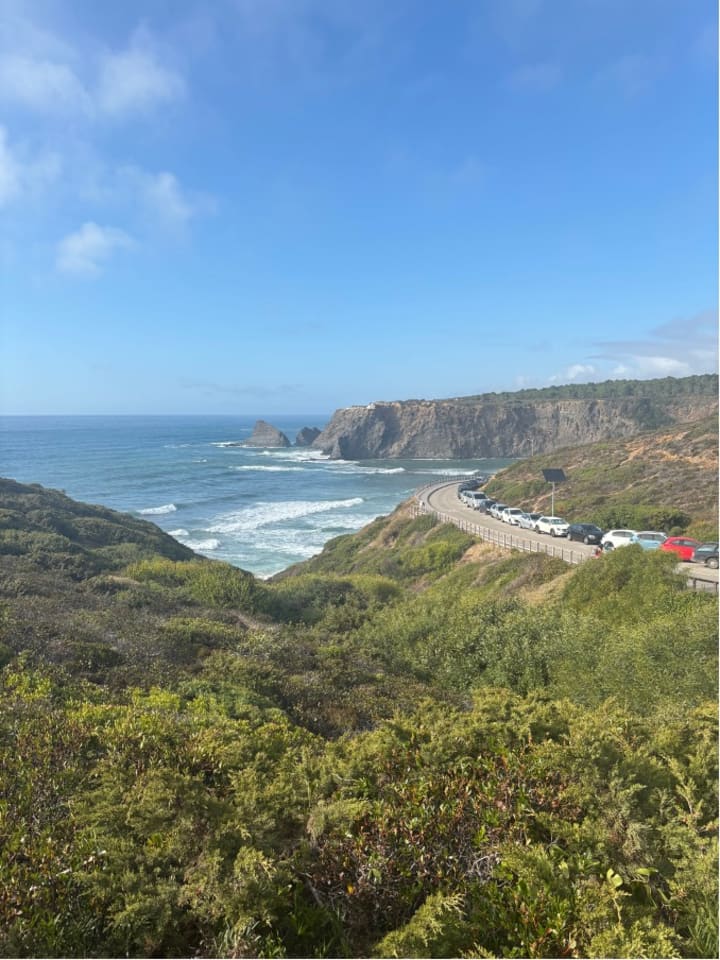
Later in the day we arrived in Odeceixe, which is another surfer's paradise. There is free parking along the cliffs, and most hotels are located close to the beach. The beach again has water on both sides, where one side is a river and the other is the sea. The river is quite undeep and ideal for swimming, while the sea gets quite rough and is more for experienced swimmers and surfers.
Day 6: Aljezur
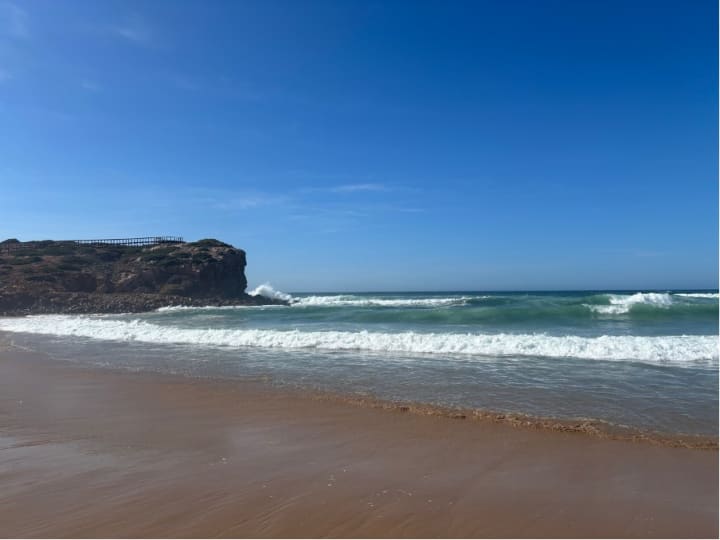
Before leaving Odeceixe we walked for about 8km along the fisherman's trail, which was a beautiful hike. We then drove onto Aljezur. We spent some time exploring the town (Castelo de Aljezur and Mercado Municipal are worth the visit) and then headed to Praia da Bordeira, which is a beach covered in dunes. It's quite the hike to get to the water, you have to cross a river first (which is luckily not very deep). The river is again the place to be for swimmers, because the waves in the sea are high.
Day 7: Faro
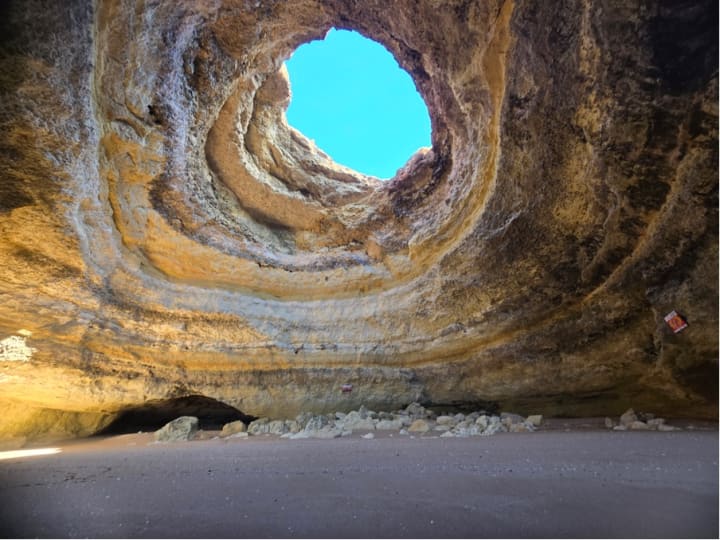
On day seven we drove to Faro. We first stopped for a kayak ride towards Benagil cave, which was on our bucket list. Many people visit the cave by kayak so you will definitely not be alone there, but it's a very unique sight. Next to the Benagil caves, you also have the opportunity to visit some other sights on the water. The total kayak ride took us about 1 hour and 45 mins. We did not get too tired while kayaking at sea, which is something that we were initially afraid of.
Because we were close-by, we also visited Ria Formosa Lagoa. This is located in a very rich neighbourhood with many golf courses, gated communities, etc. However, beyond those golf courses is a beautiful lagoon full of wildlife. We saw many different birds and crabs there, and if you follow the trail you will end up at the beach. If you visit in the spring you can also see flamingos here, but because we visited in September we unfortunately did not see any. The lagoon dries up and fills up quickly, so when you return to the car you often have a completely different view of the water and wildlife than when you came.
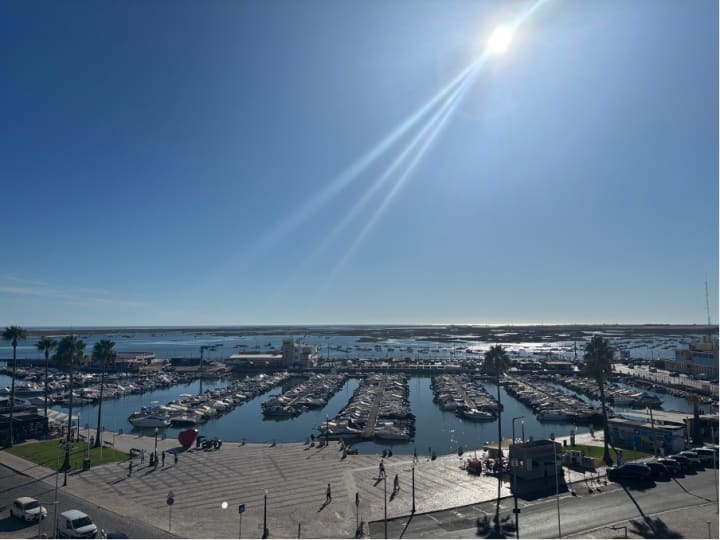
We then drove to the centre of Faro, where we visited the historic centre first and then walked towards the marina. At some of the hotels near the marina you can get a drink on one of their rooftops (without staying at the hotel). Just take the elevator to the top floor and enjoy a cocktail wile looking out at the marina and the lagoon behind it.
Day 8: Faro
On day eight, we went to Capela dos Ossos, which is made of real skulls. It's a very unique thing to see, and besides the skulls the Capela has other beautiful rooms as well. You pay a small entrance fee for this. After this, we spent some time on the beach. It was not easy to find parking at the beach, but it is free parking. The water was actually enjoyable when it comes to temperature here, so I highly recommend taking it all in one last time.
About the Creator
E DM
I'm a 28-year-old based in Belgium. I mostly write about travel tips. If you like what you read, consider giving a small tip to fund my travels so I can keep giving you travel tips! Thank you :)
Worth the Wait: Puerto Viejo, Costa Rica
Beach bumming in a small Caribbean beach town sounded like a perfect way to end our 6-month trip through Mexico and Central America. Or so we thought. The foul, fishy stench of rotten seaweed hit our nostrils as we stepped from the cramped bus and looked out at a rather depressing, empty, and underwhelming black sand beach. It was pouring with rain, and we had to quickly fish out our ponchos. We thought, this couldn’t be it, could it?
By Sh*t Happens - Lost Girl Travel7 days ago in Wander
Worth the Wait: Puerto Viejo, Costa Rica
Beach bumming in a small Caribbean beach town sounded like a perfect way to end our 6-month trip through Mexico and Central America. Or so we thought. The foul, fishy stench of rotten seaweed hit our nostrils as we stepped from the cramped bus and looked out at a rather depressing, empty, and underwhelming black sand beach. It was pouring with rain, and we had to quickly fish out our ponchos. We thought, this couldn’t be it, could it?
By Sudais Zakwan3 days ago in Wander




Comments
There are no comments for this story
Be the first to respond and start the conversation.