
Coastal Series: Part I (Washington State)
Where the Road Meets the Water...

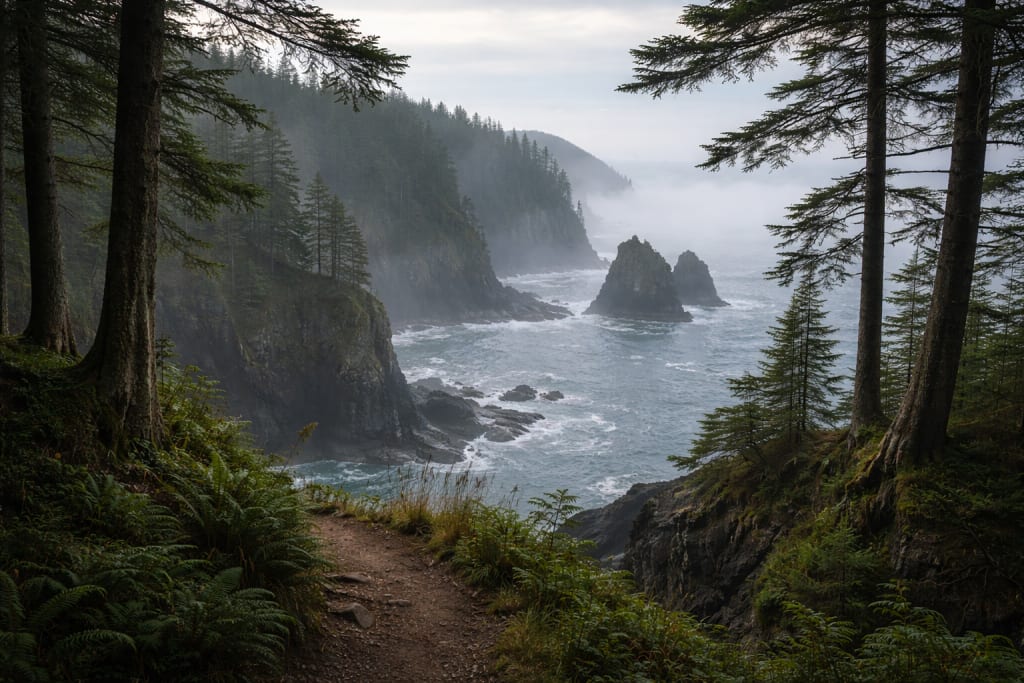
Washington does not introduce its coastline. It lets you find it...
There’s no sudden reveal, no postcard moment engineered for the windshield. The coast arrives gradually, in pieces... Through rain-darkened trees, through logging towns that never rebranded themselves, through long stretches of road where the radio fades, and the sky lowers itself closer to the ground.
This is not a coast built for spectacle. It is a working edge. A place where the road exists because it had to, and stayed because no one bothered to replace it.
If you rush it, Washington’s coast will feel gray and withheld. If you slow down, it opens, quietly, on its own terms. These are five coastal routes where the road still listens to the land.
U.S. Route 101 - The Long Way Around
The Olympic Peninsula does not reward shortcuts. Highway 101 loops it entirely, a patient ribbon of pavement tracing rainforests, river mouths, and a coastline that never fully settles into one mood. The road narrows and widens without explanation. Towns appear briefly, then retreat again into trees and weather.
Here, the coast is not one thing. It is:
- driftwood beaches stacked like wreckage
- sea stacks standing offshore like unfinished sentences
- fishing docks that smell of diesel and salt
- motels that look like they were built to last through storms, not trends
The road bends inland without apology, reminding you that the ocean doesn’t always get the final word. When it returns, it does so quietly. Through pullouts you almost miss, and beaches that demand a walk rather than an audience.
This is a road for patience. It teaches you that arrival is optional.
Cape Flattery Road - The Edge That Still Feels Like One
There are places where the road feels like a decision. Cape Flattery Road carries you through the lands of the Makah Nation toward the northwesternmost point of the continental United States. The forest tightens around you. The sense of elsewhere deepens.
This road does not dramatize itself. It simply keeps going. By the time the pavement ends, the ocean has changed character. It’s not scenic here; it’s final. The water breaks against cliffs with the indifference of something that has never needed to impress anyone.
Standing at the edge, it becomes clear why this road matters. It doesn’t lead to a destination so much as a boundary, between land and water, between movement and stillness.
Some roads end because they must. This one ends because nothing beyond it will yield.
Chuckanut Drive - When the Old Road Refused to Leave
Chuckanut Drive clings to the coastline north of Seattle, a narrow, winding stretch suspended between cliff and water. It predates efficiency. It survives because it never tried to compete. This is a road built before speed became mandatory.
The curves are slow. The pullouts are informal. The views arrive sideways, through trees, demanding attention rather than announcing themselves. Freight trucks avoid it. Locals still take it when they have time.
Below, the water shifts with light and tide. Above, the rock face watches quietly. Chuckanut is proof that some roads endure not because they’re useful, but because they’re right. They fit the land too well to erase.
Willapa Bay - Roads That Work for a Living
Willapa Bay does not pretend to be wild. It is used. The back roads threading this southern stretch of coast pass oyster beds, processing sheds, weather-beaten docks, and small towns built entirely around tides and timing. The water here feeds people. The roads exist to reach it.
Nothing feels curated. Nothing is staged. Trucks idle. Boats leave early. The bay reflects gray skies with no interest in romance. And yet, there is a deep beauty in how unbothered it all is.
These roads don’t ask visitors to admire them. They ask you to stay out of the way. That, too, is a kind of honesty.
Westport to Tokeland - The Coast That Never Performed
This stretch of road feels like it was built for people who already knew where they were going. Westport remains a working harbor, not a concept. Fishing boats line the docks. The ocean is practical here, sometimes generous, sometimes not. Heading north toward Tokeland, the road thins and the traffic disappears.
The buildings grow sparse. The horizon widens. Tokeland itself feels like a place the world forgot politely. One road in. One road out. Water in every direction. It is not abandoned, it is simply unconcerned.
Driving this stretch, the coast feels less like scenery and more like a condition. You are either part of it or passing through.
Why These Roads Matter
Washington’s coastal roads survive because they were never optimized. They weren’t widened for speed or flattened for convenience. They bend where the land told them to. They linger where people needed them to stay.
They are reminders of an older agreement... the road follows the coast and not the other way around.
In an age of shortcuts and destinations, these routes still ask for time. They don’t reward urgency. They reward attention. And that is why they endure.
Iron Lighthouse - Coastal Series
This is the first light. Washington does not shout its coastline. It waits, behind rain, behind trees, behind decisions not to hurry.
Make sure to join us next time, when the road will continue south to Oregon! Different weather and different towns, but the same quiet truth:
Some roads exist not to get you somewhere, but to teach you how to move through a place without trying to own it.
About the Creator
The Iron Lighthouse
Where folklore meets freeway. A guide to the strange heart of the American backroads...
Keep reading
More stories from The Iron Lighthouse and writers in Wander and other communities.
Six Fishing Holes America Forgot (But the Fish Didn’t)
There are two kinds of fishing in America... The first kind is loud. It comes with branded hats, social media angles, sponsorship decals, and an audience. It happens on lakes everyone already knows, at times everyone else has marked on their calendar. It is efficient, optimized, and frequently filmed.
By The Iron Lighthouse2 months ago in Wander


Comments
There are no comments for this story
Be the first to respond and start the conversation.