
Belgrade Serbia
The beautiful capital of the southeastern European country of Serbia.

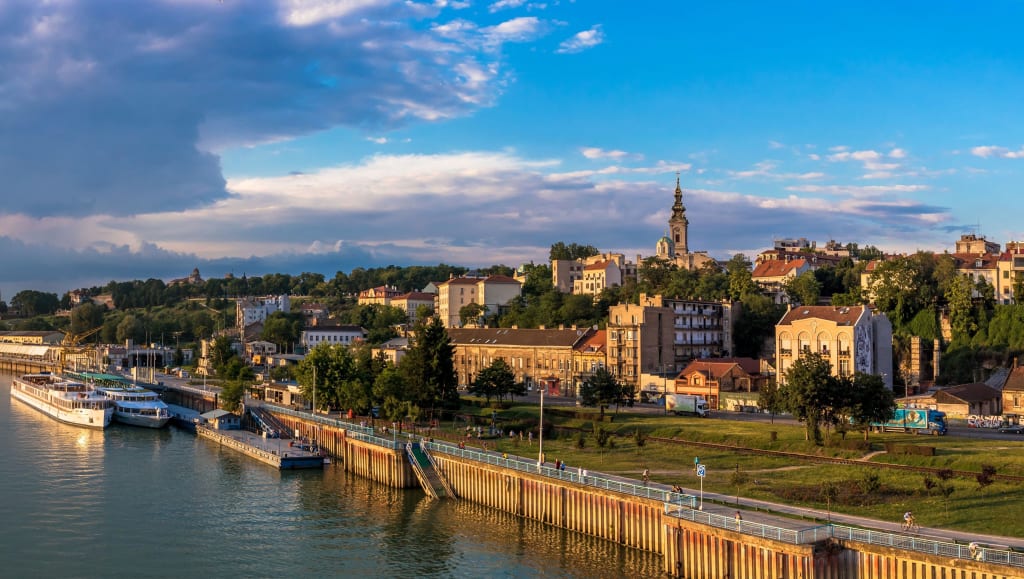
The name Belgrade translates to White City. It is the capital and largest city of Serbia located at the confluence of the Sava and Danube Rivers at the place where the Pannonian Plain meets the Balkan Mountains.
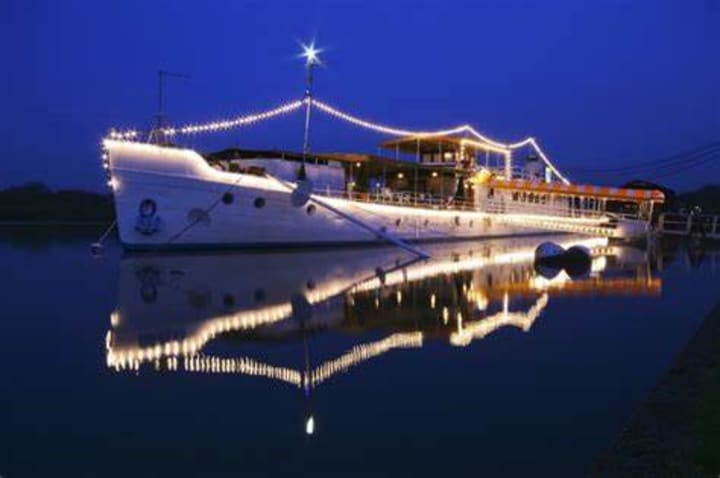
It is interesting that Belgrade has gotten a reputation of being one of Europe’s foremost party capitals. There are a lot of nightlife choices here and you can be sure that during the spring and summer the party goers, party from night till dawn. If there is one word you should learn in Serbian it is “splavovi” which refers to the party boats that are moored along the river banks in Belgrade. The boats come in all shapes and sizes and are in use for a night on the town as these are floating river clubs or barges.
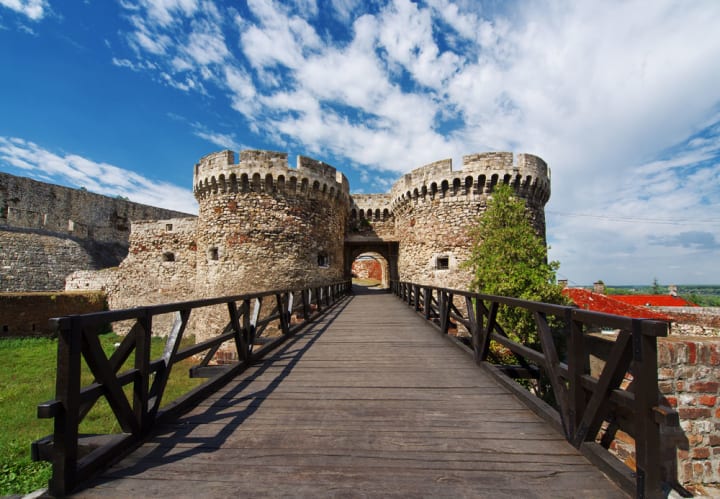
On a hill that overlooks the confluence of the Sava River into the Danube, you’ll find the Belgrade Fortress. This fortress has seen many wars and over the centuries has been destroyed and rebuilt many times. The way it looks now dates back to the end of the 18th century. Belgrade Fortress includes Upper Town, Lower Town and Kalemegdan Park.
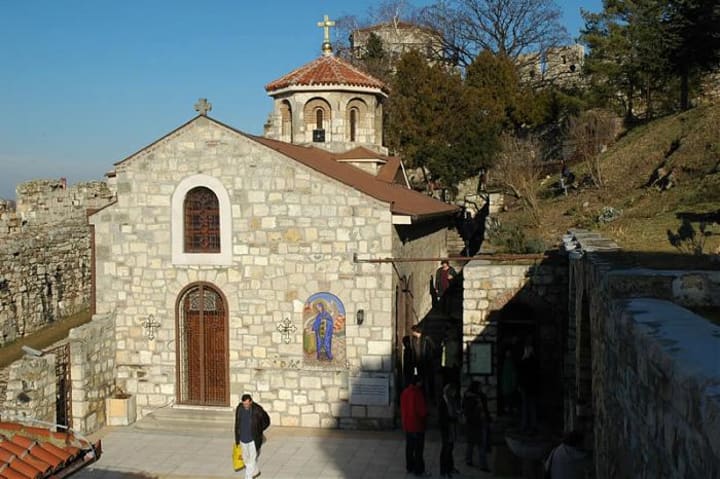
Most of the preserved fortress ramparts and gates are found in the Upper Town where you can also see the Military Museum and St. Petka and Ruzica Churches.
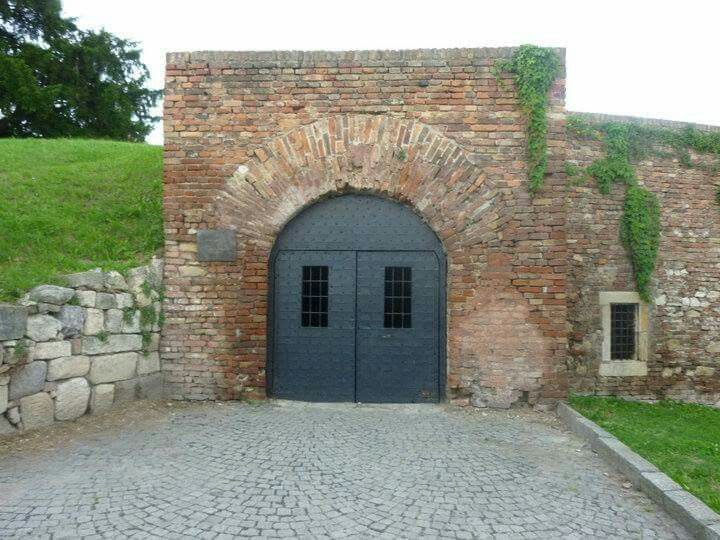
Of interest is the Roman Well, an unusual building whose eerie waters once claimed many lives.
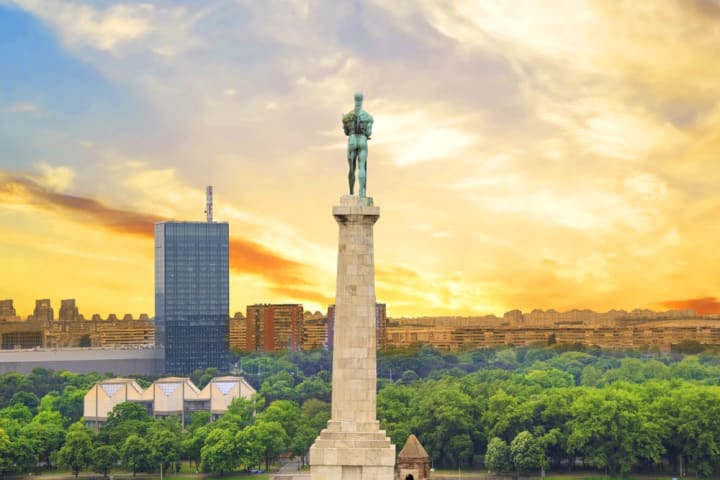
The symbol of Belgrade – Pobednik- The Victor, a monument that was built to commemorate Serbia’s victory over the Ottoman and the Austro-Hungarian Empire during the Balkan Wars and WW I. It was built in 1928 and is 14 meters high. It is one of Ivan Mestrovic's most famous artworks and the city’s most recognizable landmark.
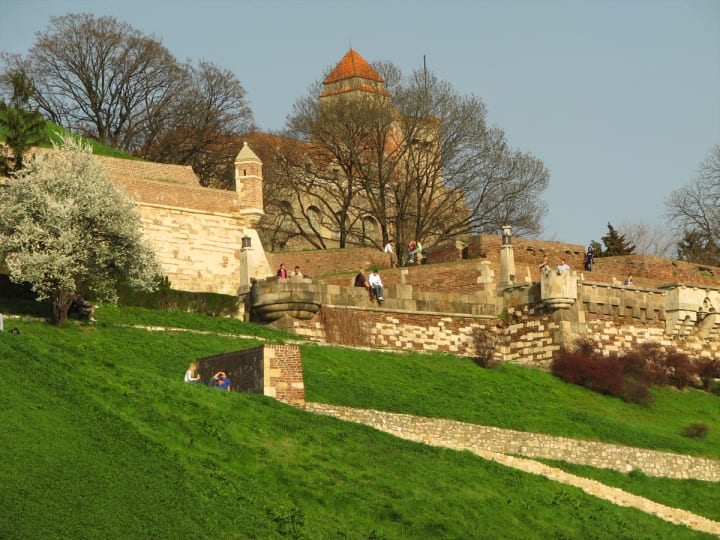
Kalemegdan Park was created in the 19th century on a plateau in front of this fortress. This plateau had been cleared so that when the fortress was in use approaching enemies could be seen. The park is a popular place for people to walk and relax. It offers lots of shady benches from which you can watch squirrels at play, some sculptures, an art pavilion, a zoo, an amusement park and souvenir vendors. It has become a favorite place for chess players and loving couples.
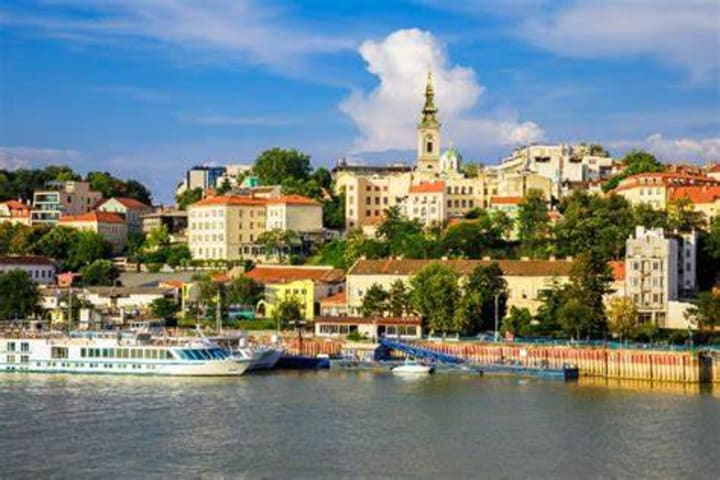
The Lower Town on the banks of the Danube was the main city center in the Middle Ages, surrounded by walls and a port. A few buildings still remain today – Kula Nebojsa or Daredevil Tower dating from 1460, the Turkish Bath from the 18th century, today you can find a planetarium here and the Gate of Carl VI dating from 1736.
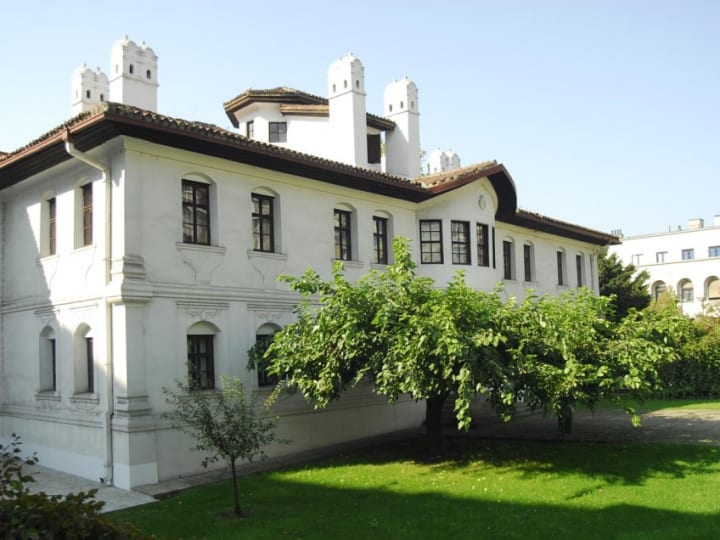
A representative building that dates from the first half of the 19th century was built for the family of Prince Miloz Obrenovic. At the Princess Ljubica Residence, visitors can see a permanent exhibit that includes the original furniture in the different styles of the 19th century. In the basement in the Vaults Hall themed exhibitions are held.
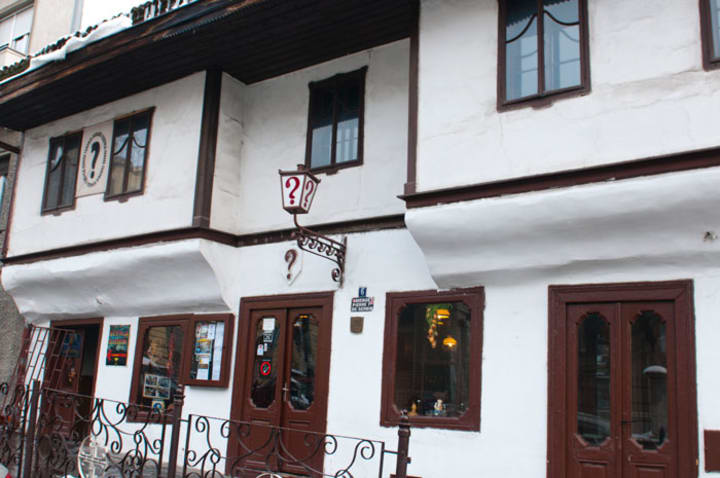
For the unknown and unusual take a look at the authentic Serbian tavern simply known as “?”. It was built in 1823 and opened its doors as a tavern in 1826. This tavern was the first one to set up a billiard table in 1834. There is a quaint wooden stove for cooking beans and roasting potatoes. This is the place where you can get delicious national dishes and draft beer. There is a summer terrace.
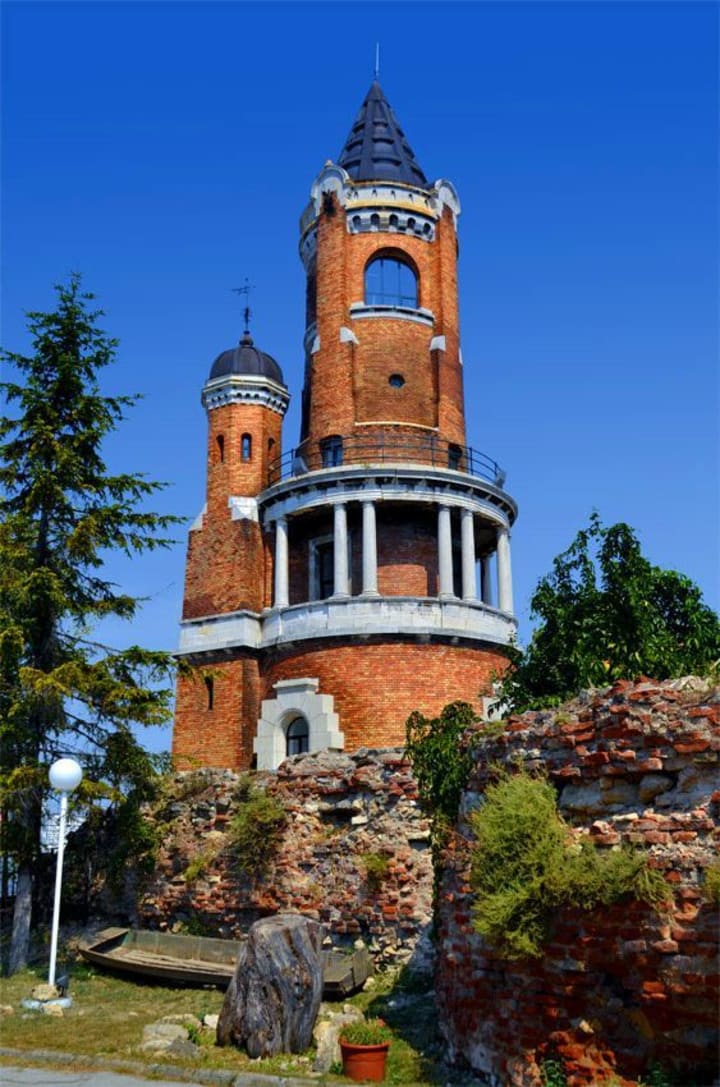
A path from Groblianska Street leads to the Millennium Tower located in Gardos. The tower was built by Hungarians in 1896 in order to celebrate their presence on the Pannonian Plain. It was built on the ruins of a 15th-century fortress and even though it is closed to the public it is well worth taking a look at as the plateau in front of the tower offers spectacular views of Belgrade.
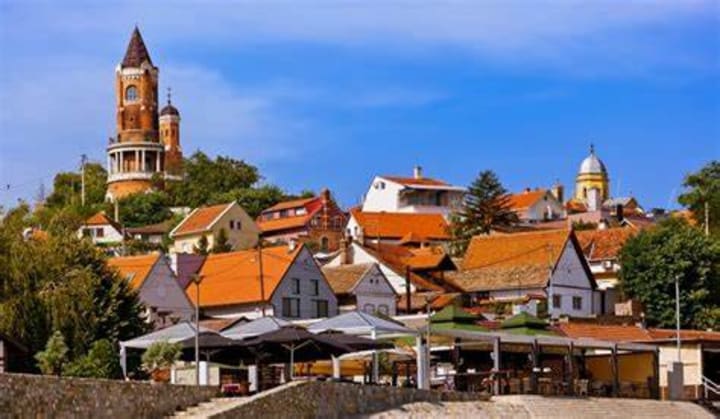
Gardos is a quaint romantic place to explore. Here you’ll find quiet, narrow cobblestone streets and rows of low houses. There are lovely and quaint cafes and fish restaurants.
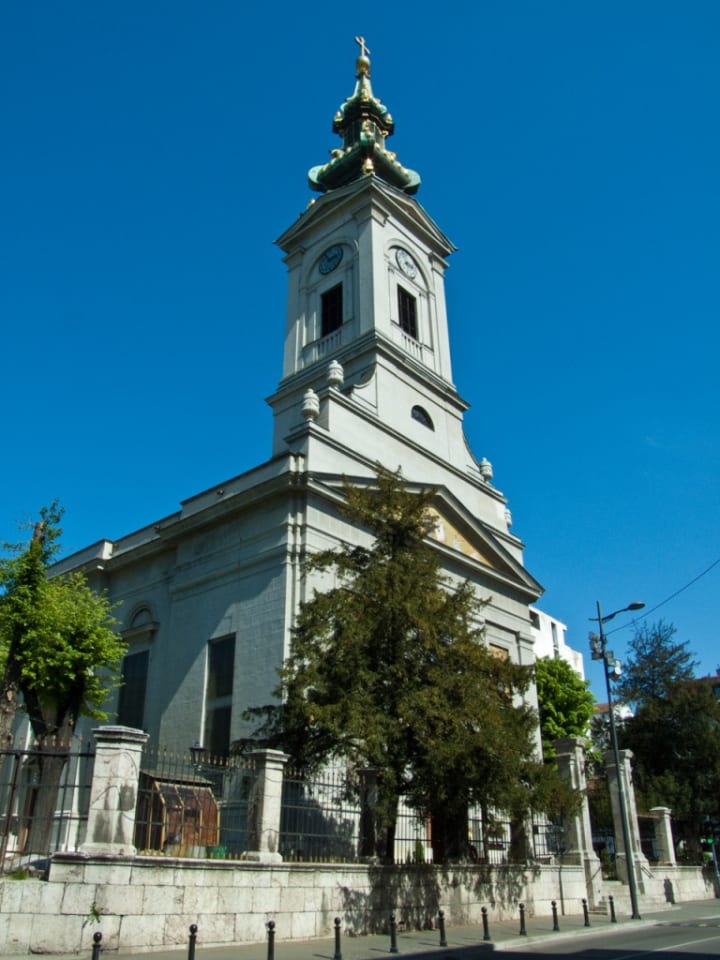
The main church of Belgrade is dedicated to St. Michael the Archangel. The present church dating from 1845 was built on the site of a former Cathedral Church from the 16th century. Within the present Cathedral Church are the holy remains of Serbian saint Emperor Uros and it is also the burial site of some of the most important figures in Serbian history such as Vuk Karadžić, Dositej Obradović, and Serbian rulers of the Obrenović dynasty - Miloš, Mihailo and Milan. The interior of the church is decorated with a gold-plated carved iconostasis, created by the sculptor Dimitrije Petrovic. The icons on the iconstasis, thrones, choirs and pulpits as well as those on the walls and arches were painted by Dimitrije Avramovic, who was one of the most distinguished Serbian painters of the 19th century. Across the way from the church, you’ll see the seat of the Patriarch of the Serbian Orthodox Church, in a building dating from 1935.
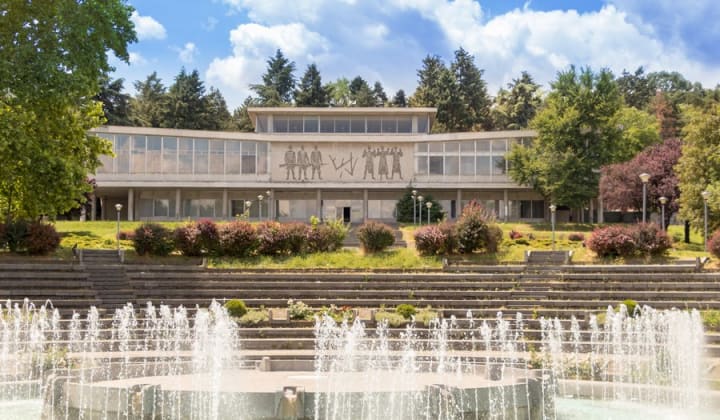
Housed in three separate buildings is the Museum of Yugoslav History. The museum has more than 200,000 items and represents a most comprehensive picture of the country from WW II up to the 1990s. There is a special emphasis placed on the life and work of Josip Broz Tito. This museum also includes the House of Flowers which is the final resting place of Tito. In the 25th of May Museum visitors can find temporary exhibitions and special events are held. The Old Museum houses various gifts that were given to Tito by different foreign dignitaries, statesmen and visiting delegations over the years.
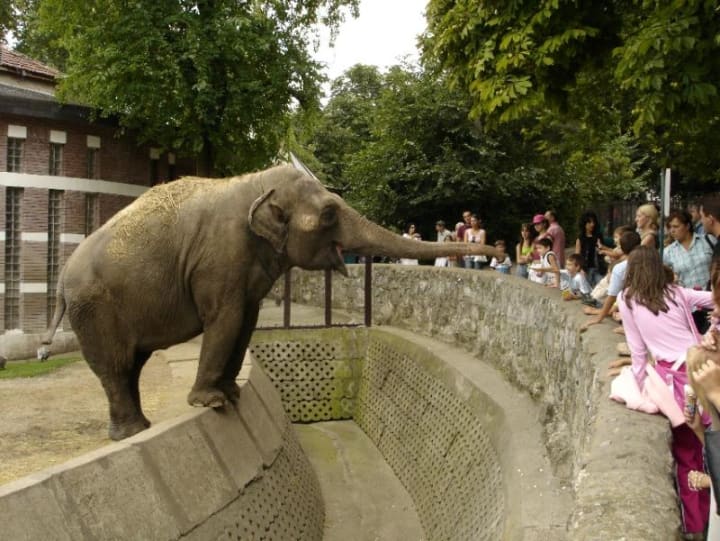
No matter if you are traveling with children or not visitors enjoy the Belgrade Zoo which is one of the oldest in all of Europe and is located in the famous Kalemegdan Fortress. The zoo stretches for 7 hectares and has more than 2,000 animals and almost 300 different species. Here visitors can see rare white lions and tigers and Muja, who is thought to be the world’s oldest alligator. There is a lovely series of mosaics that cover the zoo’s outer wall and depict various animals. It was created in cooperation with the Faculty of Fine Arts in Belgrade.
About the Creator
Rasma Raisters
My passions are writing and creating poetry. I write for several sites online and have four themed blogs on Wordpress. Please follow me on Twitter.
Keep reading
More stories from Rasma Raisters and writers in Wander and other communities.
Worth the Wait: Puerto Viejo, Costa Rica
Beach bumming in a small Caribbean beach town sounded like a perfect way to end our 6-month trip through Mexico and Central America. Or so we thought. The foul, fishy stench of rotten seaweed hit our nostrils as we stepped from the cramped bus and looked out at a rather depressing, empty, and underwhelming black sand beach. It was pouring with rain, and we had to quickly fish out our ponchos. We thought, this couldn’t be it, could it?
By Sh*t Happens - Lost Girl Travel5 days ago in Wander
A Fear for Travelers Escaping the Gulf: Are Flights Safe?
As tensions rise across the Persian Gulf region, thousands of travelers are increasingly asking a troubling question: are flights leaving the Gulf still safe? Airlines, aviation authorities, and governments have all moved to reassure passengers, but recent geopolitical developments have heightened anxieties among those attempting to leave the region or pass through its busy airspace. The Gulf has long been one of the most important aviation crossroads in the world. Major hubs such as Dubai International Airport, Hamad International Airport, and King Khalid International Airport connect Europe, Asia, and Africa through a dense network of international flights. Every day, hundreds of aircraft pass through regional airspace carrying business travelers, tourists, migrant workers, and cargo. However, the recent escalation of military tensions involving Iran and its regional rivals has raised concerns about aviation safety. Missile launches, drone activity, and military operations in nearby areas have made some passengers uneasy about flying through the region. Several governments have issued travel advisories urging airlines to review flight paths and exercise caution when operating near potential conflict zones. Despite these concerns, aviation experts stress that commercial aviation remains one of the most heavily monitored and regulated industries in the world. Airspace safety is continuously assessed by international bodies such as the International Civil Aviation Organization, as well as national aviation authorities that issue warnings and restrictions when necessary. In recent weeks, some airlines have slightly adjusted flight routes to avoid certain areas where military activity has increased. These adjustments can involve flying at different altitudes or diverting aircraft around particular air corridors. While such changes may add extra travel time, they are designed to maintain maximum safety for passengers and crew. Airlines based in the Gulf—including Emirates, Qatar Airways, and Etihad Airways—have emphasized that they are closely monitoring developments in coordination with aviation authorities. Company representatives say flight routes are reviewed constantly using real-time intelligence and airspace risk assessments. Aviation safety experts note that modern aircraft are equipped with sophisticated navigation systems that allow them to avoid restricted zones quickly. Additionally, pilots receive constant updates from air traffic controllers and global aviation monitoring networks. If conditions change during a flight, routes can be altered immediately. Still, the psychological impact of regional instability should not be underestimated. Travelers waiting at airports across the Gulf have described a sense of uncertainty, particularly those leaving areas closer to potential conflict zones. Social media images showing crowded departure halls and long lines at ticket counters reflect a growing urgency among some residents and visitors hoping to leave the region temporarily. For many passengers, the fear is rooted in memories of past aviation incidents linked to geopolitical conflict. Experts point to tragedies in previous decades where civilian aircraft were caught in dangerous airspace. These events led to stricter international regulations and more sophisticated monitoring systems designed to prevent similar situations. Governments across the region have also sought to reassure travelers. Officials stress that airports remain secure and that aviation authorities are working closely with international partners to maintain safe air routes. Security checks and surveillance at major airports have been increased, and contingency plans are in place should the situation worsen. Meanwhile, airlines continue to operate the majority of scheduled flights without interruption. Aviation analysts note that completely shutting down Gulf airspace would have enormous global economic consequences, given the region’s role as a central hub for long-distance travel and cargo transport. Ultimately, experts say the key factor is constant monitoring and rapid response to emerging risks. Aviation authorities around the world maintain detailed systems for assessing conflict zones, allowing airlines to adjust operations long before flights approach dangerous areas. For now, flights across the Gulf continue to operate under heightened awareness but with robust safety protocols in place. While regional tensions have understandably created anxiety among travelers, industry professionals insist that the global aviation system is designed precisely to manage such risks. For passengers boarding planes in the Gulf today, the journey may carry a heightened sense of uncertainty. Yet according to aviation experts and regulators, the safety measures protecting commercial flights remain among the most comprehensive of any form of transportation in the world. ✈️
By Fiaz Ahmed 4 days ago in Wander


Comments
There are no comments for this story
Be the first to respond and start the conversation.