
Baloch Culture – A Rich Heritage of Tradition and Resilience
“Exploring the History, Traditions, and Rich Heritage of the Baloch People”

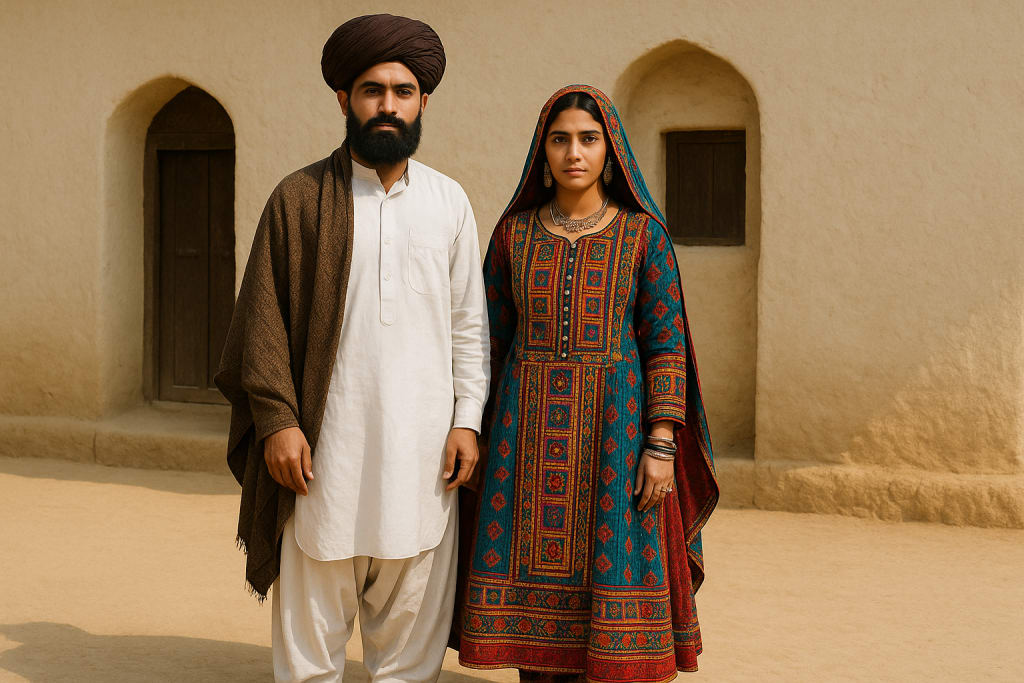
Baloch Culture – A Rich Heritage of Tradition and Resilience
Baloch culture is one of the most vibrant, diverse, and ancient cultures of South Asia. Rooted in centuries-old traditions, it reflects the bravery, hospitality, and unique lifestyle of the Baloch people. Spread across Pakistan’s Balochistan province, parts of Iran, and Afghanistan, the Baloch community has preserved its customs, language, music, dress, and values despite the challenges of time.
This article will explore the rich heritage of Baloch culture, including its history, language, literature, dress, music, food, festivals, and social customs.
Historical Background
The history of the Baloch people dates back over 1,000 years. Most historians believe that the Baloch migrated from the Caspian Sea region to their current homeland centuries ago. They settled in the rugged mountains and deserts of Balochistan, where their culture evolved in isolation, allowing them to maintain distinct traditions.
Baloch culture is deeply tied to honor (izzat), loyalty, and tribal unity. The tribal structure is central to Baloch society, with each tribe led by a Sardar (chief). These tribes have maintained their customs and heritage through oral traditions, poetry, and folklore.
Language and Literature
The primary language of the Baloch people is Balochi, which has several dialects such as Makrani, Rakhshani, and Eastern Balochi. Despite modern influences, Balochi remains the key medium for preserving poetry, proverbs, and folk tales.
Baloch literature is famous for its epic poetry and ballads, which celebrate bravery, love, and tribal honor. Renowned poets like Gul Khan Naseer and Atta Shad have played a major role in shaping modern Balochi literature while keeping traditional themes alive.
Dress and Traditional Attire
Baloch clothing reflects the simplicity and practicality needed for the region’s climate, along with cultural beauty.
For Men: Baloch men traditionally wear loose shalwar kameez with a long turban (pagri) or cap. The dress is comfortable for hot summers and cold winters.
For Women: Baloch women wear beautifully embroidered dresses known for their colorful patterns and mirror work (shisha). The embroidery is handmade and can take weeks or months to complete. These dresses are often worn with traditional jewelry such as silver bangles, necklaces, and nose rings.
The embroidery of Balochistan is world-famous and considered a cultural symbol.
Music and Dance
Baloch music is soulful and deeply connected to storytelling. Traditional instruments include:
Saroz (a type of fiddle)
Benju (a string instrument)
Dohol (drum)
Tamburag
Baloch songs often narrate stories of love, bravery, and tribal pride.
Chappar and Leva are famous folk dances performed during celebrations and festivals, often accompanied by drums and clapping.
Cuisine
Baloch cuisine is rich in flavor and reflects the lifestyle of a nomadic and tribal society.
Famous Baloch dishes include:
Sajji: Whole lamb or chicken marinated in salt and spices, slow-roasted over coals.
Kaak: A hard bread baked over stones or in sand.
Landhi: Dried meat prepared during winter.
Khaddi Kebab: Meat cooked inside a pit in the ground.
Baloch hospitality is legendary; a guest is treated with utmost respect and offered the best food available, even in times of scarcity.
Festivals and Celebrations
The Baloch celebrate both cultural and religious events with enthusiasm.
Major festivals include:
Baloch Culture Day (March 2): Celebrated worldwide by Baloch communities with traditional dress, music, and dances.
Eid-ul-Fitr and Eid-ul-Adha: Marked with prayers, feasts, and tribal gatherings.
Sibi Mela: A historic fair featuring horse and cattle shows, music, and traditional sports.
Social Structure and Values
Baloch society is tribal, and family honor is of utmost importance. Values such as bravery, loyalty, respect for elders, and hospitality are deeply ingrained.
The Jirga system (tribal council) is a traditional method of resolving disputes, led by tribal elders. This system emphasizes community unity and respect for tribal law.
Arts and Handicrafts
Balochistan is famous for its handicrafts, including:
Hand embroidery and needlework
Rugs and carpets
Camel skin lamps
Stone and metal jewelry
These crafts are not just economic products but a representation of cultural identity.
Challenges and Preservation
Modernization and migration have brought challenges to preserving Baloch culture. Many young people are moving to cities, where cultural practices are harder to maintain. However, cultural festivals, social media, and academic work are helping keep traditions alive.
Organizations and individuals are working to promote Baloch music, embroidery, poetry, and language to future generations.
Baloch culture is a proud and colorful heritage that reflects the strength, resilience, and creativity of its people. From its music and poetry to its embroidery and hospitality, Baloch traditions remain a vital part of Pakistan’s cultural mosaic. Preserving and promoting this culture is essential, not just for the Baloch people but for the cultural diversity of the entire region.
About the Creator
Noor Salam
✍️ Pakistani writer sharing motivational stories, Islamic reflections, and online earning tips in English & Urdu. I believe in the power of words to inspire, guide, and create impact. 🇵🇰
Keep reading
More stories from Noor Salam and writers in Wander and other communities.
The Rich Tapestry of Pashtoon Culture: A Legacy of Honor, Hospitality, and Heritage
The Rich Tapestry of Pashtoon Culture: A Legacy of Honor, Hospitality, and Heritage The Pashtoon (or Pashtun/Pakhtun) culture is one of the oldest, most vibrant, and deeply rooted cultures in South-Central Asia. Spread across Pakistan (mainly in Khyber Pakhtunkhwa and Balochistan) and Afghanistan, Pashtoons represent a unique blend of ancient tribal traditions, Islamic values, poetic expression, and unwavering hospitality. For centuries, their cultural practices have remained resilient in the face of globalization, war, and migration. This article explores the multifaceted elements of Pashtoon culture, including their social structure, code of conduct (Pashtunwali), language, dress, cuisine, music, festivals, and challenges in the modern era.
By Noor Salam6 months ago in Wander
Da Mayor Trip
I’m going to tell you a story. The Story doesn’t end here, this is just the beginning. On November 19 I was surprisingly terminated from my job. And for dubious reasons as well. I enjoyed my job for the most part. The work was easy, I got a long with my co-workers for the most part and the benefits and time off allowed me to do what I wanted to do – travel, go places and do things, and most of all – not be at work!
By D.A. Mayor4 days ago in Wander
What I Learned Is Considered Disrespectful in Morocco by Morocco Family Vacation
Before visiting Morocco with my family, I read countless articles about customs, etiquette, and cultural differences. Still, I worried I’d make a mistake especially traveling as a mom with children who ask questions loudly, touch everything, and don’t always understand unspoken rules.
By Ariel Cohenabout 13 hours ago in Wander


Comments
There are no comments for this story
Be the first to respond and start the conversation.