
Annapurna Conservation Area
Annapurna Conservation Area Project (ACAP)


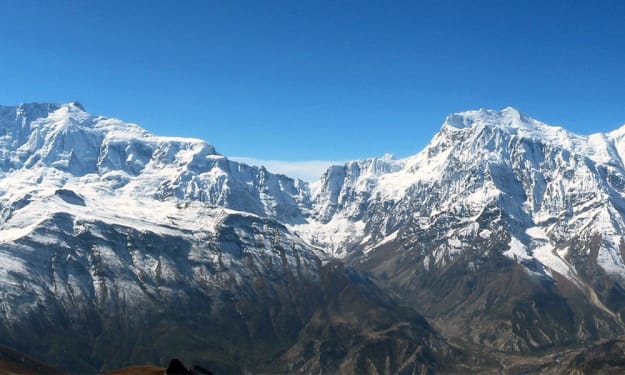
In the Himalayas, Annapurna Conservation Area is Nepal's largest protected area, which covers 7629 square kilometers in the Annapurana mountains. Some of the highest peaks in this area are among the most popular, as we find Annaurna I is one that takes a greater renowned and pride with 8091 meters high.
Annapurna Conservation Area (ACA) is a renowned stop for trekkers and conservationists because it houses beautiful scenery with diverse ecological settings. The park was established in 1986 and altitudes range from 760 to 8091 meters.
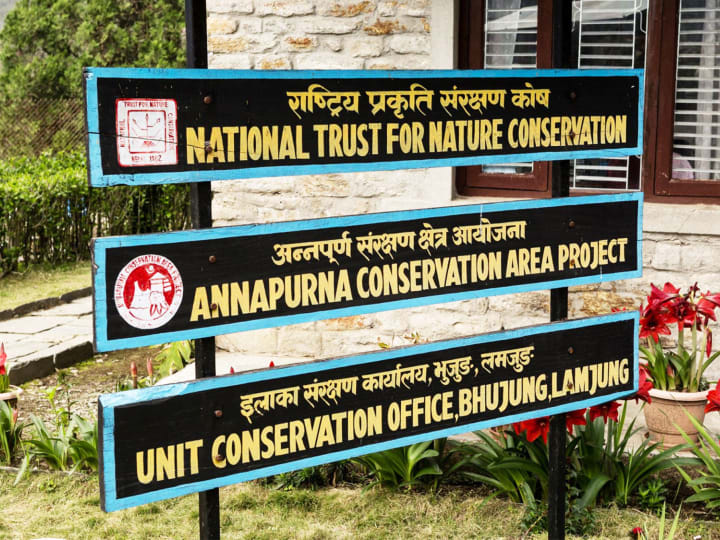
It was established by the Annapurna Conservation Area Project (ACAP) to promote long-term conservation while accommodating the needs of tourists in an environmentally sensitive region. ACAP falls under the aegis of the National Trust for Nature Conservation (NTNC), and it was not easy to protect both environment conservation as well as economic growth with a government contribution.
The first and largest conservation area in Nepal, it is often praised for its efforts to conserve the environment while simultaneously improving the living conditions of local residents.
Location and size
Annapurna Conservation Area is located in the Himalayas, in the north-center of Nepal. It is approximately 7,629 square kilometers, and it is one of Nepal’s largest protected areas. The area covers parts of Manang, Mustang, Kaski, Myagdi, and Lamjung district’s territory with a variety of landscapes, from subtropical forests to alpine meadows and desolate high-altitude landscapes.

History and Establishment
The Annapurna Conservation Area was the first and, at the time, the biggest conservation area in Nepal. It was established in 1986 with the aim of preserving the region’s rich biodiversity and sensitive ecosystems from harmful activities and unrestricted tourism development. The initiative to create the ACA was launched by the government of Nepal along with local stakeholders, nature conservation NGOs, and foreign partners.
Objectives
- Conservation of natural resources in the Annapurna region.
- Protecting and preserving wildlife habitats and biodiversity.
- Sustainable management of tourism operations to have the least amount of damage to the environment.
- The socioeconomic advancement of local communities through conservation-based initiatives.
- Build local interest in saving homegrown wildlife.
- Retaining the cultural history and usual practices of their region
- Funding research and education on conservation science and sustainable resource management practices.
- Partners with government agencies, non-governmental organizations (NGOs), and other groups of local stakeholders to meet conservation outcomes.
- Establishment of adequate monitoring and enforcement to seal commitments to conservation directives.
- Using both old and new methods together in protection and resource management.
Role of Annapurna Conservation Area Project
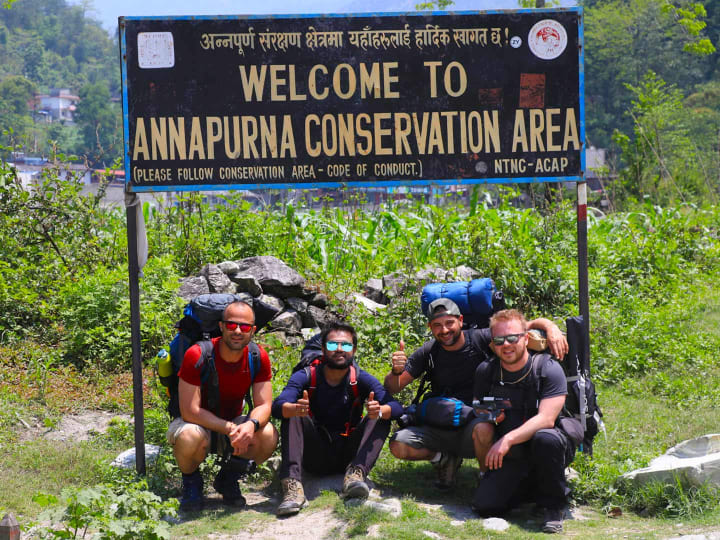
Nepal even dedicates an entire conservation project to sustainable development and ethical tourism in the Annapurna Region. The Annapurna Conservation Area Project (ACAP) was founded in 1986.
Run by the National Trust for Nature Conservation (NTNC), an organization that gets financial aid both from Nepal's government and various international partners, ACAP seeks to conserve this area rich in flora, fauna, culture, language, religion, age-old settlement units, physical features, human ingenuity, traditional practices, historical ideas, and values while securing harmony between nature protection and the improved lives of the local population.
Conservational Efforts
ACAP has significantly prioritized a broad array of conservation efforts to secure the region's natural resources. This includes;
- To protect wildlife such as snow leopards and red pandas from poaching and illegal trade
- ACAP has led to afforestation and proper forest management to maintain ecological balance.
- To collaborate with law-enforcing agents to enhance the war against wildlife poaching, thus protecting wildlife in the region.
Community Development
ACAP acknowledges the importance of local communities in the sustainable management of natural resources. Its goal is also to improve local people’s socio-economic welfare and environmental conservation awareness. Some of ACAP's ongoing community development initiatives include:
- To train locals on eco-tourism, hospitality, and farming activities
- To promote friendly environmental farming methods such as terrace farming
- To facilitate access to basic education and health in rural mountainous communities
- To build schools and health posts, as well as offer scholarships to less privileged children.

Tourism Management
The new ACAP seeks to combine developing tourism with preserving environmental sources. ACAP works toward keeping tourism to a sustainable standard, which will contribute to preserving the ecological balance of the Annapurna Region. Major initiatives include:
- The government issues permits and enforces regulations to limit the environmental impact of trekking and mountaineering.
- ACAP facilitates an environmentally responsible experience for trekkers by establishing trails and lodges, as well as providing employment to the local community.
- The project provides environmental education programs about responsible tourism and how negative impacts resulting from tourism can be minimized among many tourists, guides, and communities.
Biodiversity and Wildlife
The Annapurna Conservation Area (ACA) is the type locality of this species and has a rich biodiversity, with distinct ecosystems ranging from subtropical forests to alpine meadows. There are more than 1,200 species of flowering plants that flourish in the park's diverse landscapes, which support hundreds of at least endemic and rare species.

Flora Highlights:
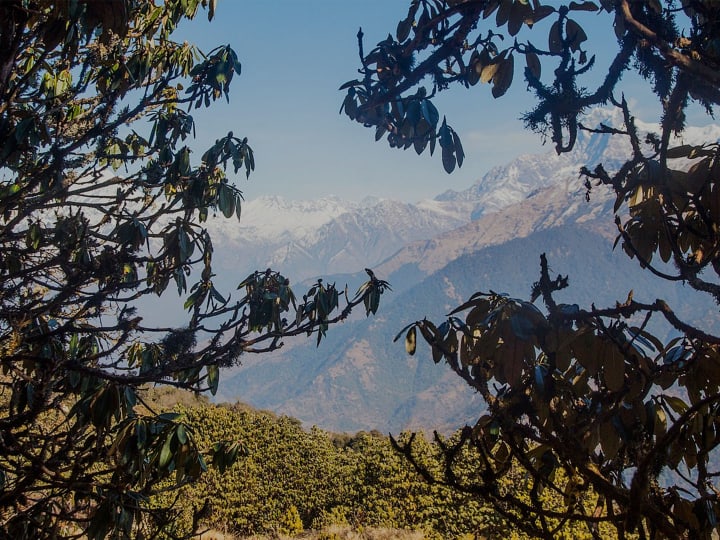
- Rhododendrons: The lower part of the park is famous for rhododendron forests, which bloom in riot colors, particularly reds, pinks, and whites, during the spring season, beautifying landscapes.
- Juniper and Oaks: Once up the altitude, forests change into junipers and oaks—probably alongside some pine—providing a colorful landscape to trekkers.
- Medicinal Plants: The region hosts various medicinal plants that have had a had a vital contribution to traditional Nepalese medicine since a long time ago. The underlying cultural and ecological value of these native land.
Fauna Highlights
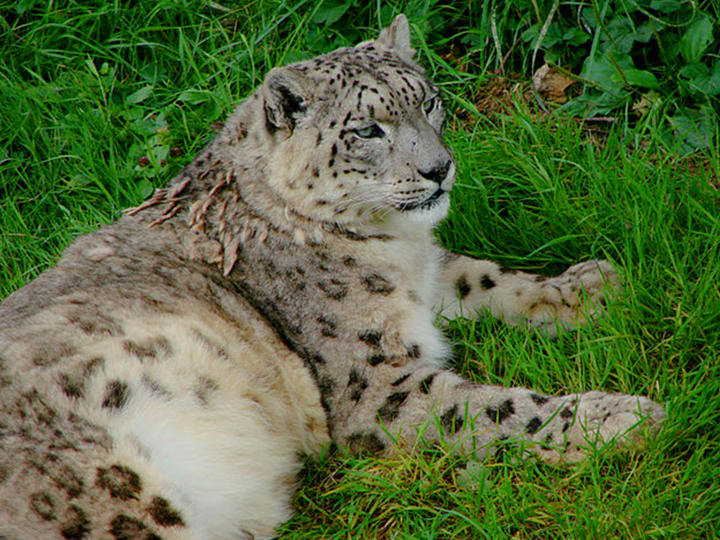
- Snow Leopards: The snow leopard is one of the most elusive and iconic creatures in the ACA, stalking high-altitude regions and hunting Himalayan blue sheep and other mountain ungulates.
- Red Pandas Another charismatic species in the thick forests of ACA is the red panda, with bright red fur and an arboreal life dominating habitats.
- Himalayan Thar: Real mountain goats, Himalayan thar are deeply at home in the Annapurna region's rugged country. You'll see them nimbly climbing up into 2 or 3-meter-high cliff bands that seem impossible to access.
- Avian life: This sanctuary is a heaven for bird watchers, and over 450 species of birds have been recorded in this area, including colorful Himalayan monal, lammergeier, and several varieties of pheasants.
Habitats
There are numerous faunal and floral species that have adapted to the varying conditions of these habitats.
Subtropical Forests:
- Places: Here, the southern slopes of the Annapurna massif are below 1,000 meters.
- Flora: It harbors plenty of vegetation, including exotic hardwood trees like sal, chir pine, and rododendron.
- Wildlife: home to diverse wildlife, including langur monkeys, barking deer, and a variety of bird species.

Temperate Forests
- Habitat: Occurs at mid-elevations (1,000 to 2,500 meters) and ranges over large parts of the ACA.
- Flora: Broad-leaved deciduous trees like oak, maple, and magnolia are common, along with a mix of conifers such as fir and hemlock.
- Wildlife: home to mammals such as the Himalayan black bear and the Himalayan goral, besides numerous bird species.
Alpine Meadows and Tundra
- Distribution: Altitude: above 2500 m from the valley bottom to the limit of the year-round snowline.
- Flora is barren vegetation with hardy alpine plants, mosses, and lichens that have adapted to the severe conditions of high mountains.
- Fauna: home of specific species like the elusive snow leopard, Himalayan tahr, and Tibetan snowcock.
Treks in Annapurna Conservation Area
The most famous of the world's classic walks leading through Annapurna Conservation Area is drawing a number of outdoor enthusiasts and nature lovers. From the sky-reaching hills of Annapurna Massif to the calm surroundings of its valleys and lush green forests, there is everything for every type of traveler.
Popular Treks
- Annapurna Base Camp Trek - 12 Days
- Annapurna Base Camp Trek
- Annapurna Circuit Trek - 14 Days
- Nar Phu Valley Trek
- Upper Mustang Trek
- Jomsom Trek
- Mardi Himal Trek
Best Time to Visit
The best seasons for trekking in the Annapurna region would be spring (March to May) and autumn (September until November). These months offer stable weather with clear skies and mild temperatures that are perfect for going trekking. In spring, rhododendron forests color the valley, and in autumn, views can extend from crystal-clear to snowy pyramid peaks.

Even so, the Annapurna region is known to have unpredictable weather even in its warmest season, so make sure you are ready for any type of condition, especially if hiking at higher altitudes. At high altitudes, trekkers must also avoid altitude sickness by acclimatizing properly and hydrating as needed.
Annapurna Conservation Area Permits Needed
ACAP (Annapurna Conservation Area Permit)
It only applies to hikers going into the Annapurna Conservation Area by foot. But it also goes to support conservation projects and help pay for infrastructure in the area.
Trekkers Information Management System (TIMS) Card
Why TIMS cards are mandatory: for safety and security. This project is to help monitor trekkers in the region and make sure they have a safe journey, as well as provide assistance for their search and rescue if contemplation occurs.
Special or restricted area permits
This permit is necessary if you are trekking to a restricted area of the Annapurna Region of Nepal, like the Upper Mustang or Nar Phu Valley. These are certainly more costly and come with certain prerequisites, such as the need to be accompanied by a registered guide.
Conclusion
In short, the Annapurna Conservation Area is not just a place to see beautiful landscapes and experience adventure; it is an asset of natural beauty and cultural inheritance that needs our care. The tireless work of the Annapurna Conservation Area Project (ACAP) has ensured that this remarkable part of the world remains a haven for both wildlife, local communities, and trekkers. As we leave this hiker paradise behind, may we hold the understanding of protecting and developing tourism so that coming generations enjoy its marvels inside Annapurna Conservation Area.
About the Creator
Nepal Trek Adventures & Expedition Pvt. Ltd
Talking about Earths highest point; Mount Everest is always an interesting topic. We provide you best stories of Mount Everest. Its All About Everest, Ways to reach: Everest Base Camp Trek and Everest Base Camp Helicopter Tour.
Keep reading
More stories from Nepal Trek Adventures & Expedition Pvt. Ltd and writers in Wander and other communities.
Attractions in Annapurna Region of Nepal
Two of Nepal's most famous trekking destinations, the Annapurna and Everest regions, offer very different experiences. The Everest region is said to be rough and the home of Mt. Everest, with harder trekking routes and a more up-close experience of the Sherpa culture, making it ideal for would-be explorers looking for a bit of an increase.
By Nepal Trek Adventures & Expedition Pvt. Ltd2 years ago in Wander
How To Find the Most Scenic Places to Photograph Around Dambulla
Sri Lanka is a great country to visit, filled with history, scenery as well as a plethora of fun activities. Among the cities of interest is Dambulla, a place where scenery, historic landmarks and travel come together for photographers. The area is known for its cave temples, rock formations as well as nature-filled surroundings, giving travellers many places to capture. This guide breaksdown practical and straightforward ways to plan your photography journey in Dambulla.
By Daphne Olga4 days ago in Wander


Comments (3)
Well written
Thanks for sharing
I have heard that area. I like Nepal.