
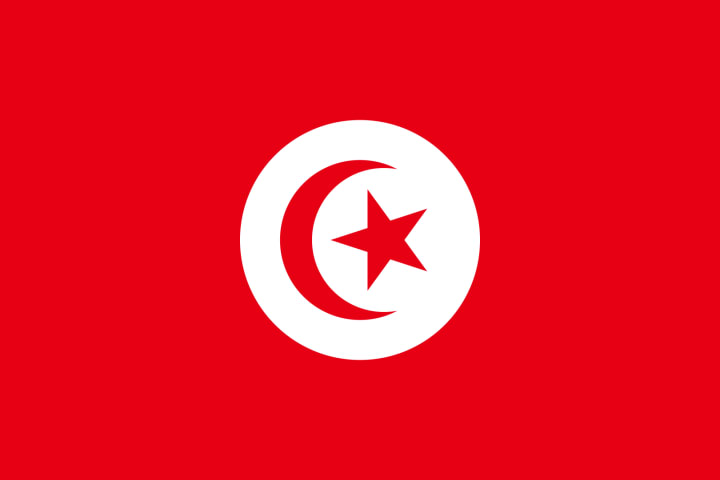
Africa — Republic of Tunisia
North African country the very top of the African continent


Situated between Algeria on the right, with Libya on the left is the tiny country of Tunisia. Tunis is the capital city as well as the largest city in the country. Bordering the Mediterranean sea, this tiny Arabic speaking country has a mix of old style Islamic architecture with newer European buildings. Other languages spoken include French, Turkish and English.
Tunisia gained independence from France on 20 March 1956. In the 7th century when Arabs invaded the country they brought with them the spread of Islam. In the 19th century France entered the country.
The first President was Habib Bourguiba, educated in France at the the Sorbonne, studying law and political science. He associated with Algerian & Moroccan independence planners. When he returned to the country in 1927 he started a news paper, practiced law and worked on starting independence organizations. He was later thrown in prison for encouraging other to rise up against the ruling party invaders.
After several incidents that lead to his being detained or arrested, Tunisians lead to fighting & terrorism to obtain independence. This caused the French to sit down to negotiations that eventually led to the independence of the country in 1956.
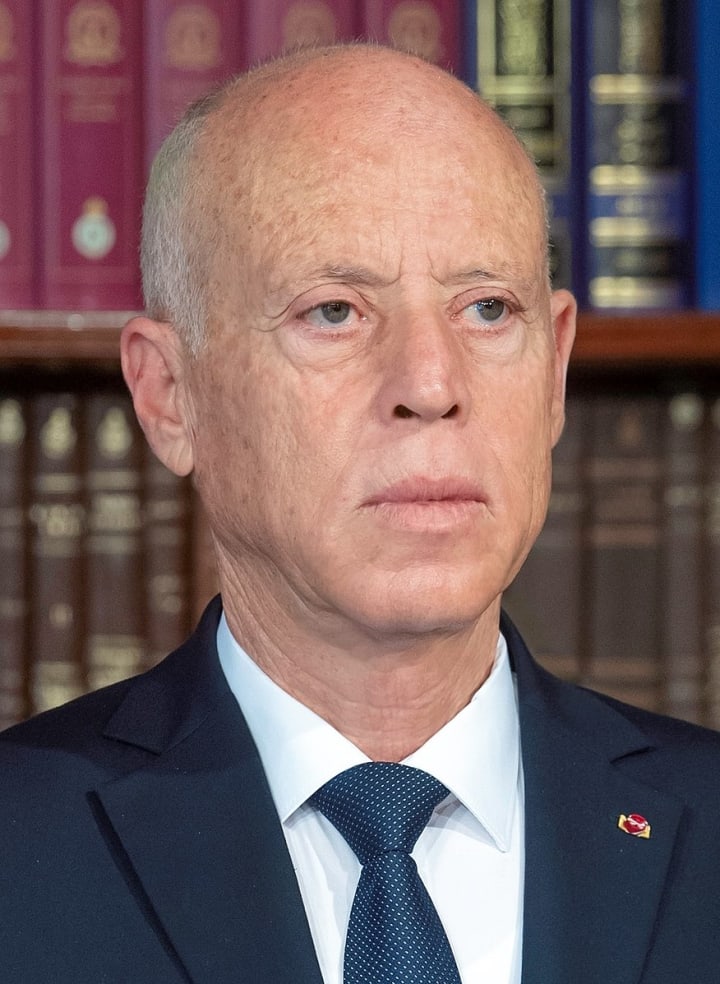
The current President of Tunisia is Kais Saied, the country Tunisia is a semi-presidential republic, whereby the president is the head of state and the prime minister is head of government. Under Article 77 of the Constitution of Tunisia, the president is also the commander-in-chief of the Tunisian Armed Forces.
Source: Wikipedia
Once elected into office Saied made several changes;
In 2021, Saïed invoked Article 80 of the Constitution to suspend the Islamist-dominated parliament. He then lifted the legal immunity of all members of parliament, dismissed the Prime Minister, and installed rule by decree, which granted him all powers of the State. The following year, in 2022, he announced that the legislators who had opposed his rulings in the virtual meeting would be prosecuted on charges of conspiring against state security. Kaïs Saïed also announced plans to redraft the Republic of Tunisia’s constitution for the New Republic.
Tunisia is considered a very safe country, however with recent (2022) instability in neighboring countries Algeria & Libya there are increased risks of terrorist attacks. These risks are higher near the countries borders, as well as at tourist sites.
Prior to 2015 Tunisia was called the most visited African country, mainly by Europeans, going to the sandy white beaches, in search of cheaper holidays. Often Muslim countries are tagged by the western world as being unsafe, even in may African countries with areas deemed ‘unsafe’ if they are majority Islamic.
For example many embassies warn against traveling to Mombasa when in Kenya, yet recent terrorist attacks in Kenya have taken place in Nairobi the capital, 11 hours from Mombasa.
Racist rhetoric by Tunisian president sparks fear among migrants and Black Tunisians
Tunisian President Kais Saied took a page from the white-nationalist playbook this week, espousing xenophobic and conspiratorial views on migration as his government rounded up sub-Saharan African migrants, leaving Black residents of Tunisia worried about their safety.
These “successive waves of irregular migration” are meant to change the image of Tunisia to that of “only an African country that has no affiliation to Arab and Islamic nations,” Saied told national security advisers on Tuesday, according to a readout of the meeting published on the presidency’s website. He called for “an end to this phenomenon,” accusing “hordes of irregular migrants” of criminality and violence.
His remarks, implying a shadowy structure of nefarious intent behind migration to the country, drew comparisons to the language of the “great replacement theory,” which holds that policies or elites welcoming immigration are working to “replace” White people in Western countries. Popularized in recent years by French nationalists — who often inveigh against Muslim immigrants in France, including those of Tunisian origin — the conspiracy theory has been linked to white-supremacist attacks in Charlottesville in August 2017; on mosques in Christchurch, New Zealand, in March 2019; and at a supermarket in Buffalo in May 2022, among others.
©️TB Obwoge 2023 All Rights Reserved
About the Creator
IwriteMywrongs
I'm the president of a nonprofit. I've lived in 3 countries, I love to travel, take photos and help children and women around the world! One day I pray an end to Child Marriages, Rape and a start to equal Education for ALL children 🙏🏽
Keep reading
More stories from IwriteMywrongs and writers in Wander and other communities.
Worth the Wait: Puerto Viejo, Costa Rica
Beach bumming in a small Caribbean beach town sounded like a perfect way to end our 6-month trip through Mexico and Central America. Or so we thought. The foul, fishy stench of rotten seaweed hit our nostrils as we stepped from the cramped bus and looked out at a rather depressing, empty, and underwhelming black sand beach. It was pouring with rain, and we had to quickly fish out our ponchos. We thought, this couldn’t be it, could it?
By Sh*t Happens - Lost Girl Travel7 days ago in Wander




Comments
There are no comments for this story
Be the first to respond and start the conversation.