
A Washing of the Body of a Balinese Cremation Ceremony
A moving and poignant experience surrounding death

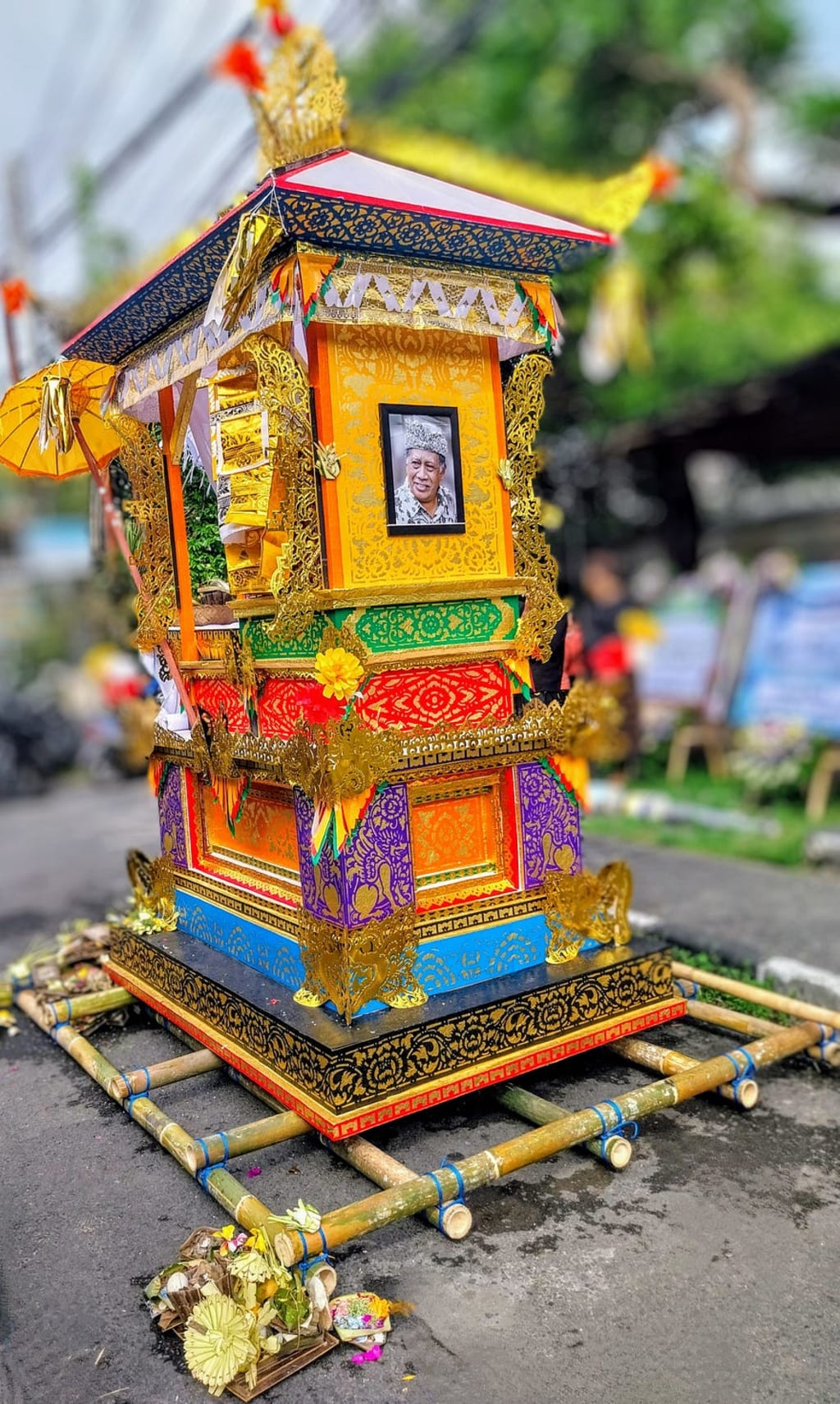
Warning: Some of the content and photographs may be considered graphic or disturbing.
Introduction: I felt extremely privileged to be invited to a Balinese family cremation ceremony and was the only foreigner present. Excited to experience this seminal Balinese tradition and absorb as much culturally as possible, it was also paramount to be respectful and non-intrusive.
The family approved my taking photographs and publishing articles. Others in attendance were taking photos as well, including the decedent's grandchildren. Unfortunately, my cell phone camera shots are all I have because it felt unseemingly to bring a "real" camera to a funereal affair.
Local traditions vary from country to country. Photographing pyres and cremations in India was strictly forbidden whereas in Nepal it was allowed. The actual cremation itself here held on the beach was open to the public.
An Invitation
I was ecstatic to be invited to a Balinese cremation ceremony - my first in more than two years on the island - a privilege for a foreigner to experience.
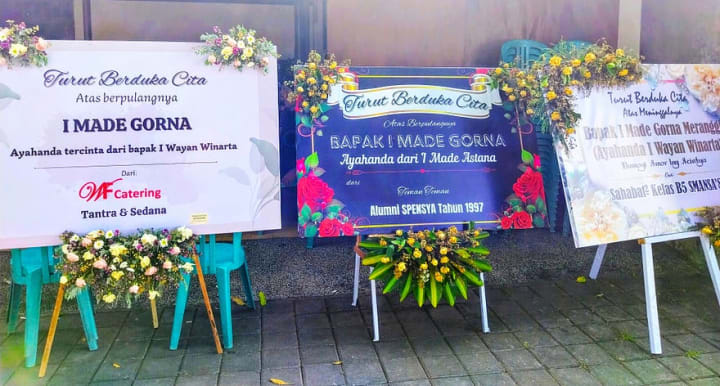
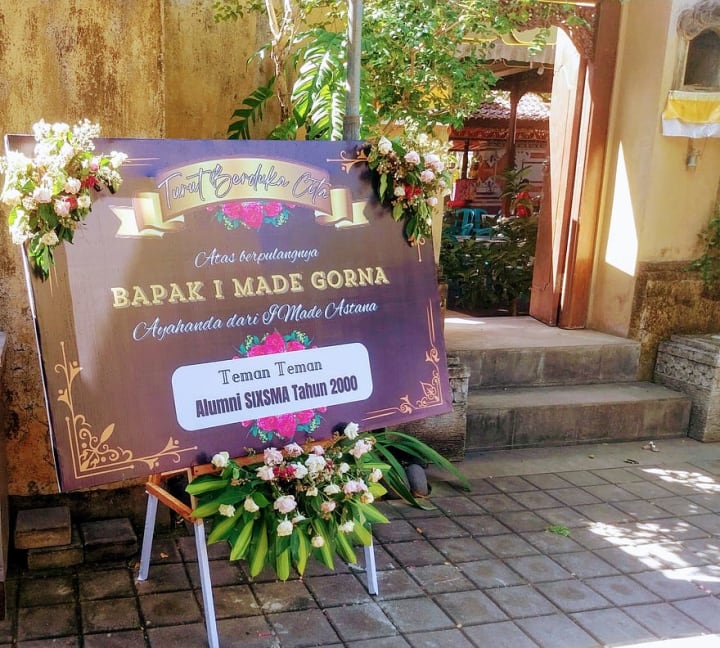
The decedent was Made Gorna,¹ the 84-year-old father-in-law of my landlady Ade. An influential, respected member of the village, his surviving family included his wife Asti, two sons, a daughter, their spouses, and children.
Extensive preparations for the ceremony occurred over ten days, during which the body remained in the hospital where he had died. The events were highly choreographed with a schedule sent via cell phone to attending family and banjar members.
Ade explained her father-in-law had requested a "medium-level" ceremony.² The family is well-off by local standards and of a social strata where apparently a higher level could have been mounted.
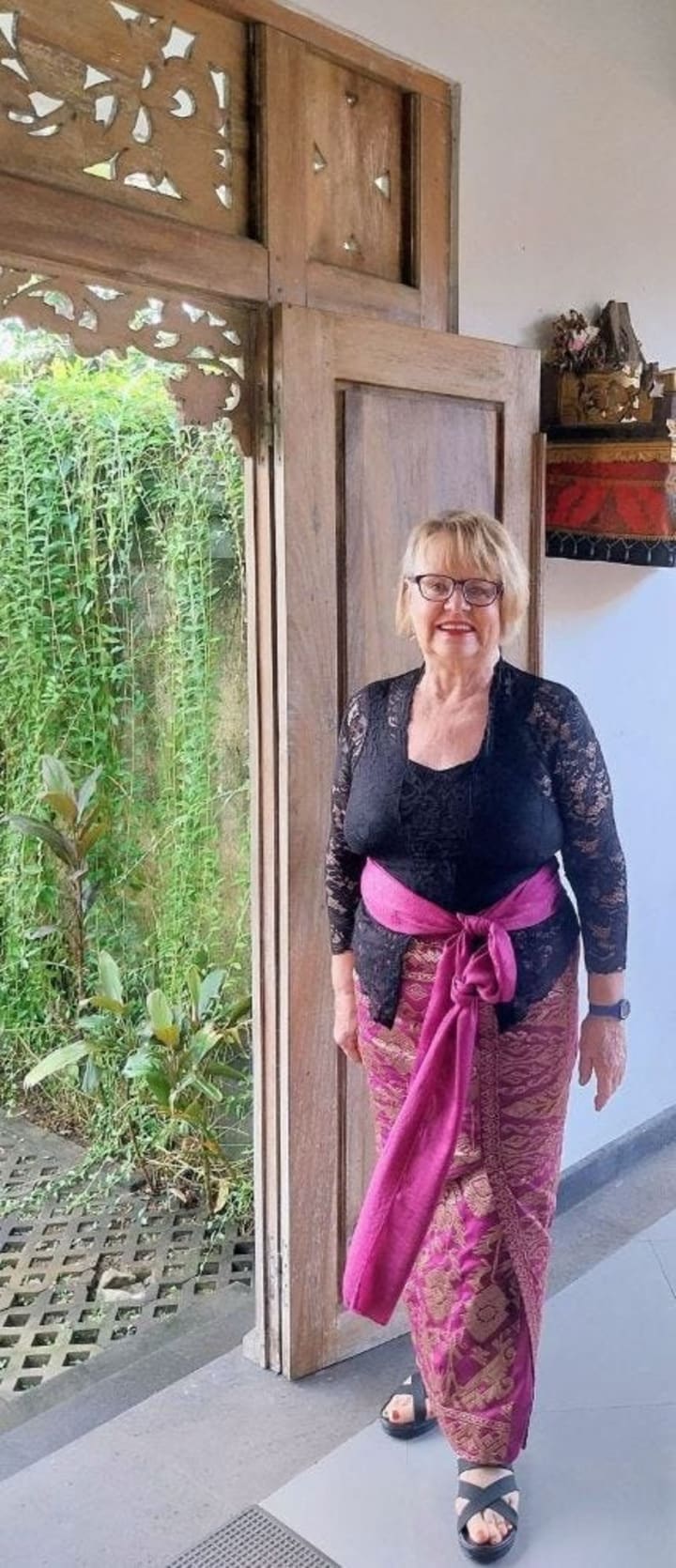
After inquiring of locals about the appropriate attire - on Bali, one doesn't throw on a black frock and call it day - I scurried around to numerous shops for an acceptable black kebaya (traditional lace blouse), sashes, skirt, and sarong.
Barely able to walk in the tight-fitting, stretchy brocade skirt, I was uncertain about maneuvering on my scooter. Hence, out of an abundance of caution, I ordered a taxi.
Bali Hindu Cremations
The Balinese word for a Hindu cremation ceremony, "Ngaben," translates literally to "turning into ashes."
A cremation is intended to free the deceased's soul, permitting entry to the upper realm and subsequent rebirth. Numerous ceremonies are part and parcel of traditional Balinese culture, but far and away, the most important is a cremation. Consulting the Balinese calendar, a Hindu priest chose the auspicious day, or hari baik.
Traditions vary in different villages across the island. In some locations, a unique casket or sarcophagus is constructed in the shape of an animal, such as a bull, cow, lion, or deer, depending on the gender, caste, and status of the decedent. An animal-shaped sarcophagus was not used for this ceremony.
Cremations are elaborate, expensive affairs that average and poor Balinese families can ill afford. Tragic tales abound regarding families taking out a loan and being chased down by banks when unable to repay the debt.
A common practice for folks of lesser means is to bury their dead in shallow graves. Then, every few years, the village families chip in the requisite funds and exhume the dead whereupon a mass cremation is held, sometimes with hundreds of bodies.³
Cremations of certain individuals - a priest, members of a higher caste, or royal family members (now with only a ceremonial role on the island) - are festive events that attract thousands of bystanders. I have not witnessed a royal cremation, however, the photographs are staggeringly impressive.
Differences from Western Funerals
Unlike the weepy depressing funerals in Western cultures, Balinese Hindu cremations are the opposite. Death is an accepted phase of life here.
Mourners don't cry because it's feared tears may interfere with a peaceful journey to the afterlife. According to their belief systems, the dearly departed will reincarnate in a birth of another family member in the future.
In stark contrast to the solemnity often associated with death in other cultures, the Balinese celebrate the day of a loved one's cremation with a sense of pride and even joy, as they see it as a final step before the deceased's return to God.³
That the cremation didn't occur for ten days also permitted the family to grieve for a period of time.
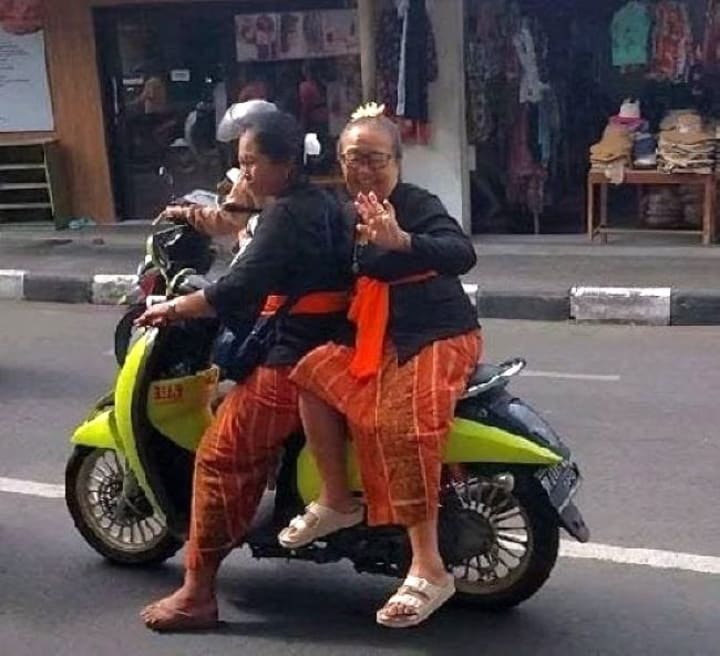
I have attended numerous Christian and Jewish funerals in the United States. Never, for example, have I witnessed a widow exhibit this joyful countenance. She was en route to the beach for the cremation, held the next day.
Washing of the Body
The ritual washing of the body commenced on a Monday at eight a.m.
Upon alighting from my taxi, I was entranced by powerful, haunting strains of traditional angklung drumming that wafted onto the street from the family residence. It continued for hours on end throughout the day, providing a powerful, yet soothing energy, with the only break when the gentlemen took their lunch.
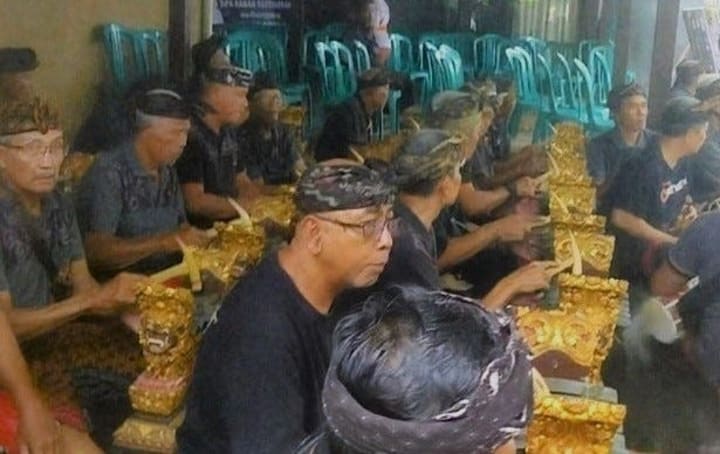
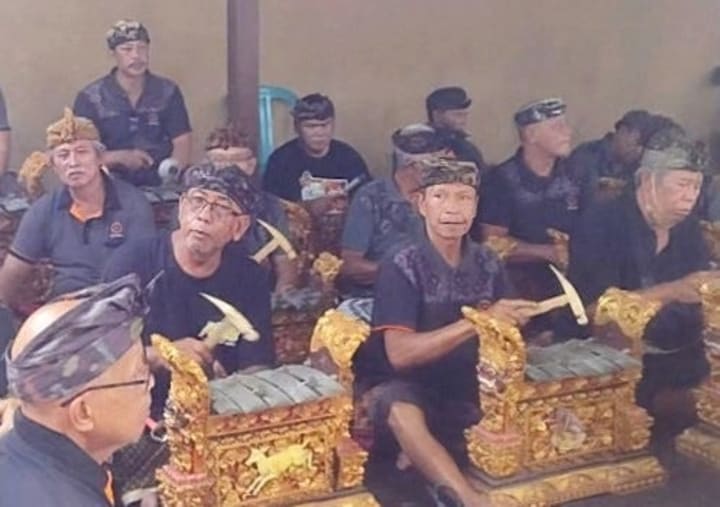
I was initially a tad squeamish about observing the ritual of washing the body. This aspect in the West is never witnessed and performed behind closed mortuary doors. Nevertheless, I wanted to participate in the entire experience and felt honored to be included. If it was too I reassured, I wouldn't watch it.
As it turned out, the process was neither unsettling nor macabre. To the contrary, I found the family and extensive communal participation beautifully supportive and life-affirming, certainly not an emotion I've ever experienced surrounding death in the past.
It struck me that if as small children we were exposed to such rituals as commonplace and not morbid, we'd feel more at peace about departing this plane.
A balmy, sunny day, 400 people were in attendance - family, friends, and banjar members (the community village), all attired in traditional Balinese garb. I was the sole foreigner.

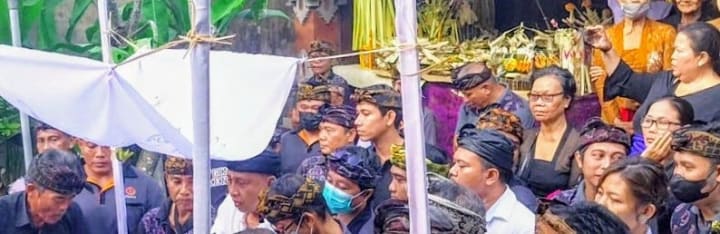
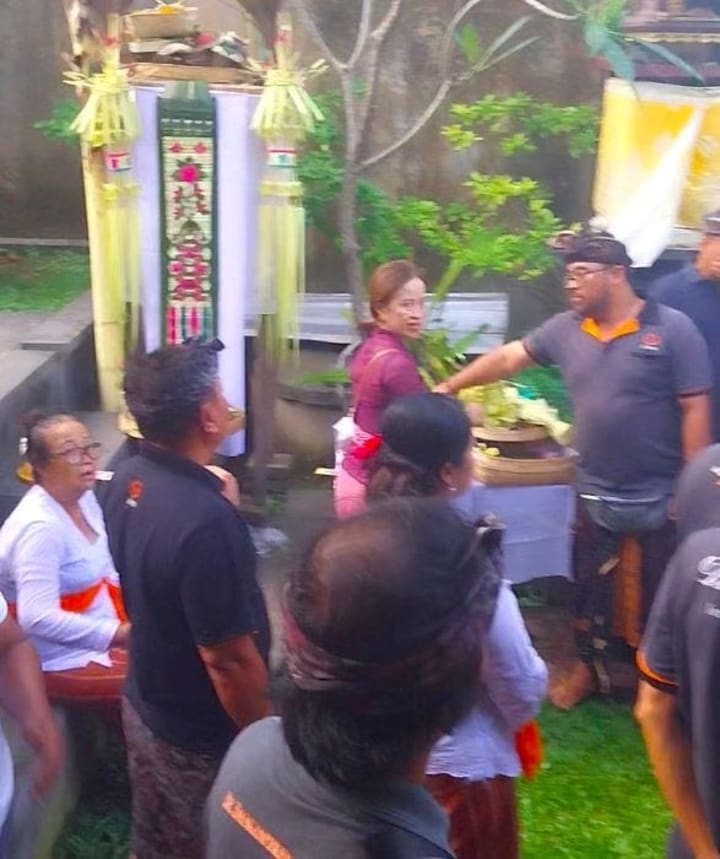
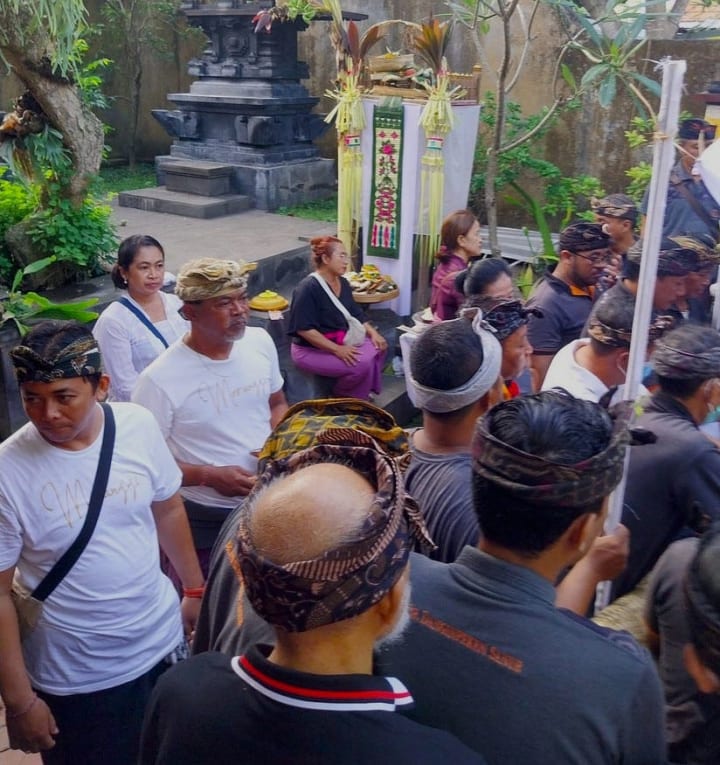
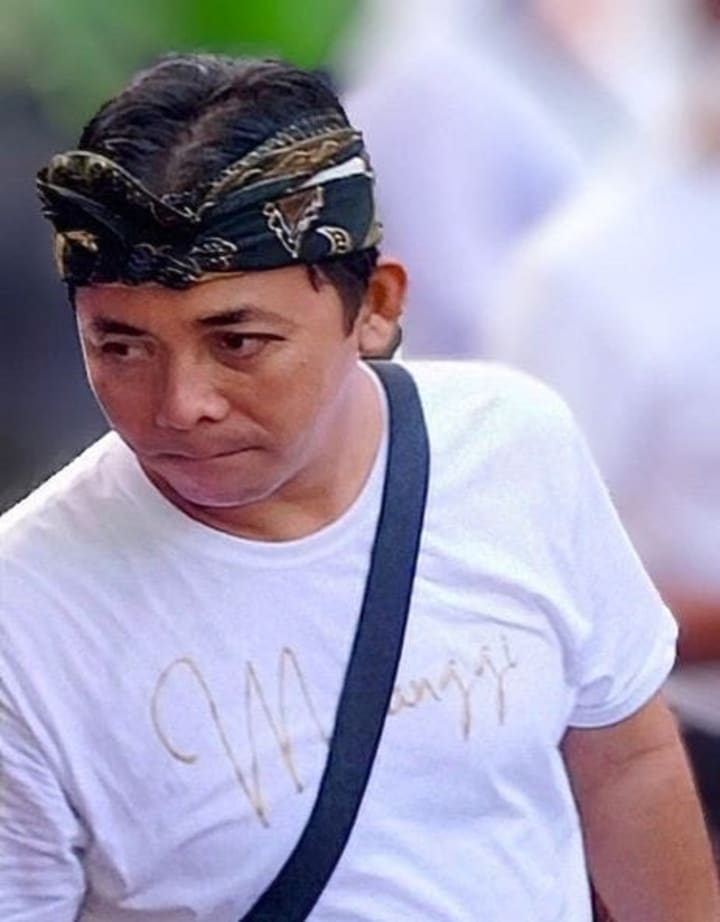
Some twenty or more men were involved in the ritual washing, preparing, and wrapping of the body. The crowd surrounded them and gathered throughout the large family compound, the current residence of one of the decedent's sons, my landlord's brother.
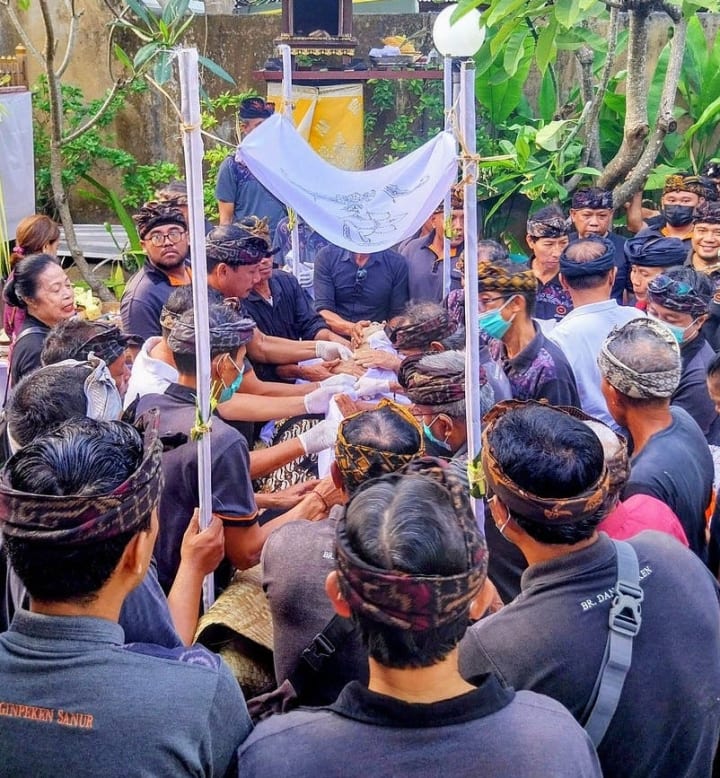
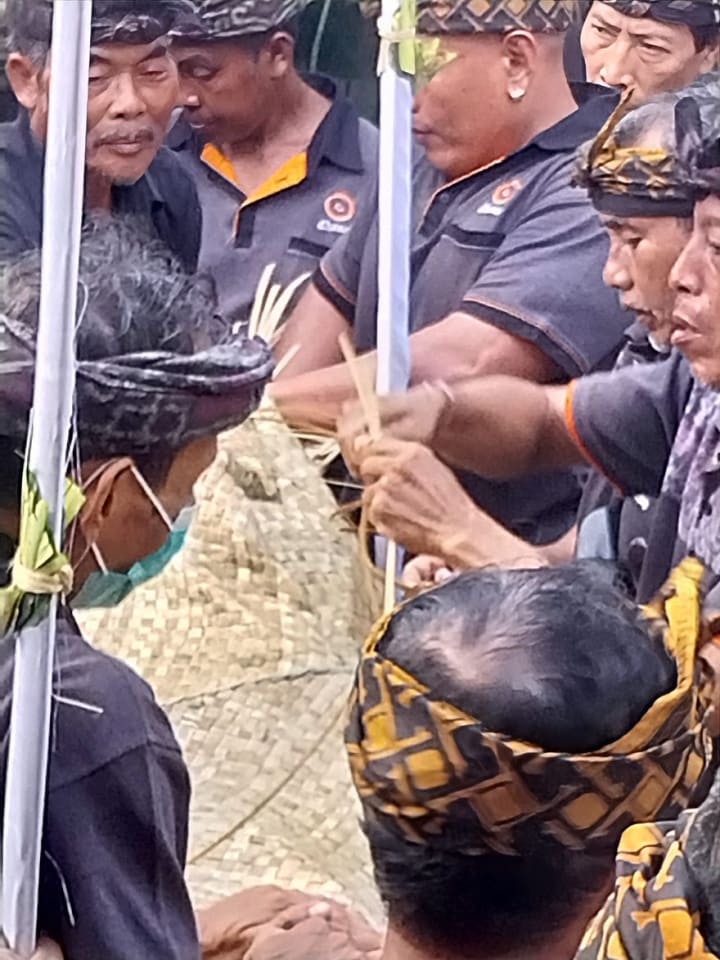
After completion of washing the body, it was wrapped and secured in a bamboo carrier. Covered with white sheets, it was transferred to a nearby covered structure and placed in the sarcophagus, where family and friends paid their respects and made offerings throughout the day.
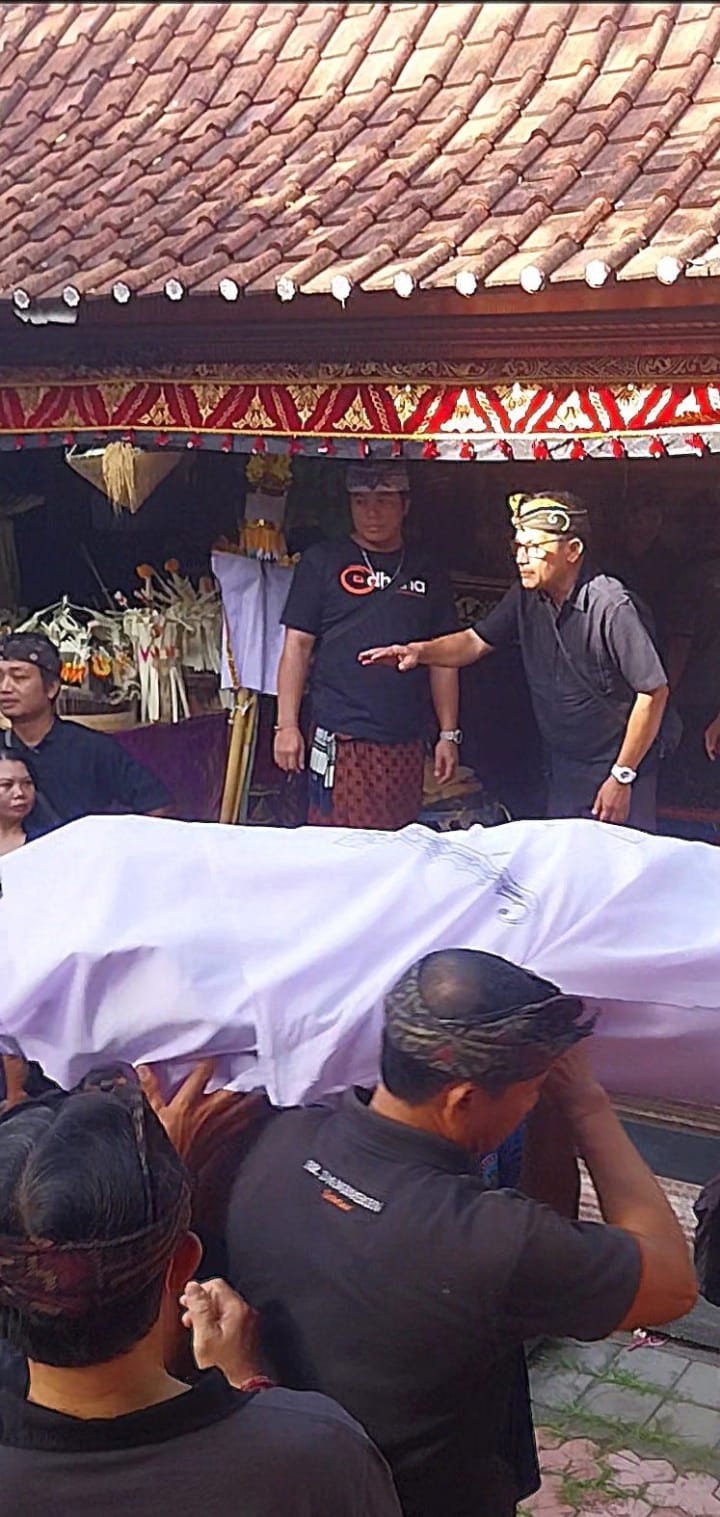
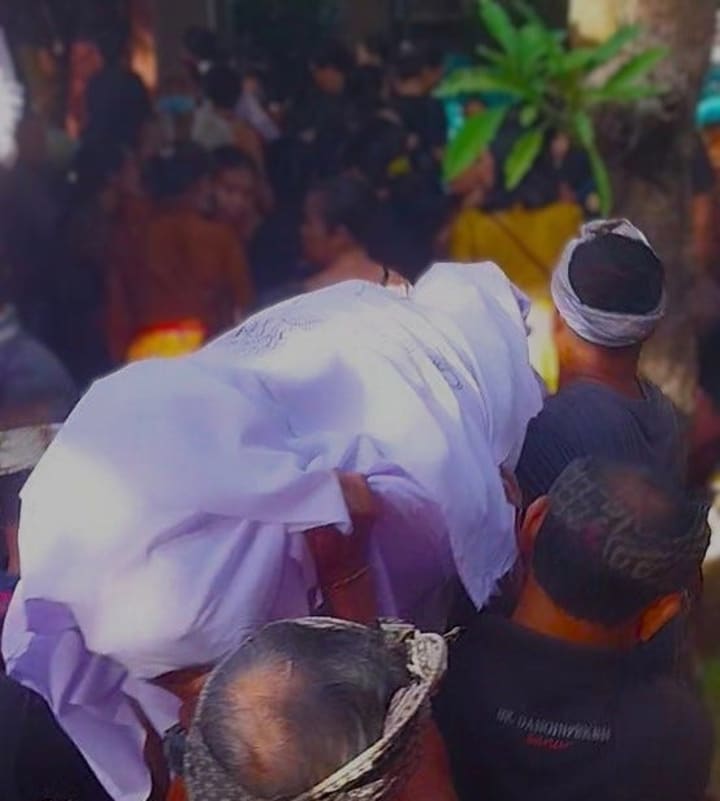
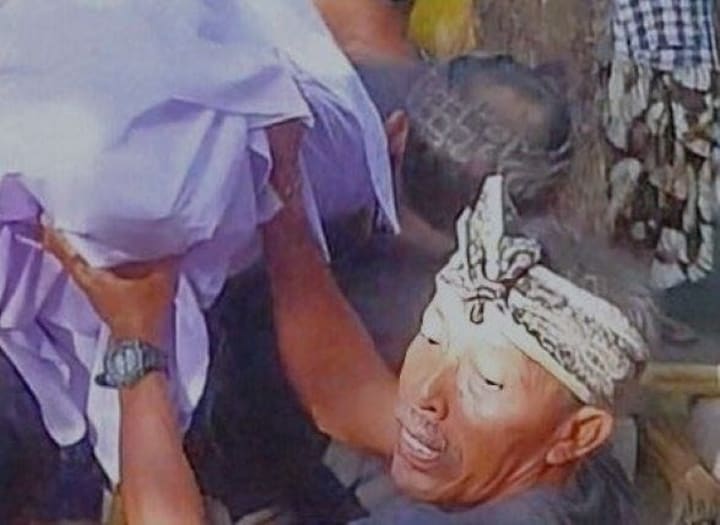
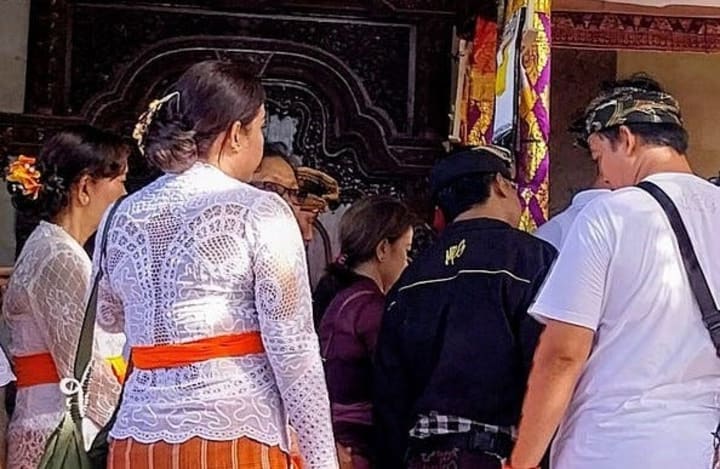
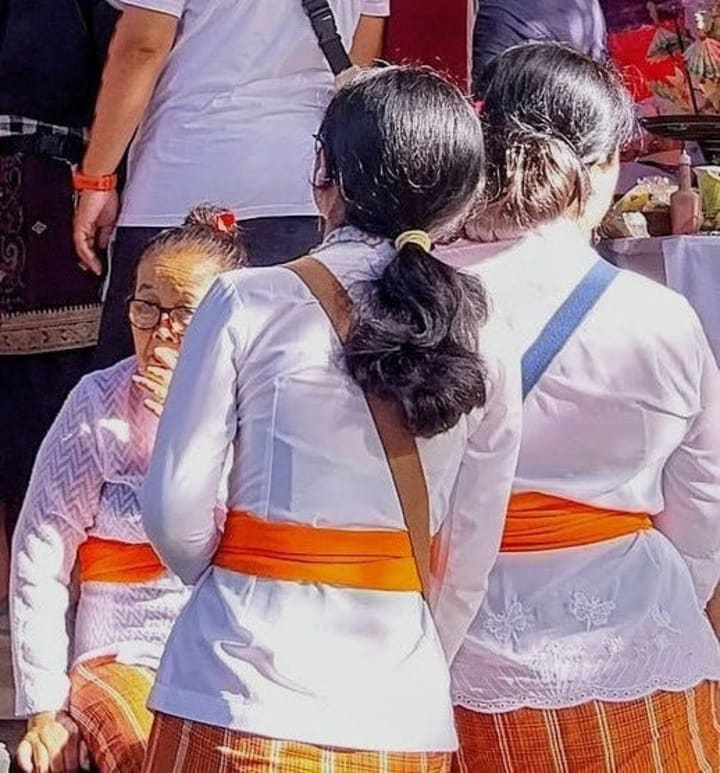
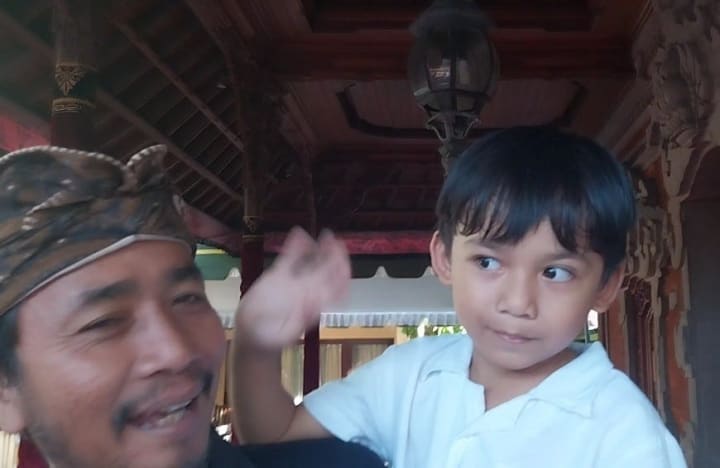
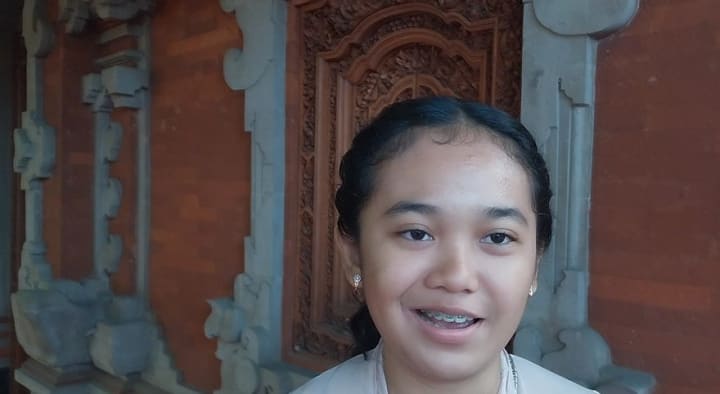
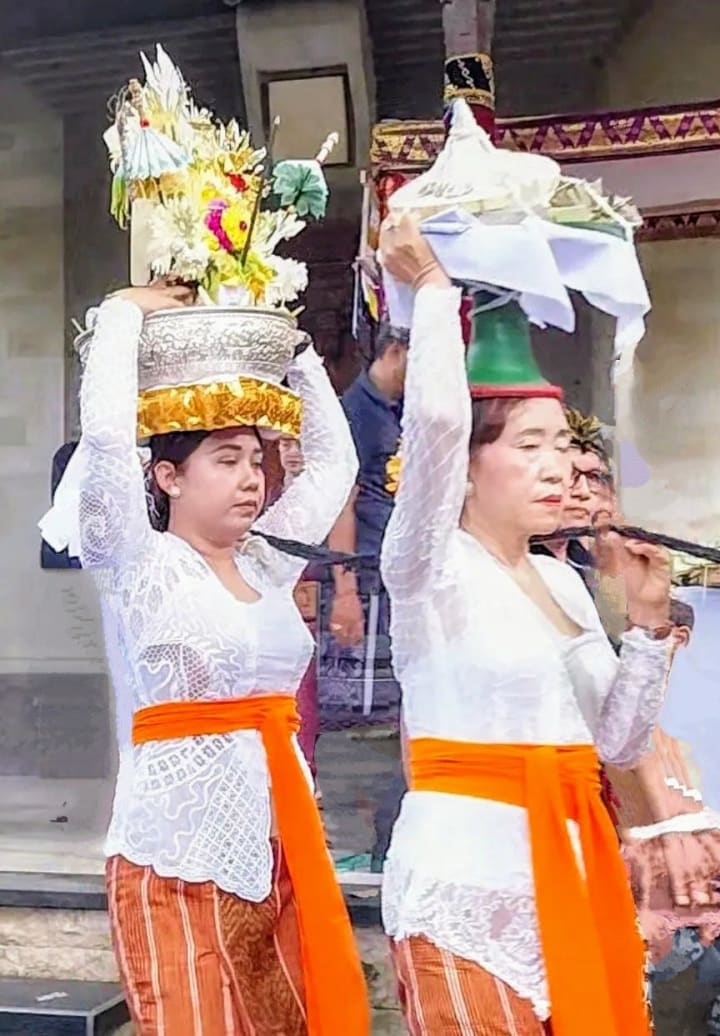
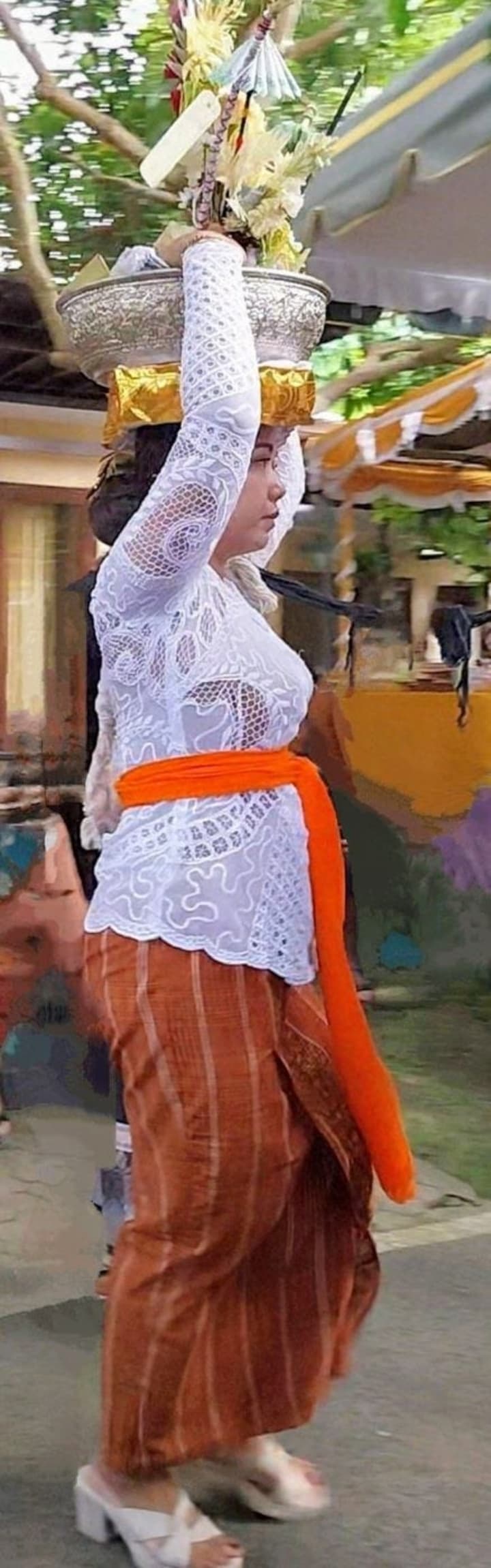
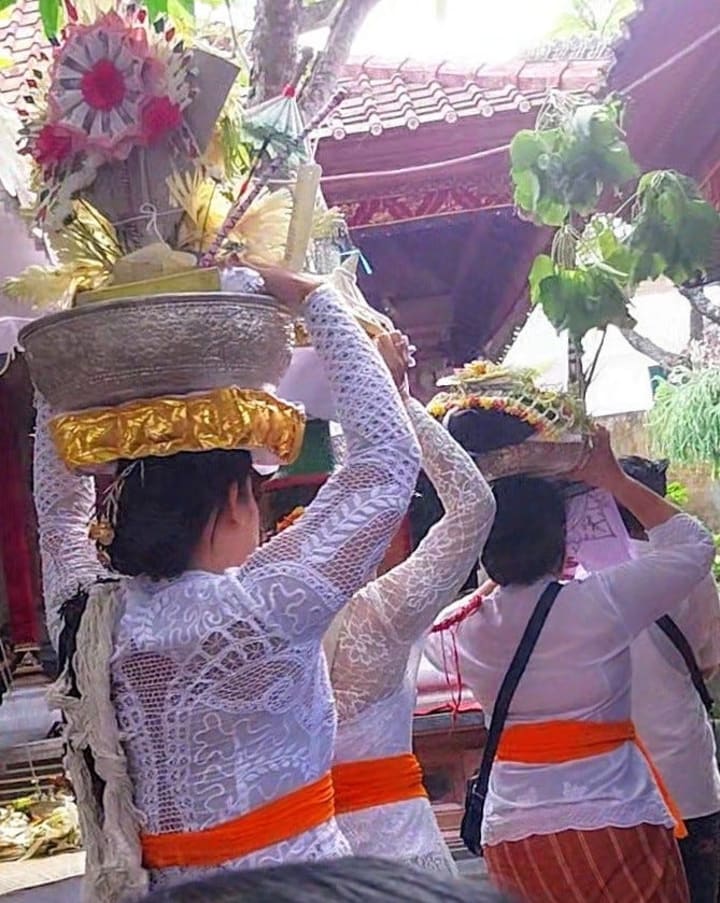
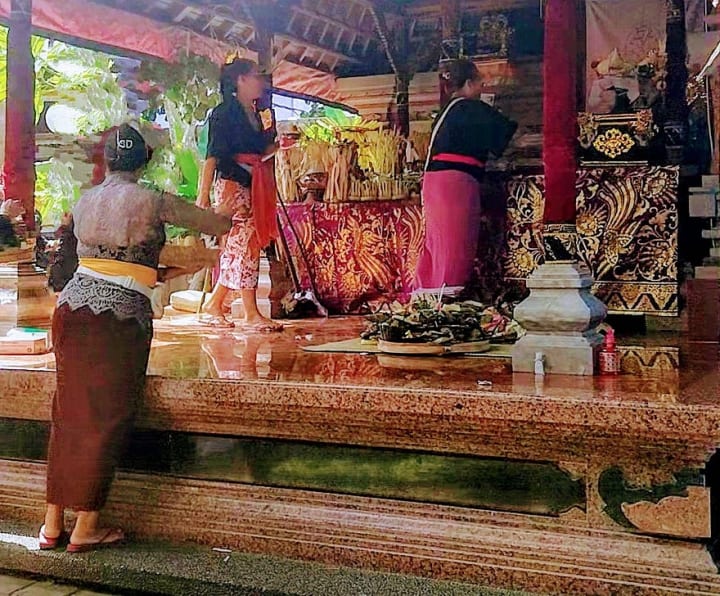
Upon conclusion of the body washing, the crowd disbursed hither and yon. Men sat apart from the women on steps, low cement walls, or on ubiquitous green plastic chairs throughout the traditional Balinese open-air compound. The women, when not involved with the disseminating food or making offerings, sat on chairs.
We were served individually wrapped snacks and bottled water in wee bamboo baskets delivered by women of the banjar (the village community). Chatting and socializing continued amidst continuous activity.
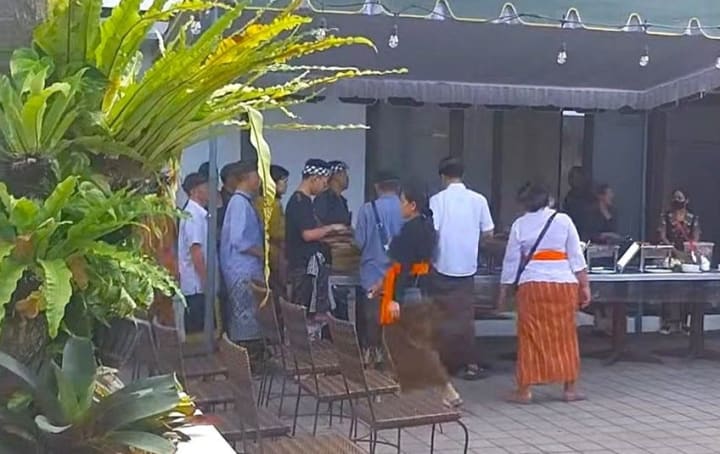
An hour or so later, we were shepherded next door to a restaurant (used solely for this event that day) for a sumptuous buffet, featuring overflowing chafing dishes of hot Indonesian fare, shrimp, rice, chicken, vegetables, desserts, and drinks. Men and women didn't mingle but ate at separate tables.
Several of the women spoke English, so I was able to communicate with them (sadly my command of Indonesian is appalling). All were incredibly warm and welcoming to me, the sole bule, or foreigner, in attendance.
After lunch upon returning to the family compound, a priest had materialized and was performing blessings beneath a bright gold canopied enclosure. People milled about visiting. The drumming resumed outdoors; chanting and drumming continued inside the compound.
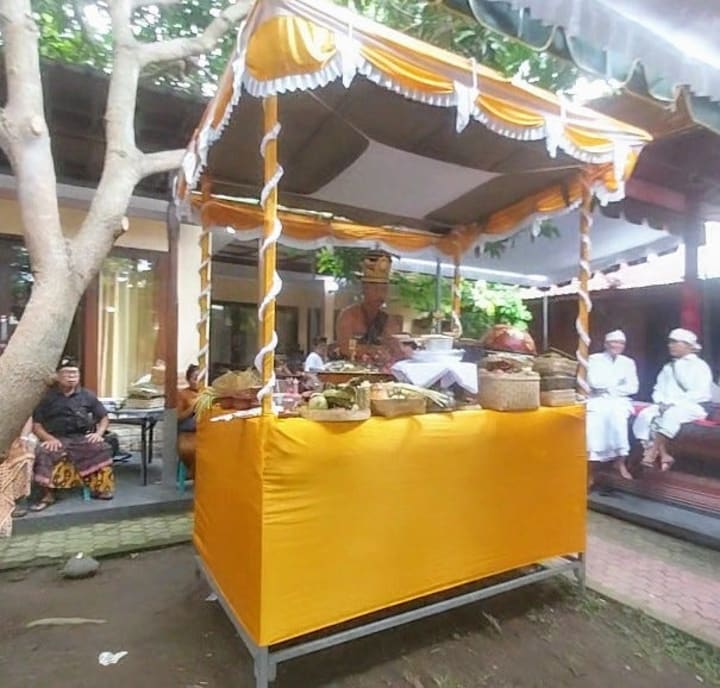
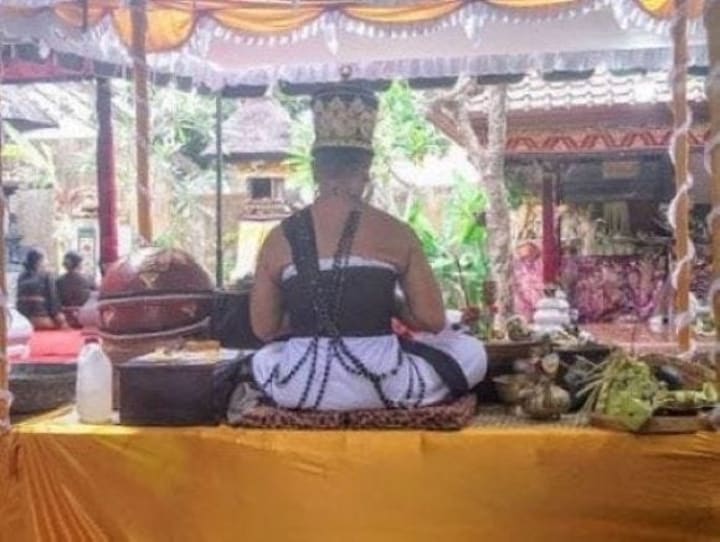
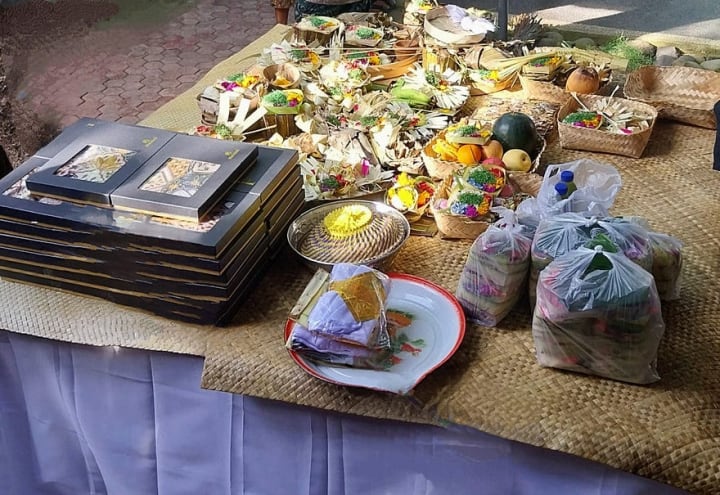
After about six or seven hours, I was weary and offered my condolences and said goodbye. What transpired during the remainder of the afternoon and evening, I am uncertain, but apparently people remained into the evening.
The next day, everyone gathered at the property at 10 a.m. for the cremation. A second article with those photos will be published soon.
Appreciation
Attending the beautiful cremation ceremony of I Made Gorna was an immense privilege. My thanks to the family and particularly my landlord and landlady, Made and Ade, for their kind invitation and for welcoming me to their home.
My appreciation to Agus Mardika I Nyoman for his editing and verifying my account of the ceremony was accurate and properly represented.
Footnotes and Resources:
1. For the most part, all Hindu Balinese are named only a handful of similar names, depending upon birth order. To confuse further, men and women are given the same names. For example, Ketut is the name of both the mother and father of my landlady, whose name is Ade, who is married to Made, the son of Made! They are differentiated by "I" (pronounced ee) before a name signifying a male and "Ni" (sounded nee) for a female.
2. A normal cremation may cost 50 million rupiah ($3,200 USD) but for the affluent or influential members of the community, the rituals are more ornate and expensive and can exceed 100,000 million rupiah ($6,400 USD). Royal cremations can cost 1 billion rupiah ($64,000 USD) or even more. For mass village cremations, the families may only have to contribute 5 million rupiah ($320) to the events. Balinese freely talk about what things cost. This cremation cost 110 billion rupiah ($7,040), which I assume was absorbed among the decedent's three children.
3. https://bali.com/bali/travel-guide/culture/balinese-cremation-ngaben/
4.https://factsanddetails.com/indonesia/minorities_and_regions/sub6_3h/entry-4025.html
5. https://visitbali.id/news/post/a-meaningful-balinese-cremation-ceremony-ngaben
Your time is valuable. I'm honored you chose to spend some of it here. Victoria🙏😎
© Victoria Kjos. All Rights Reserved. 2024.
About the Creator
Victoria Kjos
I love thinking. I respect thinking. I respect thinkers. Writing, for me, is thinking on paper. I shall think here. My meanderings as a vagabond, seeker, and lifelong student. I'm deeply honored if you choose to read any of those thoughts.
Keep reading
More stories from Victoria Kjos and writers in Wander and other communities.
It's Impossible Not to Fall in Love…Again and Again…With Sedona
What's So Special About Sedona Anyway? "Sedona, Sedona," Zach, my precious 20-year-old nephew, and Arizona State University freshman, queried with youthful skepticism, "What's so special about Sedona anyhow? I keep hearing about the place." He had recently moved to Phoenix, Arizona, for college.
By Victoria Kjos about a year ago in Wander
Worth the Wait: Puerto Viejo, Costa Rica
Beach bumming in a small Caribbean beach town sounded like a perfect way to end our 6-month trip through Mexico and Central America. Or so we thought. The foul, fishy stench of rotten seaweed hit our nostrils as we stepped from the cramped bus and looked out at a rather depressing, empty, and underwhelming black sand beach. It was pouring with rain, and we had to quickly fish out our ponchos. We thought, this couldn’t be it, could it?
By Sh*t Happens - Lost Girl Travel10 days ago in Wander
Fun Times at Globe Life Field: Part 2
Last month, I took a trip to my hometown of Arlington, Texas. It was the first time in nearly 15 years I've been back to the place that I grew up. During the two days I was there, I did some sight-seeing and was highly impressed with how much has changed the last time I was there, which was 2011. On the last day of my trip, I took part in a premium stadium tour at Globe Life Field, the home of the Texas Rangers. It was my first time there and was with a small group of people on the tour. I've discussed the things I've seen during the hour and a half tour in my previous story, which you can read down below. After the tour concluded, I went outside and took even more snapshots. I'll go over some of the images, individually and in collage form.
By Mark Wesley Pritchard 3 days ago in Wander




Comments
There are no comments for this story
Be the first to respond and start the conversation.