
A Trip to Ireland’s Most Haunted Castle
Do the ghosts of the past still inhabit Leap Castle?


Leap Castle is said to be the most haunted castle in Ireland. It has a long history of conflict and a number of reports from people who claim they had paranormal encounters while visiting there. When I visited several years ago, I went as part of a paranormal research group. I made a point of not looking up the particulars of the castle’s history because I wanted to see if what I saw and heard matched up with what has been previously reported by others without any predispositions.
Upfront, you should know that I am a skeptic and I went into the castle as someone open to the possibility of paranormal activity, but only after I’ve discounted any other explanation for it. I was excited to be there. Not only was it an opportunity to explore a place that is said to be well and truly haunted, but it was the first time I’d spent the night in a real, honest-to-goodness castle.
It is unclear when the main tower of Leap Castle was actually built, but it falls sometime between the 13th and late 15th centuries. Most historians believe it was built around 1250 CE by the O’Bannon clan who called it “Léim Uí Bhanáin” or “Leap of the O’Bannons”. Since that time, it has passed hands through several clans, including the O’Bannons, the O’Carrolls, and the Darbys. It is during this time that the events that have led to the belief that the castle is haunted occurred.
After the death of Mulrooney O’Carroll in 1532, there was considerable strife within the family. A rivalry between two of the brothers led to an incident in which one of the brothers, a priest, was killed while holding a mass for the family. It is said that his brother rushed in and plunged a sword into him, fatally wounding him. The priest fell across the altar and died before the family. This lead to the chapel within the castle being termed the “Bloody Chapel”.

In 1659, the castle passed ownership to the Darby family and was held by them for hundreds of years. Mildred Darby, the wife of one of the Darby ancestors, lived in the castle in the late 1800s. Mildred, a writer of gothic novels, has much to do with the tales of hauntings within the castle. In addition to the seances she held there, she wrote about many incidents, leading to the publicity about the haunted nature of the castle.
In 1922, the Darby family had moved away, leaving the castle in the care of Richard Dawkins and his family. During this time, the castle was partly burned, a casualty of the Irish Civil War. In 1974, the castle ruins were purchased by Australian historian Peter Bartlett, whose mother is believed to be a descendent of the O’Bannon family. Bartlett completed large-scale restorations on the castle until he died in 1989.

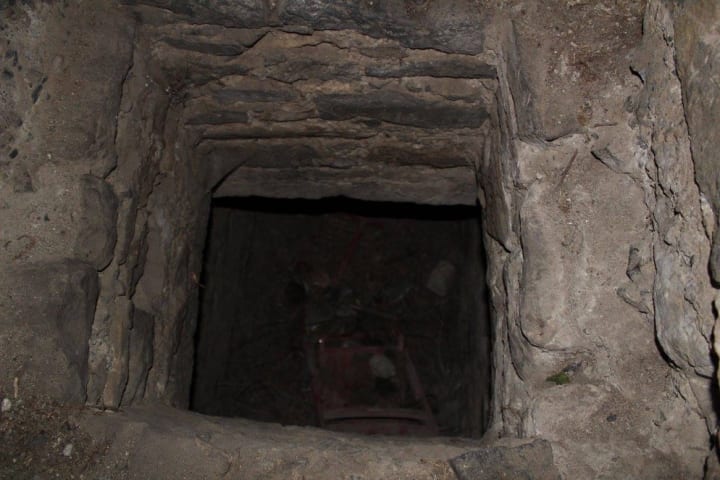
In 1991, the castle was purchased by musician Sean Ryan and his wife Anne, who continue to restore sections of the castle. They have been gracious enough to allow the public in periodically to spend the night and investigate the hauntings reported there. It was during Ryan’s initial renovations that an oubliette was discovered behind a wall of the chapel.
At the bottom of this shaft were numerous human skeletons that had been impaled on wooden spikes. It took three carts to remove all the bones found there. It is believed that the O’Carrolls would drop people who had crossed them there, but a pocket watch found among the bones shows that this practice may have continued well into the mid-1800s.
Among the hauntings claimed to take place in the castle are reports of a ghost called the “Red Lady” who walks through the halls holding a dagger; “The Murdered Woman” who is said to appear, scream twice and then disappear; “The Governess and The Old Man” who sometimes roam the halls; and Charlotte and Emily, two little girls reported to run up and down the spiral staircase. Emily is said to have died after falling from the battlements on the top of the castle’s tower and people claim to still sometimes see Charlotte running after her sister and calling her name.

The most frightening of the hauntings is the one called “The Elemental”, a dark elemental spirit that is said to be found in the Bloody Chapel. Mildred Darby described this entity as being about the size of a sheep with a human face, black holes where its eyes and nose should be. It is said to give off the smell of a rotting corpse.
In my visit to the castle, I have to say that neither I nor anyone in the paranormal team that accompanied me saw any evidence of a haunting. In fact, the most frightening thing I found was a rather disturbingly large spiders’ nest in a stairwell that was blocked off from entry.
Still, I highly recommend a visit to this outstanding piece of Irish history to anyone and not just ghost hunters. Whereas I experienced no paranormal activity, it doesn’t mean that you will not. If you don’t see any spirits, the adventure of being in an authentic castle with so many remaining original features is still superb.
Part of the castle is closed off to visitors as the private living space of the owners, but there is still plenty to explore within the castle and about the grounds that surround it. Plus, the view from the windows of the chapel is stunning.

The owners of the castle, Sean Ryan, and his wife, Anne, are wonderful hosts, providing a lovely fire, riveting conversation, and an outstanding feast-style breakfast in the morning before you depart. You’ll likely want to book your visit as a group, as there is a flat fee for the stay and a limit on the number allowed, but split between eight or ten people, the price is more than reasonable for this kind of experience.
You can find more information on the history of the castle, its hauntings, and make arrangements for a stay by visiting the Leap Castle website where you’ll find a more in-depth history and links to contact the owner directly.
If you happen to visit, remember the main rule of the castle: Don't let the cats in!

About the Creator
A.W. Naves
Writer. Author. Alabamian.
Keep reading
More stories from A.W. Naves and writers in Wander and other communities.
The Unsolved Murder of Bonny Lee Bakley
Bonny Lee Bakley was fatally shot while sitting in a parked car outside a Los Angeles restaurant in May 2001. While an unsolved murder alone would be enough to garner interest in her case, the fact that she was married to Robert Blake, best known as a child actor in The Little Rascals and for his later crime drama, Baretta, was enough to create even more interest in the case. She was Blake’s second wife and he was her tenth husband. It was his car she happened to be sitting in when she was murdered.
By A.W. Naves4 years ago in Criminal
Worth the Wait: Puerto Viejo, Costa Rica
Beach bumming in a small Caribbean beach town sounded like a perfect way to end our 6-month trip through Mexico and Central America. Or so we thought. The foul, fishy stench of rotten seaweed hit our nostrils as we stepped from the cramped bus and looked out at a rather depressing, empty, and underwhelming black sand beach. It was pouring with rain, and we had to quickly fish out our ponchos. We thought, this couldn’t be it, could it?
By Sh*t Happens - Lost Girl Travel4 days ago in Wander


Comments
There are no comments for this story
Be the first to respond and start the conversation.