
A Tour of Rocky Mountain National Park
We were awestruck by the beauty of Rocky Mountain National Park when we first visited on a cold day in January.

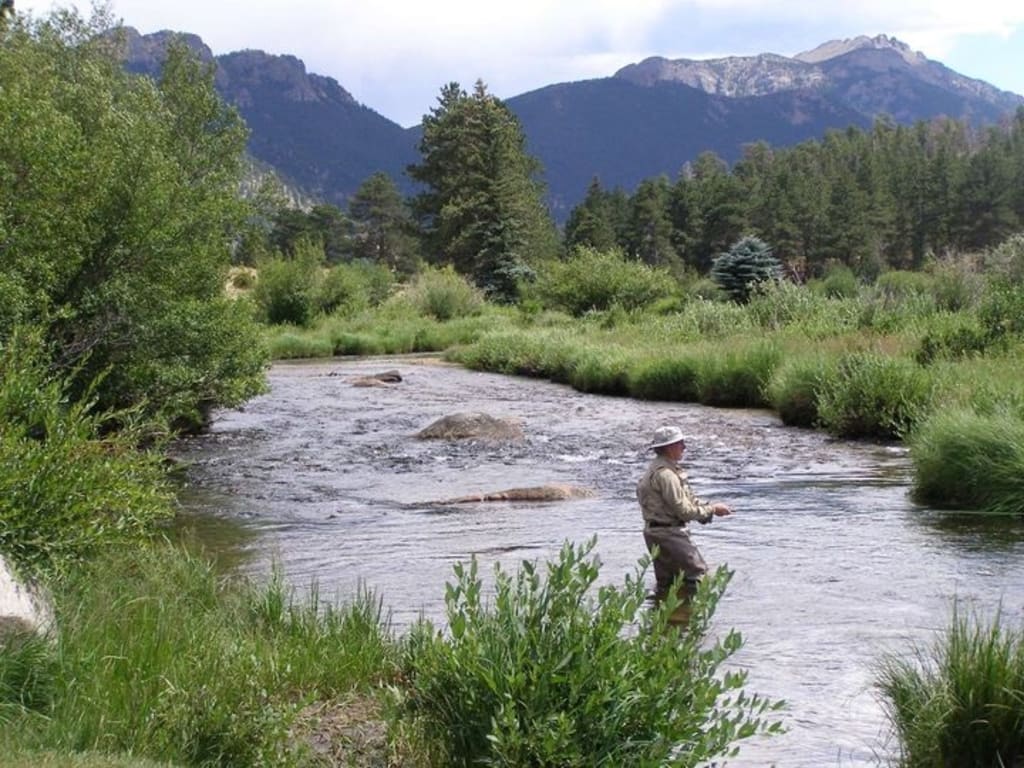
We were awestruck by the beauty of Rocky Mountain National Park when we first visited on a cold day in January. Several of the main roads were closed to traffic, including a portion of Trail Ridge Road, the most popular of the park’s roads. It did not matter. There were more than enough snowy vistas to see and more wildlife than we had ever seen in one place.
We saw herds of elk. If you want to see an elk in the wild there is no better place in the world. If you are there at the right time as we were on that January day, you will see dozens before you even enter the park and many more than that inside the park.
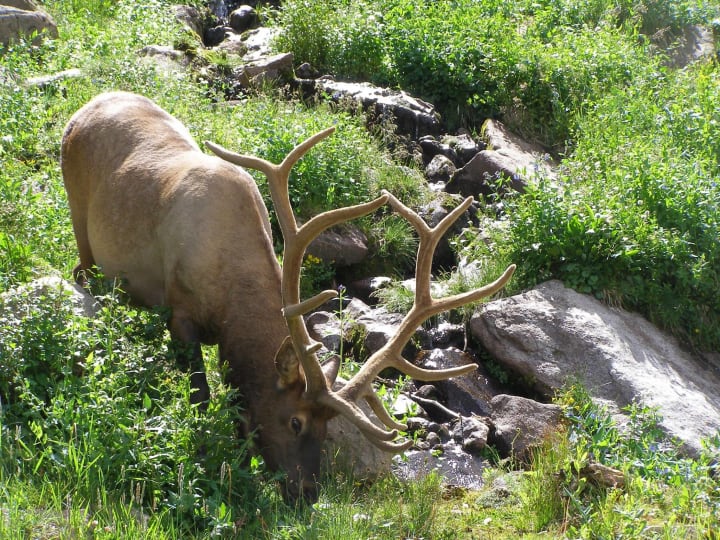
We watched a pack of coyotes play. We saw a red fox cross the road and then turn his head to check us out. A magpie followed our car for what seemed like a mile, flying up to the rear window several times to see what was inside. We saw bighorn sheep cross the road. We saw mountain goats in places that seemed impossible for an animal that large to survive, especially in the deep snow. We saw dozens of mule deer, sometimes alone and sometimes in small herds. Squirrels and chipmunks scurried in and out and over the rocks. There was at least one marmot sunning itself everywhere we looked on Trail Ridge Road.
We parked our car at pull-offs and took photos of the wildlife until we got tired. It is difficult to cease snapping those photos, and our first trip was before we owned a digital camera, when every photo that we took had to be developed and printed. We have hundreds of photos from that first Rocky Mountain National Park visit. It was probably the most beautiful scenery that we had seen up to that time, and we never could have imagined seeing that much wildlife in such a short time.
Since that first visit to Rocky Mountain National Park, we have returned many times in all seasons. Winter is still our favorite time at the park. During winter, wildlife is more abundant, and the snow-covered mountains are spectacular. On the coldest days, most of the tourists are in ski towns, so those that do visit do not have to wait on a parking place or take their place in a line of cars.
But every season is beautiful in the park. When the snow begins to melt in the meadows during the spring, wildflowers bloom around snow patches. On sunny days it would be tough to find a more beautiful spot in all the world than those meadows.
It was on a summer day we experienced our only black bear sighting in the park, and during hot days at lower elevation, a trip into the mountains is literally a breath of fresh air. The rivers and larger streams do not dry up in the summer, and it is a good time to get wet. Standing under a waterfall is especially nice in July.
As fall progresses, snow begins working its way to lower elevations, but the temperature is still generally pleasant. The aspens turn gold, elks start bugling, and bighorn sheep begin butting heads.
There is a lot to see in Rocky Mountain National Park. Following are some of the places that you do not want to miss.
Trail Ridge Road
Trail Ridge Road stretches across Rocky Mountain National Park, from Estes Park to Grand Lake, for a total of forty-eight miles. It is unquestionably one of the most beautiful scenic mountain highways in the world.
Drive Trail Ridge Road and you can say that you have traveled the highest continuous highway in the United States. The road crosses the Continental Divide at Milner Pass and reaches an elevation of 11,796 near Iceberg Pass. More than eight miles of the road is above 11,000 ft.
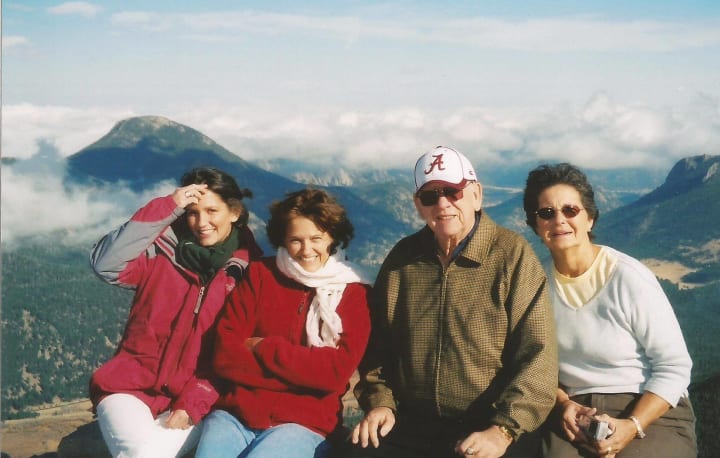
Trail Ridge Road is closed to traffic from sometime in October until around Memorial Day. After Memorial Day snow could temporarily close the road. Park rangers will tell you at the entrances if the road is closed. If it is closed, you can drive into the mountains until you see the gate across the road.
When the road is open to higher elevations words are inadequate to describe the beauty.
At lower elevations during early summer, the melting snow accumulates in low areas to form mountain streams. Around the streams are wildflowers and lush green vegetation. Huge elk, mule deer, and bighorn sheep are almost always sighted around these areas. When you see something that looks interesting, drive to the next pull-off and walk back to what you passed.
The pull-offs are not just for wildlife watching. From various vantage points, you can see past Denver or into Wyoming. You will see jagged cliffs in one direction and rolling hills from another.
As you get higher and higher, you will see less and less aspens and ponderosa pines and more subalpine forests of spruce and fir. Finally, at above tree line, you will enter alpine tundra. The terrain gets rockier, and the weather is usually windier and twenty to thirty degrees colder than the weather you left before you entered the park.
At first glance the tundra does not look very lively, but it is. Over two hundred species of alpine plants grow here, most of them perennials. Many of these plants bloom in vibrant colors, despite a growing season as short as forty days. The best place to see the tundra closely is the Tundra World Nature Trail, which can be accessed from the parking lot at Rock Cut. Signs are posted on the trail, asking visitors to stay on the trail; the tundra is very fragile.
A jacket or sweater certainly comes in handy on the tundra, but it makes better pictures to be dressed for the summer.
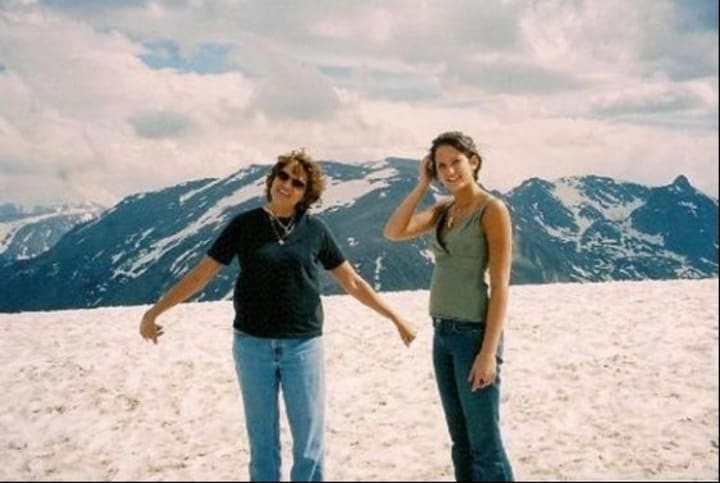
There is usually wildlife in the area. We have been on the Tundra World Nature Trail many times, and we have always seen elk either just off the trail or in the distance. Marmots are always sunning on the rocks.
The first stretch of Trail Ridge Road coming from the east was opened in July 1932 as a sunnier alternative to Old Fall River Road. Many visitors pick one or the other route with the more well-known road, Trail Ridge, usually winning out. Trail Ridge Road is a good choice, but if you have time, drive them both.
Hidden Valley
Hidden Valley is an easily accessible, pleasant place to picnic or hike along the creek. The park has fourteen picnic tables, but no bar-b-que pits or grills. The area welcomes wedding parties up to one hundred guests.
Until recently, this park was a popular ski area. Changing weather patterns, resulting in less snow, prompted Rocky Mountain National Park to close this area to skiing. Snowboarding, snowshoeing, and backcountry skiing are still permitted in the undeveloped areas.
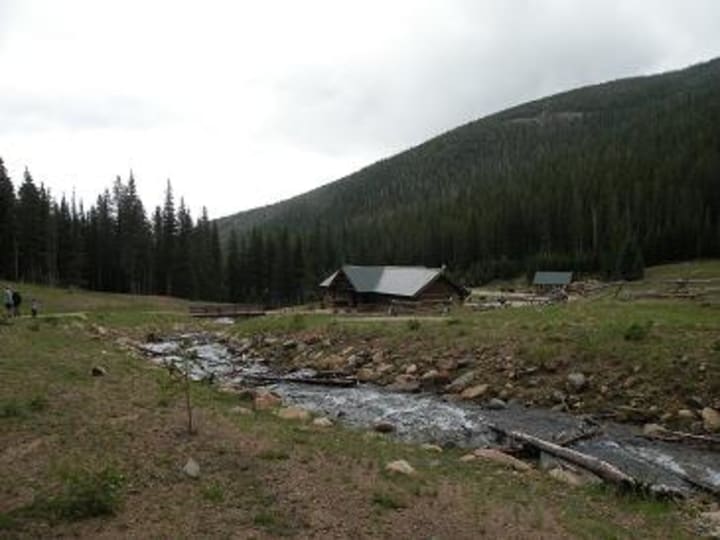
All the buildings which supported skiing activities have been removed. Much of the old parking lot has been converted to a more natural state. New facilities include restrooms, a ranger office, and a warming hut. Displays on the premises explain how some of the old structural materials were used in the construction of the new facilities.
The primary focal point of the park is the creek, which has recently been uncovered after being hidden in a culvert for fifty years.
Like everywhere else in Rocky Mountain National Park, wildlife can be spotted at any time.
We only had time for a short walk on a recent visit, but it was a pleasant one. It was July, one of the busiest months at Rocky Mountain National Park, and there was only a half-dozen cars in the parking lot and a few dozen people at the picnic tables, and even less people on the trails. Other parts of the park were very busy on this day, so this park might be a good choice if you want more quiet and solitude than there normally is in the other more popular places in Rocky Mountain National Park during the summer months.
Old Fall River Road
Old Fall River Road in Rocky Mountain National Park is not for the impatient. It is a winding gravel road with a maximum speed limit of fifteen miles an hour.
I suggest that if you have never been on the east side of the park, and you are coming in from Estes Park, take Old Fall River Road to Trail Ridge Road and then proceed farther up Trail Ridge Road towards Grand Lake, or if you are running out of time, travel Trail Ridge Road back to Estes Park. You cannot do the reverse, because Old Fall River Road is “one way” leading from Endovalley, near Horseshoe Park.
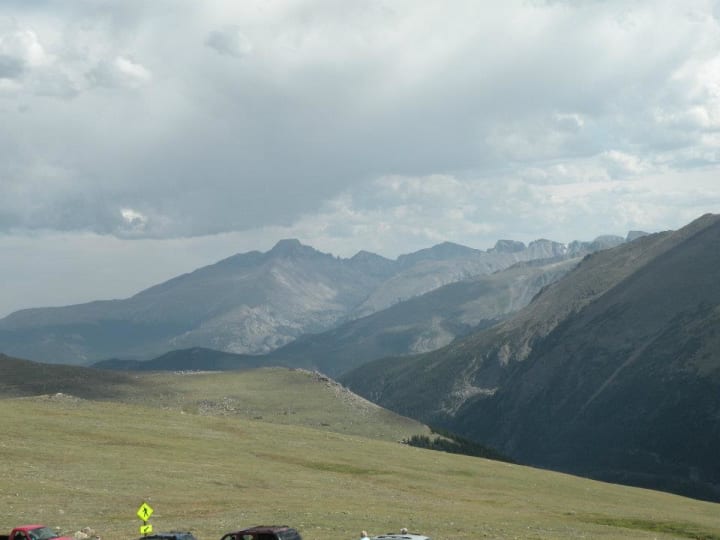
The road is a total of eleven miles long, and it ends at the Alpine Center near Trail Ridge Road. The road is only open from around July 4th to sometime in October. The winter weather is so rough on the road that it must be literally rebuilt each year. We had visited Rocky Mountain National Park several times before we hit the right time for the road to be open for traffic, so if you happen to be in the park during this time, make Old Fall River Road a priority because on your next visit it might be closed. It is also easy to miss the road coming from Estes Park because most eyes look towards the mountains, and that is the direction where the car goes.
The first few miles of Old Fall River Road are at a low climbing grade. However, if you want to get high into the mountains quickly, you will not be disappointed. Stay on the road and soon you will be traveling a winding gravel road at an elevation of twelve thousand feet, looking down at snow-covered mountaintops at elevations of around nine thousand feet.
Before you get to the higher elevations, make sure that you stop by Chasm Falls. The falls is the focal point, but the scenery is beautiful in every direction.
Chasm Falls is easy to get to from the main road, and the falls are among the prettiest in Rocky Mountain National Park. There are good spots for photo-ops from the bottom of the falls to the top. The falls drop twenty-five feet onto granite rocks. It is permitted to “rock-hop” around the falls but be careful– the rocks can be smooth and slippery.
Look for wildlife at Chasm Falls. The big animals like elk and mule deer hang out around the park.
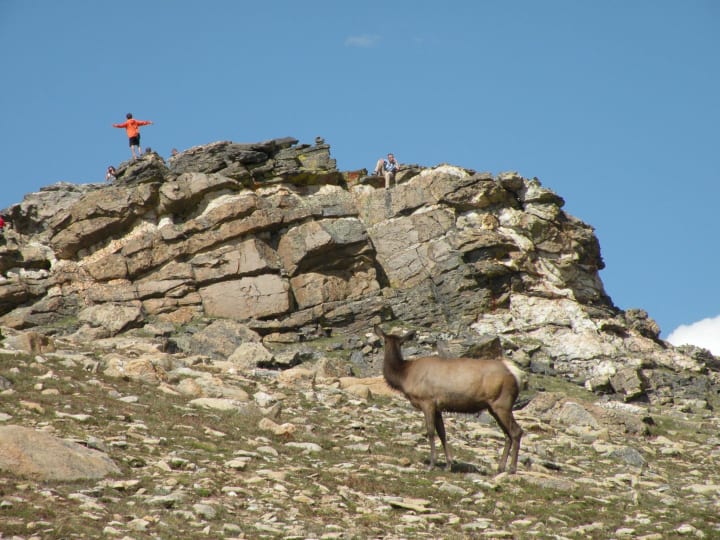
The smaller animals like squirrels and chipmunks are always there.
The road up and into the mountains is safe, but you still need to be paying attention. The scenery is beautiful, but the driver is not going to have as much opportunity as his passengers to take it all in because he must keep his eyes on the road and keep moving or else he will have the more impatient riding his bumper. Make sure you take advantage of pull-offs from time to time so that you can have time to leisurely enjoy the spectacular views and get some good pictures.
When you get to the mountaintop and the road begins to level some, there are some picturesque little lakes. Park your car, get out, and walk around. Take your jacket because even in the summer, it is going to be cold out there. Those furry creatures that you will see crawling on the rocks are probably marmots.
Just past the lakes, you will see the Alpine Visitor Center. If you have time stop and spend a little time there. There is a nice gift shop, restrooms, and a restaurant with spectacular views of some of the territory you just traveled. Find a window seat.
Milner Pass
Milner Pass, at 10,757 feet, is just a few miles past the Alpine Visitors Center on Trail Ridge Road, going towards Grand Lake. The Continental Divide crosses this area. Water falling to the west flows to the Pacific Ocean, and water falling to the east drains into either the Gulf of Mexico or into the Atlantic Ocean.
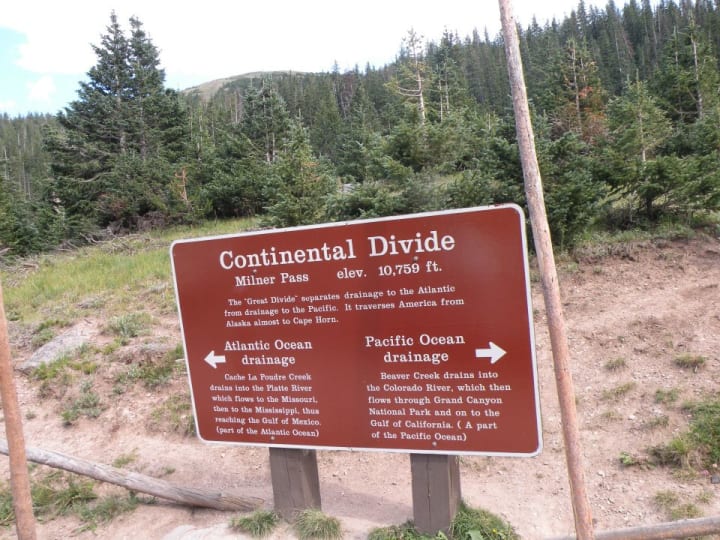
This is a section of Rocky Mountain National Park that you will have to visit before snowfall closes the higher elevations of Trail Ridge Road for the winter (usually sometime in October) or after it is cleared for summer (near Memorial Day).
Poudre Lake, a beautiful alpine lake, lies just east of the Pass. Do not bother to get your fishing tackle out of the car. It looks like it would be teeming with fish, but since it freezes solid every year it is a dead lake; no fish can survive the winter. The lake is the source of the Poudre River which flows from here through Roosevelt National Forest in Poudre Canyon, continuing into the foothills north of Fort Collins and finally entering the South Platte River near Greeley.
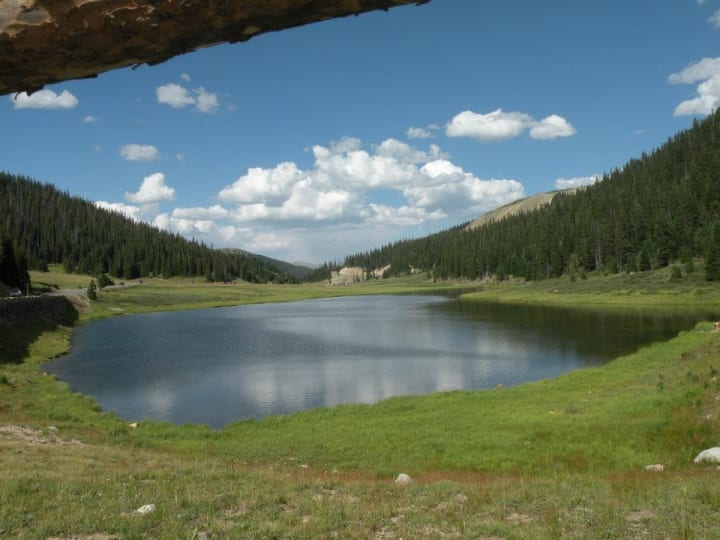
Wildlife watching is good during the summer at Milner Pass. As it gets warmer, deer, bighorn sheep, and elk make their way to the higher elevations. The open vistas make it easy to spot the big animals.
A short trail nearby leads to the crater where sheep can be viewed from a distance. The trail is closed from May to mid-July for the lambing season. During this time, the sheep move from the crater to the alpine tundra.
The road near the pass provides a breathtaking view of the Never Summer Mountains to the west.
Moraine Park
Just a short drive down Bear Creek Road, Moraine Park is one of the most beautiful areas in Rocky Mountain National Park. The meadows are the result of glacier movement between two mountain ranges. In fact, the definition of “moraine” is “an accumulation of earth and stones carried and finally deposited by a glacier.” At one time there was a town here, but that was a long time ago and very few remnants of it remain.
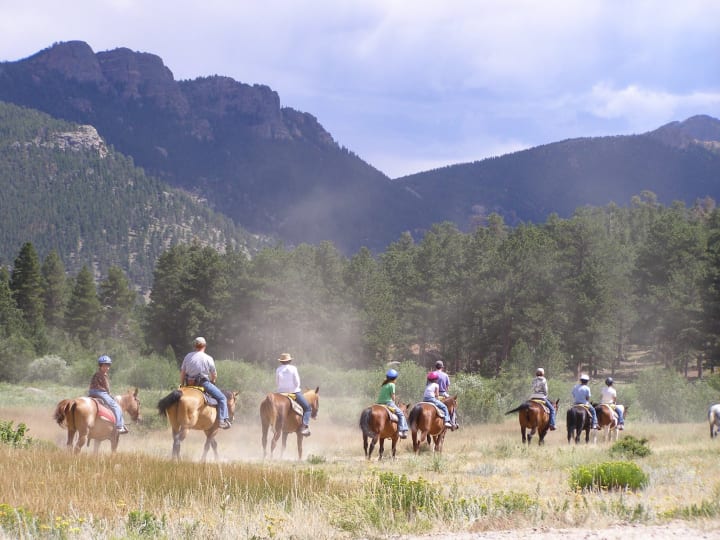
The meadows are popular with visitors to Rocky Mountain National Park. On a good weather day, people are horseback riding, fishing for trout, hiking, picnicking, and wildlife watching. It is a great place just to park the car and take a stroll. If a longer hike appeals to you, several trailheads are nearby. If you just want to just relax, this is the place.
You will not have to climb any mountains, but you will see some of the most beautiful mountains in the world, including the magnificent Long’s Peak. If you want to climb a little bit, there are plenty of big boulders for will fill that need for that. Kids love climbing rocks, and they are a great place to take pictures of your kids and a good place perch to get pictures from a higher elevation.
Few places anywhere can match the beauty of the meadows in the spring. Wildflowers against snow patches are one of those sights that will stay with you the rest of your life. Professional photographers are drawn to Moraine Park because of its matchless beauty.
This is probably the best place in Rocky Mountain National Park to look for elk. During most of the year, herds of elk frequent Moraine Park, and the open vistas make viewing them easy. The best time to see elk is early morning or late afternoon. At or nearby Moraine Park we have also seen mule deer, fox, coyotes, and our only Rocky Mountain National Park black bear sighting.
The Big Thompson River meanders through the area, and it is easy to access. If you enjoy trout fishing, this is a good place to wet a hook, and a good place for the rest of your family to hike and watch wildlife while you are busy catching dinner.
There are horse stables for those who enjoy horseback riding. Two, four, and eight hour guided rides through the park can be booked here. This area has two hundred and forty-seven campsites available that are open all year. The campgrounds fill up fast during the warmer months, so reserve early. They can accommodate vehicles up to thirty-five feet and trailers up to twenty-seven feet. Each site has a bar-b-que pit and a picnic table. Restrooms are close.
Sprague Lake
We had planned on visiting Bear Lake on one of our visits, but by the time we got to the parking lot it was full. A ranger told us to come back later. We turned around and backtracked down Bear Lake Road.
I soon noticed the Sprague Lake sign and decided to check out that parking lot. It was much smaller than the one at Bear Lake, but it still was not full.
It was a good decision because we spent a very pleasant two hours walking around the lake and on a little-used trail.
The area got its name from Abner Sprague, who own opened a dude ranch there in 1874. He created the shallow, thirteen-acre lake by damming a stream. Rocky Mountain National Park acquired the land in 1915, and the dude ranch became the Sprague Hotel.
Signs around the lake describe how the area looked when it was still a private resort. Sprague enjoyed watching his guests relax and have fun; he was especially pleased that he provided a place where people felt rested when they left, not exhausted. He did not think much of resorts where guests buzzed from here to there, wearing themselves out from too much activity.
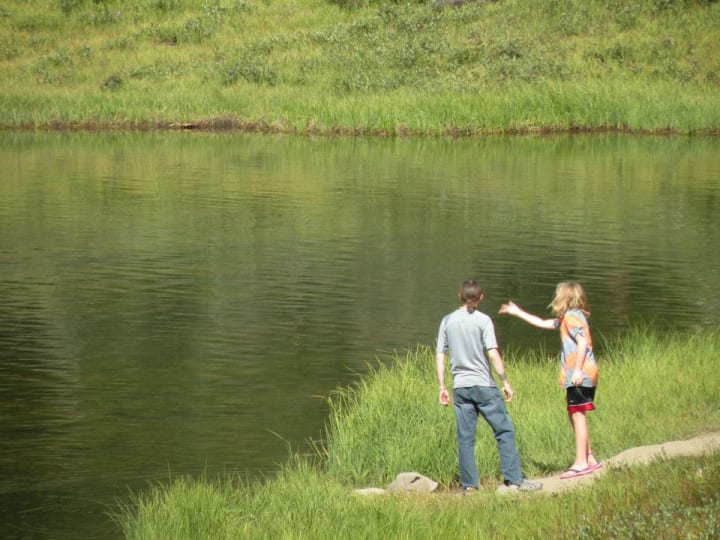
Today, Sprague Lake is a small dose of what Abner once provided. It is one of the most relaxing areas that we have visited in Rocky Mountain National Park. The walk around the lake is an easy one-mile hike and more flat than hilly. There are benches to sit and watch people fish and canoe. The water is so clear that you can easily see fish.
On the day that we were there we did not see any large animals near the lake, but we did see a lot of ducks and chipmunks.
After walking around the lake, we took a path to the right of the parking lot. We soon realized that we were walking on an animal trail, used by large, hoofed animals like deer and elk. We did not see any shoe prints.
We found a very peaceful place by a stream to rest. Running water was the only sound that we heard. After a few minutes had passed, a squirrel decided to check us out. He scurried up and down the stream, stopping numerous times just a few feet from us. I wanted a picture, but he would not stay still long enough.
At Sprague Lake, picnic, fish, hike… or just relax like Abner Sprague would want.
Bear Lake
The Bear Lake Trailhead is located at the end of Bear Lake Road in Rocky Mountain National Park. This is the most popular trail in the park for several reasons. It is a short half-mile walk around a beautiful alpine mountain lake. The hike is easy to walk and almost anybody can complete it, including children. The trail is paved and handicapped accessible.
For those who tire easily or maybe just want to relax and enjoy life in the slow lane, there are benches on the trail. Almost as soon as you sit down, chipmunks and squirrels will make sure you know they are there. It is not permitted to feed them, but they will hang around until you leave, hoping you do.
Large animals like elk and deer are common in the area. You might even see a bear, but that is more likely to happen before you park your car.
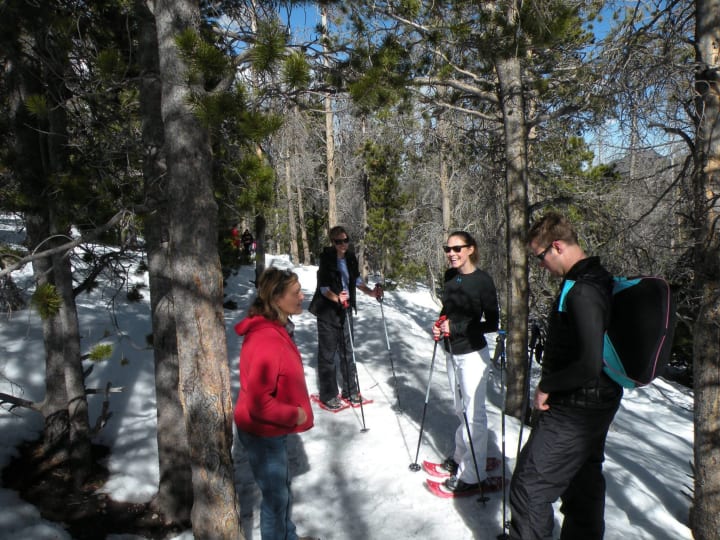
For those who want a longer, more challenging hike, there are trails nearby that would suit that purpose. In the winter, snowshoeing around the lake and nearby trails is popular.
During the summer, the parking lot fills up early in the morning, so it might be a good idea to either get up early or take the shuttle from the shuttle lot, located across from Glacier Basin Campground. Other parts of the park that are not so easily crowded might be a better place to visit if you have limited time, but if you are going to be in the park for the day, make sure to visit.
From this same parking lot, you can visit Alberta Falls, one of the most beautiful waterfalls in the park. The hike there and back is beautiful, and there is a good chance you will see wildlife.
Alberta Falls
Most visitors to Rocky Mountain National Park get to Alberta Falls from Glacier Gorge Trailhead near Bear Lake.
Visitors to Bear Lake and Alberta Falls share the same parking lot. If you find a parking spot, it is a timesaver to visit both places. The parking lot fills up quickly in the morning during the summer months, so it is best to get there early if you are visiting during this time. If you see a ranger standing in the middle of the parking lot with a “why are you here now look” you will know that you got there too late. So, if you are in Colorado during the summer, get up early and get to the trailhead before the parking lot fills up. Once you get on the scenic mountain trail to the falls, you will be glad you did not sleep late. When you get to the falls, you will be even happier. The falls are beautiful, and few places in the world offer a better photo-op.
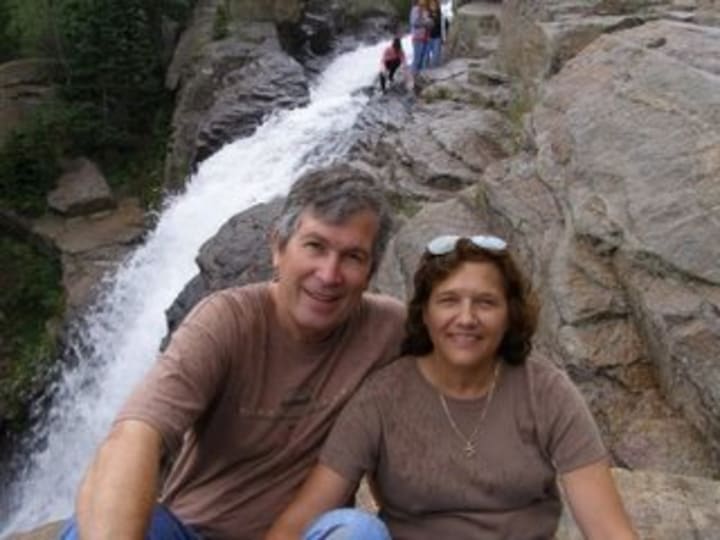
The falls are about a thirty-minute walk from the beginning of the trailhead. The hike there is an easy walk, mostly downhill, so that means that the walk back will be mostly uphill. The grade is low, but you can still get winded if you are not accustomed to high elevations. The recipe to mitigate that is frequent rests; you will not mind taking time out to rest because of the beauty of the surroundings. If you are as fortunate as we were the last time that we were there, there will be wildlife to see while you are taking a break.
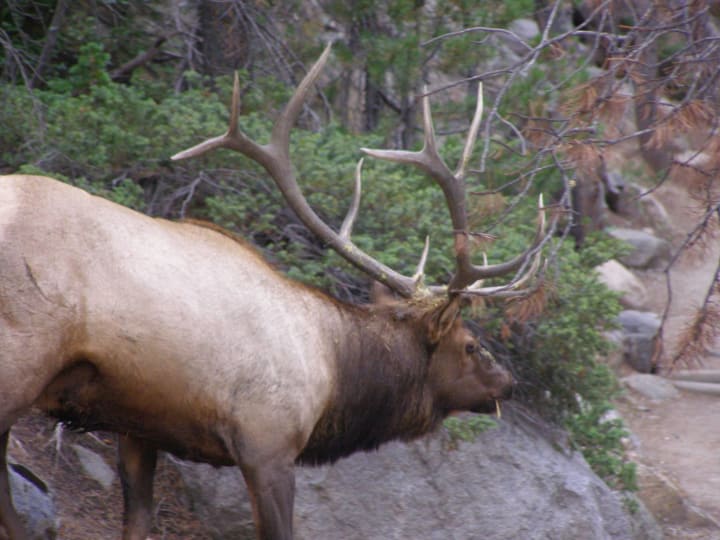
On the way to the falls, we heard this bull elk bugling just off the trail. This was in the early fall, during rutting season. The elk was pushing over small trees with his antlers, probably trying to impress the three elk cows about twenty feet away. The cows finally walked away, and the bull elk left in the other direction, crossing the trail just behind us. Why he left the cows, only he knows.
The trail to Alberta Falls looks almost too beautiful to be natural, with rock formations, aspens, and ferns bordering it on both sides, and the occasional stream crossing in the low spots. If you are not lucky enough to see any large animals, you still will not leave without a wildlife sighting. Chipmunks and squirrels are always scurrying about, and magpies and raptors are often flying overhead.
You will hear the falls before you get there. The water makes a lot of noise splashing against the rocks, and if you are there during tourist season, you will hear the noise of people talking over the noise of the falls.
It is permitted to climb up and down the falls. Remember the force of the falls is powerful, and it is possible to be swept away. Also, people do fall from the falls occasionally; some of them are older people, a little light-headed from the altitude. So have fun, get some good pictures, but be careful.
Enjoy your visit to Rocky Mountain National Park!
About the Creator
Bill Coleman
Hello! I am a traveler, outdoorsman, and writer.
Keep reading
More stories from Bill Coleman and writers in Wander and other communities.
Ono Island, Alabama: Exclusive and Secluded
Tourists often pass by the Ono Island Bridge just off Perdido Beach Boulevard and wonder what is on the other side. That bridge is the only way a vehicle can get on the island, and it has a guard on duty 24 hours a day. Unless you buy a home or you are a guest of an owner, you are not likely to find out first-hand without an escort. If you are thinking about buying property on the island, a real estate salesperson can get you on the island in a hurry. Bring money. The median price of a home on the island has been estimated at more than one million.
By Bill Coleman5 years ago in Wander
Worth the Wait: Puerto Viejo, Costa Rica
Beach bumming in a small Caribbean beach town sounded like a perfect way to end our 6-month trip through Mexico and Central America. Or so we thought. The foul, fishy stench of rotten seaweed hit our nostrils as we stepped from the cramped bus and looked out at a rather depressing, empty, and underwhelming black sand beach. It was pouring with rain, and we had to quickly fish out our ponchos. We thought, this couldn’t be it, could it?
By Sh*t Happens - Lost Girl Travel10 days ago in Wander
Fun Times at Globe Life Field: Part 2
Last month, I took a trip to my hometown of Arlington, Texas. It was the first time in nearly 15 years I've been back to the place that I grew up. During the two days I was there, I did some sight-seeing and was highly impressed with how much has changed the last time I was there, which was 2011. On the last day of my trip, I took part in a premium stadium tour at Globe Life Field, the home of the Texas Rangers. It was my first time there and was with a small group of people on the tour. I've discussed the things I've seen during the hour and a half tour in my previous story, which you can read down below. After the tour concluded, I went outside and took even more snapshots. I'll go over some of the images, individually and in collage form.
By Mark Wesley Pritchard 3 days ago in Wander
A Transparent Look at Vocal Challenges and Top Stories
Almost three years ago, we shared a resource article that served as a place for people to suggest new challenge prompts. We thought it would be a good idea to refresh that thread, and take the opportunity to answer a few common questions about top stories, how challenges are judged and how submissions are reviewed.
By Vocal Curation Team4 days ago in Resources



Comments
There are no comments for this story
Be the first to respond and start the conversation.