
A Philosophical Love Affair with Athens
My Trip, and Why I Loved It.

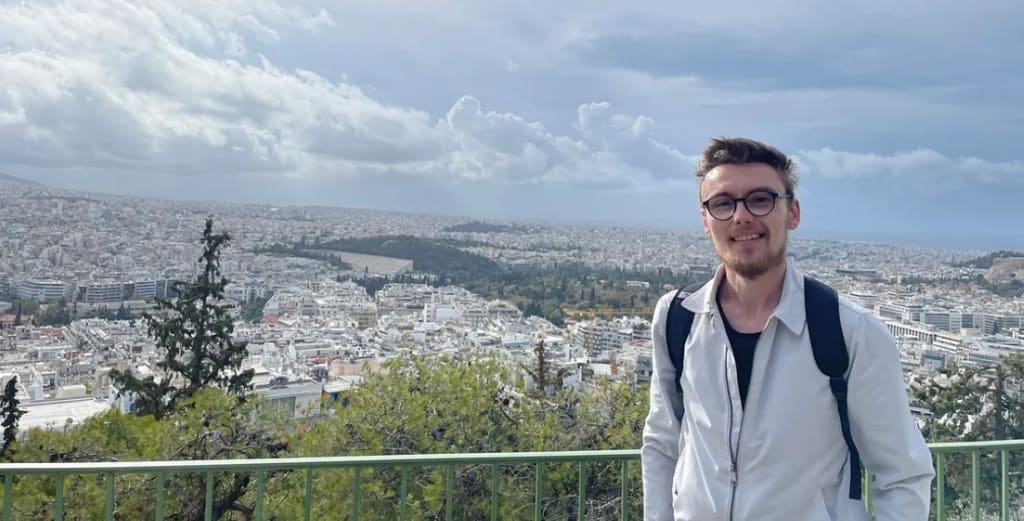
It’s time for a travelling post. I am always so excited to write these, and this one is certainly no exception.
A week ago I left Athens having seen innumerable historical/archaeological sites.
The main reason I journeyed to Athens was for the philosophical history — Socrates, Plato, Aristotle; the OG’s of western philosophy.
So that’s what I will discuss here, and I can assure you, there will be pictures. I’ll walk you through five philosophical sites I visited, and I will give you as much information as I possess.
1. Socrate’s Prison (Philopappos Hill)
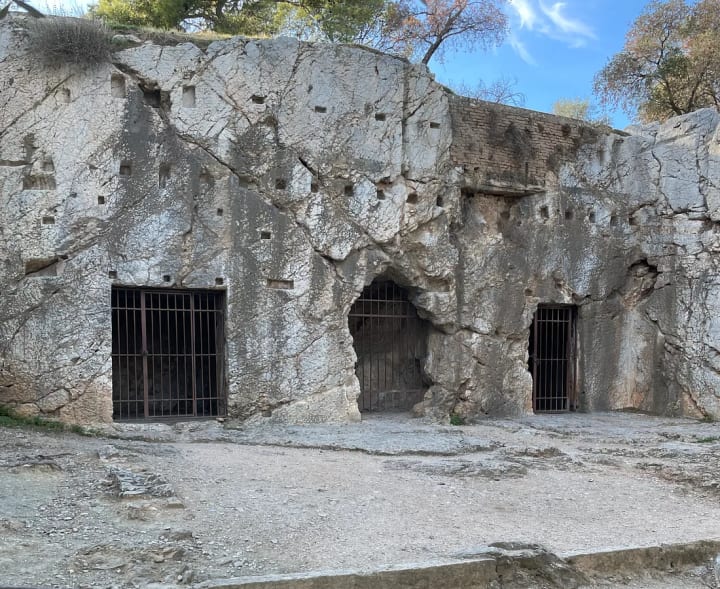
The prison. Well, this may or may not have been Socrates' prison — but nonetheless, I was deeply affected by the place. It was a very quiet point on the hill, a partially unassuming area.
Socrates' prison is one of the settings in Plato’s dialogues — he was kept there before his death. He was charged with ‘corrupting the youth of Athens’ through discussing ‘dangerous’ and ‘impious’ philosophical ideas with them. He was sentenced to drink poisonous hemlock and famously died with a brilliant equanimity.
Even if this wasn’t the exact site of Socrates' prison, it’s certainly in the right neighbourhood. That’s probably why I felt a deep sense of ‘the presence of philosophy’ — this is the only way I can describe it. It was as if Socrates’ spirit still lingered, and this was matched with a feeling of ‘philosophy in the air’.
I sat there for a while…I wanted to respect his presence. This silence concluded my trip to the prison.
2. The Theatre of Dionysus
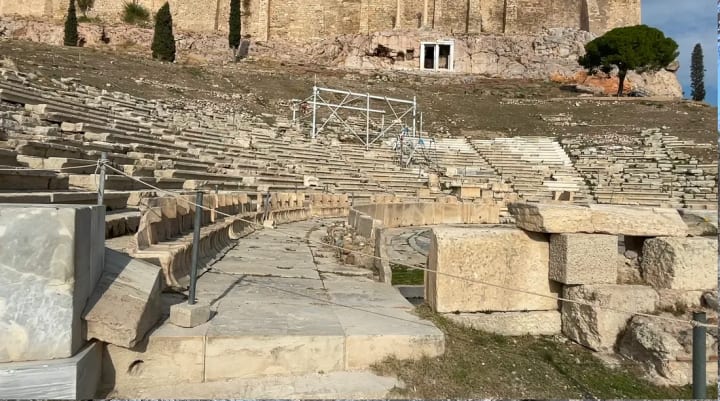
The theatre was where I felt closest to history in a rational sense. I visited it during my trip to see the Acropolis and Parthenon (it’s all one ticket — €10).
I looked at the seats, knowing that Socrate’s will have sat in one of them watching Aristophanes’ ‘The Clouds’, which comedically made fun of him — apparently, he didn’t mind.
It was special to visit the theatre, because I had already seen it in documentaries. I felt as if Socrates and Aristophanes were right there in front of me. This reminded me of my experience at the prison, but here there was also a separate rational component: the acknowledgment of living history.
3. The Ancient Agora
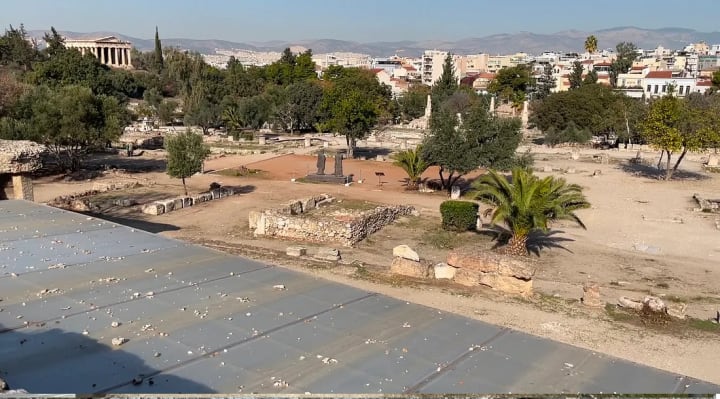
This was one site I was dying to see. Although, it took me the best part of an hour to find the place — Google maps sent me on a wild goose chase, as it often does.
The Agora is the ancient marketplace, but there would have been other buildings there too. Socrates and his followers will have walked through the Agora, discussing various ideas. You may see now why I was so excited to visit it.
The magnificent Temple of Hephaestus sits overlooking the Agora — it is truly magical. There’s also a new statue of Socrates positioned to the far side, which I believe was created in 2021.
This visit also left an impression on me (as with the previous) and I was sad to leave. I once again felt the presence of philosophy.
4. Plato’s Academy Park
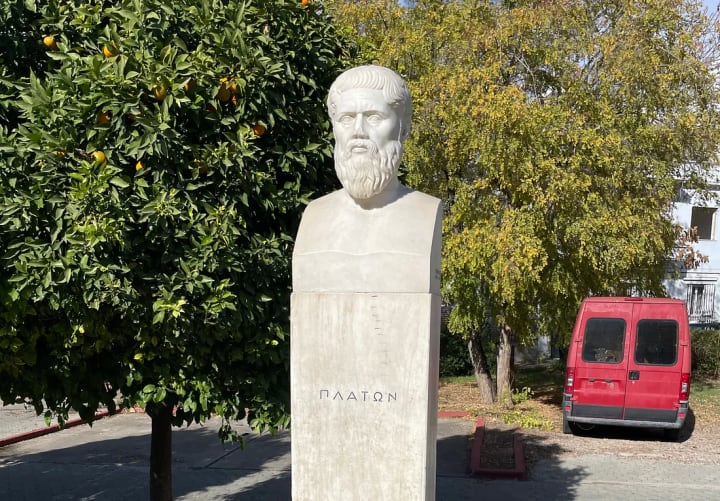
Now, this is one place I had (and still have) less knowledge about. I think it is the area containing the remains of Plato’s Academy. Unfortunately, the information boards were completely worn away by prolonged exposure to the weather.
This was a particularly sad visit, as the park wasn’t as well-kept as other historical sites. As you can see, there’s a nice bust of Plato, but the other end of the park needs some attention.
I did see some ruins, and I do believe these were the academy, but I just felt very sad that the park wasn’t what it could be. I left feeling a sense of sadness. I had felt this sadness at Socrate’s Prison. It seemed to me that Socrates and Plato were still present in Athens, but their voices were not completely heard.
I can’t prove this, it was just a feeling. It was as if the general population of Athens was ‘far from them’ — something no doubt Socrate’s agreed with in his own time, and may still agree with today.
5. Lyceum of Aristotle
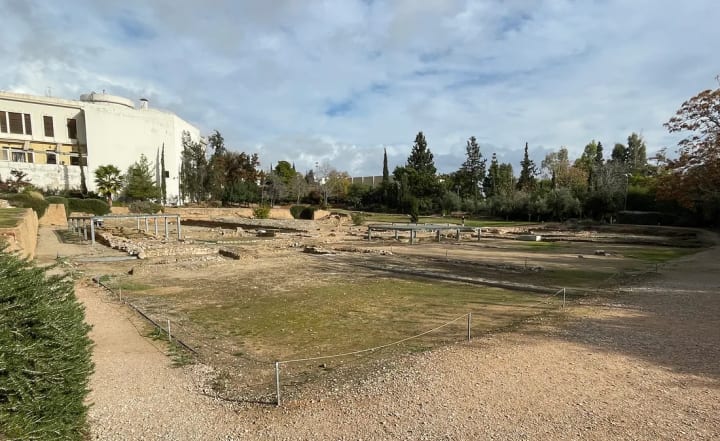
The Lyceum was the final philosophical site I visited. This was Aristotle’s school. Plato was Socrate’s student, while Aristotle was Plato’s. Plato had the Academy, Aristotle, the Lyceum.
I didn’t (and still don’t) know much about it. I am not too well-up on Aristotle’s life, or Aristotelian thought for that matter.
Nonetheless, it is a very well-kept area, and despite it not being much to look at, the information boards were full of information. I didn’t know, for example, that Athenian youth’s would have wrestling matches there. I think this was part of the Greek tradition of creating a disciplined body as well as a keen mind.
The visit to the Lyceum was similar to all the previous sites I had visited. I felt a rational sense of the living history (perhaps more so here), but I also felt something extra, something akin to Aristotle’s spirit.
I was very fortunate to visit the Lyceum; I almost didn’t go.
Closing Thoughts
So there we have it, my little tour of the philosophical history of Athens. It is a shame that I couldn’t discuss the other sites I visited, but perhaps I will do this in another post, who knows?
As you can tell, I am quite interested in philosophy, and the salient feelings while visiting these archaeological sites were ones of passion, connection, depth, and awe.
I am so glad to have finally visited where Socrates and Plato lived.
About the Creator
Adz Robinson
Poet, short story writer, and aspiring essayist with a passion for anything spiritual, psychological, and surreal.
Keep reading
More stories from Adz Robinson and writers in Wander and other communities.
University Education: Is It Really Worth it?
“It’s a waste of time.” That’s what some would say. During my degrees, I even said this myself. “You learn everything about the subject!” Others may exclaim, having either experienced it themselves or through projecting certain ideas onto the experience. But these are very black or white statements.
By Adz Robinson 9 months ago in Education
Worth the Wait: Puerto Viejo, Costa Rica
Beach bumming in a small Caribbean beach town sounded like a perfect way to end our 6-month trip through Mexico and Central America. Or so we thought. The foul, fishy stench of rotten seaweed hit our nostrils as we stepped from the cramped bus and looked out at a rather depressing, empty, and underwhelming black sand beach. It was pouring with rain, and we had to quickly fish out our ponchos. We thought, this couldn’t be it, could it?
By Sh*t Happens - Lost Girl Travel8 days ago in Wander




Comments
There are no comments for this story
Be the first to respond and start the conversation.