
University Education: Is It Really Worth it?
The answer is more nuanced than you think.

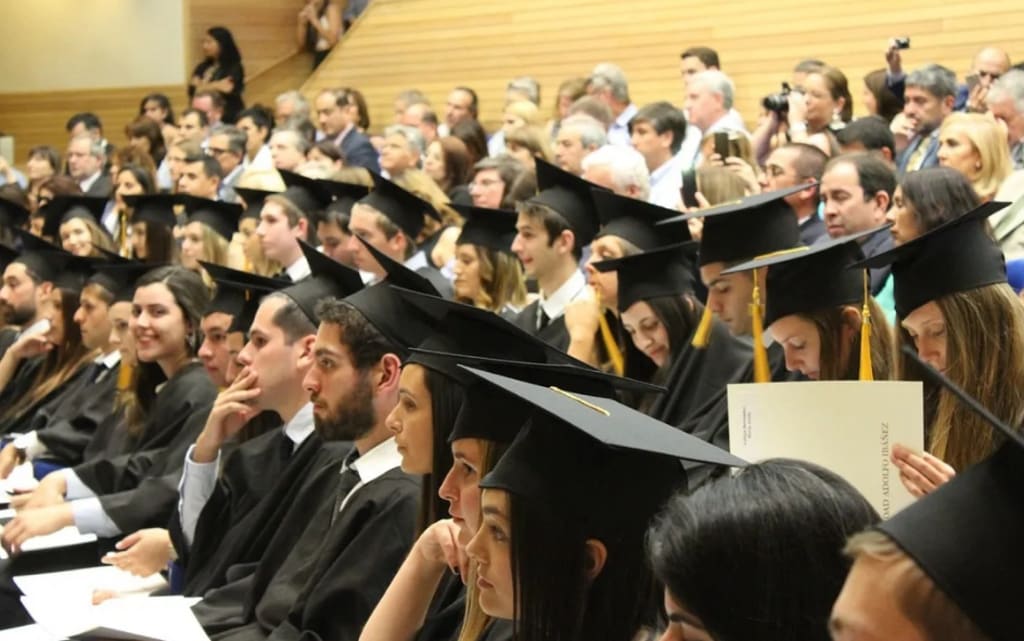
“It’s a waste of time.” That’s what some would say. During my degrees, I even said this myself. “You learn everything about the subject!” Others may exclaim, having either experienced it themselves or through projecting certain ideas onto the experience. But these are very black or white statements.
As some of you know, my first degree was in psychology. Therefore, I have a desire to consider this question beyond black or white assertions. This should get us to the true answer, or at least closer to the truth than these emotionally charged assertions.
A Reasonable Education
The fact of the matter is that the assertions, “It’s a waste of time” or “You learn everything about the subject” are extremes that become balanced in the statement, “It’s reasonable education.”
Before we continue, I must state that I am specifically speaking about the UK, as this is the only education system I have first-hand experience of. No doubt, education in places like Switzerland is of far greater quality. Similarly, there will be certain countries with a lesser quality of education than that of the UK.
In light of this, I will now speak of my ‘reasonable education’, to highlight the point of this statement.
I have completed a BSc in Psychology and an MA in Creative Writing. Both degrees provided a wealth of knowledge and facts. My psychology degree was intense and my lectures were rich in content. It certainly gave me a good education based on acquisition of information. It failed, however, to provide me with truly deep, original knowledge, and to direct me completely toward independent thought.
It was great at informing, not so great at teaching to abstract. But this, of course, is not absolute. There were times where we were encouraged to abstract.
Nonetheless, my MA gave me more of chance to abstract (as I was becoming more of an independent scholar and less of a student). This freedom was built into the format of the degree, in contrast to the more rigid BSc. Sadly, I cannot comment on the freedom an MSc in psychology offers, since I did not undertake it. I would imagine, like my MA, it offers slightly more freedom.
In our MA we were deeply encouraged to be original, abstract our thought, and find new interpretations of the work we were analysing.
So What’s Wrong? It Sounds Brilliant.
You might be thinking, “That’s not a reasonable education, it’s a good one.”
I will never deny the value of my degrees – particularly concerning the sheer amount of knowledge that was poured into my mind. From one perspective, we can definitely say, “It was a good education.” But there were oversights in the delivery of that education.
My inspirers are people like Einstein, Jung, Feynman, Nietzsche. These people questioned the ability of formal education to create the conditions necessary for the development of genius.
In both degrees, I encountered this myself. It is practically blasphemous in university to engage in what I call ‘cross-field thinking’ I.e. unifying concepts in different fields. Example: relating quantum entanglement in physics to synchronicity in Jungian psychology through use of abstract thought.
So I found that I was holding back the natural way my mind works (connective thought processes) to produce an essay that would merely be acceptable by university standards.
Sadly, I had to lower my abstract thought to get a good grade. This is just how the education system is setup; it’s great for the conscientious student who lives by the book, it’s not so great for the rebellious intellectual (like myself).
This tells us something: university can be harmful to true originality. Therefore, it can only provide value in two ways: the accumulation of facts, and the creation of discipline (I am excluding value from social life). Thus, originality must come from the spirit of the individual – from their intellectual uniqueness.
Now it is exactly true that the higher you go in education, the more abstract/original thought is accepted and valued. It is valued far more in a PhD than a BSc. Therefore, I commend the educational journey towards the freedom of thought found at PhD level (which I am aware is somewhat contradictory to my thoughts – I am providing an alternative opinion).
Final Points and Conclusion
The problem with Bachelor’s education (BSc/BA) – and I apologise for passing this horrible judgement – is that many of the lecturers aren’t intelligent enough to teach their students about the truly deep, original ideas.
This creates a problem: They cannot teach students the deeper ideas of psychology because they simply don’t understand them (I’m speaking of areas such as Jungian psychology, quantum psychodynamics etc). Thus, “You learn everything about the subject” becomes an incorrect statement.
But, as Kant alluded to, those of a greater intellect need not be taught, as they will find the information for themselves.
Nonetheless, if certain students aren’t exposed to these ideas through education, it may take them years to discover them, which would be an awful shame.
So my vision for the education system is one of teaching students deep ideas, and showing them how to fully command abstract thought from the offset (from BSc/BA level).
In my educational journey, I had to learn these things myself, but it doesn’t need to be this way. University education doesn’t need to be so restrictive. It can be a place that caters to both intellectual rebels, and the student who lives by the book.
As a final answer to my question, I think university education is worth it. But here’s what you could consider doing if you are going to university:
Accumulate the knowledge from lectures, making full use of the strength of university. All the while, focus on writing essays outside of university that use the knowledge you have gained in unison with your abstract thought. These essays will then contain your originality. After this, you can push into the world by either honing your work and submitting to journals, or undertaking a PhD with these essays as your base. Your PhD will then be a true representation of your intellectual freedom.
Here, you are independently pushing forward straight from the start. If you create these original essays during your BSc or BA, you can have your PhD organised well in advance. Sadly, this does mean treating education somewhat as a ‘formality’, or as secondary to your own project (until PhD level). But the value of university is not meaningless here, as it directly contributes to this long-term project. Just ensure, while doing this, that your grades don’t suffer (otherwise the degree is worthless).
You might say, “Why not just work on this project without doing a degree?” To which I would say, that’s fine, so long as you are a dedicated and conscientious independent learner, and you are proactive enough to get your work out there when the time comes – this is the hardest thing.
Ultimately, I think university is now hovering between being still of use, and being an outdated way of becoming educated. There may come a time when we are educated in a different, more effective way; perhaps we will have a personalised form of education that is achieved by a heavy use of technology.
Anyway, I hope you enjoyed reading my thoughts.
About the Creator
Adz Robinson
Poet, short story writer, and aspiring essayist with a passion for anything spiritual, psychological, and surreal.
Keep reading
More stories from Adz Robinson and writers in Education and other communities.
How the Sun Affects Asteroid Paths: Gravity, Radiation Pressure, and Orbital Changes Explained
Introduction: The Silent Influence of the Sun ☀️ Every night, thousands of asteroids quietly move through space. Most of them orbit harmlessly between Mars and Jupiter in the asteroid belt. Others travel closer to Earth, following paths shaped by invisible forces.
By shahkar jalala day ago in Education
The Overlooked Consequences of Weak Healthcare Program Planning
Healthcare programs are created to expand access to care, improve patient outcomes, and strengthen public health systems. Governments, hospitals, nonprofits, and health organizations invest significant resources into developing programs that address disease prevention, treatment, and community wellness. When these initiatives are carefully planned and strategically executed, they can transform healthcare delivery and improve the quality of life for entire populations.
By Evyatar Nitzany6 days ago in Education




Comments
There are no comments for this story
Be the first to respond and start the conversation.