
A Complete Guide to the Kodachadri Trek in Karnataka
If you’re yearning for an offbeat adventure that blends natural beauty with spiritual legacy, then Kodachadri might just be the perfect escape.
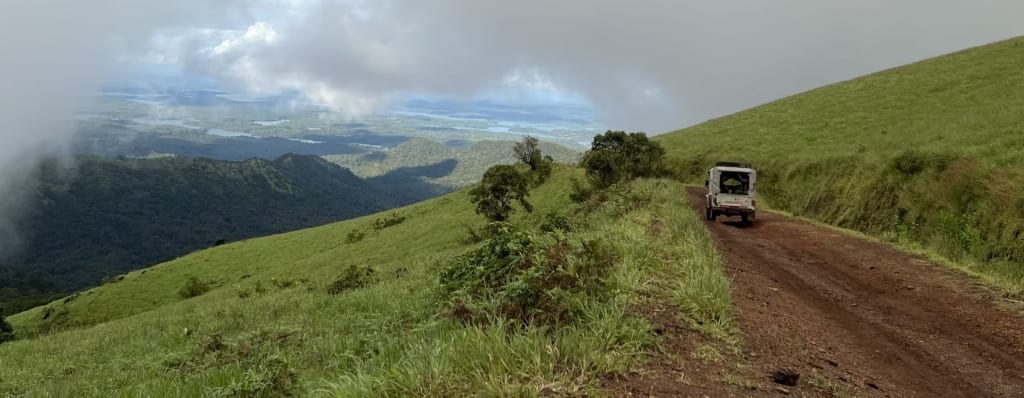
Hidden deep within the folds of the Western Ghats lies a trail that weaves through ancient forests, roaring waterfalls, and cloud-kissed peaks—welcome to the Kodachadri Trek, one of Karnataka’s most enchanting trekking experiences. It’s not just a hike; it’s a journey through sacred landscapes, raw wilderness, and soul-stirring views.
If you’re yearning for an offbeat adventure that blends natural beauty with spiritual legacy, then Kodachadri might just be the perfect escape. Let me walk you through everything you need to know to plan, trek, and fall in love with this mystical mountain.
Where Mythology Meets Mountains: What Makes Kodachadri Special?
Rising to about 1,343 meters above sea level, Kodachadri is the 10th highest peak in Karnataka. It sits in the Mookambika Wildlife Sanctuary, a biodiversity hotspot teeming with endemic flora and fauna. But beyond its ecological significance, Kodachadri holds deep spiritual meaning—Adi Shankaracharya is believed to have meditated here, and his legacy still echoes through the hills.
The trek is a seamless blend of myth and nature: you’ll pass by thick shola forests, serene grasslands, gushing streams, and sacred temples. It’s a place where leeches are as common as legends, and every turn on the trail has a story to tell.
Best Time to Visit Kodachadri: When Nature is at Her Best
Choosing the right season for Kodachadri makes all the difference. Here's how the year breaks down:
October to February (Post-Monsoon & Winter): The most pleasant time for trekking. Clear skies, cooler temperatures, and lush greenery.
June to September (Monsoon): The forest is at its most vibrant, but trails are slippery and risky—ideal only for experienced trekkers.
March to May (Summer): Hot and humid; the forest feels dry and less inviting.
For the best combination of beauty and comfort, aim for late October to early January—you’ll get the post-monsoon greenery with stable weather.
Reaching Kodachadri: Getting to the Trailhead
Kodachadri is located in the Shimoga district, around 400 km from Bangalore. The journey itself is scenic, passing through small towns and dense forests.
By Road:
From Bangalore: 8–9 hours via Shimoga and Hosanagara.
From Mangalore: 4 hours by road via Udupi and Kollur.
Private vehicles or rented cabs are your best bet if you want flexibility.
By Train:
Nearest major railway stations: Shimoga, Kundapura, or Byndoor.
From the station, take a bus or taxi to Nittur or Sampekatte, the typical base villages.
By Air:
The closest airport is Mangalore International Airport, about 165 km away.
Tip: If you’re not doing a self-drive trip, it’s easiest to combine a train/bus to Shimoga with a local cab or jeep to the base village.
The Trek Experience: Route Options, Highlights & What to Expect
There are two main approaches to the Kodachadri summit—one that challenges you with scenic forest trails, and another that takes you part of the way by jeep.
Option 1: Trek via Hidlumane Falls (Moderate to Tough)
Start from Nittur village.
Pass through lush farmlands, bamboo groves, and jungle trails.
Stop at Hidlumane Falls—a refreshing and picturesque waterfall (you’ll need to scramble up wet rocks).
After the falls, the trail gets steeper and denser before opening into meadows.
Reach Kodachadri Temple and camp or stay overnight.
Final ascent to Sarvajna Peetha for sunset—unforgettable views of the valley and possibly the Arabian Sea.
Option 2: Part Trek, Part Jeep (Easy to Moderate)
Hire a jeep from Sampekatte or Kollur to take you up the rugged path till the temple.
From the temple, it's a 1.5 km hike to the actual peak.
Ideal for those short on time or unable to manage a full trek.
Important: Jeeps don’t go beyond the temple zone, and the road is extremely bumpy—prepare for an off-road adventure!
Staying the Night: Homestays, Camping & More
Since this is a remote region, accommodation is basic but warm and welcoming.
Homestays in Nittur & Sampekatte: Perfect for an authentic local experience. Meals are usually home-cooked and filling.
Camping near the peak: Allowed with permission. Ideal for stargazing and catching early morning views.
Forest Guesthouse (near the temple): A government-run rest house—book in advance if you prefer a more structured stay.
Recommended stays:
Kodachadri Homestay (Nittur)
Bhagavathi Nature Camp (near Kollur)
Simha Farms Stay (if you prefer a mix of comfort and nature)
Essential Tips: Local Insights for a Smooth Trip
Carry light, pack right: A small backpack, water, electrolytes, energy bars, and a rain jacket are must-haves.
Footwear is key: Good grip trekking shoes will save your ankles and your patience.
Watch out for leeches: Especially during and post-monsoon. Carry salt or tobacco-lime mix to remove them easily.
Mobile network: Very limited near the trail; inform family or friends in advance.
Budget travel: A weekend trek from Bangalore including travel, stay, food, and guide can be done within ₹3,000–₹5,000.
Local guides: Worth every rupee. They know alternate routes, water points, and local legends.
Why Kodachadri Leaves You Changed
There’s something quietly humbling about Kodachadri. Maybe it’s the way clouds wrap around the hilltops like whispers of old gods. Maybe it’s the stillness you feel as you watch the sunset from Sarvajna Peetha. Or maybe it’s just the simplicity—no phone buzz, no rush, just your breath syncing with the rhythm of the wild.
The trek doesn’t just challenge your legs—it stirs your spirit. You return not just with memories, but with a sense of peace that the city can’t offer.
So, if you’re looking to disconnect from chaos and reconnect with something more timeless, Kodachadri is calling.
About the Creator
Rohit SEN
Hey! Come along with me to explore beautiful places, learn about different cultures, and share my adventures. Let's Explore together! From a travel lover!
Literary Heartbeats
Step through an unassuming storefront in Saratoga Springs, New York. Let the city’s familiar bustle fade behind you. Sink into the creak of hardwood floors as your gaze is drawn toward a labyrinth unfolding, room after room, swollen with stories. This is the Lyrical Ballad Bookstore—a place where literary ghosts linger, and generations of readers, writers, and dreamers have lost themselves amid 200,000 volumes of wonder.
By Kristen Barenthaler3 days ago in Wander
Take a Hike in Central America
In Guatemala, at Lake Atitlán is the Atitlán Volcano. The hike takes 5 to 6 hours to complete. Beautiful Lake Atitlan is among the top attractions in Central America and among the best hikes. This is an impressive crater lake flanked by three volcanoes and surrounded by steep, scenic hills.
By Rasma Raistersabout 18 hours ago in Wander


Comments
There are no comments for this story
Be the first to respond and start the conversation.