
10 Ultra-French Things the Rest of the World Truly Cannot Understand
Habits so uniquely French that no other country replicates them with the same intensity.

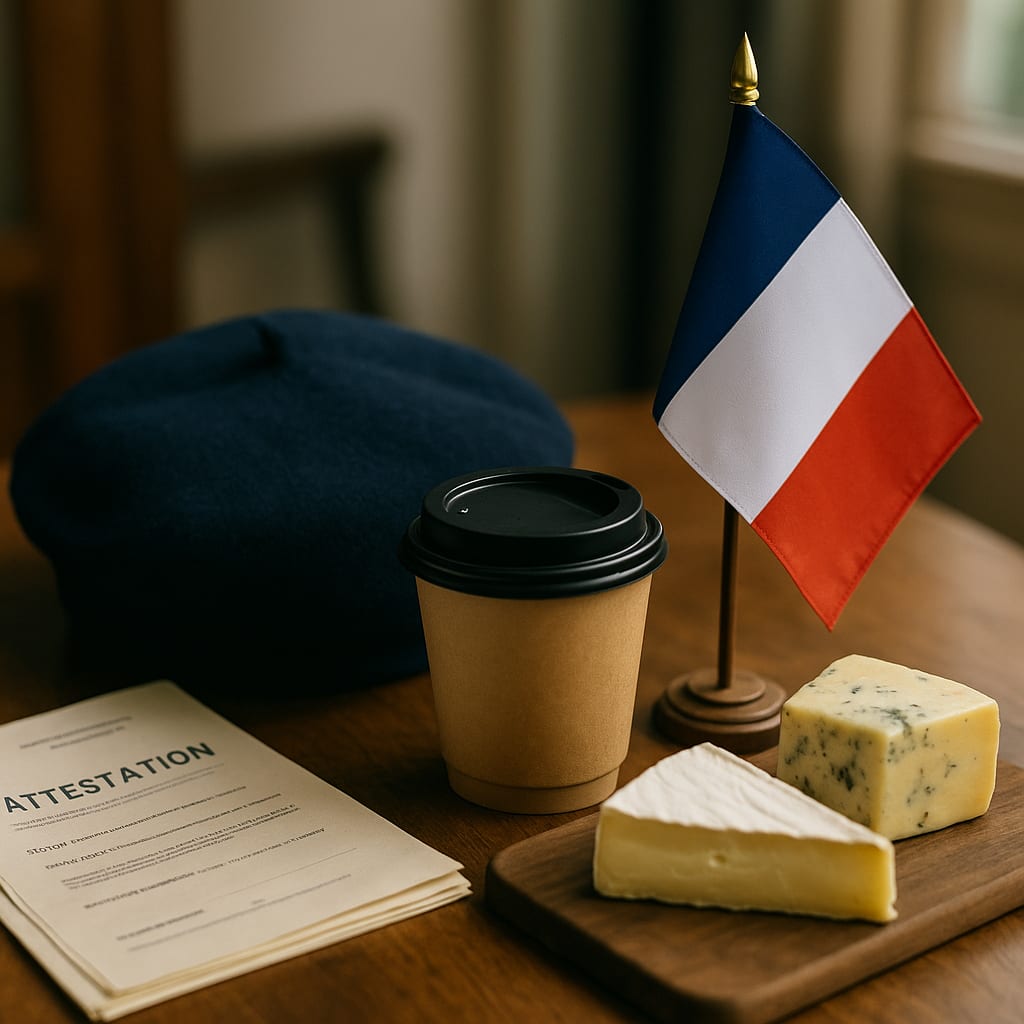
France is a beautiful country, but also a place filled with contradictions, traditions, deeply rooted reflexes, and cultural signals that often go unnoticed by the French themselves.
To foreigners, some French habits feel like an absolute mystery—an unusual blend of elegance, complexity, lifestyle philosophy, and a touch of wonderfully chaotic poetry.
Here are ten deeply, unmistakably, unapologetically French habits that leave the rest of the world fascinated, confused, amused, or simply speechless.
1. National strikes treated as a cultural tradition
In most countries, a national strike is a dramatic, exceptional event.
In France, it is almost a form of collective ritual.
Public transport stops, schools close, flights get canceled, refineries block roads… and yet, the French handle it with surprising calm, as if it were a seasonal occurrence.
Strikes are not just disruptions—they are symbols of civic power, a way for the population to remind institutions that the country can freeze whenever something feels wrong.
Foreigners struggle to understand how such massive nationwide disruptions can be tolerated.
But for the French, striking is part of the national identity.
A right.
A pride.
A habit that feels strangely “normal.”
2. Drinking coffee outside… even in winter
If you want to understand the French soul, look at café terraces.
The French sit there no matter what—rain, wind, cold, even when the temperature barely climbs above freezing.
Why?
Because a coffee on the terrace is not a drink.
It’s a ritual.
A personal stage.
A moment to observe life without participating in it.
A quiet piece of philosophy served with an espresso.
Foreigners cannot grasp why anyone would choose to freeze outside when there is warm space indoors.
But in France, the terrace is sacred.
It is a way of being.
3. Cheese treated like a national religion
If France elevates one food above all others, it is cheese.
It’s not merely nourishment—it’s heritage, terroir, identity.
Each region has its specialty.
Each cheese has a personality, a history, a character, a season.
The French speak about cheese with the same refined vocabulary they use for art, literature, or fine wine—debating its texture, its intensity, its aging process, its birthplace.
To foreigners, the smell alone can be overwhelming.
But to the French, the stronger the smell, the greater the joy.
Cheese is not just food—it’s pride, conversation, poetry.
4. Debating for the pleasure of debating
In many cultures, people debate to win.
In France, people debate to live.
A French debate is not conflict—it is performance.
A dance.
A sport of the mind.
French people can argue passionately about a topic even when they agree on almost everything.
This tradition comes from centuries of intellectual cafés, literary salons, and philosophical gatherings.
Debate is not a disagreement—it is cultural oxygen.
Foreigners often remain stunned as a simple question spirals into a passionate exchange involving politics, philosophy, literature, and personal stories—all before dessert.
5. The tu and vous dilemma: a social ballet unlike anything else
Most languages use a single form of “you.”
In French, choosing between tu and vous is an emotional, cultural, and strategic act.
Vous = respect
Tu = closeness
But between the two lies an infinite gray zone filled with instinct, hesitation, diplomacy, and unwritten rules.
Switching to tu too soon? Impolite.
Staying on vous too long? Cold.
Choosing poorly? Social disaster.
Foreigners panic.
The French simply “feel it.”
It is subtle.
It is stressful.
It is quintessentially French.
6. Bureaucracy as an alternate universe
France has turned administration into a parallel dimension.
Forms, photocopies, appointments, official stamps, “missing documents,” proof of identity, proof of residence, proof of something else…
French bureaucracy is a national rite of passage.
Even the French complain about it.
But they also laugh about it, because administrative struggle has become a national joke.
Foreigners, however, stare in disbelief when they discover that paperwork can take longer than the task itself.
7. Talking about food… while eating food
In many countries, mealtime conversations drift naturally toward work, stories, hobbies.
In France, the conversation often revolves around… food.
The meal being eaten now.
The meal eaten earlier.
The meal planned for tonight.
The restaurant from last week.
The cheese from last month.
The recipe from grandma.
It is enthusiastic, detailed, passionate, and endless.
For foreigners, this obsession can seem excessive.
But for the French, food is not a subject—it is an emotional language.
8. Pharmacies that feel bigger than supermarkets
Foreigners are always surprised by French pharmacies.
Large, bright, overflowing with products—creams, serums, oils, balms, supplements, herbal mixtures, miracle solutions, scientific skincare…
In France, taking care of oneself is serious business.
And pharmacies are temples of well-being: half medical, half cosmetic, half emotional comfort.
What shocks foreigners most is that choosing a simple face cream can involve a full consultation and vocabulary worthy of a biology course.
9. Sunday: the day the country stops
In many countries, Sunday feels like any other day.
In France, Sunday is a time capsule.
Shops close.
Streets quiet down.
Life slows.
The entire country breathes differently.
Foreigners may find it charming, inconvenient, or simply confusing.
But for the French, this attachment to a weekly pause is a cultural resistance to the “always open” lifestyle.
In France, Sunday is sacred.
10. The legendary “we’ll see” — the national answer to everything
French communication is an art of nuance.
Instead of clear yes or no, the French prefer answers that open doors instead of closing them.
“We’ll see.”
“It’s not impossible.”
“We’ll talk about it.”
“It depends.”
“Why not.”
Foreigners often find this frustrating—because nothing is ever confirmed.
But for the French, ambiguity is elegant.
It preserves harmony.
It avoids confrontation.
It keeps possibilities alive.
Conclusion
France is a land of contrasts, rituals, and subtle cultural codes.
What surprises foreigners is not only what French people do, but the deeply French way in which they do it—blending passion, complexity, slowness, intellectualism, and a touch of poetic chaos.
These ten habits are not oddities.
They are colors, textures, rhythms of life.
They are the invisible threads that make France unforgettable.
Because behind every stereotype lies a deeper truth:
France is not strange.
France is simply France.
About the Creator
Bubble Chill Media
Bubble Chill Media for all things digital, reading, board games, gaming, travel, art, and culture. Our articles share all our ideas, reflections, and creative experiences. Stay Chill in a connected world. We wish you all a good read.
Keep reading
More stories from Bubble Chill Media and writers in Wander and other communities.
10 Common Misconceptions the French Have About Americans
The relationship between France and the United States has always been special. The French admire American creativity, innovation, and cultural influence — but they also love analyzing, debating, and sometimes teasing Americans.
By Bubble Chill Media 3 months ago in Wander
The Kelpies and The Falkirk Wheel
The Kelpies The Kelpies A few years ago I was driving up the M9 towards Dollar in Scotland, it was dark and raining and suddenly I nearly crashed the car when I saw two huge hundred-foot-high horses' heads to my left-hand side. I had to pull over. I am not sure if I tried to take a photograph but I was dumbfounded.
By Mike Singleton 💜 Mikeydred 3 days ago in Wander



Comments
There are no comments for this story
Be the first to respond and start the conversation.