
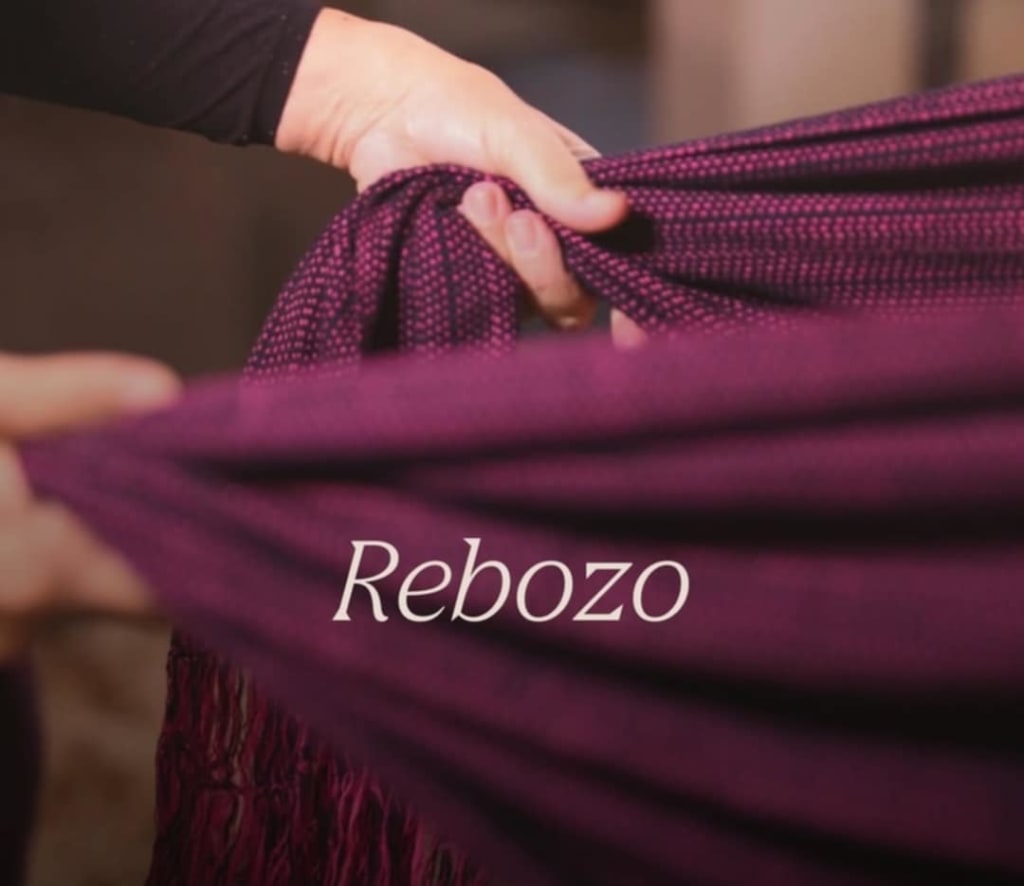
What is a rebozo, and how can I use one in labour?
The rebozo is a long rectangular woven shawl. It originally came from Mexico. It would have had many uses, but here I'm going to focus on a few of the simple techniques it can be used for in labour.

It's just for hippies, though, right?
Absolutely not! It can be so helpful, please don’t dismiss it out of hand. Try it, see how it feels.
Helpful? How?
- Comfort, helping you manage the contractions
- Helping baby to move and find a good position
- Releasing tight muscles, helping you to relax. This is great because it helps them work more effectively and comfortably
- Releasing trapped fluid
- Helping you to dilate
- Helping baby to descend
- Providing physical support for you to change positions, squat, raise your arms, or pull against - all helpful during labour. These things also help you to cope, and can help you progress.
Your partner can use many of the techniques in pregnancy to bring relief and aid foetal position. The fabric can be wrapped around you to give your bump and pelvis some support. Some women do this postnatally as well, to support the body in returning to normal. (NB: While this is common practice in some cultures, I haven’t personally tried it. Some people don’t believe it’s helpful. I am undecided.)
What if I’m having an epidural?
First of all, keep in mind an epidural isn’t always available. Sometimes the anaesthetist is unavailable, or you have to wait a while until s/he can get to you. Sometimes your labour progresses too quickly. Other times, it progresses slowly, and the early part of labour goes on quite a while. Sometimes the epidural doesn’t work, or doesn’t work as well as expected. Or it only works on one side. For all these reasons, it makes sense to have other techniques you can use. This is a great one to have in your toolkit! Having alternatives will help you stay calm, and give you a feeling of control.
If you’ve been to one of my workshops, this is a reminder of those techniques we tried.
Bump support
This is the simplest one: hammock the bump and hold the fabric taut. Take the weight of the bump. So simple, but it can feel so good when you’re very pregnant! That bump can feel so heavy, and you can sometimes wish someone could just carry that weight for you for a little bit.
This one works best when the mother is upright and leaning forward.
Bump sifting
Exactly as above, but now jiggle!
Great for helping the baby to wiggle and move to help them work their way down. Good for relaxing the muscles, which feels good, and also helps with alignment (so the womb and baby can achieve a good position, which increases the chance of a smoother birth).
Many people will recommend walking, so the pressure and motion on the cervix can help with dilation. This does the same, without the mother using any more energy!
Note: Remember to add in some bigger motions randomly, to allow even deeper relaxation.
Shaking the Apples
You can do the same sift and jiggle on other parts of the body (thighs, hips, and buttocks), to help release tension. Any release is usually helpful, but especially in the pelvic muscles (pelvic floor and fascia). This is great for that.
Tip for birth partner: antenatally try standing behind the mum to be while she is in all fours. This is probably the easiest position. Drape the fabric over her hips, bottom, and thighs. Bunch the rebozo on either side, and replicate that jiggling motion. Keep it rhythmic and gentle. Try some variations on this position. During the birth process, this is most useful in the active phase. Try it if the baby is not well-positioned, or if they are slow to rotate and descend.
It's tricky to describe this one, so here's a short video demo:
You can also do this technique by hand on the thighs, like this:
Hip squeeze
During the class, we did this by starting from “bump support”, then crossing the fabric, and pulling gently. Remember to increase the pressure in tandem with the rising contraction.
You can do this in other positions, too. If mum is standing, stand in front of her and pass the shawl around her lower back.
You can do this by hand if you don’t have the fabric to use. This one can also be done by two people working together.
If it doesn’t feel good, it might be the wrong time. Try again later. Always be guided by what the mother wants and what feels right for her.
Bump Lift
This is sometimes called an abdominal lift. It’s helpful for encouraging your baby to descend into the pelvis.
Do this one while the mum-to-be is standing. Stand behind her, and wrap the rebozo around the abdomen and hips, just below the pelvis. During a contraction, use the rebozo to gently lift the abdomen up and towards the spine.
You can do this one by hand. A labouring mum can also do it herself.
Tuck!
Tip for mum: tuck your pelvis at the same time, keeping your lower back flat and and bending your knees. It is helpful to have your partner behind you, offering physical support.
Tug of war
The muscles we use to push are the same we use to pull! "Tug of war" is an old midwifery trick to help birthing mothers with pushing. A rebozo can be used for this; it's sturdy and a decent length.
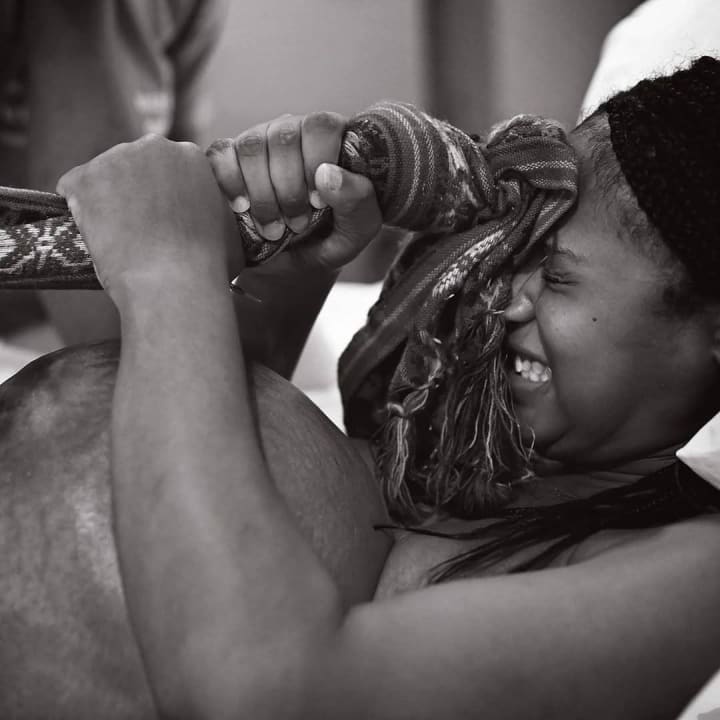
It can also be fastened above head height for the mum to hang on to. If there's nothing to fasten it to, use the door. (Make sure no one is going to come walking through it!)

This is good because it anchors gravity, and makes her pushing more effective. It also supports her to be upright, giving baby a clean line of descent and letting gravity help the baby move down. Raised arms also shifts the weight of the baby's head, which helps protect the perineum.
__________________________________________
Thank you for reading! Did you find this helpful?
Book your class here (go on, click, it's prettier than it looks):
About the Creator
Sam The Doula (Blooming Miracle)
Childbirth Eductator since 2011
Building a resource for mothers-to-be to feel informed and confident about their choices
You can find me on Facebook or book classes with me
Keep reading
More stories from Sam The Doula (Blooming Miracle) and writers in Viva and other communities.
Is Lab-Grown Meat Even Edible?
For decades, the idea of meat grown in a laboratory sounded like something out of science fiction. The concept of producing a steak or chicken nugget without raising or slaughtering animals seemed futuristic, even unsettling to many people.
By Navigating the World5 days ago in Viva
Why Staying Near Victoria Falls Transforms Your Safari Experience
A safari is not only about the animals spotted on a drive. It is shaped by where the day begins, how it unfolds, and how it ends. Near Victoria Falls, the experience feels calmer, richer, and far more personal. Staying close changes the pace, the mood, and the way the wild is remembered.
By Claudia Fennel2 days ago in Viva


Comments (1)
Some really useful techniques I was lucky with my deliveries. Less than four hours of hard labor on each of my girls, and they were born.