
What Feminism Means to Me
I’m a Mother. I’m a Feminist. And I Will Not Be Consumed.
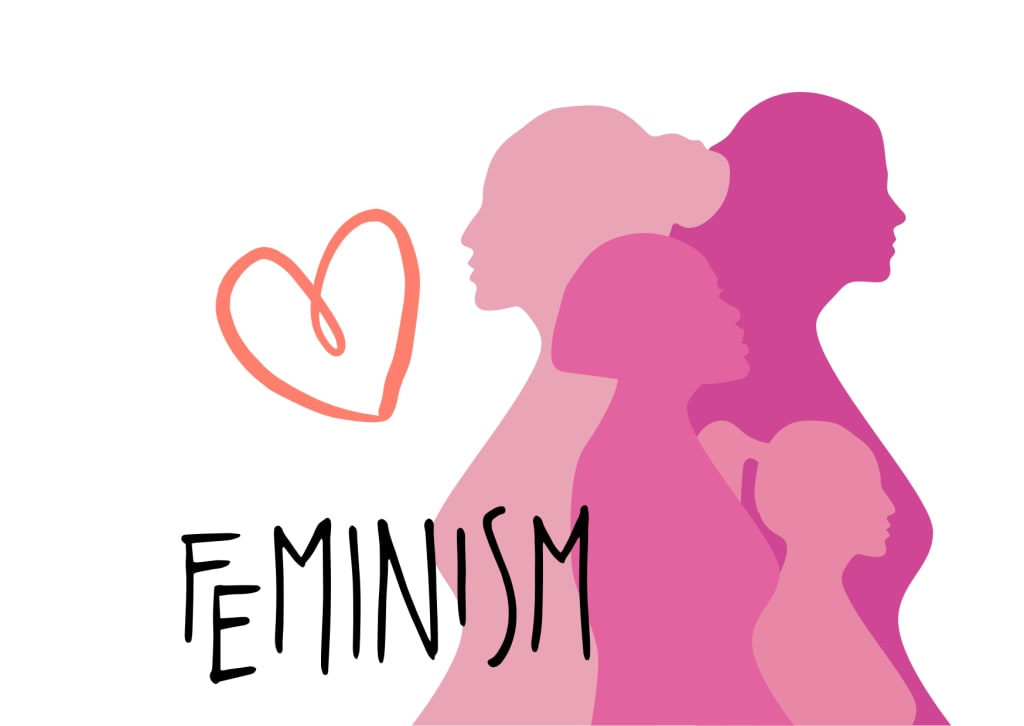
Feminism is not loud lipstick or louder voices. It is not a hashtag printed on a T-shirt, or a viral reel crafted for applause. It is not a flash of skin sold as power — because skin still sells, and that’s why the focus stays there. It is not just a legacy of burning bras or raising fists.
Feminism, to me, began in the quiet. In the moments where expectations were spoken gently, but carried weight. In the pauses where dreams were reshaped to fit what was acceptable. In the nods we gave when our own opinions stayed tucked away.
Over time, I’ve watched the message of feminism become blurred — not just by those who oppose it, but by those who’ve commercialised it. We’ve turned empowerment into a brand. We’ve confused visibility with value. The louder the display, the more “feminist” it’s assumed to be.
But real feminism doesn’t live in slogans. It lives in the day-to-day. In the conversations we have with our daughters and our sons. Feminism begins in the home — not in the protest. When we tell our daughters to dream without apologising, and teach our sons that equality is not a threat. When we remind ourselves that our circumstances — however complex — should not become a full stop to a child’s potential.
Feminism is also how women speak to each other. Not to compete, compare, or gossip — but to enrich, uplift, and remind one another of their power. It’s knowing that if a woman says, “I’m tired,” she shouldn’t have to explain herself. That rest is not selfish. That a cup of tea in solitude, a moment of silence, or a walk alone is not indulgence — it’s survival. It’s nourishment.
Feminism is knowing safety must start in the home. Not just in the streets. It means no violence — not emotional, not physical, not generational. And it means no one watches abuse in silence. We do not raise children who see pain and call it normal.
Yes, we do play the maternal role. But that role must evolve. It must become a place where we change the language — from endurance to boundary, from silence to action.
Because real feminism is knowing that there are consequences. That if a son strays, a mother does not shield him. She does not excuse his cruelty or protect his violence. She corrects it. Even if it means calling the police. Even if it breaks her heart.
We’ve been taught to take pain quietly — whether from a son, a husband, a father, or an uncle. We do it out of devotion, shame, fear, or misplaced duty. But the very same woman who suffers silently will rise with fury if her child is under threat. In that moment, she forgets pride, position, and pain — because she remembers: I am a mother.
That instinct is sacred. But it must now extend to all children. It must say: I will not protect harm. I will not stay silent for culture’s sake. I will break the cycle. I will raise a better future.
And no — feminism is not about “I can smoke too,” “I can party late too,” “I can do what the boys do.” That is mimicry, not liberation. That is mistaking privilege for progress.
Because as some debate their right to party on yachts, others bury their daughters in war-torn soil. As some film rooftop rants about empowerment, others walk miles for clean water, safety, education.
We cannot let feminism be swallowed by performance. We cannot centre privilege and mistake it for progress. We must come back to humanity, dignity, equality — and most of all, to kindness.
We don’t need a louder feminism. We need a braver one. A clearer one. One that reaches into homes, into habits, into heritage. One that holds space not just for freedom, but for responsibility.
This is what feminism means to me.
Let us remember the women who came before us — not all of them rebels, but all of them resilient. Let us honour the women beside us — not just those who shine, but those who carry. And let us raise the women yet to come — not just to survive this world, but to remake it.
Because if we change the narrative, we give voice to many. Right now, that voice is too often frowned upon, commercialised, misrepresented, or made small.
We don’t need feminism that divides, decorates, or dictates. We need a feminism that includes. That invites. That remembers.
Not a solo cry, but a chorus. Not a spotlight, but a shelter.
Together, we don’t just raise our voices —
We build a language where all of us belong.
About the Creator
Keep reading
More stories from writers in Viva and other communities.
Why Staying Near Victoria Falls Transforms Your Safari Experience
A safari is not only about the animals spotted on a drive. It is shaped by where the day begins, how it unfolds, and how it ends. Near Victoria Falls, the experience feels calmer, richer, and far more personal. Staying close changes the pace, the mood, and the way the wild is remembered.
By Claudia Fennel2 days ago in Viva
The goddess of ten thousand names.
I wanted to write about the goddess Isis for some time now, but felt like my understanding of her is too limited, and my perspective won’t do this powerful archetype a justice. Mainly because, just like the title of this essay suggests, she was the embodiment of countless archetypes, and I haven’t studied them enough.
By Eva Smitte7 days ago in Viva



Comments
There are no comments for this story
Be the first to respond and start the conversation.