
The Viva That Changed Everything
The exam hall smelled of polished wood, nervous sweat, and the faint trace of chalk dust.

M Mehran
he exam hall smelled of polished wood, nervous sweat, and the faint trace of chalk dust. For weeks, Ayesha Khan had buried herself in textbooks, notes, and past papers, yet now, sitting in the stiff wooden chair, she felt the familiar grip of panic squeezing her chest. Today was the day of her final viva, the oral exam that could determine whether she graduated at the top of her class or stumbled into mediocrity.
Ayesha wasn’t just nervous—she was terrified. Oral exams were different. Written tests could be revised, errors erased. A viva demanded presence, confidence, and instant answers. No hiding behind paper, no correcting mistakes silently. Every word, every pause, every nervous glance mattered.
As she waited, she watched the others. Some sat with calm smiles, flipping through their notes as if they owned the room. Others tapped pens nervously, whispered reassurances to themselves. Ayesha drew a deep breath, trying to calm the storm inside. She reminded herself: knowledge was one thing; confidence was another. Today, she had to master both.
When her name was called, her legs trembled as she stepped forward. The examiners, three professors known for their stern reputations, nodded politely but gave no indication of warmth. The first question hit like a sudden gust of wind:
“Explain the significance of your thesis in the context of current research.”
Ayesha’s mind raced. She had memorized definitions, formulas, case studies—but putting it all together, articulating it clearly under scrutiny, was another matter. She swallowed hard, forced herself to speak:
“My research examines the impact of renewable energy adoption in urban environments, highlighting both economic and environmental benefits. In the context of current studies, it bridges the gap between theoretical models and practical implementation strategies, offering actionable insights for policymakers.”
Silence followed. Then, the second examiner leaned forward. “Can you justify your methodology? Why did you choose these specific parameters?”
Ayesha felt the sweat on her palms. She repeated the rehearsed explanation, but halfway through, the words stumbled. She faltered, and for a moment, panic threatened to overtake her. She wanted to apologize, to start over—but then she remembered something her mentor had told her: “A viva is not about perfection. It’s about clarity and honesty. If you don’t know, explain your reasoning.”
Taking a steadying breath, she adjusted her tone. “While these parameters may seem limited, they were selected to isolate variables that could most accurately reflect urban energy consumption. I considered alternatives, but constraints in data availability guided this choice. Here, I discuss potential limitations and how future research could address them…”
She paused, scanning the faces of the professors. Something shifted. Instead of stern judgment, she saw curiosity. The questions became less about trapping her and more about discussion. Slowly, she realized the viva wasn’t an enemy—it was a conversation, an opportunity to share what she had learned.
As the exam continued, Ayesha found her rhythm. When a particularly tricky question on statistical modeling arose, she paused, smiled faintly, and walked the examiners through her reasoning, step by step. She admitted where assumptions were made, where results might vary. By the end, the room felt less like a battlefield and more like a workshop, each question a tool to refine her ideas rather than a weapon to expose flaws.
When the viva finally concluded, the examiners nodded, scribbled a few notes, and dismissed her with a polite, “Thank you.” She stepped out into the hallway, heart still racing, palms still damp—but a smile was slowly spreading across her face. She had survived. More than that, she had learned something invaluable: the viva was never just a test of knowledge—it was a test of courage, composure, and the ability to communicate under pressure.
Weeks later, when the results were announced, Ayesha saw her name at the top of the list. She had not only passed; she had excelled. But even beyond the grades, the viva had changed something in her. She no longer feared speaking up in class, presenting ideas, or defending her research. She had faced the ultimate challenge of her academic journey and emerged stronger, more confident, and ready for the next stage of her life.
The experience taught her a universal lesson: life, much like a viva, is unpredictable and demanding. It will ask questions we aren’t always prepared for. It will test our patience, our knowledge, and our resolve. But courage doesn’t mean having all the answers—it means facing uncertainty, reasoning clearly, and trusting in one’s preparation and judgment.
And so, the viva, a moment that had once seemed terrifying, became a turning point. Ayesha walked away not just with a grade, but with a story of resilience, a story that reminded her—and everyone who hears it—that true success is as much about composure under pressure as it is about what you know.
For anyone sitting in a chair, waiting for their name to be called, the lesson is clear: breathe, think, and speak with honesty. Because the viva, like life itself, rewards those who face it bravely.
About the Creator
Keep reading
More stories from Muhammad Mehran and writers in Viva and other communities.
The Day of the Viva
M Mehran Arham had always been a good student, but the word viva carried a special kind of fear for him. Written exams, he could handle. Multiple choice? Essays? No problem. But facing a professor across a table, answering questions with nothing but his mind and voice—there was something about it that turned his confidence into quicksand.
By Muhammad Mehran6 months ago in Viva
What Makes Colombo Special?
Wondering what makes Colombo stand out among the capitals in Asia? This stunning city blends colonial heritage, modern attractions, rich culture, and mouthwatering cuisine all within this amazing hotspot. From exploring colourful markets and serene temples and holy sites, to trying out some tasty street food and exquisite rooftop bars, Colombo has something for everyone! Here's how to experience its vibrant spirit and discover what truly makes it special.
By Aurora Gianna5 days ago in Viva
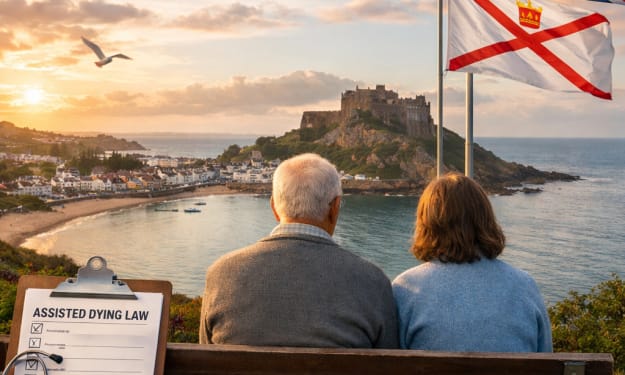
A Historic Decision in Jersey: Choosing Dignity at the End of Life
In February 2026, the island of Jersey made history. Lawmakers voted to allow assisted dying for terminally ill adults. This decision has started important conversations about dignity, suffering, and the right to choose how life ends.
By dua fatima3 days ago in Viva
Review of 'Man on the Run'
My wife and I saw Man on the Run, a nearly 2-hour documentary on Amazon Prime, about Wings, Paul McCartney's group that flew around the world from shortly after The Beatles broke up in early 1970 to shortly after John Lennon was murdered at the end of 1980, making a Beatles reunion forever impossible.
By Paul Levinsonabout 23 hours ago in Beat


Comments
There are no comments for this story
Be the first to respond and start the conversation.