history
The roots of feminism were planted millennia ago; we must understand feminism throughout history to contemplate how much farther we can go.
NASA Canceled Its All-Woman Space Walk, Because of a Wrong-Sized Spacesuit
NASA announced it's all-woman spacewalk earlier this year, marking a momentous pointing in history. It was announced on Monday, March 25th, that what was supposed to be a giant leap for womankind has fallen through.
By Reigning Women7 years ago in Viva
Abba’s Banks Favorite Heroines
Hi I am Abba Banks, Chakras Awareness Leader from NYC. I am a loving dad of a beautiful daughter, with whom I love discussing pivotal people of history. Being a conscious contributor to culture, the internet, and society; I know my activity is being viewed by the youth, so my goal is to express intelligence and wisdom in harmony. That being said, this post is about my two favorite subjects in life: women and history. It could be considered coincidence or divine synchronicity that March is national Women’s history month, and the month my favorite girl was born. I am going to share two traditionally celebrated heroines in public school history, and one that I was fortunate to have as a awesome teacher, that guided me to doing my own research, to unlock the hidden amazing lives throughout time.
By Abba Banks7 years ago in Viva
Hatshepsut
Pharaoh/Queen Hatshepsut was a female ruler around the 18th dynasty of Egypt. Her husband and half-brother King Thutmose II died unexpectedly about 1479 BC. Her stepson, Thutmose III inherited the throne. Sadly he was too young to rule, so Hatshepsut served as regent. A few years later, with the support the priests of the god, Amun, she crowned herself Pharaoh.
By Alexia Villanueva7 years ago in Viva
The Complexity of Equality and Why It Disrupted America’s Feminist Movement
After its introduction to Congress in 1923, the Equal Rights Amendment illuminated the separation between politically motivated women in America. Two sides of feminism began to emerge afterwards, “one hostile to the blending of feminism with social justice goals, one captured by those goals” (Sklar, “Abstract”). This division lasted for multiple decades after the initial fissure, and was only slightly overcome with the development of the second wave of feminism during the 1960s. The Equal Rights Amendment (ERA) presented a wedge between women in America, and exposed the class differences of those women. However, only by studying the decades before and after the ERA’s inception can an understanding of why and how the division amongst feminists came about become clear. Differences of opinion regarding the definition of “equality,” and how such equality should be achieved, ultimately led to the separation within the feminist movement in America.
By Chase E.H.7 years ago in Viva
Anne Boleyn Is My Spirit Animal
I have always been fascinated by history and people's stories but I have a special passion for the story of Anne Boleyn. To some she was the most infamous adulterous in British history but to me she was a woman in the wrong time. She was smart, ambitious and she stood up for the right to be respected as a woman and not some King's side piece. In my London adventures, I have had the chance to visit two historic destinations where the life of Anne Boleyn played out.
By Kaitlyn Smith7 years ago in Viva
The 19th Century Swedish Novel Missing from the Feminist Literary Canon
In surveys of the most important novels by 19th century women writers, the focus is usually on the works of Anglo and French authors like the Brontë sisters, Louisa May Alcott and George Sand. Yet for all their significance and value, few of these contributed to furthering both social and legal change as much as the frequently overlooked novel of one of Sweden’s most important women writers.
By Victoria Martínez8 years ago in Viva
Standing Up for Your Choices
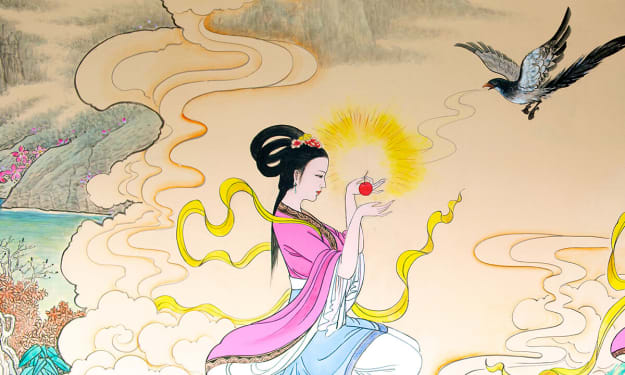
Standing up to disapproving family members to defend your relationship choices isn’t easy, but women have been standing up for what they want for hundreds of years — even in China in 170 CE. During the Eastern Han dynasty, a young woman known as Lady Wu did just that.
By Leigh Victoria Phan, MS, MFA8 years ago in Viva
The Furies: A Modern Antagonist from the Past
Strong female characters have become a desirable aspect for writers of all styles. The direct stereotype of damsel-in-distress appeals to audiences as it shows how women are so much more than what they've previously been portrayed as in society. All female films, female directors, female writers and female producers are becoming more common in our day, alongside such modern phenomena as the #MeToo movement (intended not just for women, of course) have goaded us into thinking that female lead theatre and film is the result of modern thinking. However, I believe that the inclusion of strong females in the arts industry goes back much further than most realise: to the Ancient Greeks. Not only did strong women like Sappho make the arts their own, but the Furies were written as the powerful main antagonists of The Eumenides. The final installment in the only ancient trilogy to still exist, The Oresteia by Aeschylus.
By Stephanie MacLeod8 years ago in Viva
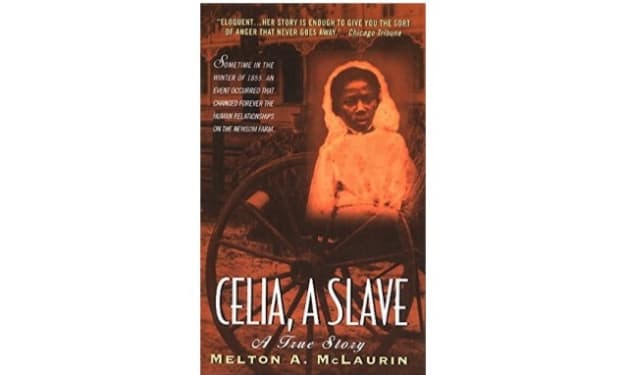
Celia, A Slave
Celia, A Slave was a book published by Melton A. McLaurin based on a true story about a woman named Celia. Celia was an African American female who lived in Audrain County, Missouri, which bordered Callaway to the North, until she was purchased by Robert Newsom in 1850 (McLaurin, 11). By this year, she was approximately fourteen years old, but other than that not much was known about her before her arrival to the Newsom farm. Historians do not know if she was born in Audrain County, whether she had been the property of a farmer, or how many masters she had had previously (McLaurin, 11). While working on the Newsom farm, Celia cooked for the Newsom household, which consisted of Robert Newsom, his son Harry, and his daughters, Virginia and Mary (McLaurin, 11). In addition to her household duties, Robert Newsom treated her as his concubine. Newsom molested and raped Celia, which eventually led to his murder. The relationships of race, gender, and power in the antebellum South were revealed in many aspects of Celia’s life as a slave, as shown in her experiences with rape by Robert Newsom and her court case.
By Jade Rosario8 years ago in Viva
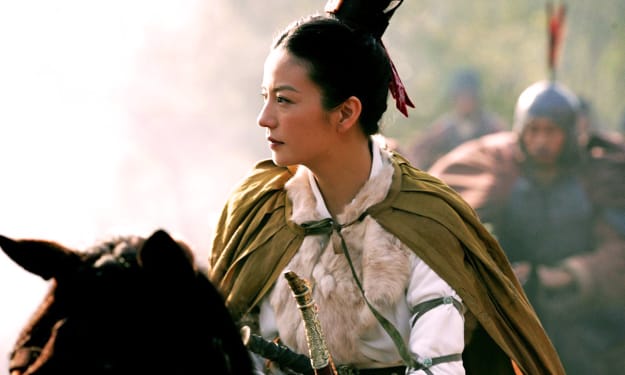
Empowering Women in Classical China
Around 190 CE China, it was common for girls’ personal names to be unrecorded by history. Instead, all we have left is to know them by their family names. One such woman born in this era was Lady Sun, but she didn’t let society stop her from trampling over gender norms with her one hundred armed female soldiers. This kind of female empowerment and early feminism is a rare find in this time period. A unit of female guards, all armed with swords and other weapons, was positively unheard of in the Han Dynasty, but when China split into three separate kingdoms, things like gender norms became a little more relaxed.
By Leigh Victoria Phan, MS, MFA8 years ago in Viva
Feminism or Common Sense?
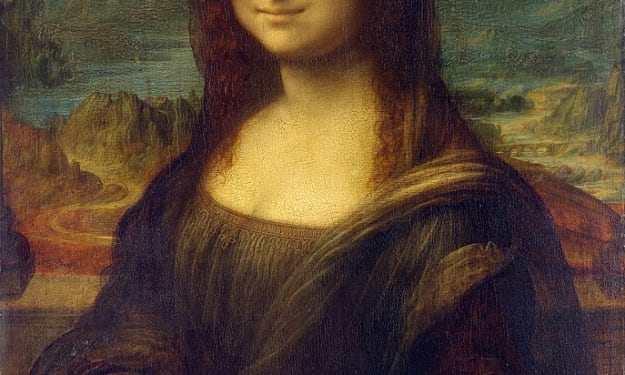
Part IWhat is considered having a monumental reputation is Leonardo Da Vinci's Mona Lisa for two reasons. For one, it is attributed to the mastery of the sfumato style, in which forms appear to evaporate into one another. Secondly, the most celebrated painting in the world has nothing to do with her enigmatic smile. Considered a great mystery, her smile is no mystery at all.
By Adrian Algan8 years ago in Viva