
Pimples to Profits, Capitalizing on Vulnerabilities
Through the whacky beauty industry I've lost money, gained insecurities, and solved basically nothing

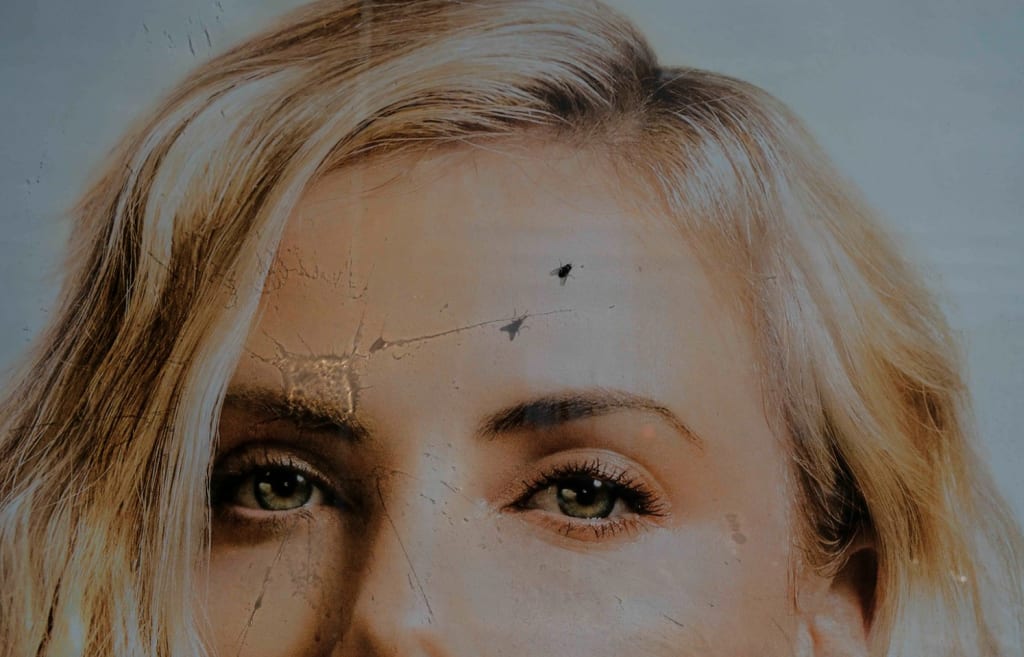
I saw a TikTok a few months back where a young attractive girl advised me wholeheartedly not to sleep on my side at night.
The reason why?
It will cause your face to look - or be(?) - “asymmetrical.”
The TikTok was liked by hundreds of thousands of people.
I wish with all my heart that people would laugh ironically at the concept of altering your nighttime sleeping position to provoke a minuscule boost in your conventional facial appeal: through a non-scientifically proven method, at that.
Yet it appeared the out-of-the-blue beauty sleep advice piqued the interest of thousands of women and people, who enjoyed the content enough to give it a like.
I frequently sleep on my side. I sat for a moment and pondered the symmetry - or lack thereof - of the two sides of my face, and I thought about whether or not I might tolerate sleeping on my back for a little while. Maybe I could. It would be less comfortable, but I thought about it…I definitely thought about it.
The (a)symmetry of my face is not something I had ever really thought about until then.
New insecurity: unlocked.
Content likable and enjoyable? No.
Did I spend my quality time engaging with it?
…..Yes.
It is not just time you are enticed to put into changing your appearance. It's money, too. Lots of money.
Expensive, painful waxing treatments will make your skin smooth until it's not. Creams and supplements will 'reverse the physical effects of aging' so you can stay 25 forever. Oils and exfoliants will smooth your skin beyond recognition. There are full-body -- I mean full body -- perfumes and 'deodorants' being sold so that you smell (and more than smell, if you get what I'm saying) not like a human, but like a $2 candy bar you can pick up at the store and discard in the trash when you're done with it. Our valuable time and hard-earned money is tempted to be spent in ways that turn us into a mesh of expensive products which ironically seem to reduce us to a cheap, value-less outline of a human with a lack of lived experience and any semblance of unique, individual substance. Furthermore, detangling which products on the market are intended for your genuine health and well-being (such as a cream that prevents painful breakouts) and which are for the sole sake of appearances is generally an un-approached topic, as we are meant to believe that looking good is the key to genuine wellbeing.
I am not particularly invested in makeup, beauty, or skincare, but every online medium I use as a woman in my 20's is infiltrated with ads marketing such products meant to be my route to happiness and endless self-satisfaction.
Who are these marketing tactics, calls to examine your appearance, and pressures to buy truly helping? Who do they make happy? Who are they intended to please?
Not me. I am not pleased.
Who ends up suffering?
Me.
Who ends up satisfied? Who ends up pleased?
Men.
Men end up satisfied.
Boys end up satisfied when they get to sleep with the doll-like women of their dreams, and men in high positions in the beauty industry end up satisfied when they can live their picket fence life off the profits they've made from insecure women like me. They find themselves satisfied and then come back for more money and more sex, and the cycle repeats.
I, on the other hand, find myself slightly less appalled with my appearance until I locate more insecurities, and I come back for more product despite having less money, and the cycle repeats. Re-read previous paragraph.
And for any women who profit off this industry as well, I feel ashamed of and betrayed by them.
I feel especially betrayed by many women in the industry because many beauty products do not need to be created by women to be effectively produced, marketed, and sold. Beauty products frequently target women's insecurities, and men alone know exactly what it is we are insecure about. They know, because these are the exact qualities that they hate.
Body hair, laugh lines, stretch marks, fat, warts, wrinkles, bumps, scars, broken skin, bruises.
Men can and will create products meant to hide our insecurities without our help in joining them. Yet women in the beauty industry continue to influence me to get rid of such harmless beauty marks because they gain financially when I do, knowing indeed how much pressure there is to cover any 'flaw' that does not fit the unrealistic, male-defined standard of attractiveness. I have gained nothing from the beauty industry other than a more complex understanding of the power of the male view, as well as a sense of annoyance and betrayal from my fellow women who gain unnecessarily at the expense of me suffering through continuous attempts to please, appeal to, and appear aesthetically desirable under conventional beauty standards.

For us women not in the beauty industry, but who instead are victims of it, there is no "net profit." We have not gained anything meaningful after all physical expenses are paid. We expend countless dollars, and what we are left with is temporary fixes at best topped by more insecurities overlaying a deeper sense of self-doubt and lack of comfortability in our own skin. And unfortunately, this is the basis for an ongoing industry that capitalizes on this sense of discomfort.
My proposed solution on how to escape this prison of the grasp the beauty industry has over our everyday thoughts, feelings, and decisions, for now, is simply to examine two quotes. You may look over each and decide how each one makes you feel. If you like, you may decide which quote you prefer.
...
(Beauty is defined in both these quotes in the 'aesthetic' sense: beauty being that which captures the eye and/or invokes the physical senses):
What is beautiful?
"Beauty is pain"
(Libba Bray, 2011) ...
"one must suffer to be beautiful"
(Christine, 2021; Ashley, 2025).
What is beautiful?
“Ordinary, is the opposite of beautiful.
Because beauty excites. It energizes. It drops our jaws … Makes us look twice"
(Floor & Decor, 2025).
About the Creator
Anna Sophia
Always grateful for writing. Well-versed in the intersection of mental health, womanhood, and society. I probably was a mermaid in another life
Hoping to fit in and stand out all at once. All likes & comments mean a lot to me
<3
Keep reading
More stories from Anna Sophia and writers in Viva and other communities.
Cameron Durrant: From Resilience in South Wales to Global Pharmaceutical Leadership
Early Life and Education The journey of Cameron Durrant begins in South Wales, where his early years were marked by significant personal challenges. Growing up in an environment shaped by hardship and prejudice, Cameron Durrant developed a strong sense of resilience and determination from a young age. Rather than allowing adversity to define his future, he used it as fuel to pursue academic excellence and personal growth.
By Cameron Durrant2 days ago in Viva
Trickle Them Down, But Not Out
The thing about smart people is that they should know better, but alas, intelligence is not the same as wisdom. Not only do the mistakes of experts too short on vision—when they are not corrected—have the potential to do great and far-reaching damage, but they also undermine public confidence in the very notion of expertise. This is particularly so when expertise is wielded in defence of the rich and powerful as a cudgel against those laid low. As an academic, this lack of faith in “so-called experts” is painful to see as it plays out in the spread of dis-/misinformation, conspiracy theories, and anti-intellectualism writ large. But it is also an understandable impulse given the catastrophic failure of an economic ideology pushed by certain economic experts. Supply-side economics has shaped a broken system for the last half-century and has arguably done more to undermine the fabric of the American Dream than any policy framework of the past century.
By Cory Wright-Maley4 days ago in Humans


Comments (1)
well said. great title